Nothing Phone (1) available at discounted price on Flipkart: Details here

Nothing Phone (1) available at discounted price on Flipkart: Details here


UK-based consumer start-up Nothing’s Phone (1) smartphone is available at a discounted price on e-commerce platform . The Phone (1) was launched in 8GB+128GB, 8GB+256GB, and 12GB+256GB configurations at Rs 32,999, Rs 35,999, and Rs 38,999, respectively. All three models are currently available at a discounted price of Rs 27,499, Rs 29,499, and Rs 32,499. Besides, there are bank offers available on that brings down the effective cost further.


The e-commerce giant is offering instant discounts of 10 per cent (up to Rs 1,500) on Federal Bank cards, and up to Rs 1,250 on Punjab National Bank credit cards. Besides, it is offering 5 per cent cashback on its Axis Bank card. The smartphone is also eligible for equated monthly installment scheme and exchange scheme.


Phone (1): Specifications


Powered by the Snapdragon 778G+ 5G processor, the smartphone sports a 6.55-inch HDR10+ screen of 120Hz refresh rate and 700 nits peak brightness level. It runs OS 1.1.6 based on the Android 12 operating system. It has a dual-camera set-up on the back, featuring a 50-megapixel primary sensor paired with a 50MP ultra-wide sensor. On the front, it has a 16MP camera sensor. The smartphone comes in 8GB + 128GB, 8GB + 256GB, and 12GB + 256GB configurations. It comes with three years of OS upgrades and four years of bimonthly security updates.


It is powered by a 4,500 mAh battery, supported by 33W fast charging and 15W wireless charging. The smartphone is IP53 rated for water and dust resistance. It supports 5G, Wi-Fi, and Bluetooth 5.2 for wireless connectivity. It comes in white and black colours. Other features include USB-C port for charging, dual SIM, and inbuilt GPS.


Source link

Wearable electronics could potentially detect emerging health problems

Wearable electronics could potentially detect emerging health problems


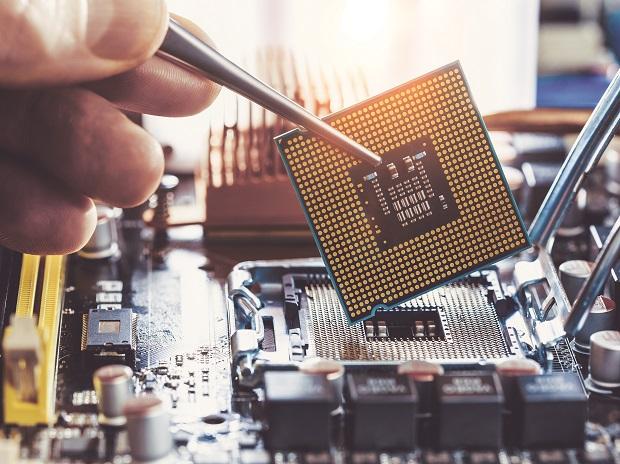
Researchers are developing skin-like electronics paired with artificial intelligence that could potentially detect possible emerging health problems.


This research was published in Matter in a paper titled “Intrinsically stretchable neuromorphic devices for on-body processing of health data with artificial intelligence.”


Flexible, wearable electronics are becoming more prevalent, yet they have yet to reach their full potential. Precision medical sensors that are applied to the skin and are intended to perform health monitoring and diagnostics could soon be made possible by this technology. It would be like having a cutting-edge medical facility at your beck and call all the time.


Such a skin-like device is being developed in a project between the U.S. Department of Energy’s (DOE) Argonne National Laboratory and the University of Chicago’s Pritzker School of Molecular Engineering (PME). Leading the project is Sihong Wang, assistant professor in UChicago PME with a joint appointment in Argonne’s Nanoscience and Technology division.


Worn routinely, future wearable electronics could potentially detect possible emerging health problems — such as heart disease, cancer or multiple sclerosis — even before obvious symptoms appear. The device could also do a personalized analysis of the tracked health data while minimizing the need for its wireless transmission. “The diagnosis for the same health measurements could differ depending on the person’s age, medical history and other factors,” Wang said. “Such a diagnosis, with health information being continuously gathered over an extended period, is very data intensive.”


Such a device would need to collect and process a vast amount of data, well above what even the best smartwatches can do today. And it would have to do this data crunching with very low power consumption in a very tiny space.


To address that need, the team called upon neuromorphic computing. This AI technology mimics operation of the brain by training on past data sets and learning from experience. Its advantages include compatibility with stretchable material, lower energy consumption and faster speed than other types of AI.


The other major challenge the team faced was integrating the electronics into a skin-like stretchable material. The key material in any electronic device is a semiconductor. In current rigid electronics used in cell phones and computers, this is normally a solid silicon chip. Stretchable electronics require that the semiconductor be a highly flexible material that is still able to conduct electricity.


The team’s skin-like neuromorphic “chip” consists of a thin film of a plastic semiconductor combined with stretchable gold nanowire electrodes. Even when stretched to twice its normal size, their device functioned as planned without formation of any cracks.


As one test, the team built an AI device and trained it to distinguish healthy electrocardiogram (ECG) signals from four different signals indicating health problems. After training, the device was more than 95 percent effective at correctly identifying the ECG signals.


The plastic semiconductor also underwent analysis on beamline 8-ID-E at the Advanced Photon Source (APS), a DOE Office of Science user facility at Argonne. Exposure to an intense X-ray beam revealed how the molecules that make up the skin-like device material reorganize upon doubling in length. These results provided molecular level information to better understand the material properties.


“The planned upgrade of the APS will increase the brightness of its X-ray beams by up to 500 times,” said Joe Strzalka, an Argonne physicist. “We look forward to studying the device material under its regular operating conditions, interacting with charged particles and changing electrical potential in its environment. Instead of a snapshot, we’ll have more of a movie of the structural response of the material at the molecular level.” The greater beamline brightness and better detectors will make it possible to measure how soft or hard the material becomes in response to environmental influences.


“While still requiring further development on several fronts, our device could one day be a game changer in which everyone can get their health status in a much more effective and frequent way,” added Wang.

(Only the headline and picture of this report may have been reworked by the Business Standard staff; the rest of the content is auto-generated from a syndicated feed.)



Source link

Apple, Major League Soccer to launch streaming service in February 2023

Apple, Major League Soccer to launch streaming service in February 2023


Apple and (MLS) have announced plans to launch a streaming service on February 1, 2023.


The ‘MLS Season Pass’ streaming service will feature “live MLS regular-season matches, entire playoffs, and the Leagues Cup, all with no blackouts”, Apple said in a blogpost.


The service will make MLS more accessible to a global audience in a more streamlined manner.


Starting from February 1, users can subscribe to the service on the application for $14.99 per month or $99 per season.


Whereas, Apple TV+ subscribers can sign up for $12.99 per month or $79 per season.


All games will be accessible via the app on Apple devices, smart TVs, streaming devices, set-top boxes, and gaming consoles, as well as online at tv.apple.com.


“The launch of MLS Season Pass marks the official kickoff of the 10-year partnership between MLS and Apple,” the tech giant said.


Additionally, St. Louis CITY SC, a 2023 expansion franchise, also unveiled the first look at the sleeve patch as well as its jerseys for the club’s inaugural season.


“We’re counting down the days to February 2023 when fans everywhere can enjoy MLS Season Pass on billions of devices, all with no blackouts,” said Eddy Cue, senior vice president of Services, Apple.


–IANS


aj/ksk/

(Only the headline and picture of this report may have been reworked by the Business Standard staff; the rest of the content is auto-generated from a syndicated feed.)


Source link

Karnataka may get India’s first semiconductor fab facility: Report

Karnataka may get India’s first semiconductor fab facility: Report


may become India’s first state to have a fab. The International Consortium’s (ISMC’s) proposed $3 billion fab may start construction as early as February 2023, said a report in Mint.


The ISMC will make 40-65 nanometre analog chips which will cater to “defence and auto sectors” and to some other sectors, the report added.


“We will probably become the first state in India to have a fab. ISMC has the and the capability. Subject to the central government’s approval, we hope to see work starting on this plant from February,” Minister for Information Technology, Electronics, and Skills Development, CN Ashwath Narayan, was quoted as saying by Mint.


The Centre had announced subsidies of up to 50 per cent of the project costs for semiconductor manufacturers under its Rs 76,000 crore Production-linked Incentive (PLI) scheme in 2021. Moreover, the latest set of restrictions imposed by the US on sales of semiconductor-making equipment to China has encouraged companies to shift to India.


The report added that India already has expertise in designing chips but the lack of fab pushes it to depend on imports.


ISMC, which is a joint venture between UAE’s Next Orbit Ventures and Israel’s Tower Semiconductor, will be among the three consortia shortlisted by the Centre for incentives. Tower Semiconductor was acquired by Intel Inc in February.


and Vedanta earlier this year announced setting up a semiconductor facility in Ahmedabad. Singapore’s IGSS Ventures will also set up a $3.2 billion semiconductor park in Tamil Nadu.


All of the projects will be provided with government incentives. It would take about 4-5 years, once the construction starts, for the ISMC’s plant to become operational.


Source link

Nothing Ear (stick) open sale begins today: Read review, watch unboxing

Nothing Ear (stick) open sale begins today: Read review, watch unboxing


UK-based consumer start-up Nothing’s half in-ear wireless earbuds, the Ear (stick), go on open sale at 12 noon on November 17. Priced at Rs 8,499, the earphones will be available on the e-commerce platform Flipkart and Myntra. On Flipkart, the earphones will be available with introductory offer, but in limited stock. In the offer, is offering a flat Rs 1,000 discount to the existing customers on the Ear (stick) purchase.


Ear (stick): Specification

The Nothing Ear (stick) is a pair of half in-ear wireless with transparent design. It comes in a cylindrical case, which rolls to open and close. It is compatible with both Android and iOS devices. However, it supports fast pairing only with Android devices. It is IP54 rated for dust and water resistance. The feature 12.6mm audio drivers and boast up to 29 hours of battery life with a charging case. Nothing says these can deliver up to 2 hours of extra listening time with 10 minutes of charging.


Unlike its predecessor Nothing Ear (1), these Ear (stick) earbuds lack silicone buds and active noise cancellation (ANC). But, these come with clear voice with three microphones on each bud to offer wind-proof and crowd-proof calls. It comes with touch control on each bud for play, pause, skip, voice assistance and change volume functions.


Other features include bass lock technology, which detects how much bass is lost during wear and automatically tune the graphic equalisers based on ambient conditions. The earbuds functions are integrated in the Nothing Phone (1), allowing users to customise gesture controls, adjust EQ settings and access find my earbuds function via quick settings menu. Other smartphones (Android and iOS) get the similar functionality enabled through the Nothing X app.


Source link

Focused on long-term goals amid market uncertainties, says Qualcomm

Focused on long-term goals amid market uncertainties, says Qualcomm


Despite several quarters of declining smartphone sales owing to rough macroeconomic conditions, chip major is confident it will weather the global condition with a strong focus on long-term growth, while delivering top-of-the-line features for the overall device ecosystem.


Chris Patrick, SVP and General Manager, Mobile Handset, Qualcomm, told IANS that despite a lot of ups and downs in the global market, the company is “really focused on the long term”.


“Smartphone is the most indispensable device in our lives and we make sure we have the right mix of products for our customers for the long term. Structurally, we don’t see anything really different in the current global scenario for our business,” Patrick said on the sidelines of the company’s flagship ‘Snapdragon Summit 2022’ here.


“We are witnessing the same demand for devices and the same kind of demand for advanced features,” he added.


caters to a premium set of for most of the major smartphone players globally.


According to the International Data Corporation (IDC), worldwide smartphone shipments declined 9.7 per cent (year-over-year) to 301.9 million units in the third quarter this year.


The drop marked the largest-ever third quarter decline and the fifth consecutive quarter of decline for the smartphone market as shipments continue to struggle amid weakened global demand and economic uncertainties, said the IDC report.


According to Patrick, some original equipment manufacturers (OEMs) are facing the problem, especially those who “hit the accelerator maybe a little bit too hard”.


“We are focusing very hard to provide optimum, next-generation features to our customers across the spectrum, be it gaming, camera, AI and the overall device performance. We’ve taken a big leap on delivering peak performance and we expect OEMs to have an easier time making a balance,” Patrick told IANS.


In the latest quarterly results earlier this month, Cristiano Amon, President and CEO, said that the semiconductor industry is being impacted by significant macroeconomic headwinds and other short-term challenges from which “we’re not immune.


However, “the fundamentals of Qualcomm’s growth drivers remain unchanged with significant opportunities in the coming years,” Amon mentioned.


In handsets, the company recently entered into a new multi-year agreement with Samsung, expanding the use of Snapdragon platforms for future premium Samsung Galaxy products globally.


“We also executed on the changing OEM landscape opportunity, securing key premium and high-tier design wins with our customers in China. Snapdragon has become synonymous with premium mobile experiences worldwide,” said Amon.


(Nishant Arora can be reached at nishant.a@ians.in)


–IANS


na/ksk/


(Only the headline and picture of this report may have been reworked by the Business Standard staff; the rest of the content is auto-generated from a syndicated feed.)


Source link

YouTube
Instagram
WhatsApp




