Over 1 bn youngsters at hearing loss risk due to headphones: Study

Over 1 bn youngsters at hearing loss risk due to headphones: Study


Over one billion teenagers and young people are potentially at risk of hearing loss due to their use of headphones and earbuds, and attendance at loud music venues, according to a study published in the journal BMJ Global Health.


The international team, including researchers from Medical University of South Carolina, US, noted that the governments around the world need to urgently prioritise “safe listening” policies to safeguard aural health.


“There is an urgent need for governments, industry, and civil society to prioritise global hearing loss prevention by promoting safe listening practices,” the authors of the study said.


The World Health Organization (WHO) estimates that over 430 million people worldwide currently have disabling hearing loss, the researchers said.


Young people are particularly vulnerable because of their use of personal listening devices (PLDs), such as smartphones, headphones and earbuds, and attendance at loud music venues, amid poor regulatory enforcement, they said.


Previously published research suggests that PLD users often choose volumes as high as 105 decibel (dB) while average sound levels at entertainment venues range from 104 to 112 dB.


This far exceeds the permissible sound levels of 80 dB for adults and 75 dB for children even if for very short periods of time.


The researchers gauged the prevalence of unsafe listening practices among teens and young adults to create a global estimate of the numbers who could therefore be at risk of hearing loss.


They trawled research databases for relevant studies published in English, French, Spanish and Russian, involving 12-34 year-olds, and reporting on objectively measured device output levels and length of exposure.


The research included 33 studies, corresponding to data from 35 records and 19,046 participants. 17 records focused on PLD use and 18 focused on loud entertainment venues.


The researchers also estimated the number of people who could be at risk of hearing loss by considering the estimated global population of 12-34 year-olds in 2022 (2.8 billion) and the best estimates of exposure to unsafe listening practices from PLDs or loud entertainment venues.


The research indicates that the prevalence of unsafe listening practices from PLD use and attendance at loud entertainment venues is common worldwide — 24 per cent and 48 per cent, respectively, among teens and young people.


The researchers estimate that the global number of teens and young adults who could potentially be at risk of hearing loss as a result ranges from 0.67 to 1.35 billion.

(Only the headline and picture of this report may have been reworked by the Business Standard staff; the rest of the content is auto-generated from a syndicated feed.)


Source link

YouTube to allow Shorts creators to use minute-long licensed music

YouTube to allow Shorts creators to use minute-long licensed music


has announced that short-term video creators will soon be allowed to feature up to one minute of copyrighted music in their Shorts.


The video-streaming platform said that its short-form creators will be able to use between 30 and 60 seconds of licensed music “for most tracks”, reports Engadget.


However, some songs will continue to be limited to 15 seconds, with licencing agreements determining which tracks fall into which window.


In the app’s audio picker, creators can quickly see how much time each song allows.


As the popularity of user-created videos has grown over the last decade, aggressive DMCA (Digital Millennium Copyright Act, a 1998 US copyright law) takedown notices have become a headache for streamers across all platforms, according to the report.


Record labels frequently automate their copyright enforcement, resulting in overzealous claims.


For example, creators’ videos have been flagged for including a few seconds of copyrighted audio from a passing car’s stereo, the report added.


The song-limit boost is YouTube’s latest attempt to entice TikTok creators (and therefore viewers and ad dollars) to switch to Shorts.


In September, the company announced an ad-revenue-sharing programme that will give qualified creators a 45 per cent cut of ad revenue, regardless of whether they use music.


TikTok launched a similar sharing programme earlier this year in response to widespread criticism of its previous “static pool of money” approach, said the report.


–IANS


shs/ksk/

(Only the headline and picture of this report may have been reworked by the Business Standard staff; the rest of the content is auto-generated from a syndicated feed.)


Source link

Google Chat will soon allow users to schedule ‘Do Not Disturb’: Report

Google Chat will soon allow users to schedule ‘Do Not Disturb’: Report


has announced that it will soon allow users to schedule recurring ‘Do Not Disturb’ (DND)feature on its Chats platform.


After the new feature rolls out on Android, iOS and the web, “set a do not disturb schedule” will display below the various time increments, reports 9To5Google.


Users can create multiple toggles and easily activate or deactivate them from the settings.


The new feature will help “when you want to mute notifications during your regular lunch break, or have Do Not Disturb set automatically over the weekend while away from your desk”, said.


“We hope this feature enables you to better concentrate without Chat distractions or help you disconnect entirely from work when needed,” it added.


The feature to schedule a DND in Chat will roll out in the coming weeks.


It will first be available on the web and later on mobile, the report said.


Earlier, the tech giant had rolled out custom emojis to its Chat for personalised experience.


–IANS


aj/ksk/

(Only the headline and picture of this report may have been reworked by the Business Standard staff; the rest of the content is auto-generated from a syndicated feed.)



Source link

India’s biggest iPhone manufacturing unit coming up in Bengaluru: Vaishnaw

India’s biggest iPhone manufacturing unit coming up in Bengaluru: Vaishnaw


The biggest unit to manufacture Apple iPhone in India is coming up at Hosur near Bengaluru, which will employ around 60,000 people, Telecom and IT Minister Ashwini Vaishnaw said on Tuesday.


While speaking at the Janjatiya Gaurav Divas ceremony, Vaishnaw said that six thousand tribal women residing near Ranchi and Hazaribagh have been trained for making iPhones.


“Apple’s iPhone is now getting made in India and it’s the biggest plant in India is being set up at Hosur near . 60,000 people work in a single factory. The first 6,000 employees of these 60,000 employees are our tribal sisters from places nearby Ranchi and Hazaribagh. Tribal sisters have been trained to make Apple iPhone,” the minister said.


Apple has outsourced the manufacturing of iPhone enclosures to Tata Electronics, which has a plant at Hosur.


The company gets iPhones manufactured by electronics giants – Foxconn, Wistron and Pegatron in India.

(Only the headline and picture of this report may have been reworked by the Business Standard staff; the rest of the content is auto-generated from a syndicated feed.)



Source link

Zepp Health to launch India-exclusive Amazfit Pop 2 smartwatch on Nov 22

Zepp Health to launch India-exclusive Amazfit Pop 2 smartwatch on Nov 22


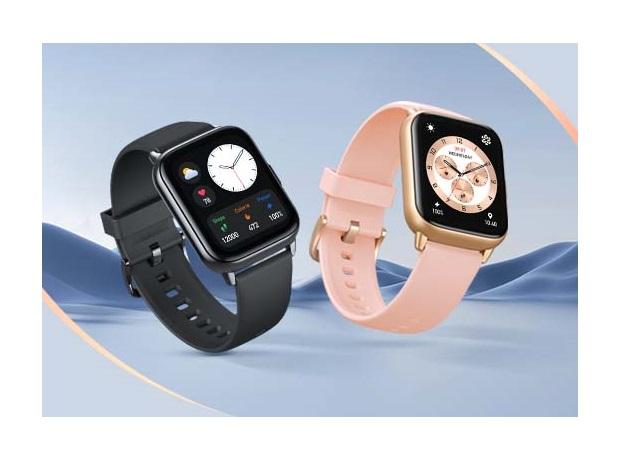
Chinese smart wearable maker Zepp Health on Wednesday announced launch details of its India-exclusive smartwatch, the Pop 2. Arriving on November 22, the fitness wearable is priced at Rs 3,999. It will be available on the e-commerce platform at an introductory price of Rs 3,299 on the launch day. It will also be available on the official website, alongside Flipkart, from November 23.


Pop 2: Specifications


Powered by a 270 mAh battery, the Amazfit Pop 2 sports a 1.78-inch HD AMOLED screen. The fitness wearable has a rectangular dial with a side-mounted button for navigation. It boasts an aluminium frame and steel button. The is supported by the Zepp Active app, which allows users to customise the watch face, modify the settings, and sync health and fitness data to their smartphone.


The Amazfit Pop 2 offers Bluetooth calling feature supported by inbuilt microphone and speaker. Besides, it will have a built-in capability to activate Apple Siri and Google Assistant on iPhones and Android phones, respectively. The fitness wearable is compatible with Zepp OS. According to Zepp Health, the Amazfit Pop 2 can last up to 10 days on normal usage.


As for fitness, the has over 100 sports modes built-in and supports automatically detect features for four everyday activities – walking, jogging, working out on elliptical, and rowing machines. It has sensors for heart rate monitoring, and blood oxygen saturation. Besides, it has a feature to alert the user – if it detects irregularities in heart rate.


Earlier this month, Zepp Health also launched the Amazfit Band 7 at Rs 3,499. Powered by a 232 mAh battery, the Amazfit Band 7 sports a 1.47-inch HD AMOLED screen supported by over 50 customisable watch faces and always-on displays. The fitness band has a rectangular dial. It is 5 ATM rated for water protection. The comes in classic black and elegant beige colours. The smart band can be customised with the help of straps which are available in pink, orange, blue, and green colours.


Source link

“Password” most widely used password in India, “bigbasket” fourth: Report

“Password” most widely used password in India, “bigbasket” fourth: Report


“Password” continues to be the most widely used in India, a new report showed. It is used by nearly 3.5 million users in the country, and it would take less than one second for hackers to hack it. It is followed by “123456”, which can also be cracked within one second.


The fourth most widely used in India is the name of a start-up, the report released by NordPass showed. “Bigbasket” has been used by over 75,000 users in India as their . It would, however, take about 5 minutes to crack it. The third most widely used password is 12345678.


“We learned that despite growing awareness, old habits die hard. The research shows that people still use weak passwords to protect their accounts,” the report said.


The country’s 11th, 18th and 19th most popular passwords were found to be different spellings of “India”. These were Indya123, India@123 and india123, which have been used 7,512, 5,321 and 5,207 times, respectively.


Four out of the top 10 passwords are numeric, three are textual, and the rest are alphanumeric.


Globally too, “password” was found to be the most widely used password. It is used by over 4.9 million users worldwide. It is followed by “123456” and “123456789”.


The analysis of the trend showed a change in the use of passwords. For the last two years, “123456” was the most widely used password globally. In 2019, “12345” was the most-used password. However, this year, a textual password has topped the list.


The strong impact of culture


The report also analysed the impact of culture on the usage of particular words as passwords.


“The glitziest film industry event of the year – the ceremony – inspired many to use not-so-glitzy passwords: the password ‘Oscars’ was used 62,983 times,” it said.


Millions of passwords were kept on the name of the movies or TV series released in 2020/21, like Batman, Encanto and Euphoria.


“‘batman’ was used 2,562,776 times, ‘euphoria’ 53,993, and ‘encanto’ 10,808 times,” it added.


Moreover, some of the top passwords in the world were kept after the names of fashion brands, sports stars and movies.


“Tiffany”, “Aldo”, “Leon”, “Coco”, and “U2” were some of the other widely used passwords globally.


Source link

YouTube
Instagram
WhatsApp


