VLC Media Player returns to India as MeitY lifts ban on VideoLAN website

VLC Media Player returns to India as MeitY lifts ban on VideoLAN website


The Ministry of Electronics and IT (MeitY) has lifted the ban it imposed on the VideoLAN website, which allows users to download the popular media-streaming player called the VLC Media Player. This comes about nine months after MeitY made the first announcement of blocking the website.


“We have news! VLC Media Player is back!”, VideoLAN announcement on Twitter.


The ministry sent a letter to VideoLAN on Monday stating that it has decided to lift the ban, as reported by the Indian Express (IE).


In October, MeitY sent a letter to VideoLAN stating the reasons for the ban. It said that the primary reason to block the website was that VideoLAN was communicating with servers of a previously banned app, Onmyoji Arena. Onmyoji was banned in India for allegedly transferring user data to a “hostile country”.


It further said that the ministry uses “open source threat intelligence reports” for its findings. According to the ministry, VLC Media Player was used by a China-backed hacking group called ‘Cicada’ for carrying out cyber attacks.


In reply to the letter, VideoLAN sent a detailed response to MeitY, according to IE. In this, the digital rights group assisted the website. The response explained the issues with MeitY’s concerns.


VideoLAN also denied the claims of transferring data to a “hostile country”. It further added that the ministry provided no details about the allegations of the use of the software by Chinese hackers.


After the ban was lifted, VideoLAN’s announcement said that VLC Media Player has nearly 80 million Indian users and “by blocking the primary avenue for authentic downloads and updates, the ban left us all considerably less secure on the internet than we were before.”


Source link

OxygenOS 13: Always-on display widgets and other new features of OnePlus UI

OxygenOS 13: Always-on display widgets and other new features of OnePlus UI


Unveiled earlier this year, the OxygenOS 13 is now rolling out for select devices as a free software update. Based on the Android 13 operating system, the user interface brings several new upgrades in terms of design and features. The OxygenOS 13 is currently available for the 9 and OnePlus 9 Pro in North America, Europe, and . According to the company, the update will be released first to the devices who participated in the open beta testing and then it will be gradually pushed to more users. Here are the new features the OnePlus OxygenOS 13 brings:


Always-on display widgets


Always-on display gets a makeover with support for widgets in OxygenOS 13. The new user interface enables two new live widgets on AoD. OnePlus has partnered with Spotify to allow users to control their playlist directly from the lock screen. Besides, there is another live widget to track food delivery from Zomato and Swiggy on the AoD screen.


Smart Launcher


The OxygenOS 13 supports large folders and big widgets on the home screen. It allows users to reach their favourite apps faster by tapping on the large folders and lets users access some applications without needing to open the app first.


Spatial Audio


Spatial Audio is coming to select OnePlus smartphones with the OxygenOS 13. It transforms the way users listen to their music and video content by creating an immersive 3D audio experience. Besides Spatial audio, the OxygenOS 13 enables fast pairing and multi-device connection.


Security


OxygenOS 13 alerts users while downloading risky applications and other files and keeps private elements like your location secure, even when the device is connected to a public Wi-Fi network. It also offers a virtual lockbox, which employs a data encryption algorithm, protecting data privacy during file transfers – perfect for your documents, images, and videos. It enhances security by isolating the files from other apps while retaining personal access.


Source link

Google to pay nearly 0 mn in settlement in location tracking case

Google to pay nearly $400 mn in settlement in location tracking case


Forty US states have reached a nearly USD 400 million settlement with over misleading of consumers about the tech company’s location tracking practices, the office of Michigan Attorney General Dana Nessel said on Monday.


“Michigan Attorney General Dana Nessel announced that Michigan, along with 39 other attorneys general, has reached a USD 391.5 million multistate settlement with over its location tracking practices relating to Account settings. This is the largest multistate Attorney General privacy settlement in the history of the US,” Nessel’s office said in a statement.


Nessel said Google makes the majority of its revenue from using the personal data of those who search in its browsers and use its apps.


“The company’s online reach enables it to target consumers without the consumer’s knowledge or permission. However, the transparency requirements of this settlement will ensure that Google not only makes users aware of how their location data is being used, but also how to change their account settings if they wish to disable location-related account settings, delete the data collected and set data retention limits,” she added.


In the past few years, Google, Amazon, and others US tech giants have faced strict rules in a number of countries globally. Some of them have been subjected to hefty fines over privacy violations.


The group of attorneys general launched an investigation into Google following a 2018 report revealing that the company continued tracking users’ locations even if they seemingly chose to turn off the feature.


The probe found that Google had violated state consumer protection laws by misleading consumers about their location tracking practices since at least 2014.


The settlement requires that Google be more transparent with consumers about its practices by showing additional information to users when they choose to adjust location-related account settings, making key information about location tracking unavoidable for users, and giving users detailed information about the types of location data Google collects.


The settlement also limits Google’s use and storage of certain kinds of location information.


Oregon and Nebraska attorney generals led the settlement negotiations and were joined by states including Alabama, New York, Ohio and Virginia.

(Only the headline and picture of this report may have been reworked by the Business Standard staff; the rest of the content is auto-generated from a syndicated feed.)


Source link

India’s smartphone shipments drop 10% in Q3 as prices hit record: IDC

India’s smartphone shipments drop 10% in Q3 as prices hit record: IDC


BENGALURU (Reuters) – India’s smartphone market fell by 10% year-on-year last quarter to 43.5 million units, marking the lowest third-quarter shipment since 2019, and a high inventory pile-up is expected to lead to a muted fourth quarter, market research firm IDC said on Monday.


Despite the festival season beginning earlier than usual, the unrelenting rise in prices pulled down shipments in the world’s second-biggest smartphone market, IDC said.


The average selling price jumped 15% year-over-year, and 6% from the previous quarter, to a record $226, IDC said.


“The average selling price has grown consistently for the past eight quarters in a row due to increasing costs and growing 5G shipments at mid-premium price points,” said Upasana Joshi, research manager, client devices, IDC.


Moreover, the inventory pile-up and post-festive tapering in demand will lead to a muted fourth quarter, said Navkendar Singh, associate vice president, devices research, IDC.


IDC expects 2022 shipments of around 150 million units, a decline of 8-9% over the previous year, and Singh does not expect 2023 to be any better.


“The major challenges going into 2023 are the impact of inflation on consumer demand, increasing device costs, and slow feature phone-to-smartphone migration.”


(Reporting by Navamya Ganesh Acharya in Bengaluru; Editing by Savio D’Souza)

(Only the headline and picture of this report may have been reworked by the Business Standard staff; the rest of the content is auto-generated from a syndicated feed.)


Source link

Samsung may reduce smartphone shipments by 13% in 2023, says report

Samsung may reduce smartphone shipments by 13% in 2023, says report


is reportedly planning to reduce its smartphone shipments by 13 per cent next year.


The tech giant was not able to sell as many smartphone units as it had expected because of many reasons, including the supply-chain issue caused by the Covid-19 pandemic, reports Gizmochina.


The plan to reduce the shipments by 13 per cent, roughly turns out to be 30 million units.


Although the smartphone maker was able to raise its market share in terms of shipments during the third quarter of this year in comparison to the second quarter, the company had an overall decline of about 8 per cent when compared year over year, the report said.


It was recently reported that was expected to sell 270 million next year with focus on its foldable devices.


The estimate of 260 million units sold in 2022 was around 10 million more than the last year, and the company wanted to increase that by 10 million next year.


The company was concentrating on foldables in order to achieve this goal because it could increase profitability as opposed to just sheer sales volumes overall.


–IANS


aj/ksk/

(Only the headline and picture of this report may have been reworked by the Business Standard staff; the rest of the content is auto-generated from a syndicated feed.)


Source link

Zepp Health announces India-exclusive Amazfit Pop 2 smartwatch, launch soon

Zepp Health announces India-exclusive Amazfit Pop 2 smartwatch, launch soon


Zepp Health announces India-exclusive Amazfit Pop 2 smartwatch, launch soon


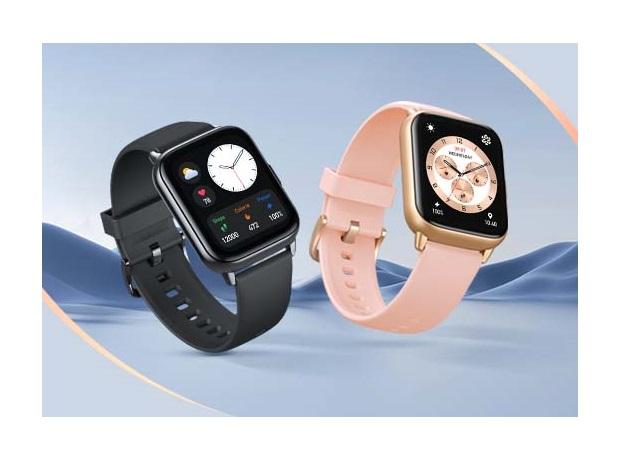
The Amazfit Pop 2 sports a 1.78-inch HD AMOLED screen and it will support Bluetooth calling feature, announced Zepp Health in a statement


Chinese smart wearable maker Zepp Health is gearing up to launch its India-exclusive Amazfit Pop 2 . The fitness wearable will be soon available for purchase in India, announced the company on Monday. The will be supported by the Zepp Active app, which will allow users to customise the watch face, modify the settings, and sync health and fitness data to their smartphone – according to the company.


Amazfit Pop 2: Features


The Amazfit Pop 2 will sport a 1.78-inch HD AMOLED screen. It will be among the few in its segment with Bluetooth calling feature supported by inbuilt microphone and speaker. Besides, it will have a built-in capability to trigger Apple Siri and Google Assistant on iPhones and Android phones, respectively.


The fitness band will have a rectangular dial with a side-mounted button for navigation. It will boast an aluminium frame and steel button. The watch will feature a variety of sports modes and it will be compatible with Zepp OS. According to Zepp Health, the Amazfit Pop 2 can last up to 10 days.


Earlier this month, Zepp Health also launched the Amazfit Band 7 at Rs 3,499. Powered by a 232 mAh battery, the Amazfit Band 7 sports a 1.47-inch HD AMOLED screen supported by over 50 customisable watch faces and always-on displays. The fitness band has a rectangular dial. It is 5 ATM rated for water protection. It has sensors for heart rate monitoring, stress level measurements, and blood oxygen saturation.


The Amazfit Band 7 supports continuous tracking of blood-oxygen saturation, heart rate, and stress levels. It has 120 sports modes built-in and supports automatically detect features for four everyday activities – walking, jogging, working out on elliptical, and rowing machines. The comes in classic black and elegant beige colours. The smart band can be customised with the help of straps which are available in pink, orange, blue, and green colours.


Source link

YouTube
Instagram
WhatsApp