Twitter Blue ‘verification’ rolled out in India, to cost Rs 719 per month

Twitter Blue ‘verification’ rolled out in India, to cost Rs 719 per month


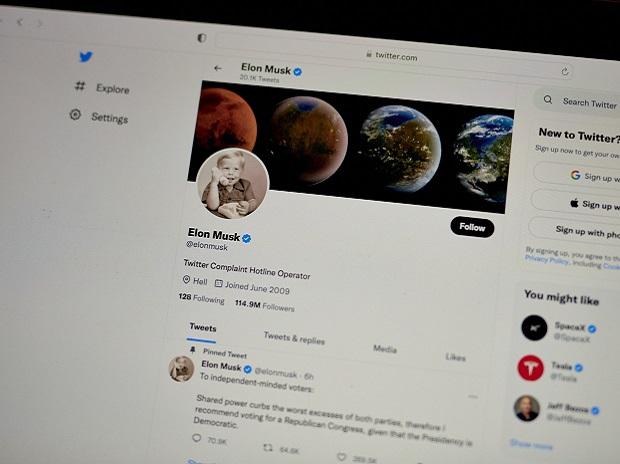
Some people in India have started receiving Blue access for Rs 719 per month, equivalent to $8.9 approximately. This comes just days after rolled out Blue in the US for a fee of $8 per month.


Several people shared screenshots of Twitter’s offer in India. The price has been kept higher in India as compared to the US. On November 1, Musk said that the subscription pack would be “adjusted by country proportionate to purchasing power parity”.


The subscribers of Twitter Blue will reportedly get priority in replies, mentions and search and the ability to post longer videos. They will also get half ads and the option to bypass the paywall on select articles.


For users, the $8 Twitter Blue has been rolled out in the United States, Canada, Australia, and the United Kingdom.


Earlier, Musk had said that the new Twitter Blue subscription service for $8 will be available in India in less than a month.


This comes at a time when several reports have emerged in the last couple of days about fake accounts being created and getting “verification” checkmarks on Twitter. This included a fake account of and LeBron James.


ALSO READ: Twitter’s big headache: Brand impostors thanks to the $8 verification


On Friday, said that there are too many corrupt and fake legacy Blue “verification” checkmarks on Twitter, and he will remove them in the coming months.


Musk added that accounts engaged in parody must include “parody” in their name, not just in their bio.


“To be more precise accounts doing parody impersonations. Basically, tricking people is not ok,” he tweeted.


Musk also said he loves it “when people complain about Twitter on Twitter”.


Musk also said that Twitter would soon purge accounts that have been inactive for months.


(With agency inputs)


Source link

Pixel 7 series, Pixel 6a to get 5G as part of December Feature drop: Google

Pixel 7 series, Pixel 6a to get 5G as part of December Feature drop: Google


on Friday confirmed that the Pixel 6a, Pixel 7, and Pixel 7 Pro will get the 5G-related software update in December. The American software giant said it has been actively working with the Indian carriers to enable on its supported devices at the earliest.

“Pixel 7, 7 Pro and Pixel 6a are capable devices. We are actively working with the Indian carriers to enable functionality at the earliest. Our current target is to enable capabilities as part of our December Feature Drop,” said in a statement.

Unlike other smartphone makers, will rollout support as part of December Pixel Feature Drop. For the uninitiated, Pixel Feature drop is different from regular operating system and security updates.

As the name suggest, it is a package of new features that comes in addition to the monthly software fixes and improvements and the major Android updates. The Pixel Feature drops enable new functionality to Pixel phones.

Google and Apple are the two big brands that will enable support in their supported smartphone in December. Apple is currently testing 5G capability on Airtel and network in iOS 16 beta. Earlier this week, the American giant rolled out 16.2 developer beta for supported enabling 5G on both standalone and non-standalone networks. The developer beta will be followed by public beta soon with final commercial release of the iOS 16.2 slated for December release.


Source link

Surveillance vendor targeted Samsung smartphones with zero-day bugs: Google

Surveillance vendor targeted Samsung smartphones with zero-day bugs: Google


has warned that a commercial surveillance vendor was exploiting three zero-day security vulnerabilities in new that could have been exploited to steal users’ data.


All three vulnerabilities were in the manufacturer’s custom components rather than in the Android Open Source Project (AOSP) platform or the Linux kernel.


“It’s also interesting to note that 2 out of the 3 vulnerabilities were logic and design vulnerabilities rather than memory safety,” said Maddie Stone, Project Zero.


“While we understand that has yet to annotate any vulnerabilities as in-the-wild, going forward, has committed to publicly sharing when vulnerabilities may be under limited, targeted exploitation, as part of their release notes,” Stone added in a blog post.


“We hope that, like Samsung, others will join their industry peers in disclosing when there is evidence to suggest that a vulnerability is being exploited in-the-wild in one of their products”.


The Threat Analysis Group (TAG) obtained a partial exploit chain for Samsung devices that it believes belonged to a commercial surveillance vendor.


“All 3 vulnerabilities are within Samsung custom components, including a vulnerability in a Java component,” said the team.


The exploit sample targeted Samsung phones running kernel 4.14.113 with the Exynos SOC.


“Samsung phones run one of two types of SOCs depending on where they’re sold. For example the Samsung phones sold in the United States, China, and a few other countries use a Qualcomm SOC and phones sold in most other places (example Europe and Africa) run an Exynos SOC,” said the team.


Examples of Samsung phones that were running kernel 4.14.113 in late 2020 (when this sample was found) include the S10, A50, and A51 smartphones, the team added.


“The analysis of this exploit chain has provided us with new and important insights into how attackers are targeting Android devices. It highlights a need for more research into manufacturer specific components,” said Google.


–IANS


na/ksk/

(Only the headline and picture of this report may have been reworked by the Business Standard staff; the rest of the content is auto-generated from a syndicated feed.)


Source link

YouTube rolls out ‘Live Q&A’ feature for creators to interact with viewers

YouTube rolls out ‘Live Q&A’ feature for creators to interact with viewers


has rolled out a new ‘Live Q&A’ feature, a new way to interact with the viewers on live streams.


The new feature makes the live streams more interactive, the company said in a blogpost.


The feature allows users to create and manage Q&A sessions in live chat during their streams and premieres by using ‘Live Control Room’ (LCR).


With ‘Live Q&A’, users can easily build a community while responding to a number of important questions asked by their viewers.


The new feature is present alongside ‘Live Polls’, another way for the users to interact with their live stream’s viewers.


The questions submitted by the new feature are managed by the same systems that allow users to moderate live chat.


It means that the users can block words, hold for review, and report questions.


Users with ‘Manager’ or ‘Editor’ channel permissions will be able to manage the questions list which includes, “viewing the questions list, selecting questions to answer, removing questions from the list”, and much more.


‘Moderators’ are not allowed to manage questions in Live Q&As.


The earlier questions submitted are displayed at the top of the chronological list of questions, the platform said.


There is no limit to the number of questions, however, the oldest ones on the list will disappear after 200 questions.


–IANS


aj/na

(Only the headline and picture of this report may have been reworked by the Business Standard staff; the rest of the content is auto-generated from a syndicated feed.)


Source link

Explained: What is the difference between WhatsApp Communities and Groups

Explained: What is the difference between WhatsApp Communities and Groups


Meta-owned WhatsApp, recently launched its new Community feature, allowing users to club up to 20 groups together to form a community.


According to The Verge, Communities are designed to house multiple related groups within bigger organizations of people, such as a neighbourhood or a workplace.


But soon after the new feature was launched, users compared the new communities feature to groups and also raised questions on the need for the it.


To answer the questions, on Thursday, took to Twitter and shared a video which they captioned, “The difference between Communities and groups, explained.”


https://twitter.com/WhatsApp/status/1590760264596877312


The group allows users to have everyone join a single conversation and helps to connect with family and friends, whereas Communities helps to bring all related groups into one place, connect with schools, neighbourhoods, camps and more, and keep everyone in the loop with the announcement group.


It is something like Slack or Discord, but with a WhatsApp spin (including end-to-end encrypted messages), and admins can share updates with an entire community through an announcements channel.


Communities were first tested by the company in April and are now being rolled out to everyone, reported The Verge.


A few new features that Meta is providing could enhance daily communications. The use of new in-chat polls could be beneficial for choosing a meeting time or a movie to watch.


Up to 32 people can now participate in video calls, which may be useful for a large video call in your new Community. Additionally, WhatsApp is increasing the maximum group size from 512 to 1024 individuals if you simply want to create a huge group, as per The Verge.

(Only the headline and picture of this report may have been reworked by the Business Standard staff; the rest of the content is auto-generated from a syndicated feed.)


Source link

YouTube
Instagram
WhatsApp