How indigenous is India’s 5G technology?

How indigenous is India’s 5G technology?


Play this FM interaction video from the beginning till 0:34. Then start the VO below


Last month, while interacting with students at the Johns Hopkins School of Advanced International Studies (SAIS) in the United States, Union finance minister Nirmala Sitharaman said that the India’s is not imported, it is a domestic product. Sitharaman also said that the Indian government can offer the indigenous technology and infrastructure to other countries as well.


rollout in India


Back home, a few days before the finance minister’s US visit, the country’s Telecom Minister Ashwini Vaishnaw had announced that over 200 cities in India will get access to 5G within six months.


A mixed bag?


And Vaishnaw may be right. Telecom companies are working on a war footing to launch pan India services. But is India’s 5G fully indigenous? Maybe not. Both Jio and Airtel have already partnered with global gear makers for the smooth rollout. Reliance Jio has inked multi-year contracts with Ericsson and Nokia to get 5G network equipment.


Under the contracts, Nokia will supply equipment from its AirScale radio portfolio, including base stations, high-capacity 5G radio antennae, and remote radio heads, while Ericsson’s 5G Radio Access Network (RAN) products and solutions and E-band microwave mobile transport solutions will be deployed in the 5G network for Jio. Meanwhile, Airtel has signed 5G network agreements with Ericsson, Nokia and Samsung.


A telecom network has four parts — a radio access network, a core network, a transport network, and an interconnect network. While Jio said it will deploy a standalone 5G network, which needs a new core, Airtel is putting in place a non-standalone 5G network, leveraging the existing 4G infra. So at this point, India’s 5G infra is a mixed bag.


How far have we come?


Unlike 3G or 4G rollouts, telcos this time are not entirely depending on global vendors for equipment and instead developing their own 5G tech. For example, Jio will be using its own indigenously-built 5G core. Both Reliance and Airtel have also said they are indigenously developing the next-generation 5G stack. According to a Business Standard report, Reliance is building a 5G software stack with its own R&D team, along with its US subsidiary Radisys.


Emergence of platforms like O-RAN or Open-Radio Access Networks has helped Indian telcos to build their own 5G tech. For instance, Airtel has inked a partnership with TCS to build O-RAN-based radio, and an indigenous 5G stack. Tatas have acquired a stake in Tejas Networks, a developer and seller of networking products such as radio, which in turn has bought, Saankhya Labs, which is developing 5G software. TCS will act as a system integrator, putting the hardware and software parts together on an O-RAN platform. Airtel-Tata will likely be a win-win for both as Tatas will get to test proof of concept while Airtel will get indegenous tech.


When it comes to other home-grown telecom gear companies developing 5G tech, it is a tall order. The government brought in a PLI scheme for telecom equipment making last year. While the 31 companies, approved under the scheme, promised an investment of over Rs 3,000 crore over four years, these companies do not have any orders from operators for 5G equipment and the incentives under PLI are given only when the companies undertake production.


According to R K Bhatnagar, director general at Voice of Indian Communications Technology Enterprises, few companies that have made 5G radio design have no orders. Bhatnagar told Business Standard that domestic gear makers should concentrate on the private network market and the growing number of government contracts where the requirement for 5G equipment like radios is not so rigid or so large.


Let us hear more from N K Goyal, who represents telecom equipment manufacturers association in India, “Some companies successfully demonstrated indigenous technology which needs to be put up in trials,” says Prof N K Goyal, Chairman Emeritus, TEMA. Private operators gave orders to MNCs because of the urgency of 5G launch, he says.


Complete indigeneity in 5G infra and technology is still far-fetched for India. However, there is some progress on the tech front with 5G when compared with 3G or 4G.


Source link

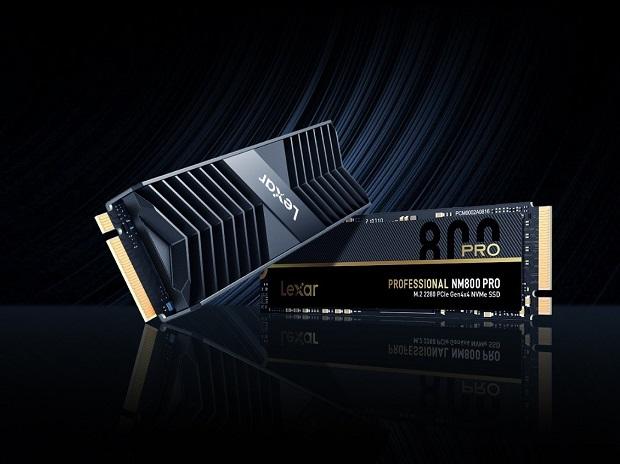
Lexar launches high-performance Professional NM800PRO Gen4 SSD in India

Lexar launches high-performance Professional NM800PRO Gen4 SSD in India


American flash brand Lexar on Friday launched in the Professional NM800PRO M.2 2280 PCIe Gen4 x4 NVMe SSD. Priced Rs 12,999 onwards, the SSD comes in base storage capacity at 512GB and goes up to 1TB. It will be available across all online and retail stores in .

“We are excited to bring the all-new Lexar Professional NM800PRO M.2 2280 PCIe Gen4 x4 NVMe SSD in India, the fastest speed in the NVME Heatsink from Lexar, which is designed for data-heavy applications such as gaming, design, and more. With its superior and brilliant performance, we believe the product will be an excellent choice for PC enthusiasts and professionals looking to upgrade their system.” said Gaurav Mathur, Director, Lexar Co. Limited.

Lexar Professional NM800PRO Gen4 SSD: Details

The Lexar Professional NM800Pro M.2 2280 NVMe SSD boasts speeds of up to 7500MB/s read and 6500MB/s write. It has an integrated heatsink and heat spreader to maintain speed, power efficiency, and thermal control for high performance while playing on 5 and PCs. This SSD leverages the 12nm controller for low power consumption and long battery life, making it a good fit for hardcore gamers, professionals, and creators.

Unlike the traditional hard disk drives, the Lexar Professional NM800PRO SSD has no moving parts and is also shock and vibration-resistant. The storage capacity starts from 512 GB and is available up to 2TB. The company claims that it’s built to last as the SSD is shock and vibration resistant. It is a robust and reliable SSD.


Source link

Apple supplier Foxconn plans to quadruple workforce at India plant: Sources

Apple supplier Foxconn plans to quadruple workforce at India plant: Sources


Apple supplier plans to quadruple the workforce at its iPhone factory in India over two years, two government officials with knowledge of the matter said, pointing to a production adjustment as it faces disruptions in China.


has grabbed headlines in recent weeks, with tight virus restrictions at its Zhengzhou plant, the world’s largest iPhone factory, disturbing production and fuelling concerns over the impact of China’s virus policy on global supply chains.


The disruptions prompted Apple to lower its forecast for shipments of the premium iPhone 14 models this week, dampening its sales outlook for the busy year-end holiday season.


Taiwan-based now plans to boost the workforce at its plant in southern India to 70,000 by adding 53,000 more workers over the next two years, said the sources, who declined to be named as the discussions are private.


While the size of the plant in India’s southern state of Tamil Nadu is dwarfed by Foxconn’s Zhengzhou plant, which employs 200,000 workers, it is central to Apple’s efforts to shift production away from China.


Foxconn, formally called Hon Hai Precision Industry Co Ltd, opened the India plant in 2019 and has been ramping up production. It began producing iPhone 14 this year.


Foxconn’s interest in expanding the facility is known, but the scale of the planned expansion and timelines have previously not been reported.


Both Foxconn and Apple declined to comment.


Foxconn Chairman Liu Young-way said on an earnings call on Thursday the company would adjust its production capacity and output so there was no impact from further potential disruptions on supplies for the Christmas and Lunar New Year holidays.


Foxconn has shared its plans with Tamil Nadu officials about accelerating its hiring efforts at the Indian plant due to disruptions in China, said the first government source.


Beyond iPhones, the plant also manufactures products for other global tech firms, but the new hiring push is mainly driven by its need to meet growing iPhone demand, the person added.


A person in Taiwan with knowledge of the matter said Foxconn was expanding its operations in India to increase its capacity for basic models and to meet Indian demand.


“We are gradually increasing our production scale there,” the person said, declining to give details on its hiring plans in India.


The second government source in India, a senior official in the Tamil Nadu administration, said the state government was working with Foxconn in “finalising” the expansion.


On Oct. 27, the state’s investment promotion arm tweeted that top government officials had travelled to Taiwan and met Liu. They had “elaborately discussed Foxconn’s plans for new ventures and investments” and offered the government’s support.


The state was having discussions with the suppliers to address issues such as housing facilities for workers as it looked to expand, the first government official said.


Last year, Foxconn’s Tamil Nadu plant was at the centre of a mass food-poisoning incident which sparked employee protests and threw light on the living conditions of the workers in hostels near the factory.


Officials at Tamil Nadu, a hub of electronic and automotive manufacturing, were also pushing Apple suppliers to branch out into manufacturing components for iPhones beyond just assembly, the two government sources added.


Currently, iPhones are assembled in India by at least three of Apple’s global suppliers: Foxconn and Pegatron in Tamil Nadu; and Wistron in nearby Karnataka state.


JP Morgan analysts estimated in September that Apple may make one out of four iPhones in India by 2025, and 25% of all Apple products, including Mac, iPad, Apple Watch and AirPods, will be manufactured outside China by 2025 from 5% currently.

(Only the headline and picture of this report may have been reworked by the Business Standard staff; the rest of the content is auto-generated from a syndicated feed.)


Source link

Twitter’s gray ‘official’ labels return for some prominent accounts

Twitter’s gray ‘official’ labels return for some prominent accounts


is once again adding gray official labels to some prominent accounts. The company, in its second chaotic week after billionaire took over, had rolled out the labels earlier this week, only to kill them a few hours later.


But on Thursday night they were back again, at least for some accounts including Twitter’s own, as well as big like Amazon, Nike and Coca-Cola.


Some media companies, such as The New York Times and The New Yorker also had the labels as of 9 pm Pacific time, while others, like The Wall Street Journal and The Los Angeles Times, did not.


Celebrities, some of whom have been impersonated this week since Musk began overhauling Twitter’s blue check verification system, also did not appear to be getting the official label.


began offering a subscription service this week that for USD 8 a month gets anyone who wants without actual verification the blue check mark that previously was given to prominent accounts to prevent impersonation.


Now, there are two categories of “blue checks”, and the check marks look identical. One, which includes the accounts that were actually verified before Musk took helm, now note that This account is verified because it’s notable in government, news, entertainment, or another designated category. The other notes that the account subscribes to Blue.


Earlier on Thursday, Musk tweeted that too many corrupt legacy Blue ‘verification’ checkmarks exist, so no choice but to remove legacy Blue in coming months.

(Only the headline and picture of this report may have been reworked by the Business Standard staff; the rest of the content is auto-generated from a syndicated feed.)


Source link

Apple iOS 16.2 Beta: How to enable Airtel 5G Plus, Jio True 5G on iPhones

Apple iOS 16.2 Beta: How to enable Airtel 5G Plus, Jio True 5G on iPhones


Apple on November 9 released the iOS 16.2 beta for developers. The software update enables 5G on supported iPhones with support for both standalone and non-standalone 5G networks. While the final version or commercial version of the iOS 16.2 is slated to roll out in December, enthusiasts can experience 5G by downloading and installing the Apple Beta software on iPhone. Below are the steps to enable Airtel 5G Plus and Jio True 5G on iPhones:


Steps to download and install the public beta software update


Step 1: From iOS device, go to beta.apple.com/profile to download the configuration profile


Step 2: After downloading the configuration profile, go to Settings – General – Software Update


Step 3: Tap on software update to check for update available in beta


Step 4: If the update is available, click on download


Note: It is recommended to back up data and files before installing the beta versions of iOS using Finder service.


Steps to activate 5G network on iPhone


Step 1: Go to Settings and click on Mobile Data


Step 2: Tap on Mobile Data Options, then tap on Voice & Data


Step 3: Inside Voice & Data, there are three options – 4G On, 5G On and 5G Auto


Step 4: Either select 5G On or 5G Auto to enjoy 5G service


Note: While the 5G On will lock you to the 5G network, Auto mode will let you dynamically switch between the 4G and 5G network based on availability.


Source link

Tweets with racial slurs on rise since Elon Musk’s Twitter takeover

Tweets with racial slurs on rise since Elon Musk’s Twitter takeover


Instances of racial slurs have soared on since purchased the influential platform, despite assurances from the platform that it had reduced hateful activity, a digital civil rights group reported on Thursday.


Researchers at the Centre for Countering Digital Hate found that the number of tweets containing one of several different racial slurs soared in the week after Musk bought .


A racial epithet used to attack Black people was found more than 26,000 times, three times the average for 2022. Use of a slur that targets trans people increased 53 per cent, while instances of an offensive term for homosexual men went up 39 per cent over the yearly average.


Examples of offensive terms used to target Jews and Hispanics also increased.


All told, the researchers looked at nearly 80,000 English-language tweets and retweets from around the world that contained one of the offensive terms they searched for.


The figures show that despite claims from Twitter’s Head of Trust and Safety, Yoel Roth, that the platform had succeeded in reducing the number of times hate speech was being seen on Twitter’s search and trending page, the actual volume of hateful tweets has spiked, according to the analysis from the centre, a nonprofit with offices in the US and United Kingdom.


Roth resigned on Thursday, joining the large number of employees who have either resigned from Twitter or been laid off since Musk took control.


A day before, Roth acknowledged the recent increase in hate speech on the site but said the platform had made significant progress in bringing the numbers down.


We’ve put a stop to the spike in hateful conduct, but that the level of hateful activity on the service is now about 95 per cent lower than it was before the acquisition, Roth said in remarks broadcast live on Twitter. Changes that we’ve made and the proactive enforcement that we carried out are making Twitter safer relative to where it was before.


An executive confirmed Roth’s resignation to coworkers on an internal messaging board seen by The Associated Press on Thursday.


On October 31, Twitter announced that 1,500 accounts had been removed for posting hate speech. The company also said it had greatly reduced the visibility of posts containing slurs, making them harder to find on the platform.


We have actually seen hateful speech at times this week decline below our prior norms, contrary to what you may read in the press, Musk tweeted last week.


Musk has described himself as a free speech absolutist, and he is widely expected to revamp Twitter’s content moderation policies.


While he said no changes have been made so far, Musk has made significant layoffs at the company, raising questions about its ability to police misinformation and hate speech before Tuesday’s midterm election.


It may take some time to accurately assess the platform’s performance in the election and to determine whether Twitter has adopted a different strategy for content that violates its policies, said Renee DiResta, research manager at the Stanford Internet Observatory.


The civic integrity policy was unchanged, DiResta said of Twitter under its new ownership. “Now, there is a difference between having a policy and enforcing a policy.


Shortly after Musk purchased Twitter, some users posted hate speech, seemingly to test the boundaries of the platform under its new owner.


Within just 12 hours of Musk’s purchase being finalised, references to a specific racist epithet used to demean Black people shot up by 500 per cent, according to an analysis conducted by the Network Contagion Research Institute, a Princeton, New Jersey-based firm that tracks disinformation.


Twitter did not immediately respond on Thursday to messages seeking comment on the findings of the new report.

(Only the headline and picture of this report may have been reworked by the Business Standard staff; the rest of the content is auto-generated from a syndicated feed.)


Source link

YouTube
Instagram
WhatsApp




