Delhi air quality turns ‘poor’ again; Rohini most polluted with AQI at 372

Delhi air quality turns ‘poor’ again; Rohini most polluted with AQI at 372


Delhi air quality today: Delhi’s air quality slipped back into the ‘poor’ category on Saturday, February 28, with several areas recording high pollution levels, according to data released by the Central Pollution Control Board (CPCB). Rohini reported the highest Air Quality Index (AQI) at 372, making it one of the most polluted locations in the national capital.

Residents woke up to a misty and unusually warm morning, as pollution levels once again became a concern across the city.

Several areas record high AQI


Add Zee News as a Preferred Source


As per CPCB data, many monitoring stations showed high figures. Anand Vihar recorded an AQI of 332, Dwarka Sector-8 303, Shadipur 311 and Wazirpur 297. Other areas such as Chandni Chowk (276), Bawana (244), Nehru Nagar (246), Patparganj (230) and IGI Airport (229) also reported ‘poor’ air quality levels.

Some stations, including DTU (193), IIT Delhi (190) and ITO (126), recorded relatively lower readings compared to the worst-affected areas.

This decline has come just a day after the city saw some improvement. On Friday morning, the overall AQI stood at 186, placing Delhi in the ‘moderate’ category. Out of 39 monitoring stations, 24 were in the ‘moderate’ range while 14 reported ‘poor’ levels at that time.

(Also Read: India’s leap in Air Defence: DRDO successfully conducts three successive flight trials of VSHORADS)

February most polluted

Despite occasional improvements, February has largely remained polluted. The capital recorded 20 ‘poor’ air quality days and two ‘very poor’ days this month.

An analysis by the Centre for Research on Energy and Clean Air (CREA) showed that Delhi has registered its poorest February air quality in three years. The average AQI reached 234 till February 26. In comparison, February’s average AQI was 218 in 2024 and 214 in 2025.

Warmer than usual months 

Along with pollution, the city also experienced warmer weather. The mean maximum temperature this month was 27 degrees Celsius, which is 2.8 degrees above normal. On Friday, the temperature touched 31.9 degrees Celsius, the warmest day of the season so far.


Source link

West Bengal final year medical college student found dead, family alleges foul play

West Bengal final year medical college student found dead, family alleges foul play


The family members of Pulak Haldar, a final-year student of Kalyani Jawaharlal Nehru Memorial Hospital and Medical College in West Bengal’s Nadia district, whose decomposed body was recovered from the hostel room, have claimed that he was murdered. 

The autopsy of the medical student’s body will be conducted on Friday, and only after that will the medical reasons behind the death be ascertained, said an investigating officer in the case.

According to Sudhanshu Haldar, the father of the deceased medical student, several injuries and cut marks were noticed on the body of his son, which created suspicions about the possible murder. “This is surely not a case of natural death. We demand an in-depth and fair investigation into the matter. I do not want the investigation into the death of my son to meet the same fate as the case of the gruesome rape and murder of a junior doctor of R.G. Kar Medical College and Hospital in Kolkata in 2024,” he added.


Add Zee News as a Preferred Source


Uttam Mondal, a relative of the family, said that Pulak was not just a meritorious and studious youth but also extremely well-behaved. “I, too, have noticed injury and cut marks on his face and belly. So, an assault on him before his death cannot be ruled out. I hope that there will be a fair and proper investigation into the matter,” Mondal said.

Preliminary investigation had revealed Pulak was last seen on February 20 when he went to the hostel canteen for a meal. Since then, he had not left the hostel premises and was not seen by fellow students or hostel authorities.

On Thursday (February 26), a foul smell was noticed emanating from his hostel room. When there was no response from inside, the door was broken open, and his decomposed body was discovered.

His family members have also informed the police that the last time they had a telephonic conversation with Pulak was on February 20, which is the day he went missing.

The family members have also claimed that in the past, Pulak had complained of facing bullying from other students during protests related to the RG Kar rape and murder incident. It was also alleged that he had academic difficulties, though these claims are yet to be officially confirmed.


Source link

Uttar Pradesh Govt to release February salaries and pensions early for Holi 2026

Uttar Pradesh Govt to release February salaries and pensions early for Holi 2026


The Yogi Adityanath government on Friday issued instructions for the disbursal of salaries and pensions for the month of February before Holi festival, bringing cheers and smiles on the faces of about 18 lakh staffers as well as pensioners. 

The decision will benefit scores of state government employees engaged in departments ranging from education to civic bodies to various ministries.

According to official instructions, the salary cycle has been revised in wake of consecutive holidays, pertaining to Holi, falling in the first week of the March.


Add Zee News as a Preferred Source


March 1 is Sunday, a weekly holiday while March 2 and 4 have been announced holidays for ‘Holika Dhahan’ and the festival of colours, respectively.

To avoid inconvenience and delay in salaries due to Holi, the Chief Minister Yogi Adityanath on Friday directed the concerned department to expedite the salary disbursal process.

To facilitate the smooth disbursal of salaries, Saturday i.e. February 28 has been turned into a working day.

“Ensure all employees’ salaries are paid before Holi. Ensure all employees, including outsourcing/contractual employees/sanitation workers, are paid before Holi,” says clear instructions from CM Yogi to the officials.

The department has also been directed that no negligence is allowed to creep in.

The salaries are likely to credited into accounts of employees and pensioners on February 28 only. Officials have been directed that the salaries and pensions are processed by the treasury department on time, without fail.

Uttar Pradesh has currently about 18 lakh government employees and 12 lakh pensioners, taking total figure to 28 lakhs.

The move is seen as a major administrative decision, to lift the festive spirit of government employees while ensuring that the larger message of public welfare is delivered.

Usually the salaries and remunerations for the current month are paid by the government in next month but this marks a new trend, signalling a new measure at bolstering public welfare.

Officials said that the decision was taken to ensure that employees have enough funds to meet their respective festive expenses and their festivities don’t get hampered by delayed payment.


Source link

ECI reviews poll preparedness for upcoming Tamil Nadu Assembly elections

ECI reviews poll preparedness for upcoming Tamil Nadu Assembly elections


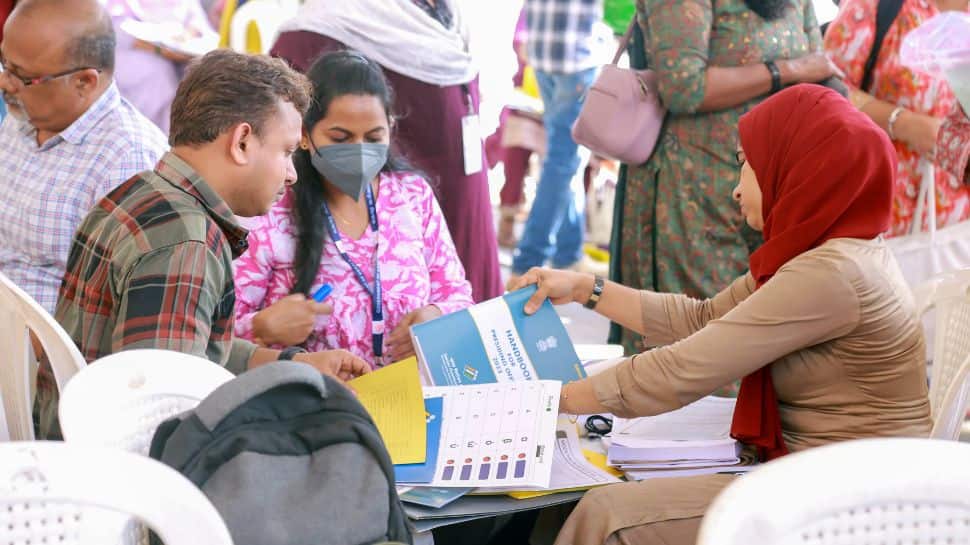
CHENNAI: The Election Commission of India (ECI) on Thursday conducted a detailed review of poll preparedness for the upcoming Tamil Nadu Legislative Assembly elections. Chief Election Commissioner Gyanesh Kumar, along with Election Commissioners Sukhbir Singh Sandhu and Vivek Joshi, led the comprehensive assessment in Chennai.


As per the ECI statement, during the review visit, the Commission interacted with the representatives of recognised national and state political parties, including the Aam Aadmi Party (AAP), Bahujan Samaj Party (BSP), Bharatiya Janata Party (BJP), Communist Party of India (Marxist), Indian National Congress (INC), and the National People’s Party (NPP), All India Anna Dravida Munnetra Kazhagam (AIADMK), Dravida Munnetra Kazhagam (DMK), Desiya Murpokku Dravida Kazhagam (DMDK), Naam Tamizhar Katchi (NTK), and Viduthalai Chiruthaigal Katchi (VCK) and sought their suggestions.


Most of the political parties appreciated the Election Commission for the peaceful and smooth conduct of the Special Intensive Revision of the Electoral Rolls in Tamil Nadu. Political parties urged the Commission to take stringent measures to curb the use of money power and distribution of freebies during elections. Some political parties asked for an increase in the number of flying squads to curb malpractices during elections, said the ECI.


Some of the political parties urged the Commission to keep in mind the upcoming festivals while finalising the dates of elections. Assuring the political parties that their suggestions will be considered, CEC Gyanesh Kumar assured all the political parties that elections are always held as per law in a free, fair and transparent manner.


Following the interaction with the Political Parties, the Commission held a detailed review with the Heads and Nodal Officers of Enforcement Agencies, IGs, DIGs, DEOs, SPs on every aspect of election planning, EVM management, logistics, training of election staff, seizures, law and order, voter awareness and outreach activities.


As per the statement, the Commission directed all Heads and Nodal Officers of Enforcement Agencies to act with complete impartiality and firmly clamp down on all inducement-related activities.


The Commission also directed all DEOs and SPs to prioritise voters’ comfort and accessibility at polling stations, and impart robust training to officials and ensure wide awareness about electoral processes.

The Commission also directed the officers to ensure absolute impartiality and act without fear or favour and underscored that there will be zero tolerance towards any deviation from the laws, rules and related elections with respect to the conduct of elections.


Add Zee News as a Preferred Source


Source link

From chalkboards to smart classrooms: Bhagwant Mann govt’s Sikhya Kranti scripts historic digital revolution in Punjab

From chalkboards to smart classrooms: Bhagwant Mann govt’s Sikhya Kranti scripts historic digital revolution in Punjab


CHANDIGARH: In one of the largest technological overhauls in Punjab’s educational history, Punjab Education Minister Harjot Singh Bains on Thursday announced a massive Rs 400 crore digitalisation project under the Punjab Sikhya Kranti, stating that the Bhagwant Mann Government has initiated an unprecedented transformation that will equip government schools with state-of-the-art technology and fundamentally redefine classroom teaching across Punjab.

Chief Minister Bhagwant Singh Mann termed the initiative a transformational milestone in Punjab’s education journey and said, “This is a historic intervention. Never before in the history of Punjab’s government schools has digital infrastructure been rolled out at such scale. Under Punjab Sikhya Kranti, we first strengthened classrooms and improved learning outcomes. Now we are ensuring that every child has access to modern digital tools. Our students must be prepared not just for today, but for the future.”

Addressing a press conference at Punjab Bhawan, Education Minister Harjot Singh Bains said that the ambitious initiative will replace outdated hardware and phase out obsolete computer systems while ensuring that all government Senior Secondary Schools, High Schools and Middle Schools are equipped with the latest digital infrastructure.


Add Zee News as a Preferred Source


Sharing details of the historic intervention, Minister Harjot Singh Bains said, “As many as 38,649 brand-new desktop computers equipped with the latest software are being deployed across 5,012 government schools. These will be distributed to all Senior Secondary and High Schools, as well as 50 percent of Middle Schools, ensuring that students have access to the latest hardware and technology.”

He further informed that dedicated computer labs will be established in 5,000 government schools, ensuring that all Secondary and Senior Secondary government schools have fully functional computer labs. “To foster interactive learning, we are installing 8,268 Interactive Flat Panels in 3,694 schools. Every Senior Secondary and High School will receive these panels, with larger schools receiving four, five or even eight units based on student strength. This massive infusion of technology ensures that digital literacy and smart learning are no longer the privileges of private institutions but the fundamental right of every student in Punjab’s public school system,” he said.

Describing the move as a decisive shift from traditional chalkboards to technology-driven smart classrooms, the Education Minister noted, “The move would phase out obsolete computer systems. For too long, our students were working on computers so outdated that they barely functioned, still running on old versions of Microsoft Paint. We are changing it permanently.”

He emphasised that implementation has already begun and is not a future promise. “This is not just an announcement for tomorrow; deliveries have already begun in schools today. By the 20th of March, every school in every district of Punjab will receive their new equipment,” he said.

Minister Harjot Singh Bains reiterated that the mass-scale rollout marks a structural shift in pedagogy and said, “This mass scale rollout of Interactive Flat Panels and computers is a game changer. It will fundamentally change how lessons are delivered, understood and experienced. Punjab Sikhya Kranti is about systemic reform, and digital classrooms are a crucial pillar of that transformation.”

The Education Minister further informed that School Heads have been directed to organise School Level Unboxing Celebration Programmes between 21st February and 20th March by inviting parents, School Management Committees, village panchayats, retired teachers and ex-servicemen to witness the inauguration of this new digital era. “We want the community to see the change in the government education system. Often, people look at government schools from the outside and do not realise the transformation inside. Let the parents see that their children are learning with the latest technology, perhaps even better than private schools in the area. This will build confidence in our public education system,” he said.

Responding to a media query regarding TET qualifications, Harjot Singh Bains said, “I want to assure every teacher. Your jobs are secure. No one will lose their job.” He said he understands the anxiety among experienced teachers who have been serving for 20 to 25 years and assured that legal solutions are being explored. He added that he remains in constant touch with teacher unions and is exploring every legal avenue, reiterating that the Chief Minister Bhagwant Singh Mann-led Punjab Government stands firmly with its teachers.

The initiative is being implemented with strict monitoring, safe installation protocols and transparent utilisation of public resources, ensuring that the digital transformation is delivered effectively on the ground.

With Punjab Sikhya Kranti steadily transitioning government schools from traditional classrooms to smart, technology-enabled learning spaces, the Bhagwant Mann Government has positioned Punjab’s students at the forefront of digital preparedness, ensuring that they are equipped with the competencies essential for higher education, employment and leadership in a rapidly evolving world.


Source link

Sunetra Pawar takes charge as NCP national president

Sunetra Pawar takes charge as NCP national president


In a significant political transition, Sunetra Pawar was officially elected as the National President of the Nationalist Congress Party (NCP) at the party’s national executive meeting.

Party Working President Praful Patel proposed Sunetra Pawar’s name and announced her unanimous election as National President. Maharashtra unit President Sunil Tatkare seconded her name and hailed her elevation to the post.

Members of the national executive raised their hands to express their faith and confidence in Sunetra Pawar’s leadership.


Add Zee News as a Preferred Source


Both Patel and Tatkare paid tribute to former NCP National President and former Maharashtra Deputy Chief Minister Ajit Pawar, who died in a plane crash in Baramati on January 28, 2026.

She succeeds her late husband, Ajit Pawar, who held the position until his tragic passing in the plane crash. Sunetra Pawar assumed office on February 26 following a unanimous decision by party MLAs and senior leaders.

She was sworn in as Deputy Chief Minister on January 31, becoming the first woman to hold the office in the state’s history. Before her swearing-in, she was unanimously elected leader of the NCP Legislative Party following the sudden leadership vacuum in the party.

In addition to her party leadership responsibilities, Sunetra Pawar serves in the Maharashtra Cabinet under Chief Minister Devendra Fadnavis, holding key portfolios including State Excise, Sports and Youth Welfare, and Minority Development and Waqf.

This rapid political ascent marks a major shift for Sunetra Pawar, who transitioned from a Rajya Sabha MP to the highest levels of state and party leadership within a matter of weeks, reflecting the party’s confidence in her leadership abilities.

The ascent of Sunetra Pawar to the National Presidency of the NCP marks a dramatic shift from a largely behind-the-scenes role to the centre of active political leadership.

For decades, Sunetra Pawar was primarily known as a stabilising force behind Ajit Pawar. While he handled the high-intensity world of Maharashtra politics, she focused on social work in Baramati, managing the Vidya Pratishthan educational institutions and supporting environmental initiatives such as the Environmental Forum of India.

She was regarded as a quiet but influential presence, deeply connected to grassroots workers but rarely serving as the public face of the party.

That changed in mid-2024 when she entered active electoral politics by contesting the Baramati Lok Sabha seat. Though she initially faced a setback there, she was later elected to the Rajya Sabha, signalling the party’s intent to elevate her role within the organisation and the national political framework.


Source link

YouTube
Instagram
WhatsApp