How Abhishek Singhvi Tore Into Probe Agency Over Arvind Kejriwal's Arrest

How Abhishek Singhvi Tore Into Probe Agency Over Arvind Kejriwal's Arrest


Arvind Kejriwal was arrested by ED last week in Delhi liquor policy case

New Delhi:

Appearing in Delhi High Court for Chief Minister Arvind Kejriwal, Senior Advocate Abhishek Singhvi today tore into the Enforcement Directorate’s case in the liquor policy case, in which three top leaders of the Aam Aadmi Party (AAP) are currently in jail.

Here’s a rundown of arguments and counter arguments

On Timing Of Arrest: A sitting Chief Minister, Mr Singhvi said, is arrested on the cusp of election. “The heart of democracy is a level-playing field. It means free and fair elections. If you do anything to make the level-playing field uneven, then you are impinging on basic structure. This arrest on the cusp of election is intended to disable the person from campaigning and give a body blow to the party, and third, you end up scoring some points before even the first vote is cast,” he said, adding, “Of course, Chief Ministers can be arrested, but the question is timing.”

On ED’s petition for 3 weeks’ time: Mr Singhvi said the request is completely mala fide. “Even one day incarceration is an issue of fundamental right. What reply can ED file? It can’t be different from grounds of arrest.”

On Prevention Of Money Laundering Act: Mr Singhvi said there are three phrases in Section 19: “material in possession”, “reasons to believe” and “guilty”. “These are vital conditions for arrest. Prior to any arrest, these conditions must be satisfied on the files and on the papers. This threshold has been put deliberately high because of the corresponding provisions under Section 45 of PMLA, which puts the threshold for bail very high. So, there is counterbalancing,” he said.

These phrases, he said, go towards the basic point of clear demonstration of the necessity to arrest. “You have the power to arrest, but it must be conditioned and satisfied by the high conditions under Section 19,” he said. “The question is what was the necessity to arrest me today.”

On ED’s No-Cooperation Point: “They say I have not cooperated. Non-cooperation is one of the most abused phrases since the ED has become active,” Mr Singhvi said. “Can you say I will arrest you because I am exercising my right against self-incrimination? This will hit Articles 20 and 21 of the Constitution on the head. Suppose I say I don’t know or that I have very poor memory. Which law says I am arresting you because you are not incriminating yourself”

ED’s custodial interrogation plea, he said, was based on non-cooperation. “They say he is to be interrogated with regard to his role. I say, if you want to investigate me for my role two months before the election, is it not directly against the necessity to arrest?”

On Statements And Co-Accused: Mr Singhvi said the ED is following a step-by-step process. “I record the statement. There is nothing against me in that step. Frequently there are few more statements recorded. In (the case of) Sanjay Singh, nine statements were recorded and there was nothing against me.”

“The next step is to arrest the person. He suffers in jail and is then made to apply for bail. Next step, the ASG tells the court I have no opposition to bail. The reason cited is he has back pain. The next step is that he comes out and makes a statement against me. Next he turns approver and is granted pardon,” Mr Singhvi said.

“This has happened in every case in the liquor policy case. It is blowing to smithereens the constitutional safeguards,” he said, adding that these statements are no corroborated.

On Approvers: Mr Singhvi said it is easy to extract statements out of co-accused. “He is concerned about himself, that’s why little weight should be given to statements of co-accused,” he said.

“This species called approver. In our history, whether for good motives or bad motives, the courts have dealt with phrases like Jaichand and Trojan Horses. The history looks very harshly at these Jaichands and Trojan horses. They gave daga (betrayal).” The reference was to Jaichand, a king in the 12th century. According to Prithviraj Raso, Jaichand refused to help Prithviraj Chauhan and joined forces with the invading king Muhammad of Ghori. The Prithviraj Raso is disputed by historians, but the name Jaichand has become synonymous with the word “traitor”.

An approver, Mr Singhvi said, is the “most untrustworthy friend”.

Stressing that “there is absolutely no reason to ask for time”. “This is a matter where democracy itself is involved. Basic structure is involved. Level playing field is involved. A day is too long if arrest is illegal. Day by day, ED is achieving its objective by seeking time,” he said.

What the Centre Said

Appearing for the ED, Additional Solicitor General SV Raju sought three weeks’ time to file a reply in the main matter and also said he wanted to reply to Mr Kejriwal’s petition for interim relief.

He also objected to multiple lawyers appearing for Mr Kejriwal. “Even ED will request that five people be heard for ED. You want a level-playing field, I am saying, let there be a level-playing field here as well.”

In important matters such as this, he said, “people often play to the gallery, so the break has to be out”.

When the court said that it will issue a notice in the main matter, Mr Raju replied, “On interim relief also, I have the right to file a reply. If I am not entitled to file a reply, then there is no need to hear me. I can’t be deprived of my right to file a reply.”

He also said he got a copy of Mr Kejriwal’s petition only yesterday.

Appearing for the AAP leader, Advocate Shadan Farasat said the petition was moved on Saturday. “We cleared the objections and then shared the plea with the ED. We served them and they had enough time. A Delay very severely prejudices us in this case,” he said.

To this, Mr Raju replied, “We wrote emails to them asking for a copy on March 25 and 26. They deliberately did not supply the petition to us. They could have supplied the copy to us with objections. The reason they did not supply is because they did not want us to prepare,” he said.

The court has said it will upload its order by 4 pm today. 


Source link

CSK vs GT Live Score, IPL 2024: CSK In Control, 5-Down GT’s Asking Rate Mount | Cricket News

CSK vs GT Live Score, IPL 2024: CSK In Control, 5-Down GT’s Asking Rate Mount | Cricket News


Chennai Super Kings vs Gujarat Titans Live Updates, IPL 2024© BCCI

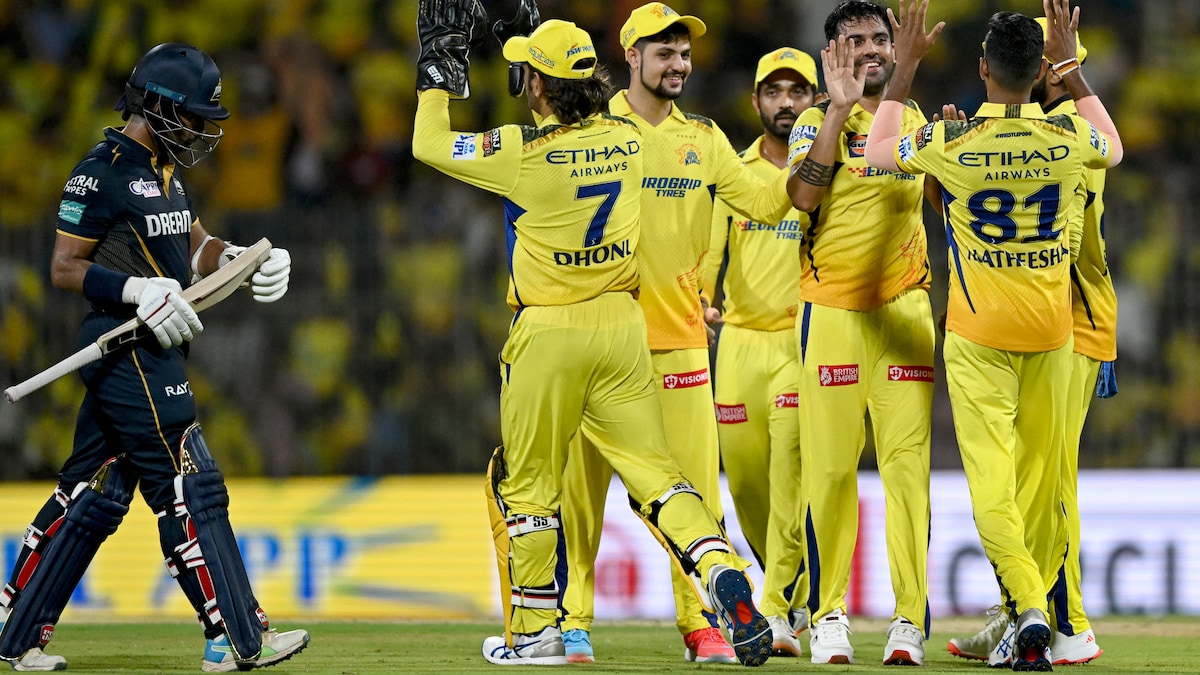
CSK vs GT Live Score, IPL 2024:GT have lost five wickets in a 207-run chase. Shivam Dube scored a fast and furious 50 as Chennai Super Kings et a 207-run target for Gujarat Titans. Rachin Ravindra and Ruturaj Gaikwad fell short of the half-century mark by narrow margins. For GT, Rashid Khan took two wickets. CSK are coming to this clash after registering a six-wicket victory over Royal Challengers Bengaluru in their opening match. On the other hand, GT defeated Mumbai Indians by six runs in their previous match. (Live Scorecard)

Topics mentioned in this article


Source link

RCB vs PBKS Highlights, IPL 2024: Dinesh Karthik’s Late Burst Complements Kohli’s Classy 50 As RCB Beat PBKS | Cricket News

RCB vs PBKS Highlights, IPL 2024: Dinesh Karthik’s Late Burst Complements Kohli’s Classy 50 As RCB Beat PBKS | Cricket News


IPL 2024, RCB vs PBKS: Virat Kohli starred for RCB.© Twitter

RCB vs PBKS, IPL 2024, Highlights: Harpreet Brar’s incisive bowling came to naught as Virat Kohli’s splendid half-century and Dinesh Karthik’s power-hitting at the back end helped Royal Challengers Bengaluru defeat Punjab Kings by four wickets in an Indian Premier League match here on Monday. Chasing 177 for victory, RCB, thanks to Kohli’s 77 (49 balls) and Karthik’s unbeaten 28 (10 balls), won the match with four balls to spare. (Scorecard)

Highlights of IPL 2024 Match Between Punjab Kings and Royal Challengers Bengaluru, straight from Bengaluru

Topics mentioned in this article


Source link

Opinion:  PM Modi's Big Bet On Elon Musk In India Might Just Work

Opinion: PM Modi's Big Bet On Elon Musk In India Might Just Work


Elon Musk’s long courtship of Indian officialdom may have finally paid off. Prime Minister Narendra Modi wanted him to open one of his Tesla “gigafactories” in the country, as part of its efforts to expand its long-moribund manufacturing sector; Musk, meanwhile, wanted India to address tariffs on electric vehicle imports that rendered foreign-made Teslas uncompetitive.

On March 15, the government announced a new scheme to promote investment in EVs. Any company willing to invest $500 million in a new manufacturing facility that begins production in three years (and with at least a quarter of its components added locally, to begin with) will also be allowed to import 8,000 high-end vehicles a year at a lower tariff of 15%. It’s generally assumed that this quid pro quo will be enough to get Musk – and, hopefully, one or two other companies, like Vietnam’s Vinfast Auto Ltd. – to bite. Certainly, the EV producers that currently dominate the Indian market are already bracing for competition.

On the one hand, this looks like business as usual. Officials have made a habit of using the supposed potential of the domestic market as an inducement for foreign investors. The stick of high tariffs together with the carrot of possible consumer demand growth should be enough to lure in people like Musk, they think.

That said, there’s a deeper story to be told here. Size matters: The Indian government is a big believer in the transformative potential of a single large investor. Officials expended enormous amounts of energy wooing Apple Inc. They were ultimately successful, and now think an entire mobile phone manufacturing ecosystem will grow up around Foxconn Technology Co.’s factories in south India. For the past few years, they’ve been working to convince Taiwan Semiconductor Manufacturing Co. to do the same. It’s an anchor investor strategy: Get a whale like Musk in, and the minnows will follow. If Apple and Tesla are both putting hundreds of millions into backing the India story, it is something of a statement about the country’s business environment, right?

This isn’t the first time governments have tried this, of course. China famously waived its domestic ownership requirements to get Tesla to open a gigafactory in Shanghai. That seems to have paid off: Tesla says that over 95% of the parts that factory uses come from local suppliers. And Musk’s claim that he couldn’t invest big in a country that didn’t allow him to get enough cars on the ground first did have a certain logic. Importing vehicles to begin with allows you to start creating a charging infrastructure, for example. That in turn grows the domestic market enough to justify the investment you make in local production.

There’s a lot more that India could do to help this trend along. For example, EV makers who take up this offer should be encouraged to invest in interoperable charging. Land is scarce, and finding space for multiple different kinds of EV charging stations would otherwise be a nightmare.

Tesla does have an advantage when it comes to making deals like this: Its business model stresses vertical integration. That’s why its factories are giga-sized, after all. It’s easier for them to make promises about localization since they have greater control over their supply chains than their competitors do.

How will local companies deal with new entrants into India’s EV market? The optimistic take here is that companies like Tata Motors Ltd., if they’re worried about competition from the Teslas of the world now that tariffs have come down, should argue more strenuously for lower trade barriers all round. That’s the only thing that would keep them competitive, given their more expansive supply chains. The automobile sector needs to become the loudest voice in favor of trade deals like the ones the country is currently negotiating with the UK and the European Union. Manufacturing will only take off when the business climate really improves – when tariffs are low and stable, and regulators are as welcoming to smaller companies as they are to whales.

India’s big bet on big companies may pay off. This is clearly where its industrial policy is going now: relying on trusted foreign partners to transform entire sectors. But, you ask, can you trust Tesla with a task of this magnitude? Or, in particular, Elon Musk, given his history of missed deadlines and impulsive business decisions? The government may have bet on Tesla, but it’s not taking any chances, either. Any company choosing to take India’s deal will also have to put up a bank guarantee in case it fails to follow through on its promises of investment and local sourcing. Trust, but verify bank details first.

(Mihir Swarup Sharma is a fellow at the Observer Research Foundation.)

Disclaimer: These are the personal opinions of the author.

(Except for the headline, this story has not been edited by NDTV staff and is published from a syndicated feed.)


Source link

GT vs MI LIVE Updates, IPL 2024: Jasprit Bumrah Strikes Twice In One Over, 5-Down GT Lose Plot | Cricket News

GT vs MI LIVE Updates, IPL 2024: Jasprit Bumrah Strikes Twice In One Over, 5-Down GT Lose Plot | Cricket News


IPL 2024 Live: Here’s a look at squads –

Mumbai Indians: Hardik Pandya (c), Rohit Sharma, Dewald Brevis, Jasprit Bumrah, Piyush Chawla, Gerald Coetzee, Tim David, Shreyas Gopal, Ishan Kishan, Anshul Kamboj, Kumar Kartikeya, Akash Madhwal, Kwena Maphaka, Mohammad Nabi, Shams Mulani, Naman Dhir, Shivalik Sharma, Romario Shepherd, Arjun Tendulkar, Nuwan Thushara, Tilak Varma, Vishnu Vinod, Nehal Wadhera, Luke Wood, Suryakumar Yadav.

Gujarat Titans: Shubman Gill (c), Azmatullah Omarzai, Spencer Johnson, Kartik Tyagi, Josh Little, Abhinav Manohar, David Miller, Sushant Mishra, Darshan Nalkande, Noor Ahmad, Rashid Khan, Wriddhiman Saha, Sai Kishore, Sai Sudharsan, M Shahrukh Khan, Vijay Shankar, BR Sharath, Mohit Sharma, Manav Suthar, Rahul Tewatia, Matthew Wade, Kane Williamson, Jayant Yadav, Umesh Yadav.


Source link

Digvijaya Singh, Karti Chidambaram In Congress' Latest List For Lok Sabha Polls

Digvijaya Singh, Karti Chidambaram In Congress' Latest List For Lok Sabha Polls


The names of 45 candidates have been released.

New Delhi:

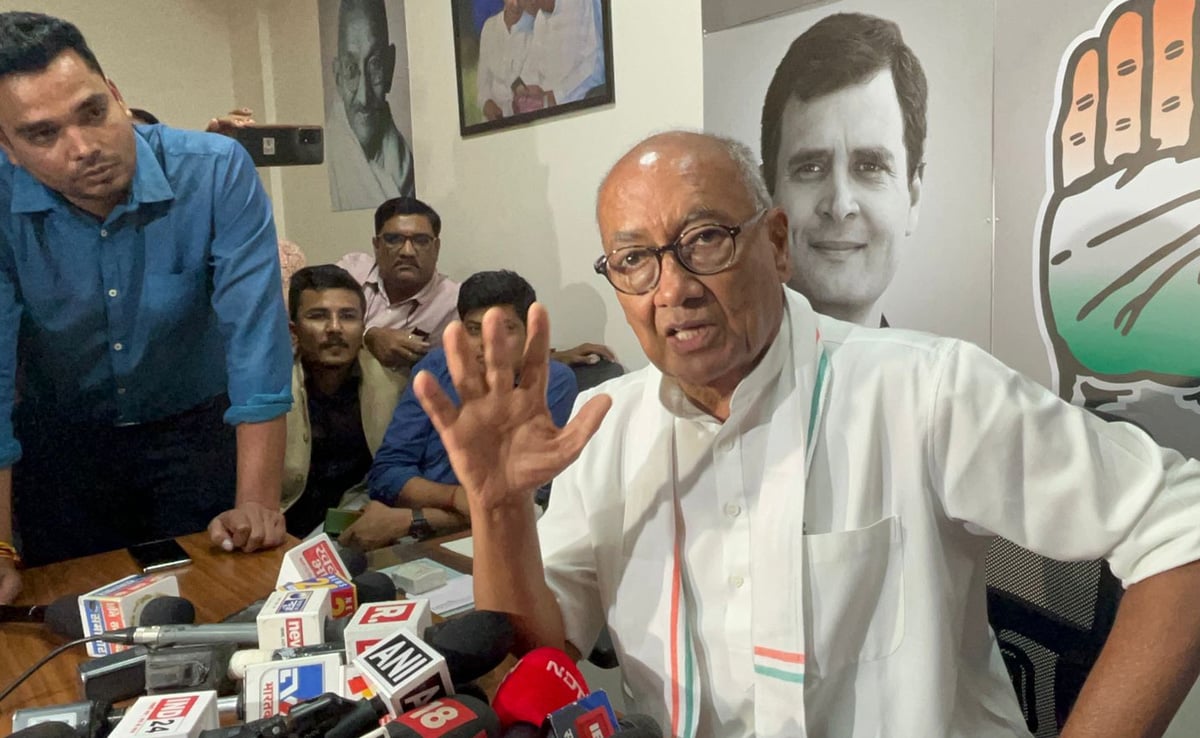
With less than a month to go for the first phase of the Lok Sabha elections, the Congress released its fourth list of 45 candidates on Saturday. Some of the big names on the list are former Madhya Pradesh chief minister Digvijaya Singh, Karti Chidambaram and Danish Ali, who joined the party on Wednesday, but it is also notable for its omissions.

Congress’ Uttar Pradesh President Ajay Rai will contest against Prime Minister Narendra Modi from Varanasi for the third straight time. Despite naming candidates from Uttar Pradesh for the first time, however, the party has kept the suspense going on the all-important Amethi and Rae Bareli seats. 

The two constituencies have been Congress bastions, barring Rahul Gandhi’s shock defeat to BJP’s Smriti Irani from Amethi in 2019. While Mr Gandhi is likely to contest from Amethi again, in addition to Kerala’s Wayanad, all eyes are on the Rae Bareli seat, from where his sister and Congress General Secretary Priyanka Gandhi Vadra is expected to make her political debut. 

The seat was vacated by former Congress president Sonia Gandhi, who has won it five straight times. Mrs Gandhi is now a member of the Rajya Sabha. As part of its seat-sharing arrangement with the Samajwadi Party in Uttar Pradesh, the Congress is contesting 17 out of 80 seats and has now named candidates for nine. 

Digvijaya Singh, a Rajya Sabha MP, has been fielded from his former Lok Sabha constituency of Rajgarh in Madhya Pradesh. Mr Singh had last won a general election from the same constituency in 1991 and his comeback attempt is expected to be an uphill battle as the Congress had won only one of the state’s 29 seats in 2019. The senior leader had fought against Pragya Thakur of the BJP from Bhopal that year, and lost by a margin of over 3.5 lakh votes.

Karti Chidambaram has been nominated from the Sivaganga constituency in Tamil Nadu, which he had won in 2019 and lost in 2014. The seat has been a stronghold of the Chidambaram family and Karti’s father and senior Congress leader P Chidambaram held it – barring one term – since 1984.   

Former BSP leader Danish Ali, who represented the Mayawati-led party in the Lok Sabha from Amroha, has been nominated from the same seat by the Congress. The nomination has come just three days after he joined the party. Mr Ali, who was the target of alleged communal slurs in Parliament from BJP MP Ramesh Bidhuri in September last year, was suspended by the BSP in December after he spoke in support of Trinamool Congress leader Mahua Moitra. 

Some of the other notable names on the list are former Union minister Kantilal Bhuria, who will contest from Ratlam in Madhya Pradesh; Virender Rawat – son of former Uttarakhand chief minister Harish Rawat – from Haridwar; and Manickam Tagore from Virudhunagar in Tamil Nadu. 

While the Congress has released a list of 46 constituencies, it has named candidates only on 45. The fourth list now takes the total number of candidates announced by the party to 183.


Source link

YouTube
Instagram
WhatsApp