Kerala SIR: Final electoral roll of 2.69 crore voters published

Kerala SIR: Final electoral roll of 2.69 crore voters published


Kerala SIR: The final electoral roll for Kerala has been published on Saturday evening, following the completion of the Special Intensive Revision (SIR), with the total voter strength standing at 2,69,53,644. 

In the first phase of the SIR exercise, 2.78 crore forms were distributed across the State.

After detailed scrutiny, hearings, and corrections across all 140 Assembly constituencies, the rolls were finalised.


Add Zee News as a Preferred Source


According to the Chief Electoral Officer’s office, 9,06,211 names were removed from the voters’ list during the revision process.

Of these, 53,229 names were deleted after statutory hearings, including those of persons who died during the enumeration period, individuals who acquired foreign citizenship, voters who shifted residence, and cases where duplication was detected.

At the same time, 4,24,518 new voters were added to the final roll.

Between October 27 last year and January 30, 2026, the Election Commission accepted 13,51,151 new applications (Form 6) for inclusion. Additionally, 1,59,111 applications (Form 6A) from expatriates seeking registration as overseas voters were approved.

During the revision period, 24,28,639 applications were processed for inclusion or deletion, while 3,93,333 applications were accepted for corrections to existing entries.

The Commission also served 36,88,948 notices for hearings following the publication of the draft roll.

As per the final figures, the electoral roll comprises 1,38,27,319 women and 1,31,26,048 men.

The number of transgender voters stands at 277, while 2,23,558 Non-Resident (overseas) voters are included.

The Election Commission has clarified that there is still an opportunity to enrol.

Names can be added until the last date for filing nominations for the upcoming Assembly elections.

Voters can verify their details through the Election Commission’s online portal using their voter ID number, name, relative’s name, date of birth or mobile number.

The booth-level final electoral roll under SIR 2026 is also available on the Chief Electoral Officer’s official website.

With the final roll now in place, preparations are set to intensify ahead of the Assembly polls, which are expected to be announced shortly.


Source link

US Vedic scholar David Frawley meets Uttar Pradesh CM Yogi Adityanath; discusses Yoga, Ayurveda

US Vedic scholar David Frawley meets Uttar Pradesh CM Yogi Adityanath; discusses Yoga, Ayurveda


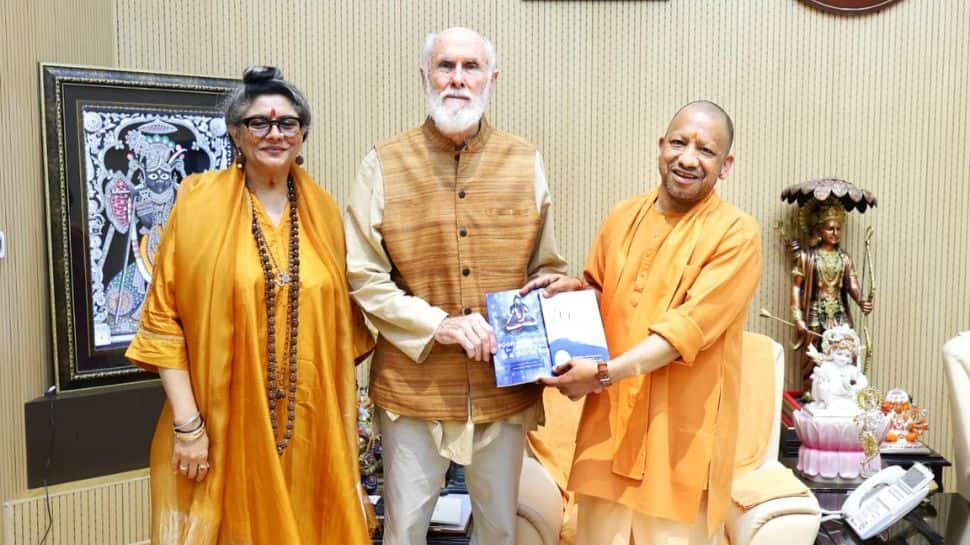
Renowned Vedic scholar Dr. David Frawley met Uttar Pradesh Chief Minister Yogi Adityanath at his official residence on Friday. 

Though it was a courtesy meet, the renowned Vedic scholar sought to impress upon the Chief Minister about various advantages and merits of Yoga and Ayurveda, in pursuance of a happy and healthy life.

The Chief Minister’s office (CMO) shared a picture of the meeting, in which the duo discussed and deliberated on various aspects of Yoga, Ayurveda, and Sanatan culture.


Add Zee News as a Preferred Source


“Renowned American Vedic scholar David Frawley met Chief Minister Yogi Adityanath in Lucknow and had a detailed discussion on Yoga, Ayurveda and Sanatan culture,” the CMO said in a post on X.

Dr Frawley, an American citizen, is a recipient of Padma Bhushan, India’s third highest civilian honour, for his wide-ranging contributions and commendable work in the field Yoga, Ayurveda and Astrology.

Frawley, born in the US state of Wisconsin, is also a National Eminence Award winner and has written several books on Vedas, Yoga, Ayurveda and Astrology.

He described Yogi’s leadership as a boon for the world and stated that the Chief Minister was “purifying” politics and paving a new path for global welfare through the Nath tradition.

The US vedic scholar described the rejuvenation of Ayodhya and the darshan of Lord Ram as a symbol of spiritual renaissance.

“Today, the world is gradually losing its spiritual consciousness. In such a situation, innovation and revitalisation of the Vedas, Yoga, Ayurveda, and other Indian traditions are extremely necessary in the current environment. At such a time, leadership like Yogi Ji’s is a blessing not only for India but for the entire world,” he stated.

Dr. Frawley further said that Yogi Adityanath possesses brilliance because he is ‘Aditya’, which means, connected to the Sun element.

In 2015, the government honored Dr. David Frawley with Padma Bhushan. In the same year, the South Indian Education Society in Mumbai honoured him with the ‘National Eminence Award’, in recognition of his remarkable contribution in the field of Ayurveda, Yoga and Vedic Astrology.


Source link

New Delhi Marathon 2026: Delhi Metro to start services at 3:30 AM on February 22

New Delhi Marathon 2026: Delhi Metro to start services at 3:30 AM on February 22


The Delhi Metro Rail Corporation (DMRC) will begin train operations at 3:30 AM on Sunday, February 22, to assist people participating in the New Delhi Marathon 2026. Three major lines, Yellow, Blue, and Violet, will see an early start.

Delhi Metro in a post on X informed, ” To facilitate participants of the New Delhi Marathon 2026 on Sunday, 22nd February 2026, Delhi Metro train services will begin early from the terminal stations at 03:30 AM and continue to operate till 06:00 AM at 30-minute intervals, followed by the regular Sunday timetable on the following lines: Yellow Line: Samaypur Badli – Millennium City Centre Gurugram, Blue Line: Dwarka Sec-21 – Noida Electronic City / Vaishali, Violet Line: Kashmere Gate – Raja Nahar Singh Metro services on all other lines will operate as per the regular Sunday timetable.”

The New Delhi Marathon is an annual running event with a full marathon distance, also termed as the National Championship, presented by NEB Sports. An opportunity to run alongside the best in the nation, NDM witnesses some fantastic performances every year. Some of these performances qualify to represent the country.


Add Zee News as a Preferred Source


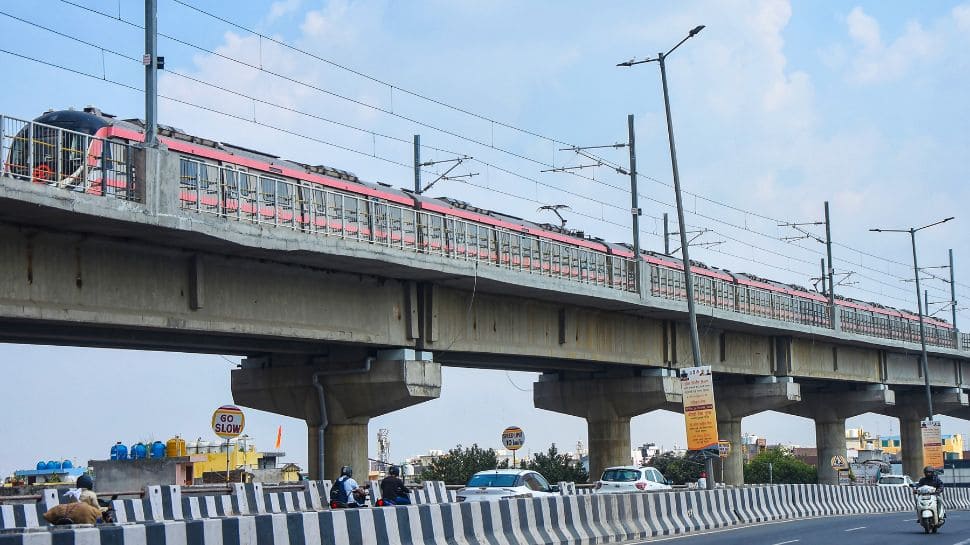
Meanwhile, the Delhi government has taken a major step towards strengthening and modernising the capital’s public transport system. The Cabinet, chaired by the Chief Minister Rekha Gupta, approved Metro Phase V(A).

Delhi CM informed that this ambitious project will develop three new corridors totalling 16 kilometres in length, including 13 metro stations. The estimated cost of the entire project is Rs 12,014.91 crore, with the Delhi Government’s budgetary share being Rs 2,940.46 crore. The project is targeted for completion in 2028, according to a release from the Delhi CMO.

The Chief Minister thanked Prime Minister Narendra Modi for his support and said the project is a significant step toward implementing his “7-C Vision” for transportation — Common, Connected, Convenient, Congestion-free, Charged, Clean, and Cutting-edge mobility. She emphasised that strengthening public transport is essential for achieving environmental protection and net-zero emission goals.


Source link

Delhi LG Vinai Saxena, CM Rekha Gupta inaugurate 25 new Atal Canteens

Delhi LG Vinai Saxena, CM Rekha Gupta inaugurate 25 new Atal Canteens


Delhi Lieutenant Governor Vinai Kumar Saxena, and the Chief Minister Rekha Gupta inaugurated 25 new Atal Canteens in the national capital on Thursday. The canteens were launched digitally from Nursery Basti in Krishna Nagar. With this addition, the total number of Atal Canteens in Delhi has increased to 71.

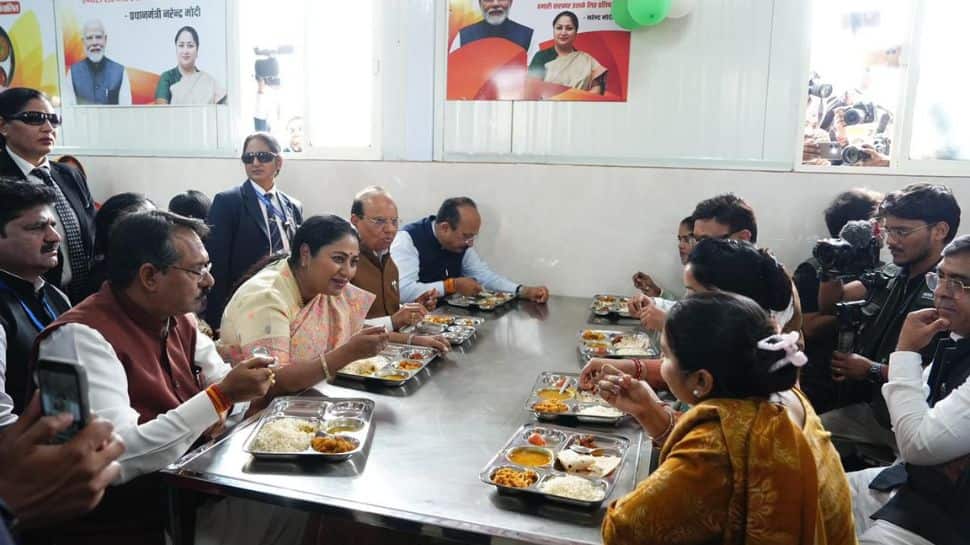
Following the inauguration, Lieutenant Governor Saxena, Chief Minister Gupta, and other dignitaries sat with members of the public and partook of a meal at the canteen.

Addressing the gathering, Lieutenant Governor Saxena said that the launch of 25 new Atal Canteens marks an important milestone for Delhi. With 71 canteens now operational across various parts of the city, people are receiving clean and nutritious meals at affordable prices. He stated that the scheme is proving highly beneficial for the poor and the needy.


Add Zee News as a Preferred Source


He informed that the initiative was launched on 25 December last year on the 101st birth anniversary of former Prime Minister and Bharat Ratna awardee Shri Atal Bihari Vajpayee. The scheme has been particularly helpful for economically weaker sections, migrant workers, students who have come to Delhi for education, rickshaw pullers, sanitation workers, domestic helpers and daily wage labourers.

Lieutenant Governor Saxena further stated that the Delhi Government is providing a subsidy of Rs 25 per meal to ensure that needy citizens receive food with dignity. Regular monitoring mechanisms have been put in place to maintain quality, hygiene and transparency. He congratulated the Chief Minister and her team for successfully implementing the initiative and expressed confidence that the scheme would continue to expand in the coming months.

Chief Minister Rekha Gupta, in her address, said that the Atal Canteens are dedicated to those who work hard every day to support their families. It is the Government’s responsibility to ensure that they have access to affordable, dignified and nutritious food. She emphasised that the scheme goes beyond merely serving meals; it instils a sense of dignity, security and inclusion among the poor, labourers, street vendors, construction workers and rickshaw pullers.

Chief Minister Gupta stated that the Government is working on the principle of “Sabka Saath, Sabka Vikas, Sabka Vishwas” to ensure that no one in Delhi sleeps hungry. Clean, wholesome and balanced meals are being served at just Rs 5, providing substantial relief to low-income groups. She announced that the Government aims to increase the number of Atal Canteens to 100 in the near future so that a larger section of society may benefit from the scheme.

She further informed that balanced meals comprising dal, rice, roti and vegetables are being served in all canteens. To ensure transparency and efficient functioning, a digital token system and CCTV monitoring have been introduced. Meals are served in steel plates and billing is fully computerised. Chief Minister Gupta also proposed the creation of an Atal Canteen corpus fund to encourage public participation, enabling individuals and organisations to sponsor meals on special occasions.

Highlighting the Government’s broader commitment, Chief Minister Gupta noted that the Delhi Government will complete one year in office on 20 February. She stated that public trust has ushered in positive change in the Capital and that the Government is functioning with transparency and accountability. Over the past year, several key decisions have been taken in the interest of the poor and labourers. The expansion of Atal Canteens is a significant step towards building a developed and inclusive Delhi.

Delhi’s Urban Development Minister Ashish Sood stated that the Government is fully committed to realising the resolve of Antyodaya reaching and uplifting the last person in society. He informed that since the launch of the Atal Canteen scheme on 25 December, a total of 1,458,301 people have availed themselves of nutritious meals at Rs 5 within 57 days.

He further stated that during the past 56 days, 46 Atal Canteens had been operational, serving an average of nearly 26,000 people daily. Each canteen has served more than 31,000 people on average. He announced that 25 additional canteens will soon be launched, which will benefit over 50,000 needy individuals every day.

He added that the Atal Canteen scheme is not merely a food distribution initiative but a comprehensive effort to extend support to the most vulnerable sections of society. Under the guidance of Prime Minister Narendra Modi, the Government is working on the principle of “Minimum Government, Maximum Governance” to ensure that the benefits of development reach the last person in the queue.

The programme was attended by Union Minister of State Harsh Malhotra, Urban Development Minister Ashish Sood, MLA from Krishna Nagar Dr Anil Goyal, senior officials and a large number of local residents. The canteens are being operated by the Delhi Urban Shelter Improvement Board (DUSIB) and are aimed particularly at providing nutritious and hygienic meals at a nominal cost of Rs 5 to the working class and other needy citizens.


Source link

Explained: Chinese robodog row at India AI Summit – Why Galgotias University was asked to leave | Video

Explained: Chinese robodog row at India AI Summit – Why Galgotias University was asked to leave | Video


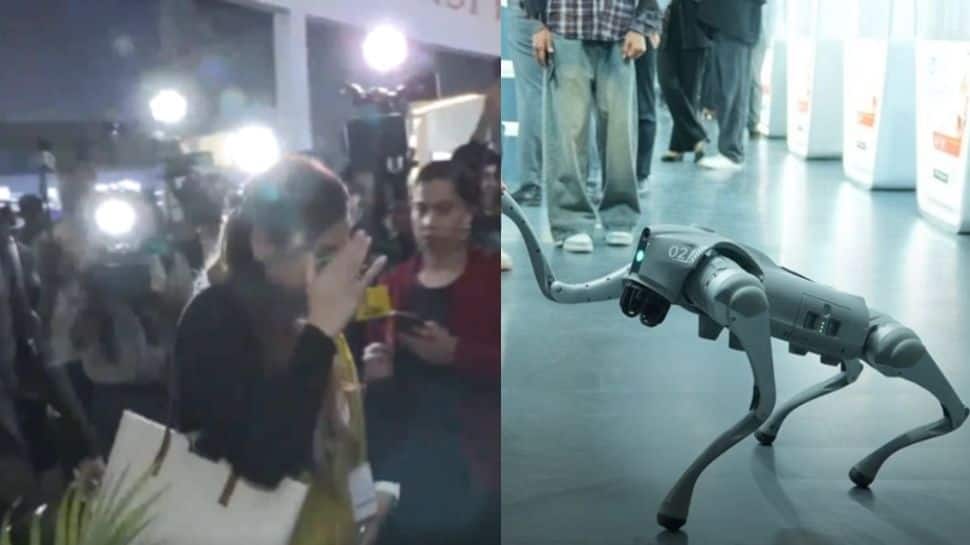
A row erupted at the India AI Impact Summit when a viral video showed Galgotias University staff presenting a Chinese-made Unitree Go2 robodog, dubbed “Orion,” as a homegrown innovation, sparking misrepresentation claims and forcing the Greater Noida institution to vacate its stall.

Professor Neha Singh introduced the robot during the expo as a university project, igniting online backlash. The video quickly spread online, prompting criticism and raising questions about whether the Greater Noida-based institution had claimed the imported robot as its own creation. Amid the outrage, authorities reportedly asked the university to vacate its stall at the Summit.

Following the backlash, Galgotias University staff and officials vacated their exhibition space on Wednesday. According to sources, authorities directed the institution to leave the expo premises, ANI reported.

Add Zee News as a Preferred Source


Galgotias University blames “develop” vs “development” confusion

Responding to the controversy, Galgotias University Registrar Nitin Kumar Gaur said the issue stemmed from confusion over the words “develop” and “development,” stressing that the university had not built the robot but had used it for academic purposes.

“This is a jumble of two words, develop and development. We didn’t develop it. We worked on its development… We want to bring them, just like that robot was brought, and an effort was made to get students to do research on it,” Gaur told ANI.


ALSO READ: Indian startup flaunts homegrown robodog after Galgotias University controversy at India AI Summit | Video


Professor Neha Singh reacts

Addressing the viral video in which Professor Neha Singh introduced the RoboDog as “Orion,” Gaur said she may have misspoken during the presentation. He reiterated that the robot had been purchased to support student research initiatives.

“I can say that perhaps she (Professor Neha) might have been confused by the words “develop” and “development” in the flow. But the truth is that we bought this robot for children’s research… If China is making the claim, then maybe it (robodog) could be bought from China,” ANI quoted Gaur as saying.


Meanwhile, Professor Neha Singh, who appeared in the viral clip explaining the RoboDog at the AI expo, maintained that she had never claimed the robot to be an original invention of the university.

“We have never claimed that it is ours, Indian, or Galgotian. Its main branding is still on it. The robot that had come for a particular task has gone there for the children’s study, for the children’s research and development. Our center, our campus — it has gone into the children’s lab. It was here for two days for projection; the projection has been completed,” Professor Neha Singh told ANI.

Addressing the row triggered by the viral video, Professor Neha said the situation escalated due to misinterpretation.

“By one misinterpretation, the internet has gone by storm. It might be that I could not convey well what I wanted to say, or it was misunderstood. I am a faculty member in communications at the School of Management, not in AI. Only you (the media) have heard what the government has said. As far as I know, we are here at the expo. As a university, we are standing tall. The robot was brought here only for projection,” Professor Neha Singh told reporters.


University issues official clarification

The university faced sharp criticism both online and offline after the robot, allegedly manufactured by a Chinese company, was displayed at its stall. As the controversy intensified, the institution issued an official clarification and apologised profusely for the confusion created at the recent AI Summit.

The university said an unauthorised representative at the pavilion, unaware of the product’s technical origins, gave incorrect information on camera.

“We at Galgotias University wish to apologise profusely for the confusion created at the recent Al Summit. One of our representatives, manning the pavilion, was ill-informed. She was not aware of the technical origins of the product and in her enthusiasm of being on camera, gave factually incorrect information even though she was not authorised to speak to the press… Understanding the organisers sentiment we have vacated the premises,” the University said in a statement.


What is the India AI Impact Summit?

The India AI Impact Summit is a five-day programme structured around three core pillars, or “Sutras”  of People, Planet, and Progress. The event brings together policymakers, technology firms, innovators, academic institutions, and industry leaders, aiming to translate global AI discussions into actionable development outcomes under the IndiaAI Mission and the Digital India initiative.


Source link

Delhi CM Rekha Gupta inaugurates CM Shri School, says Government schools to become first choice of parents

Delhi CM Rekha Gupta inaugurates CM Shri School, says Government schools to become first choice of parents


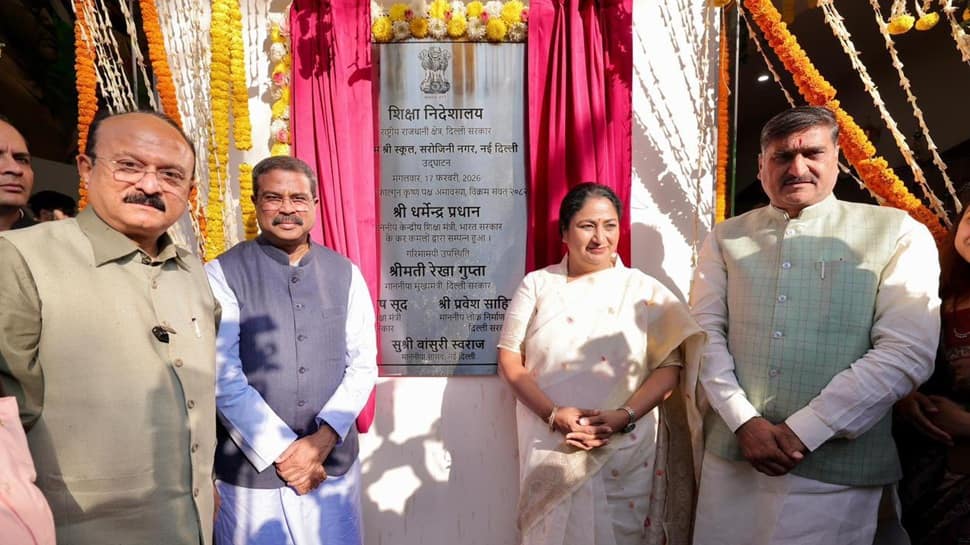
NEW DELHI: Union Education Minister Dharmendra Pradhan and Delhi Chief Minister Rekha Gupta on Tuesday inaugurated the CM Shri School at Sarojini Nagar. The foundation stones for 75 CM Shri School projects across the Capital were also laid. This initiative of the Delhi Government has been launched in accordance with the National Education Policy to provide modern, technology-integrated and improved education.

On the occasion, Union Education Minister Dharmendra Pradhan congratulated the Chief Minister and the Education Minister, stating that within a year the government has made commendable progress towards fulfilling its commitments in the field of education. Chief Minister Rekha Gupta said that CM Shri Schools are not merely new buildings, but an initiative to make Delhi’s children globally competitive.

Education Minister Ashish Sood, public representatives, senior officials of the Education Department, teachers, parents and a large number of students were present at the event. The Union Education Minister described the establishment of 75 CM Shri Schools as a significant achievement and said that by developing them as institutions of high standards, the Delhi Government has set an example. These schools will provide children from economically weaker, lower and middle-income families with modern facilities and technologically advanced education comparable to private schools.

Add Zee News as a Preferred Source


Key Features of CM Shri Schools:

* AI-based smart classrooms

* Competitive examination preparation portal

* Multi-sectoral skill labs

* ICT labs

* Digitised libraries

* Career labs

* Multilingual education and foreign language learning facilities

* Industry-linked internships during schooling

* Play- and activity-based learning for young children

* Over 7,000 smart interactive boards

The Union Education Minister noted that hundreds of thousands of students are pursuing education in Delhi and that it is the government’s responsibility to effectively implement the National Education Policy. He expressed confidence that under the leadership of Prime Minister Narendra Modi, the Delhi Government is playing an active role in advancing school education, higher education and research-oriented learning in the country.

Chief Minister Rekha Gupta said that CM Shri Schools are not merely about infrastructure, but represent a commitment to making Delhi’s children globally competitive. These schools are being developed as ‘Centres of Excellence’, integrating modern technology, skill education, career guidance and holistic personality development. The government’s aim is to create an education system that prepares children not only for examinations, but for life. 

The Chief Minister informed that AI-enabled smart classrooms are being established in these schools, equipped with interactive panels, digital learning content and modern learning tools. This will enable personalised learning according to each student’s ability. A dedicated portal has also been developed for preparation for competitive examinations such as JEE, NEET, CUET, CLAT and NDA, featuring regular online tests and progress tracking.

Rekha Gupta further stated that multi-sectoral skill labs will introduce students at an early stage to subjects such as robotics, artificial intelligence, design and mechatronics, helping them secure employment or start their own ventures in the future. ICT labs will provide training in digital literacy, coding and computational thinking. Digitised libraries will offer e-books, research material and resources for competitive examinations.

She added that career labs will assess students’ interests and aptitudes, providing appropriate guidance for higher studies, skill development and employment. ‘Science of Living’ spaces will focus on mental well-being, moral education and personality development to ensure students grow with confidence and strong values. Special language labs are being established to promote multilingual education and foreign languages, enabling better opportunities for international education and careers. For the first time, mandatory internships in collaboration with industry are being introduced in government schools to provide practical work experience during schooling.

The Chief Minister stated that such an education model has not been implemented in this manner in any other state. With the integration of AI and technology-driven learning, multilingual education and structured industry engagement through internships, the schools aim not only to secure high board examination results but also to facilitate admissions into IITs, medical colleges and foreign universities, create quality employment opportunities and encourage entrepreneurship. She congratulated teachers, parents and the Education Department team, describing the initiative as a strong foundation for a developed Delhi and expressing confidence that CM Shri Schools will set a new benchmark for the nation’s education system.

On the occasion, Delhi Education Minister Ashish Sood said that at a time when the Global AI Impact Summit is being held internationally, Delhi is simultaneously launching a modern AI-driven education system, demonstrating its commitment to advancing education through technology. He stated that before the completion of one year of the government, 7,000 classrooms will be converted into AI-enabled smart classrooms.

He added that the previous government had not left behind a single fully functional ICT lab. Under the leadership of the Chief Minister, 175 new ICT labs equipped with 7,000 computers are now being launched. Additionally, more than 100 digital libraries and over 175 language labs are being dedicated to the public.

The Education Minister noted that the education model discussed over the past 11 years comprised only 700 smart boards, installed under CSR initiatives, and facilities were limited to select areas such as Rouse Avenue and Patparganj. Now, from Rohini to Dera Mandi and from Hiran Kudna to the farthest parts of Yamunapar, digital and technology-enabled education is being delivered uniformly across Delhi. Equal opportunities are now being extended to students across the entire city. He stated that all 7,000 smart classrooms will be fully operational before 31 March, marking a major milestone in Delhi’s educational history.
Source link

YouTube
Instagram
WhatsApp