Delhi schools to mandatory implement ‘water bells’ every hour: New heatwave guidelines for students

Delhi schools to mandatory implement ‘water bells’ every hour: New heatwave guidelines for students


Delhi heatwave: Amid rising concerns about flooding from increased summer rainfall, the Directorate of Education (DoE) in New Delhi announced on Tuesday that all schools in Delhi will implement “water bells” – a strategy that will help keep students well-hydrated while at school.

According to forecasts from the India Meteorological Department, severe heat waves are anticipated across the Delhi National Capital Region.

The water bell system


Add Zee News as a Preferred Source


Schools must sound a separate bell at least every 45 to 60 minutes during the school day, which will signal to students that it is time to stop what they are doing and drink. This method is being used to help prevent students from becoming dehydrated or suffering from heat-related illnesses during their time at school.

Restricting children’s outdoor activities

The DoE has prohibited or restricted many activities that expose students to the sun in order to protect them from the sun:

Assembly schedule: Schools must not conduct outdoor assemblies. If school assemblies are mandatory, they must either occur indoors or remain very short in length.

Classroom environment: Teachers must not teach in open classroom spaces or outdoors in direct sunlight.

Physical activity: Schools should limit students from engaging in heavy, intense physical and play activities during the hottest parts of the day.

Buddy system: The DoE has instructed schools to utilize a buddy system to assist students with reminders about drinking water and to stay safe during extreme weather conditions.

Key mandates include the following:

Provision of water: Schools will have to create several access points for clean, chilled drinking water throughout the campus.

Nodal teachers: Every school must have a nodal teacher who will manage the Water Bell system and lead the heatwave awareness campaign.

Health awareness: Teachers will provide education to students in class as well as assemblies regarding the symptoms of dehydration and heat stroke.

Advisory for parents: The directorate has contacted parents and provided specific guidelines regarding the safety of their child(ren) regarding summertime school.

For clothing: Parents should send their student(s) to school in light coloured, breathable, cotton or cotton-like clothing.

Hydration: Parents should ensure their child(ren) take enough water from home to enable them to stay well hydrated throughout the school day.

Communication: Teachers will provide IMD weather and heatwave alerts to parents via digital platforms on a regular basis.

ALSO READ | India heatwave alert: IMD issues 5-day warning as Delhi set to breach 44°C; yellow alert in Punjab & Chandigarh


Source link

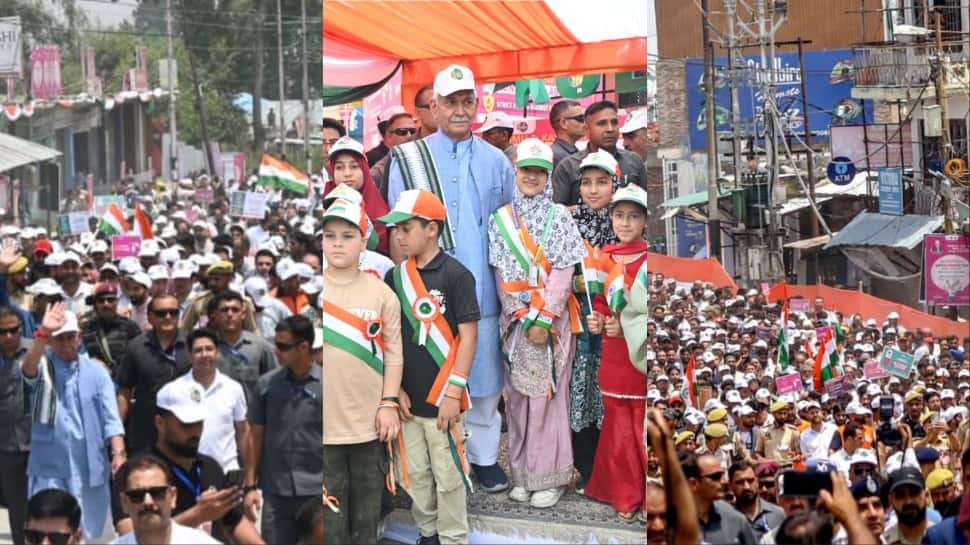
Pahalgam tourism rebounds one year after terror attack

Pahalgam tourism rebounds one year after terror attack


One year after the tragic terrorist attack that struck Pahalgam on April 22, 2025, claiming the lives of 26 people, the Kashmir Valley is witnessing a tremendous resurgence in tourism as the first anniversary of the incident approaches. While the event had caused a drastic decline in tourist numbers during 2025, Pahalgam and other renowned tourist destinations are now once again bustling with crowds, signaling a robust comeback for the tourism sector.

As the first anniversary of the April 22, 2025, terrorist attack draws near, a special memorial has emerged as a focal point for both tourists and locals to pay tribute to the 26 victims.

This memorial—commissioned by the government and often referred to as ‘Shaheed Marg’ (Martyrs’ Path)—is situated along the banks of the Lidder River, near Pahalgam’s famous “Selfie Point.” It stands as a permanent tribute to the 25 tourists and one local pony-puller who were killed in the ambush attack that took place in the meadows of Baisaran. The memorial bears the names of all 26 victims, allowing visitors to offer flowers, light candles, and offer prayers. Tourists visiting Pahalgam now consider it an essential part of their itinerary to stop at this “Martyrs’ Memorial”; as they read the names of those who were lost, their mood shifts from lighthearted leisure toward deep contemplation and solemn peace. 


Add Zee News as a Preferred Source


Arun Goyal, a tourist visiting the martyrs’ memorial to pay his respects, said, “When we arrived here, we came to know that this is a memorial dedicated to the martyrs of the Pahalgam attack. We came here and paid our tributes to them. The very presence of this memorial ensures that their memory will live on forever; it is a great honor bestowed upon them.”

In a boost to tourism, government statistics reveal that in the last month alone, over 250,000 tourists visited Srinagar’s renowned ‘Indira Gandhi Memorial Tulip Garden.’ This massive influx of visitors underscores the fact that Kashmir remains an incredibly attractive and essential destination for tourists even today. Officials and locals alike view this heavy turnout as a befitting reply to the terrorists—and their handlers across the border—whose objective was to destabilize the region’s peace and cripple its tourism-dependent economy.

The large numbers of returning tourists are expressing their complete faith in the security forces. Many visitors stated that their decision to visit was based on current ground realities rather than past incidents; describing the region as safe, many also lauded the hospitality of the local people. A comparison of tourist arrival data reveals a stark contrast: last April—following the attack—Pahalgam recorded zero bookings, whereas this April, bookings in Pahalgam stand at 90%. Tourists observe that the atmosphere has undergone a complete transformation, shifting from one of fear to one of trust.

Urusha Jamwal, a visitor from Australia, said, “It is a coincidence that we happen to be here on the very days when the attack took place last year—an incident that was truly tragic. However, honestly speaking, we have been here for four days, and we haven’t even felt as though we are in Kashmir, or that any such incident ever occurred here. While the administration is certainly vigilant, the local people have also proven to be incredibly cooperative. We are just two women traveling alone, yet not once did we feel unsafe.”

This newfound sense of trust and security is the direct result of the measures implemented by the administration and the local community to bridge the trust deficit and reinforce security across the region. A unique digital identification system—utilizing QR codes—has been introduced in Pahalgam for all tourism service providers. By scanning these codes, tourists can instantly verify the authentic identity, registration status, and police clearance status of pony operators, shawl vendors, shopkeepers, and various other individuals associated with the tourism sector.

To further bolster security and transparency, the administration has implemented this QR code-based tracking mechanism. These codes have been issued to taxi drivers, shopkeepers, hotel staff, and tourist guides. The system also incorporates GPS-based monitoring capabilities, thereby adding an additional layer of security.

Ejaz Ahmed, President of the Pony Association, stated, “This is an excellent initiative. Tourists will feel secure once the information obtained from the QR codes confirms that the individuals accompanying them are both registered and police-verified. This will not only deter unscrupulous elements but also lead to an increase in our business.”

Tourists, too, acknowledge the benefits of this initiative, noting that it will afford them greater freedom to explore the region. Rakesh Manhas, a tourist from Maharashtra, remarked, “This makes us feel secure and allows us to freely enjoy this paradise. Knowing that the individuals we are engaging with have been verified by the police significantly enhances our sense of safety.”

Following the attack, approximately 48 tourist sites were temporarily closed for security reasons. Most of these locations have now gradually reopened, and the government aims to have all sites fully operational by the end of 2026. However, some locations situated in dense forest areas remain closed.

Baisaran Valley—often referred to as “Mini Switzerland”—officially remains closed to the public. While tourism is once again flourishing in Pahalgam town and other surrounding areas, this meadow—the site of the tragic terrorist attack on April 22, 2025—is still designated as a “No-Entry Zone” for security reasons, according to security forces.

The path leading toward Baisaran currently ends at a junction where the Jammu and Kashmir Police and the CRPF have erected a barricade to prevent anyone from proceeding further uphill. Tourists attempting to venture forward along the muddy trail are turned back by police and CRPF personnel. For security reasons, photography or videography is also strictly prohibited even at this security barricade. However, other nearby attractions—such as Betaab Valley and Aru Valley—remain open and are witnessing a heavy influx of tourists amidst heightened security.

Ahead of the first anniversary of the terrorist attack that occurred on April 22, 2025, security has been significantly bolstered across Pahalgam and other tourist destinations within the Kashmir Valley. Authorities view this anniversary as a highly sensitive occasion and have deployed a multi-layered security apparatus to preempt any potential disturbances.

In addition to a QR code-based system, security forces have intensified their day-and-night patrols. Surveillance at major tourist hotspots has been further tightened. Security agencies remain on high alert following intelligence reports. These reports have raised apprehensions regarding new threats that could once again derail the tourism sector. Consequently, strict measures are being enforced concerning foreign nationals and the implementation of the Immigration Act.

Tourists visiting Pahalgam feel remarkably safe here; they attribute this sense of security to the presence of deployed security forces, as well as the installation of CCTV cameras and FRS (Facial Recognition System) cameras at key tourist sites. Whether at the entry points to Pahalgam or at other tourist destinations, checkpoints have been established everywhere.

Officials view this surge in tourism not merely as an economic recovery, but also as a strong message against terrorism. As thousands of people return to savor the natural beauty of this paradise, Pahalgam now stands as a symbol of recovery—a place where cherished memories and new beginnings now go hand in hand.


Source link

Bengal polls: Suvendu Adhikari ridicules Mamata Banerjee’s job promise for I-PAC Kolkata employees

Bengal polls: Suvendu Adhikari ridicules Mamata Banerjee’s job promise for I-PAC Kolkata employees


KOLKATA: The Leader of Opposition in the West Bengal Assembly, Suvendu Adhikari, on Monday, ridiculed Chief Minister Mamata Banerjee’s job promises for the Kolkata-based employees of the Indian Political Action Committee amid information that I-PAC has temporarily suspended its operations in the state for 20 days and have directed the employees at its Kolkata office to go on “short leave”. 

On Sunday morning, soon after the information came regarding an email communication from I-PAC to Kolkata office employees, the Trinamool Congress initially issued a statement terming the information as baseless. However, soon after that, while addressing a campaign rally at Tarakeswar in Hooghly district, the Chief Minister made job promises to the I-PAC’s Kolkata office employees and also claimed that she had already discussed the matter with the party’s General Secretary and Lok Sabha member, Abhishek Banerjee.

“The Enforcement Directorate is conducting raids every day, and especially during the election. Those people of agencies who work for us are being threatened with leaving the state. You can have so many agencies working for you. What can’t we also have? If you scare them, they will join my party, and we will give them jobs. Keep in mind that I will not let a single boy go without a job. I spoke to Abhishek Banerjee this morning on the matter… Let me be clear, this is a conspiracy. How much more lawlessness will you do, how many more votes will you cut? After that, you will do the NRC,” the Chief Minister said on Sunday


Add Zee News as a Preferred Source


On Monday morning, Suvendu Adhikari issued a social media statement ridiculing the Chief Minister’s job promises for I-PAC’s Kolkata office employees and claimed that after failing to fulfil her promises to protect the jobs of “untainted teachers” going jobless because of the multi-crore cash-for-school job case in West Bengal, the job promises for I-PAC employees sounded funnier.

“You snatched jobs from the qualified persons, gave false promises one after another just to save your own skin. No one got their jobs back as yet. Now you are promising jobs for those who actually scripted your false promises to confuse everyone just to save your own skin. Everyone in the country knows how capable you are of giving jobs. All you know is how to sell jobs to unqualified ones by depriving the qualified ones and then scattering a fireworks display of lies,” Adhikari said.


Source link

On Bengal campaign trail, PM Modi stops for popular street snack ‘jhalmuri’ in Jhargram

On Bengal campaign trail, PM Modi stops for popular street snack ‘jhalmuri’ in Jhargram


In a candid moment during his Assembly election campaign in West Bengal, Prime Minister Narendra Modi on Sunday made an unexpected stop in Jhargram for a quick bite of the popular Bengali street snack — the ‘jhalmuri’. 

The Prime Minister was seen enjoying jhalmuri at a local stall, interacting with residents, sharing smiles, and at the same time creating a memorable moment of outreach beyond the campaign trail. He also shared jhalmuri with children and women who were present at the shop. 

Locals were caught by surprise after PM Modi paid a visit to the shop during his trip to Jhargram to address a public meeting.


Add Zee News as a Preferred Source


Later, the Prime Minister shared moments from his visit to the snack shop on his social media handles.

“In between four rallies across West Bengal on a packed Sunday, I had some delicious jhalmuri in Jhargram,” PM Modi wrote on his X handle. After spending some time there, PM Modi left the area.

PM Modi was in West Bengal on Sunday to address four election rallies across the state, which will go to polls in the first phase of the Assembly elections on April 23.

The owner of the shop, Vikram Shaw, told a section of media persons that he was very happy to have served jhalmuri to the Prime Minister.

“He stopped his car and came out of his vehicle. He told me to make jhalmuri. I asked him whether he wanted it to be spicy; he told me to make it spicy. He told me that the jhalmuri was delicious. He also shared it with children and their parents. He asked them their names. I am very happy to meet him,” said Shaw.

Jhalmuri is a popular, spicy and crunchy street food snack from West Bengal. It is typically made by tossing puffed rice (muri) with chopped onions, tomatoes, boiled potatoes, roasted peanuts, chickpeas, chillies, and a distinctive dressing of raw mustard oil, lemon juice, and Bengali bhaja moshla (roasted spice blend).


Source link

J&K govt takes over 58 more schools linked to banned Jamaat-e-Islami, citing security concerns

J&K govt takes over 58 more schools linked to banned Jamaat-e-Islami, citing security concerns


Jammu & Kashmir government continuing the process of taking direct control of educational institutions took over 58 schools affiliated with Jamaat-e-Islami (JeI) and Falah-e-Aam Trust (FAT).

Jammu and Kashmir administration ordered the takeover of management for 58 schools linked to the banned Jamaat-e-Islami (JeI) and its educational wing, the Falah-e-Aam Trust (FAT). This move follows a larger action in August 2025 targeting 215 schools. 

Authorities said The decision follows adverse reports by intelligence agencies, which indicated that these schools had direct or indirect links with banned organizations. The managing committees of these schools had their validity expired and were reported negatively by intelligence agencies. Deputy Commissioners concern is tasked with replacing current management with new, vetted committees. The authorities today since morning took over 58 schools affiliated directly or indirectly with Jamaat-e-Islami (JeI) and its educational wing, the Falah-e-Aam Trust (FAT) in 10 districts of Kashmir. 


Add Zee News as a Preferred Source


While the government maintains this ensures educational stability, local political leaders have criticized the intervention, raising concerns about its impact.

The move is sanctioned under The Jammu and Kashmir School Education Rules 2010 (SRO 123 of 2010), SRO 292 of 2018, and SO 177 of 2022.

Order further said “The Deputy Commissioner concerned must immediately assume management of the 58 identified schools. A fresh managing committee will be proposed for each school after government verification and due diligence. The administration has been tasked to ensure the academic future of enrolled students is safeguarded—meaning their studies and exams should not be adversely affected.

Today’s action is part of the order earlier issued by J&K School Education Department of J&K government order Number: 578-JK(Edu) of 2025 which says to take over the management of schools found to be directly or indirectly affiliated with the proscribed Jamaat-e-Islami (JeI) or its affiliate, Falah-e-Aam Trust (FAT).

Order was earlier issued that stated 

“Whereas, the Ministry of Home Affairs, Government of India vide Notification S.O.1069(E) dated 28th February 2019 and further vide Notification S.O. 924(E) dated 27th February 2024, issued under subsection (1) of section (3) of the Unlawful Activities (Prevention) Act, 1967 (37 of 1967) declared the Jamaat-e-Islami (Jel), Jammu and Kashmir as an unlawful association; and 

Whereas, the Intelligence Agencies have identified several schools which were found to be directly or indirectly affiliated with proscribed organization Jamat-e-Islami (Jel)/Falah-e-Aam Trust (FAT);and,

Whereas the validity of the Managing Committee of 58 such schools have expired / have been reported adversely upon by the Intelligence Agencies.

Now therefore, in view of the above and in order to safeguard the academic future of the students enrolled in these schools in exercise of the powers conferred by the Government of Jammu and Kashmir through The Jammu and Kashmir School Education Rules 2010 notified vide SRO 123 of 2010 read with SRO 292 of 2018 and SO 177 of 2022, it is hereby ordered that:

1. The Managing Committee of the 58 schools as given in Annexure ‘A’ shall be taken over by the District Magistrate/ Deputy Commissioner concerned who shall propose a fresh Managing Committee in due course for the concerned schools after getting these duly verified.

The Concerned District Magistrate/ Deputy Commissioner, on taking over these Schools, shall take appropriate steps in consultation and in coordination with School Education

Department so that to ensure that the academic career of the students enrolled in these schools is not affected in any manner. He shall also take all necessary measures to ensure quality education as per NEP norms in these schools.

The Ministry of Home Affairs, Govt of India, by Notifications S.O.1069(E) (Feb 28, 2019) and S.O.924(E) (Feb 27, 2024), declared JeI as an unlawful association under the Unlawful Activities (Prevention) Act. 

Jamaat-e-Islami (JeI) and affiliated organizations like FAT have been banned for alleged involvement in unlawful activities, radicalization, support to secessionism and terrorism, and fraudulently acquiring government or community property for school construction.


Meanwhile the action is criticized by Several opposition political parties in Jammu and Kashmir, saying Jammu Kashmir government’s decision to take over the management of schools linked to the banned Jamaat-e-Islami (JeI) is unconstitutional. 

The opposition termed the move an “administrative overreach” and a “betrayal,” accusing the elected government of implementing the BJP’s agenda. They labeled the takeover an “attack on the institutions and culture of J&K,” accusing the government of implementing the order against the interests of local people.


Source link

Who is Mohammed Ayan? Amravati sex scandal suspect’s alleged AIMIM links spark political row

Who is Mohammed Ayan? Amravati sex scandal suspect’s alleged AIMIM links spark political row


A major political and social scandal erupted in Amravati, Maharashtra, after the arrest of Mohammed Ayan, alias Tanveer, the alleged ringleader of an extensive sexual exploitation ring involving at least 180 victims. The case has captured nationwide attention not only because of the scale of the alleged crimes, but also because of Ayan’s alleged connections with the All India Majlis-e-Ittehadul Muslimeen (AIMIM), a political party led by Asaduddin Owaisi.

Political connection to AIMIM and viral video of Ayan

A 57-second video has been circulated on social media purportedly showing Mohammed Ayan attending an AIMIM political rally and allegedly standing on stage with Asaduddin Owaisi as he was speaking. Additionally, there are claims that Ayan received a formal invitation or certificate from an AIMIM MP in Amravati according to the sources circulating online.


Add Zee News as a Preferred Source


Manipulator’s approach: Reportedly, Ayan contacted victims utilising various channels such as WhatsApp and Snapchat with the intention of impersonating potential partners and ultimately developing relationships.

Methods of coercion: Police alleged Ayan obtained intimate videos of the victims through various means without first seeking their consent. Subsequently, Ayan is alleged to have used the video footage to blackmail and further exploit the victims.

Extent of the criminal activity: Investigators have established that Ayan also travelled to cities such as Mumbai and Pune to assist some of his victims exit their homes.

BJP MP Dr. Anil Bonde has claimed there is an established network of 350 recorded videos. Seven victims have come forward to police; they believe the number of individuals will increase as the investigation continues to develop.

Arrests and court proceedings

Public attention on the matter increased when multiple “MMS” videos surfaced on the internet, which sparked public outcry in Achalpur and Paratwada. Victims were fearful of making a report; therefore, police instituted an action of suo motu to expedite the arrest of Ayan.

Uzer Khan – Uzer Khan is the second suspect who has been arrested for his part in downloading the videos from Now Ayan’s cell phone and distributing them on various forms of social media. He is currently being interrogated. 

ALSO READ | Delhi weather: Mercury set to hit 42°C after Friday’s storm; IMD warns of rising heat in North India


Source link

YouTube
Instagram
WhatsApp