Delhi artisans to gain access to global markets as CM Rekha Gupta approves ‘CM Skill Development Scheme’

Delhi artisans to gain access to global markets as CM Rekha Gupta approves ‘CM Skill Development Scheme’


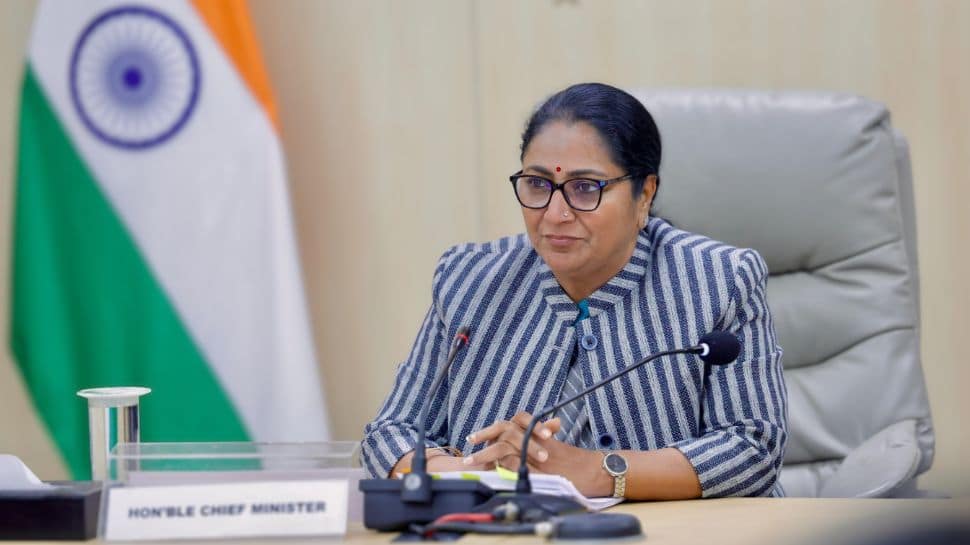
In a major push for traditional workers, the Delhi government under the leadership of Chief Minister Rekha Gupta has approved the Chief Minister Skill Development Scheme, a transformative scheme aimed at supporting thousands of artisans associated with khadi, handloom, cottage industries, and the unorganised sector.

The decision was cleared at a recent Cabinet meeting chaired by the Chief Minister. Announcing the move, she said Delhi’s artisans are the true custodians of the city’s cultural heritage. “For years, they have strengthened society with their craftsmanship. But in changing times, they also need modern training and direct market access. This scheme will ensure that they not only sustain themselves in the new economy, but truly progress with upgraded skills and access to digital platforms,” she said.

Referring to the ‘Viksit Bharat Young Leaders Dialogue 2026’, the Chief Minister noted that Prime Minister Narendra Modi had described skill development as a cornerstone of nation-building. The Union Budget 2026-27, she added, has also placed strong emphasis on connecting artisans to global markets, along with branding, training, and quality enhancement. “Delhi is carrying that vision forward. We are linking skills directly to dignified livelihoods,” she said.

Add Zee News as a Preferred Source


The scheme will be implemented through the Delhi Khadi and Village Industries Board (DKVIB). During 2025–26, a total of 3,728 beneficiaries will be trained, with Rs 8.95 crore already approved for this phase. For 2026-27, a proposed allocation of Rs 57.50 crore is likely to be brought in to expand the programme at a much larger scale.

12 Days of training, stipend and toolkits

Under the scheme, beneficiaries will undergo 12 days (96 hours) of structured training, which will include a two-day Entrepreneurship Development Programme (EDP). To ensure personalised guidance, training will be conducted in small batches of 35-45 participants. Upon completion, each beneficiary will receive a stipend of Rs 4,800 (Rs 400 per day), along with Rs 100 per day towards meals. Participants will also be provided essential toolkits after training, including foot-operated sewing machines where required.

A key feature of the scheme is digital onboarding. Each artisan will have an e-catalogue created with their profile, photographs, and product details. These will be uploaded on the Open Network for Digital Commerce (ONDC) platform, giving their products visibility not only across India but also in international markets.

Recognising existing skills through RPL

The scheme also incorporates Recognition of Prior Learning (RPL), which will formally certify the skills and experience of traditional artisans already engaged in their crafts. This certification will open doors to better income opportunities and help them integrate into the formal economy.

Beneficiaries will receive a Chief Minister’s certificate and an identity card. Support will also be extended for Udyam (MSME) registration, branding assistance, and guidance on accessing credit facilities.

Priority for e-Shram registered workers

The first phase will focus on nearly 18,000 tailors registered on the e-Shram portal. Over time, the scheme will be expanded to include other traditional occupations such as embroiderers, dressmakers, potters, carpenters, cobblers, basket and mat makers, perfumers, bamboo artisans, barbers, garland makers, washermen, fishing net makers, carpet weavers, and several others.

Transparent process and strong monitoring

Applicants must be at least 18 years old. Only one member per family will be eligible for the scheme. Government employees and their family members will not qualify. Aadhaar-based identification and verification will be mandatory at the time of enrolment.

The Chief Minister emphasised that the entire process will be closely monitored to maintain training quality and ensure that beneficiaries receive full support. “This scheme turns the vision of a developed India into action. By directly linking skills with employment and income, we are ensuring that every artisan gets both opportunity and respect,” she said.

She further added that the government is expanding the scope of self-reliance for workers in khadi, handloom, and village industries. “This is not merely a training programme. It is a comprehensive effort that brings together skills, technology, market access, and financial empowerment. It will give thousands of artisans in Delhi a new identity, new direction, and new opportunities.”

Delhi Industries Minister Manjinder Singh Sirsa said the initiative goes beyond skill-building. “This is about restoring dignity and creating self-reliance for thousands of families,” he said. Courses in merchandising, logistics, IT operations, and fashion production, he added, will open up fresh employment and entrepreneurial avenues for artisans, while also preserving traditional crafts and aligning them with modern market demands.

Source link

Lamborghini crash case: Kanpur tycoon’s son granted bail hours after arrest

Lamborghini crash case: Kanpur tycoon’s son granted bail hours after arrest


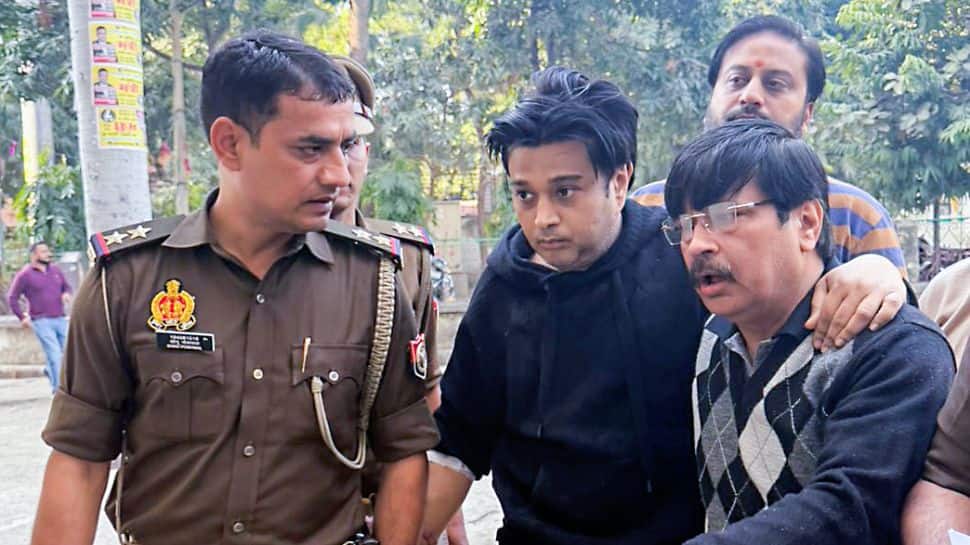
Kanpur Lamborghini crash case: Shivam Mishra, son of tobacco baron KK Mishra, walked free on Thursday on a Rs 20,000 personal bond after a district court rejected police remand in the Feb 8 Lamborghini crash that left six people injured.

The court granted him bail, citing serious procedural lapses by the police, observing that the arrest was made without serving proper notice under the BNSS and in violation of the Supreme Court’s guidelines laid down in the Arnesh Kumar judgment.

Mishra’s lawyer big claim

Add Zee News as a Preferred Source


Speaking to reporters, Mishra’s lawyer, Naresh Chandra Tripathi, claimed that the arrest was unjustified and alleged that the police acted under government pressure.

“The Court has refused the remand. He (Shivam Mishra) is being released now, on an undertaking of Rs 20,000 and a personal bond of Rs 20,000. The police were working under pressure from the government. Police had wrongly arrested him (Shivam Mishra),” he said.

Who is Shivam Mishra? Why was he arrested

Shivam Mishra is the son of tobacco businessman KK Mishra and was arrested on Thursday in connection with a Lamborghini accident in Kanpur that injured six people. The accident occurred on Sunday.

A controversy erupted after Shivam Mishra claimed that his driver, Mohan, was behind the wheel when the accident happened, contradicting eyewitness accounts and CCTV footage that showed him driving.


Shivam Mishra’s driver takes responsibility for the accident

Earlier on Wednesday, Mishra’s driver admitted that he was driving the Lamborghini, which rammed into an autorickshaw, a bullet motorcycle, and then a pole in Kanpur, leaving six people injured. Driver Mohan said that Shivam Mishra was sitting beside him and had a seizure and fell on him.

When asked if Shivam Mishra was sitting beside him when he (Mohan) was driving the car, driver Mohan said, “Yes. He (Shivam Mishra) had a seizure. Suddenly, his arms and legs started shaking, and he fell on me. I was there (at the spot). I was there on the day the accident happened. The bouncer pulled me out (of the car).”

Mishra’s lawyer said the driver had submitted an affidavit accepting responsibility for the accident.

Lamborghini crash incident

The accident occurred near Jhula Park Crossing on the afternoon of February 8, when the Lamborghini struck an autorickshaw and a bullet motorcycle, then crashed into a pole. Eyewitnesses reported that the car was travelling at a high speed at the time of the incident.

(With ANI inputs)


Source link

Ten schools in Chandigarh and Mohali evacuated after bomb threat

Ten schools in Chandigarh and Mohali evacuated after bomb threat


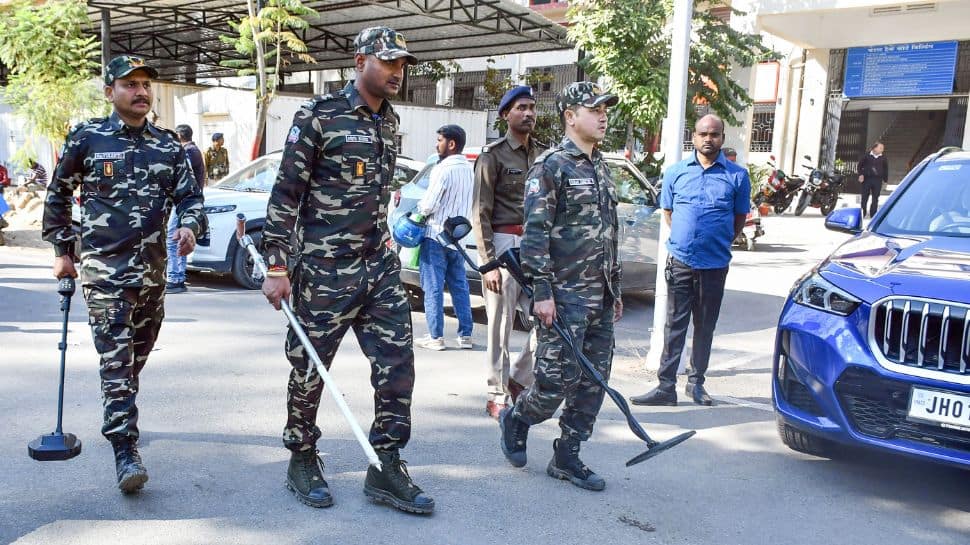
Ten schools in Chandigarh and Mohali received bomb threats on Wednesday, leading authorities to suspend classes and send students home. Police teams were deployed to secure the campuses and ensure student safety.

Police said that several prominent schools in Mohali received threatening emails, prompting immediate action. Bomb disposal units, anti-sabotage teams, ARP personnel, and police officers, including senior officials, were deployed to thoroughly check the campuses.

As a precaution, the schools were cordoned off, students and staff were sent home, and a thorough search was conducted. So far, authorities have found nothing suspicious, police said. 

Add Zee News as a Preferred Source


Speaking to ANI, SP City Mohali Dilpreet Singh said, “At around 7:30 today, many prominent schools in Mohali received a threatening email. Our bomb disposal team, our ARP team, our anti-sabotage team, and our police station forces, along with all RGOs, DSPs, and SPs, are on the field checking thoroughly. As a matter of precaution, we have cordoned off all these schools, given a holiday to the students and teachers inside, and are conducting searches. We haven’t found anything suspicious yet.”

Approximately 300 police personnel took part in the search operation, with all affected schools being evacuated. Authorities are currently investigating the origin of the threatening emails.

Earlier bomb threat

Earlier on January 28, thirty schools across the Union Territory of Chandigarh received bomb threat emails, prompting a rapid response from police and emergency services. The threats targeted 22 private schools and eight government schools. Upon receiving the alerts, Anti-Sabotage Teams, Bomb Disposal Squads, local police units, and emergency services, including fire, ambulance, and PCR team,s were deployed to the affected campuses to conduct thorough inspections. After detailed searches, authorities confirmed that no suspicious or explosive materials were found.

Delhi schools bomb threat mails

The recent threats in Chandigarh and Mohali follow a series of bomb threat emails sent to multiple schools in Delhi just a day earlier, which led to evacuations and extensive security checks. 

While most bomb threats in Delhi over the past year have proven to be false alarms, schools continue to follow strict safety protocols whenever such warnings are received. In October last year alone, over 200 schools in Delhi received threat emails in a single day, and more than 500 such incidents were reported throughout 2024.

(This is a developing story.)


Source link

Sharad Pawar’s grand daughter Revati Sule set to marry Nagpur businessman’s son – More details inside

Sharad Pawar’s grand daughter Revati Sule set to marry Nagpur businessman’s son – More details inside


Revati Sule, daughter of Nationalist Congress Party (NCP) leader and Lok Sabha MP Supriya Sule, is set to marry Sarang Lakhanee, the son of a Nagpur-based businessman, in a high-profile wedding that has attracted attention across political and social circles.

According to sources, Revati Sule, who is the daughter of Supriya Sule–a senior NCP leader and daughter of Sharad Pawar, will soon tie the knot with Sarang Lakhanee. The engagement has been publicly acknowledged by family members on social media, where Supriya’s son, Vijay Sule, shared a photograph of the couple with a congratulatory message.

About Revati Sule

Add Zee News as a Preferred Source


Revati Sule has pursued higher education both in India and abroad. She earned a bachelor’s degree in economics from St. Xavier’s College in Mumbai and later completed a master’s degree in public administration from the London School of Economics. Her academic background and family’s political legacy have kept her in the public eye, even though she leads a relatively private life compared with her mother.

Who is Sarang Lakhanee?

Sarang Lakhanee, the groom-to-be, comes from a prominent business family in Nagpur. He is the executive director at Vishvaraj Group, a company controlled by his father, and has a background in management studies from Columbia Business School in the United States. Lakhanee is also known to be involved in sports, particularly badminton.

(Also Read: Assam CM Himanta files Rs 500 cr defamation suit against Gaurav Gogoi and other Congress leaders)

Social media buzz

The announcement of the upcoming marriage generated a positive response on social media, with friends, colleagues, and well-wishers expressing their congratulations. The photographs shared by family members quickly drew widespread attention on social media platforms.

Date and details still awaited

While the engagement is confirmed and many details about the couple’s background are public, the official date and venue for the wedding have not yet been announced. Both families are expected to release more details as preparations continue.

Overall, the wedding of Revati Sule and Sarang Lakhanee marks a notable event for both the NCP and business communities in Maharashtra, drawing attention for its blend of political legacy and entrepreneurial success.


Source link

CM Rekha Gupta inaugurates 6 new continuous Ambient Air Quality Monitoring Stations

CM Rekha Gupta inaugurates 6 new continuous Ambient Air Quality Monitoring Stations


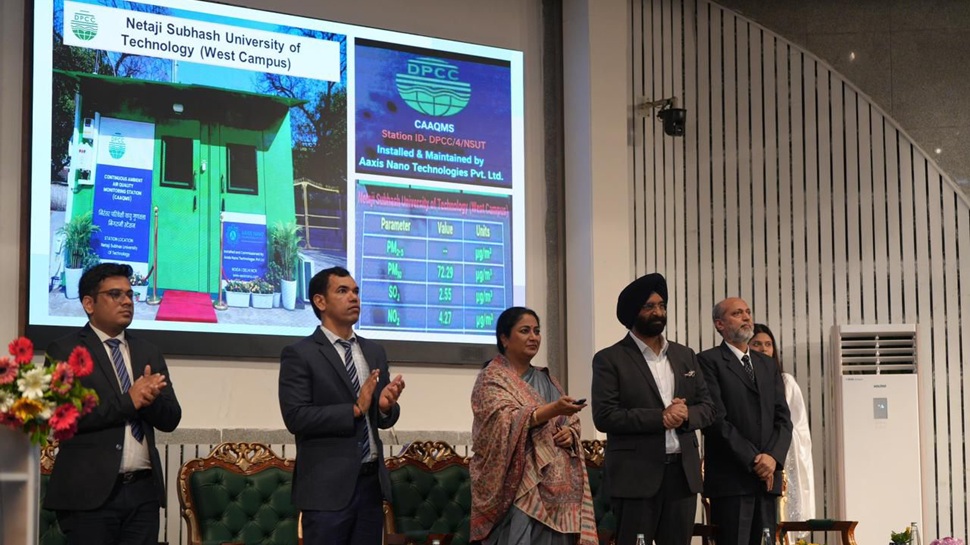
New Delhi: Delhi Chief Minister Rekha Gupta today inaugurated six new Continuous Ambient Air Quality Monitoring Stations (CAAQMS) and launched the ‘Vayu Rakshak’ initiative with the deployment of 100 dedicated Vayu Rakshaks, as part of the Government’s sustained efforts to control air pollution in the national capital. The initiative aims to strengthen both real-time air quality monitoring and on-ground enforcement, ensuring year-round action against pollution.

The programme, held at the Delhi Secretariat, was attended by Delhi’s Environment Minister Shri Manjinder Singh Sirsa and senior officials of the Environment Department.

Effective expansion of the air monitoring network

Add Zee News as a Preferred Source


The six new monitoring stations were inaugurated online at Jawaharlal Nehru University (JNU), Indira Gandhi National Open University (IGNOU), SPMSPC Talkatora Garden, Commonwealth Sports Complex, Delhi Cantonment and NSUT (West Campus).

With the addition of these stations, the total number of CAAQMS in Delhi has increased to 46, making it the largest air quality monitoring network in any city in the country. Of these, 30 stations are operated by the Delhi Pollution Control Committee (DPCC), 10 by the India Meteorological Department / IITM, and 6 by the Central Pollution Control Board (CPCB). A further 14 monitoring stations are planned to be installed in the coming period.

Addressing the programme, the Chief Minister said that air pollution is a year-round challenge and not limited to a particular season. She stated that the Delhi Government is committed to addressing the issue on a continuous basis through monitoring, policy intervention and enforcement. She emphasised that providing clean and breathable air to the people of Delhi is a core responsibility of the government.

Emphasis on data transparency and policy-making

The Chief Minister highlighted that air quality data is fully transparent and available in the public domain. She informed that PM10 and PM2.5 data are updated every hour, while data for other parameters are updated every five minutes. She added that the government believes in evidence-based policymaking backed by transparent data.

Referring to measures taken in the transport sector, the Chief Minister said that the Delhi Transport Corporation (DTC) currently operates nearly 4,000 electric buses, the highest number in the country, and the government aims to induct 14,000 clean-fuel buses by 2028. She also mentioned ongoing initiatives such as landfill remediation, waste-to-energy projects, mechanical road sweeping, mist spraying, dust control measures and expansion of green cover.

On the occasion, Environment Minister Shri Manjinder Singh Sirsa said that monitoring must be complemented with strict enforcement to achieve tangible results. He stated that the deployment of 100 ‘Vayu Rakshaks’ will ensure that pollution control measures are implemented effectively at the ground level.

He informed that in 2024, 233 posts were vacant in the DPCC, of which 157 posts have been filled within the last 11 months, significantly strengthening enforcement capacity. He added that pollution control efforts are being undertaken simultaneously across multiple sectors including vehicles, construction activities, road dust management and plantation.

‘Vayu Rakshak’: Enforcement alongside monitoring

As part of the initiative, 100 ‘Vayu Rakshaks’ have been deployed to work in coordination with the DPCC for on-ground pollution control. In addition, 600 Vayu Rakshaks, in coordination with the Delhi Police, are monitoring violations related to traffic and emissions.


Source link

YouTube
Instagram
WhatsApp