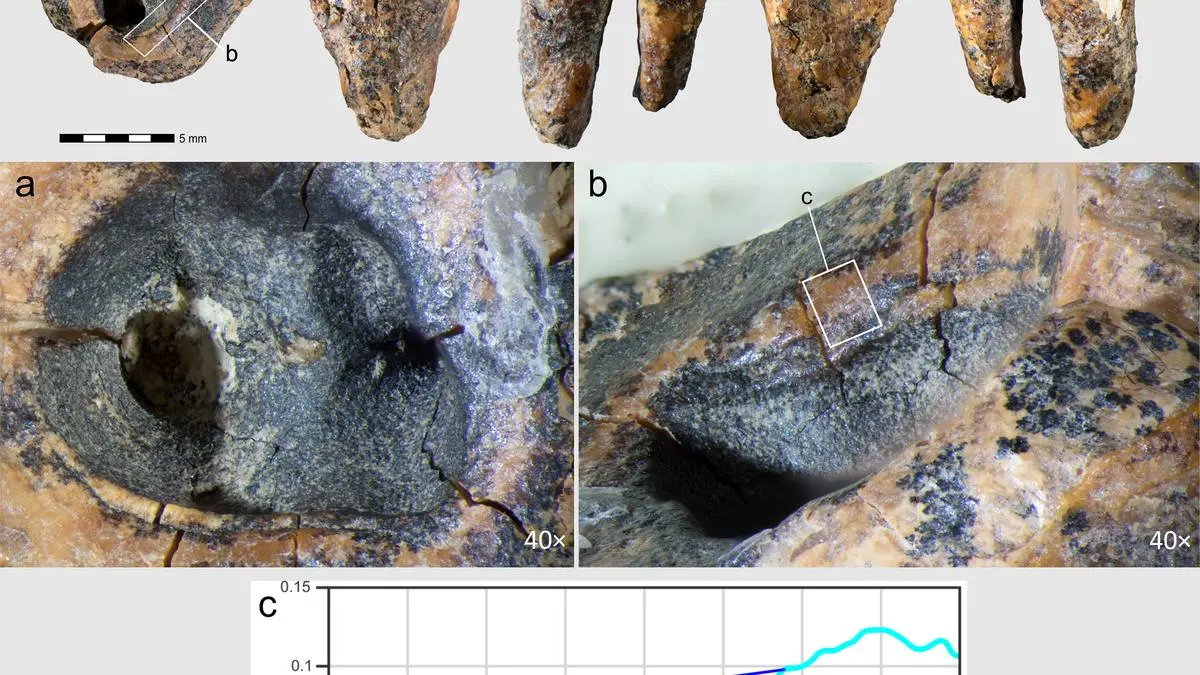
LONG IN THE TOOTH. Neanderthal molar with a ‘drilled’ hole, found in Siberia; image courtesy PLOS One
Sixty thousand years ago, it is very likely that a dentist did not have a nice reclining chair for patients. Nor did he or she have a soothing anaesthesia but they did offer molar relief.
Dentistry appears to be older than humankind itself. The human ancestor — the Neanderthal — practised it to a point of precision that surprised scientists. The clue came from a badly decayed molar discovered in 2016 in Siberia’s Chagyrskaya cave. The tooth had a suspiciously neat hole in it — researchers now believe this was not damage caused by nature but the result of someone painstakingly drilling into the rotten tooth tissue using a small stone tool.
The study, published in PLOS One, adds to growing evidence that Neanderthals were far from the brutish cavemen they were once portrayed to be. Earlier findings have suggested they cared for injured individuals, may have treated ailments with medicinal plants, and even looked after a child with Down Syndrome.
Ironically, Neanderthals probably had fewer cavities than modern humans because their diets contained much less sugar and carbohydrates.
The oldest known evidence of dental treatment by humans dates back only about 14,000 years, in Italy. The find in Chagyrskaya cave suggests that the roots of surgery and healthcare may run deeper than previously thought.
In short, long before modern dentists began asking us to “open wide”, a Neanderthal somewhere in icy Siberia seems to have heard its prehistoric equivalent.
Published on May 18, 2026







