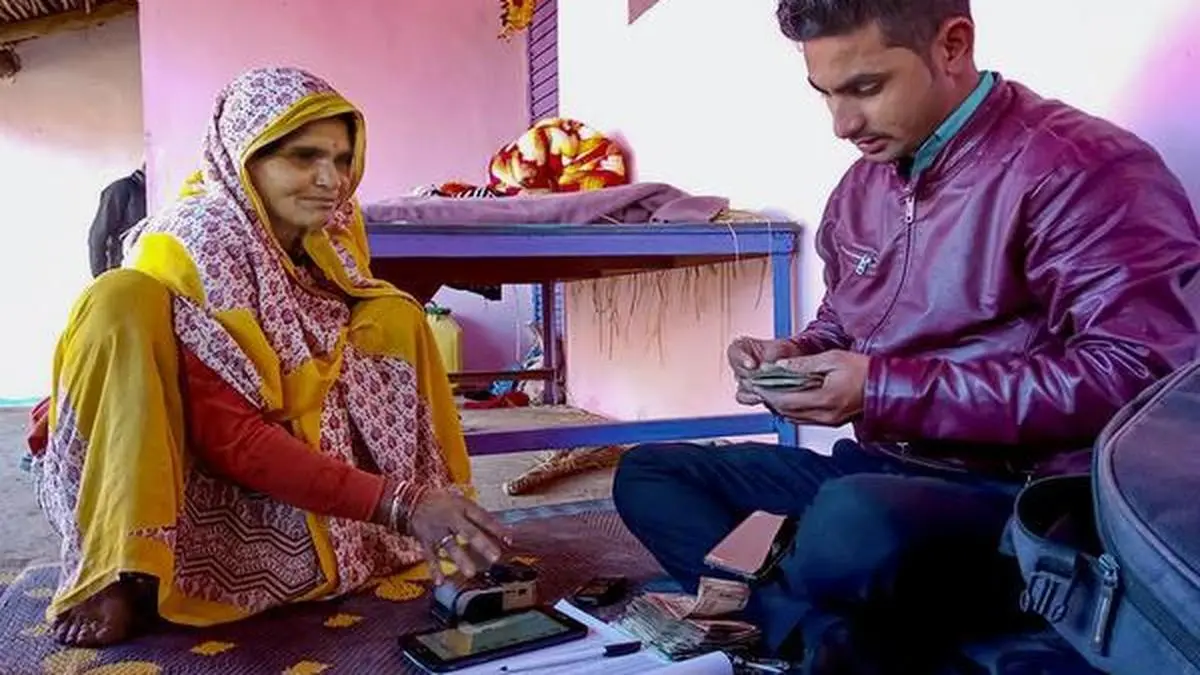
The government has launched a ₹20,000-crore Credit Guarantee Scheme for Microfinance Institutions (MFI) 2.0 to revive credit flow and ease liquidity constraints in the sector..
The government has rolled out a ₹20,000-crore Credit Guarantee Scheme for Microfinance Institutions 2.0, a move that industry body Microfinance Industry Network (MFIN) said would help revive credit flow to underserved segments and ease funding constraints in the sector.
The scheme comes amid a sharp decline in bank funding to microfinance institutions (MFIs), particularly smaller players. According to MFIN, bank lending to the sector dropped by nearly 70% between the fourth quarter of FY24 and the third quarter of FY26, severely impacting liquidity.
Jiji Mammen, CEO & ED, Sa-Dhan, said, “We sincerely thank the Government of India for introducing the Credit Guarantee Scheme for the microfinance sector 2.0, an important and timely step towards strengthening financial inclusion initiatives in the country.”
“This initiative will strengthen lenders’ confidence to lend to MFIs, which have been under stress in recent times, initially due to recovery-related issues and later to liquidity issues. Sa-Dhan had been working for such a facility for the past year. We are very happy that the Government has come out with this scheme, and we thank them,” he added.
“We are sure this step will increase credit to underserved communities and support the continued growth and resilience of the microfinance ecosystem and financial inclusion. We deeply appreciate this progressive move and look forward to its transformative impact across the sector,” he further said.
AM Karthik, Senior Vice President & Co-Group Head, Financial Sector Ratings, ICRA Ltd, said, “The MFI credit guarantee scheme is designed to channel credit flow to the sector, with particular emphasis on small and mid-sized MFIs. Under this program, 15% of lender exposure is allocated to these MFIs. Combined with a one-year moratorium period, this arrangement is expected to strengthen liquidity in the short term and support credit growth. The scheme specifies a lending rate cap (EBLR or 1-year MCLR plus 2%) and a guarantee fee of 0.5%, reflecting a credit risk cover ranging from 70% to 80% based on MFI size. Retail microfinance borrowers to also benefit from the lower interest rates provided by MFIs which avail loans under this scheme.”
Loan pricing and tenure details
Loans under the scheme will be priced at a capped rate linked to the EBLR or 1-year MCLR plus 2 per cent. MFIs, in turn, must lend at least 1 percentage point below their average rate over the past six months. Loans will have a maximum tenure of three years, including a one-year moratorium.
Exposure is capped at 20 per cent of an MFI’s AUM, with absolute limits of ₹100 crore for small, ₹200 crore for medium, and ₹300 crore for large MFIs. The scheme also mandates that at least 5 per cent of loans go to small MFIs and 10 per cent to mid-sized players.
Credit guarantee cover ranges from 70 per cent for large MFIs to 75 per cent for medium MFIs and 80 per cent for small MFIs.
Boost to lender confidence
MFIN said the guarantee programme is expected to restore lender confidence and catalyse fresh credit from banks, especially for small and mid-sized MFIs that have borne the brunt of the funding squeeze.
The launch also coincides with improving asset quality metrics.
Portfolio at risk (PAR) for 31–90 days declined to 1.6 per cent from 3.2 per cent a year ago, indicating better repayment behaviour. However, constrained liquidity has weighed on growth, with the industry’s portfolio standing at ₹3.15 lakh crore as of December 31, 2025, a 7.3 per cent sequential decline.
Borrowers impacted by credit crunch
The funding crunch has had a direct impact on borrowers, with MFIN estimating that nearly 50 lakh customers have lost access to formal credit due to reduced lending activity.
MFIN chief executive Alok Misra said the scheme is a timely intervention that will help unlock liquidity and support sustainable growth in the sector. He added that, despite improvements in credit discipline and responsible lending practices, access to bank funding remained the key challenge for MFIs.
Published on March 20, 2026







