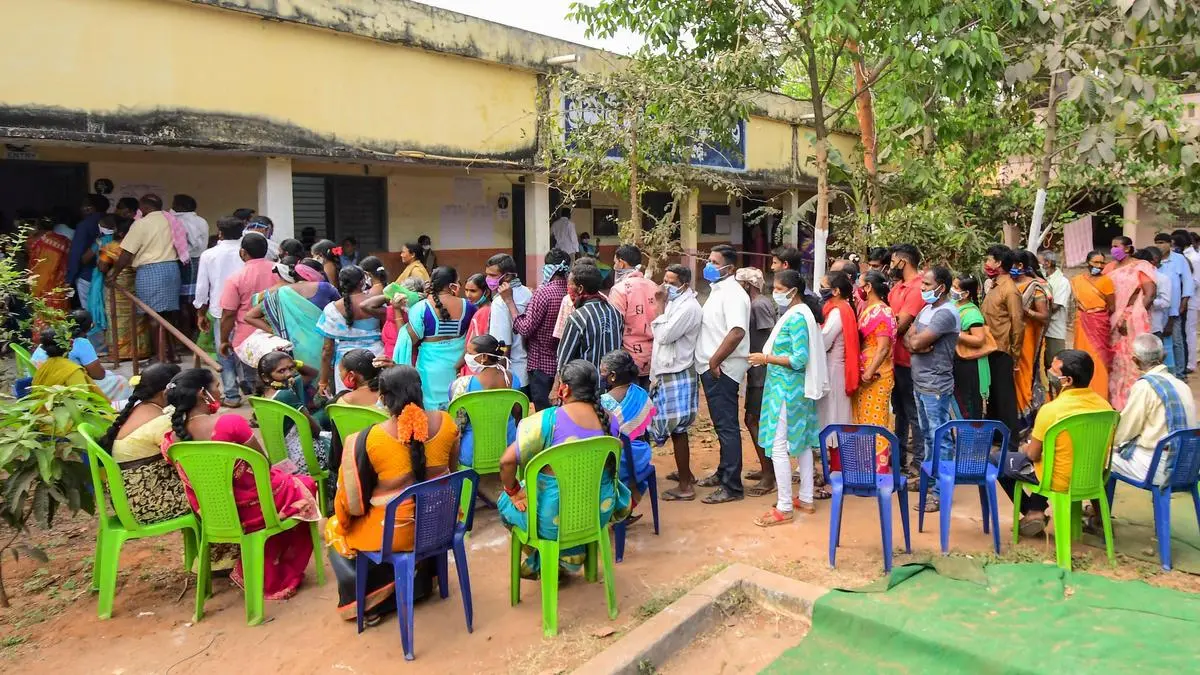
It may be noted Panchayati Raj Ministry, in collaboration with IIM Ahmedabad, has also developed a training module on OSR to strengthen the financial self-reliance of Gram Panchayats
| Photo Credit:
DEEPAK KR
Over 13,000 Gram Panchayats of Andhra Pradesh could prove as the template in generating Own Source Revenue (OSR). Data showed that they managed to collect around 79 per cent of demand in taxes and non taxes amounting to over ₹1,000 crore which is all time high.
“This will boost financial self reliance of gram panchayats and in turn lower the dependency on grants etc,” Vivek Bharadwaj, Secretary in Panchayti raj Ministry told businessline on the eve of Panhchayti Raj Diwas scheduled on Friday. The day intends to commemorate the 73rd Constitutional Amendment Act, 1992 (which came into effect on 24 April 1993) and strengthen the Panchayati Raj Institutions.
OSR has two components, — taxes (property taxes, library cess, sports cess, fire cess, water tax. drainage tax and lightening tax) and non taxes (private water tap fee, cell tower renewal charges, auction amount and trade licences). According to data, total demands by panchayats in 26 districts of Andhra Pradesh during 2025-26 was around ₹1,285 crore, while the collection was over ₹1,000 crore, which is 78.91 per cent of total demand.
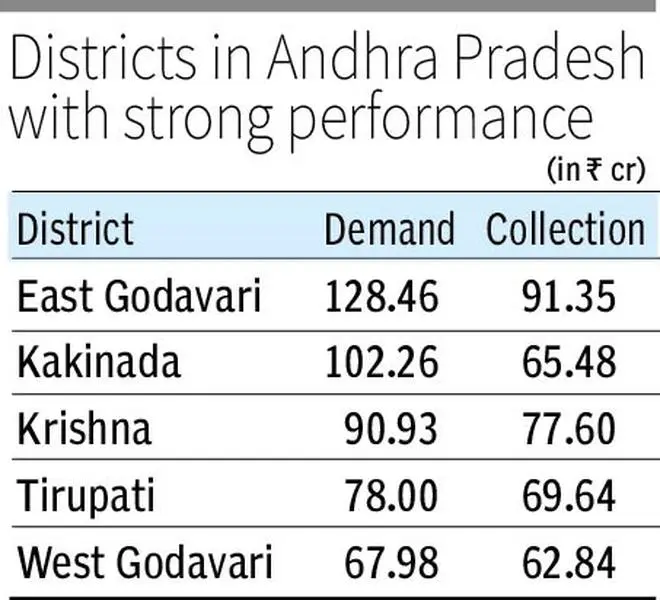
There could be various reasons fore higher collection, which include use of digital tools, training module and incentives also contributed in improving the ratio of demand and actual collection. It may be noted Panchayati Raj Ministry, in collaboration with IIM Ahmedabad, has also developed a training module on OSR to strengthen the financial self-reliance of Gram Panchayats. At the same time, the Ministry launched the Atma Nirbhar Panchayat Special Award (ANPSA) last year to promote Atmanirbharta through the augmentation of OSR by Panchayats.
In order to strengthen OSR, the Ministry launched Samarth Portal. This enables online collection of taxes and non-tax revenue such as property tax, professional tax, sanitation tax, market tax and others through a payment gateway. It supports issuance of demand notices and online payment, improving efficiency and transparency and helps Panchayats in better revenue planning while enabling the monitoring by Central government and State governments. This digital empowerment is designed to bring transparency, efficiency, and scalability to local financial administration.
“The portal had soft launch in Chhattisgarh and Himachal Pradesh. Once more and more States adopted, there will be further improvement expected in OSR,” said Bharadwaj.
The achievement of Gram Panchayats in Andhra Pradesh is also important from the point of view of recommendations by 16th Finance Commission. It paid special emphasis on the need for local bodies to generate their own resources. Accordingly, it recommended total grants of over ₹4.35 lakh crore for the Rural Local Bodies (RLBs) for the award period of 2026-31. The grant allocated for RLBs is further sub-divided into Basic grant of over ₹3.48 lakh crore and performance linked component of little over ₹87,000 crore.
According to a recent written reply by Panchayati Raj Minister Rajiv Ranjan Singh in Lok Sabha, the Commission observed that the own resources generated by the vast majority of local bodies, are minuscule. They remain heavily, if not entirely, dependent on the Union and State governments to carry out their mandate. Further it said that successive Finance Commissions have stated that the primary responsibility for the provision of fiscal resources for local bodies rests with the State Governments.
Published on April 23, 2026







