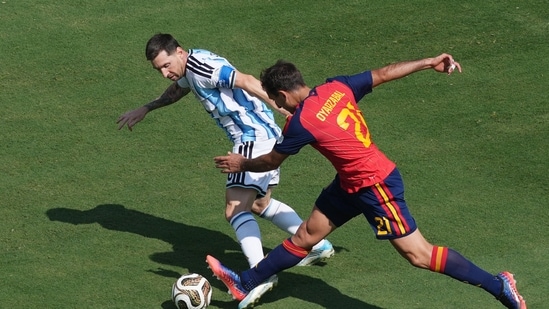
Extra time in the FIFA World Cup final between Argentina and Spain follows the same rules as all knockout-stage matches. It lasts 30 minutes in total, with two 15-minute halves and a short break between them as teams switch end.
Spain and Argentina are locked in a battle at the World Cup final, with the match currently underway at MetLife Stadium.
Also Follow: Spain vs Argentina LIVE Score, FIFA World Cup Final
What is Extra time and how long does it last?
If the 90 minutes of standard gameplay fail to produce a winner in the World Cup knockout stages, extra time is used to determine one. This serves as a tiebreaker phase before the match moves to penalties.
Extra time lasts a total of 30 minutes, broken into two 15-minute halves, plus stoppage time added onto the end of each period.
At half-time, the teams switch sides, just like they do during a regular 90-minute match.
There is no golden goal rule at the World Cup, which means the match does not end immediately even if a team scores during extra time. The game continues until the full 30 minutes are completed.
Also Read: FIFA World Cup trophy value: How much is it worth and is it made of real gold?
What happens if the score is still tied after extra time?
If match is still tied after extra time then the match will be decided by a penalty shootout, where a series of players from each side take turns shooting at the goal.
A coin toss by the referee determines which goal the shootout will be taken at, and a second toss usually decides which team strikes first. Each team selects five players for the first round, and teams alternate attempts.
Only players who were on the pitch at the end of extra time are allowed to take penalties, and any eligible player, including the goalkeeper, can be chosen as a striker. If the teams remain tied after five penalties each, the shootout goes into sudden death, where each team takes one kick per round until one team scores and the other misses in the same round.







