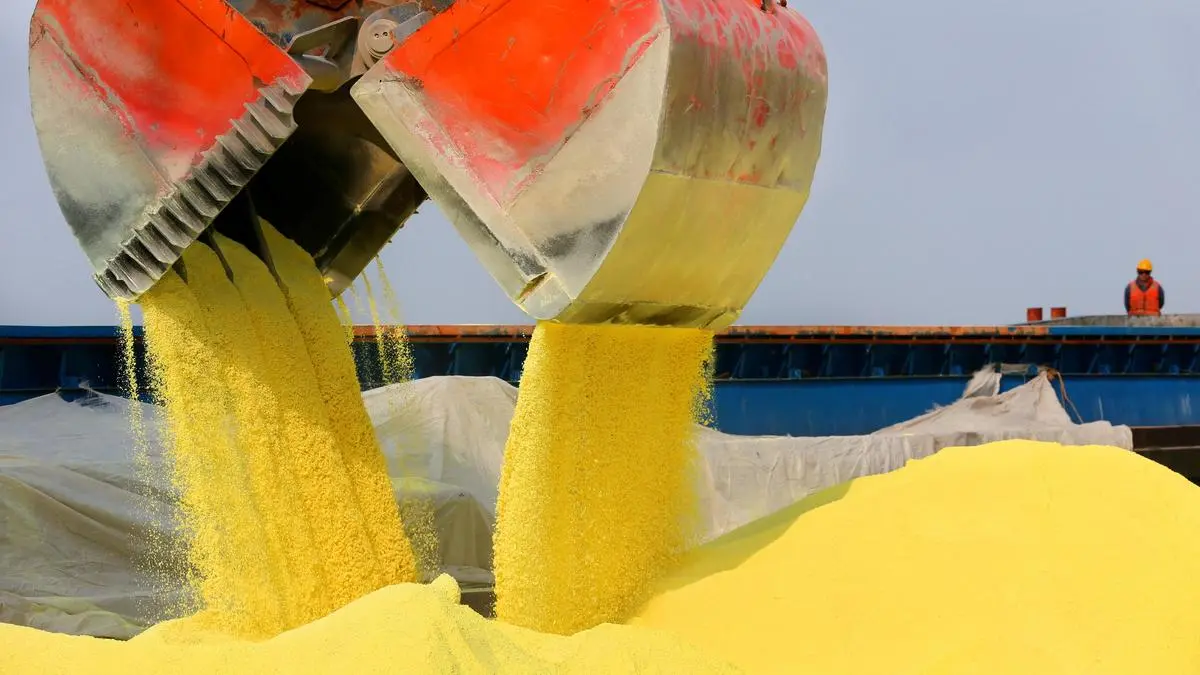
Sulphur is used to produce fertilisers such as ammonium sulphate and single super phosphate, both widely used in India.
| Photo Credit:
CHINA STRINGER NETWORK
India is considering a proposal to restrict sulphur exports after industry lobby groups raised concerns about soaring prices and disruption to supplies from the Gulf, three sources aware of the development said. Export restrictions could add to upward pressure on global sulphur prices, as supplies from the Middle East are disrupted by the Iran war and with China also set to restrict sulphuric acid exports from next month.
“Sulphur supplies are tightening due to falling imports from the Middle East,” a senior government official with knowledge of the proposed restrictions told Reuters. “Allowing exports could further pressure availability, so discussions are under way on whether exports should be limited.”
Sulphur is used to produce fertilisers such as ammonium sulphate and single super phosphate, both widely used in India.
India meets more than half of its sulphur requirement through imports of around 2 million metric tons a year, with nearly half sourced from the Middle East.
It also exports around 800,000 tons of sulphur a year, with more than 90 per cent going to China.
Industry lobby groups asked the government in New Delhi to ban these exports, according to a company executive aware of the development, who declined to be named due to the sensitivity of the matter.
A government spokesperson did not respond to a Reuters request for comment.
India has already directed oil refineries, which account for most domestic sulphur output, to supply adequate amounts to local fertiliser companies. The Middle East accounted for around a quarter of global sulphur production at 83.87 million metric tons last year, according to the US Geological Survey. But the main shipping route through the Strait of Hormuz has been severely disrupted since the US-Israeli attacks on Iran began on February 28.
The sulphur shortage is also being felt in the mining industry, which uses sulphuric acid to dissolve metal from ore via a process known as leaching.
Nickel makers in Indonesia, as well as some copper producers in Chile and the Democratic Republic of Congo, face having to pay higher prices as competition intensifies for sulphuric acid.
Published on April 16, 2026







