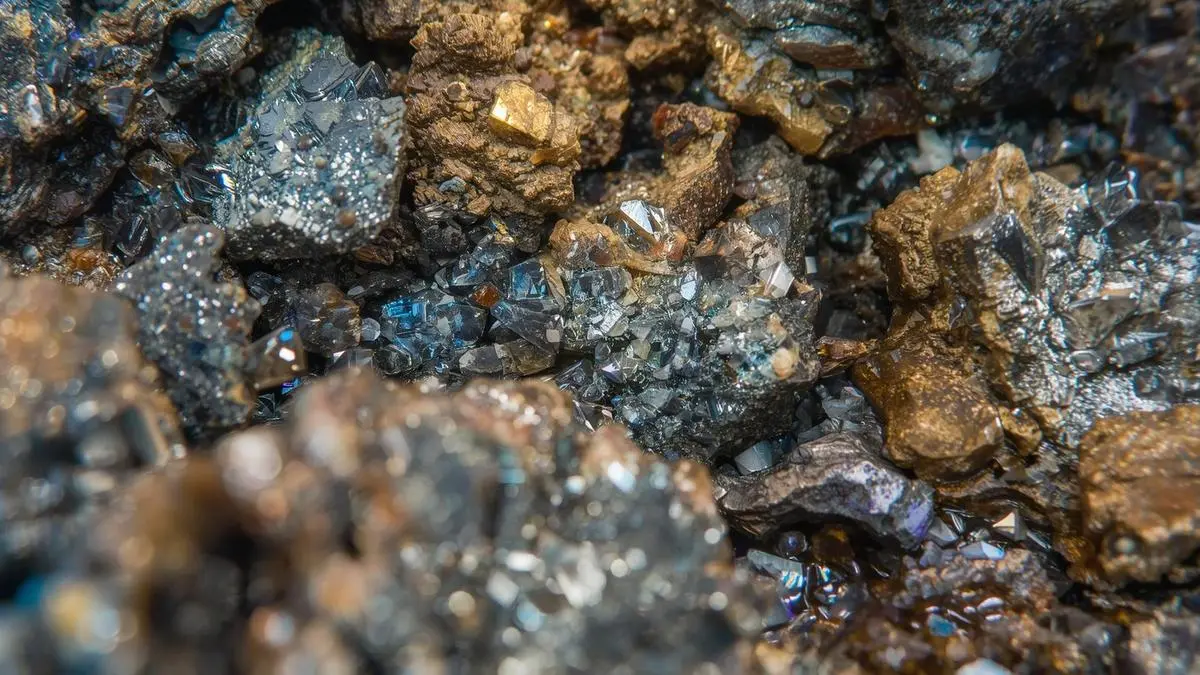
While India targets 500 GW of green energy capacity by 2030 and higher non-fossil power share, it relies heavily on imports of lithium, cobalt and nickel.
The conflict in the Middle East is pushing India, which imports 80%
of its oil and gas, to accelerate its shift to renewables, but
the country is also dependent on imports for the minerals and
rare earth metals needed to power its green transition.
India aims to install 500 gigawatts of green energy capacity
including solar, wind and hydropower by 2030, alongside
expanding battery storage and electric transport.
The country’s latest climate goals, announced last month,
also aim for 60% power capacity from non-fossil sources by 2035,
which could further increase demand for critical minerals.
While India produces some green minerals like copper and
graphite, it remains highly dependent on imports for several
others such as lithium, cobalt and nickel.
A report by NITI Aayog, the government’s premier think-tank,
found demand for these minerals is likely to rise sharply by
2030, driven by demand for renewable energy, storage and
electric vehicles.
A separate analysis by the Federation of Indian Chambers of
Commerce & Industry and Deloitte warned this rising demand could
expose India to supply chain risks unless it built domestic
capabilities.
India’s energy transition is increasingly tied to securing
these minerals and building processing capacity, areas where it
remains dependent on foreign suppliers.
It also faces difficult choices on where to invest, whether
to prioritise mining, processing or recycling, each requiring
time, capital and technological capability, energy experts told
Thomson Reuters Foundation.
“Critical minerals are a real strategic vulnerability for
India. The more immediate weak link is processing and refining,
not just mining,” said Sehr Raheja, programme officer at the
Centre for Science and Environment, a Delhi-based think tank.
“Batteries, electric vehicles and clean-tech manufacturing
are more directly exposed, but the broader power transition is
not immune,” Raheja said.
GLOBAL RACE FOR MINERALS
Building the entire value chain domestically will take time,
said Saloni Sachdeva Michael, lead energy specialist at the
Institute for Energy Economics and Financial Analysis, an energy
policy think-tank.
Last year India launched a National Critical Mineral Mission
to boost domestic supply through mining, recycling and overseas
sourcing. But progress has been slow, with limited participation
in mining auctions, long project timelines, and land and
environmental hurdles.
While India is focusing on expanding mining of these
minerals, the bigger hurdles lie in processing and refining
them.
“Even if companies want to set up refining units, there are
gaps around financing, technology and clarity on who will buy
the processed materials,” Sachdeva said, adding that cost
competitiveness with global suppliers is a concern.
The global race for these minerals is intensifying.
Resource-rich countries, particularly in Africa, are pushing to
capture more value domestically through processing, while China
dominates refining and major economies such as the United States
and European Union are moving to lock in supply chains.
While India is a late entrant in this race, Sachdeva said it
could still build a role in processing, refining and recycling,
even if it continues to rely on imports for some materials.
India is the third-largest producer of electronic waste and
is making early investments to recover more minerals from waste.
“Recycling is the lowest hanging fruit for India right now,”
Sachdeva said.
For India, Raheja and Sachdeva said the challenge was no
longer just adding renewable capacity, but building the material
backbone needed to support it in a tightening global supply
system.
Published on April 8, 2026







