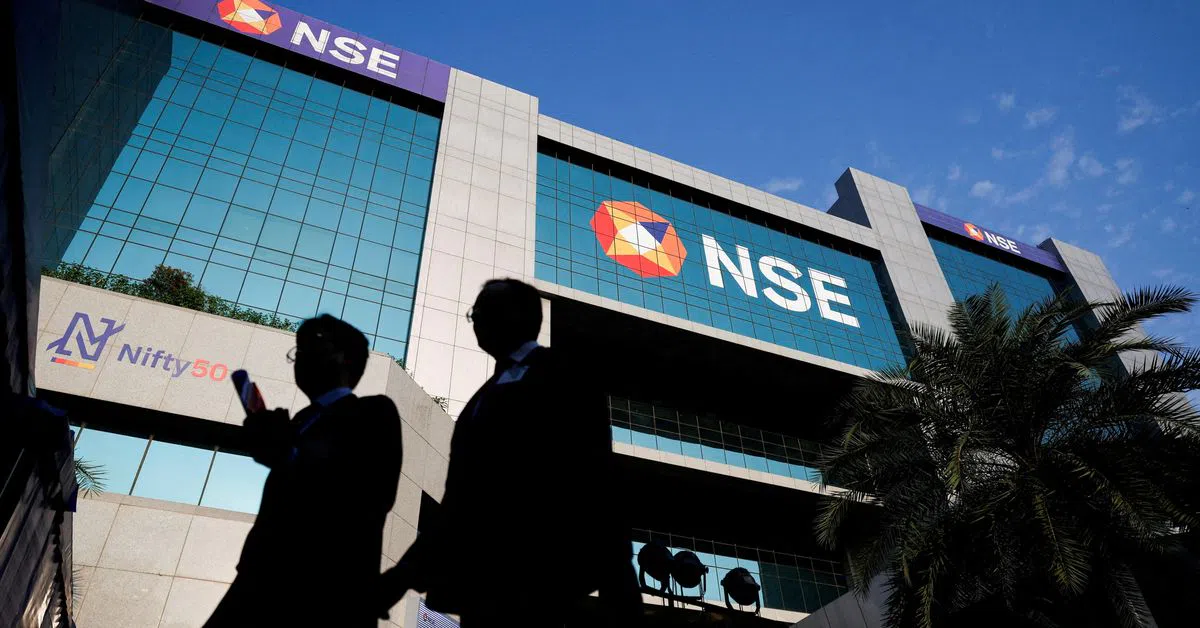
The National Stock Exchange’s (NSE’s) long-awaited initial public offering (IPO) is set to unlock massive gains for a wide spectrum of shareholders.
Data in the draft red herring prospectus (DRHP) show that several of the largest institutional investors, who are also early entrants, acquired shares at exceptionally low prices.
SBI is offering up to 24.7 million shares in the offer for sale (OFS), while Bank of Baroda has offered 10.89 million shares.
At present, SBI holds a 3.23 per cent stake in the company. Post-IPO, the stake will decline to 2.2 per cent.
Life Insurance Corporation of India (LIC), the largest shareholder with a 10.72 per cent stake, is not diluting its holding in the IPO.
Stock Holding Corporation of India acquired its stake at ₹0.46 per share.
Among other public sector undertakings (PSUs), The New India Assurance Company, National Insurance Company and The Oriental Insurance Company each hold shares acquired at ₹0.32 apiece, while United India Insurance’s acquisition cost is ₹0.50 per share.
Among other selling shareholders, MS Strategic (Mauritius) has an acquisition cost of ₹66.54 per share, Canada Pension Plan Investment Board’s weighted acquisition cost is around ₹324.13 per share, and that of Aranda Investments (Mauritius) is ₹62.38 per share.
The IPO will comprise up to 148.9 million equity shares, or nearly 6 per cent of NSE’s paid-up capital, of face value Re 1 each, with no fresh issue component. This means the exchange itself will not receive any proceeds from the offering. Instead, all funds raised will go to the selling shareholders.
The wide dispersion in acquisition prices sets the stage for substantial gains across shareholder categories once the IPO price is finalised. Early institutional backers, particularly public sector banks and insurers, are poised for outsized returns, while later-stage investors are also likely to benefit from appreciation over their entry prices.
NSE shares are currently trading at around ₹2,055 apiece in the unlisted market.
A significant factor influencing these costs is the 4:1 bonus issue undertaken in November 2024, which effectively reduced the acquisition cost for long-term investors.
While early investors are set to make multi-fold gains, recent transactions have taken place at much higher acquisition costs. The weighted average acquisition cost of shares transacted over the past year stands at ₹1,909.02, with deals occurring in a range of ₹1,350 to ₹2,260 per share.
Over a three-year period, however, the average drops sharply to ₹229.23, reflecting the presence of legacy holdings and bonus issuances.
With momentum building around the IPO, NSE has seen a surge in retail investors over the past two years, making it one of the most widely traded stocks in the unlisted market.







