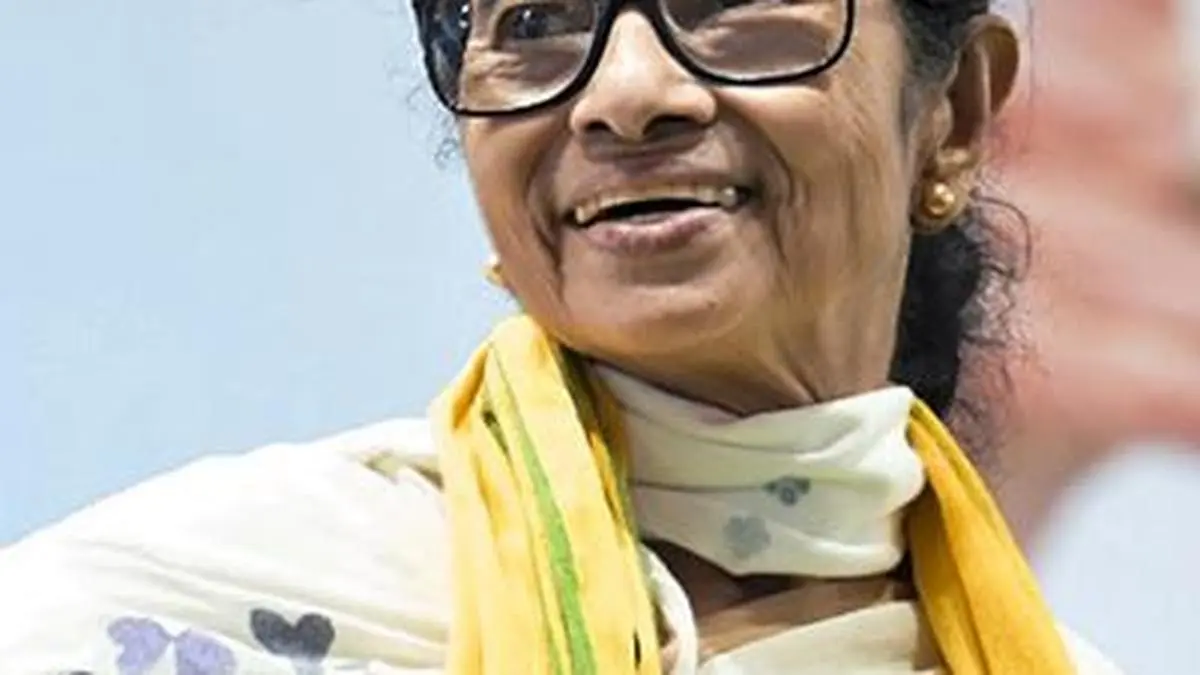
Following the apex court’s order, West Bengal Chief Minister and Trinamool Congress supremo Mamata Banerjee said she was very happy about the development
| Photo Credit:
–
Shibu Paul of Habra Assembly constituency in North 24 Parganas and Ubaid Rashed Molla of Kolkata’s Chowrangee Assembly constituency now share the same uncertain fate — both are eagerly awaiting notices from appellate tribunals.
Paul, who applied before the appellate tribunals for inclusion of his name and those of his four family members in the electoral rolls after they had been struck off following SIR adjudication process, has so far not received any notices.
“We are a family of five. After discovering that all of our names were deleted from the voters list even after judicial scrutiny, we promptly applied before the appellate tribunal. Twenty days have gone by, we are yet to get any notices for hearing. Our constituency is going to polls on April 29. Time is running out fast. I doubt we will be able to vote this time despite all necessary and valid documents,” says the thirty-eight year old, who had casted votes in previous Assembly and Lok Sabha elections.
Twenty-year-old Molla, a first year medical student, welcomes the Supreme Court’s order, which stated that electors purged from the voters list during the Special Intensive Revision (SIR) in West Bengal, but cleared by the appellate tribunals at least two days before polling, should be allowed to vote in the Assembly elections this month.
“But I am completely perplexed right now. Although I applied before the appellate tribunal on April 5 after my name was deleted from the voters list even after the adjudication procedure, I have not so far received any notices from it for hearing. I checked the status last night, it is still showing pending. I would be able to vote if the tribunal clears my case by April 27. Only ten days are remaining,” said Molla, who casted his vote in the 2024 Lok Sabha elections. Moreover, his parents’ names were in the 2002 voter list, and their names are also present in the current electoral rolls.
According to lawyers of applicants, approaching the appellate tribunals for inclusion of their names in the electoral rolls, time taking procedures at appellate tribunals and procedural hitches thereafter have casted doubt on the Supreme Court’s significant relief to West Bengal citizens whose right to vote was denied in SIR under the “logical discrepancy” category.
“So far my knowledge and practicing experience are concerned, it is quite impossible for any of the applicants, who would get appellate tribunals’ order in favour of him or her, to cast votes in the upcoming Assembly elections. Time is the major factor here. As of now no applicants have received hearing notices. Moreover, there is no clarity on how many days would be required for hearing. After the hearing, tribunals will prepare orders on inclusion or exclusion in the voters list. Remember that in our State, the first phase of polling will happen on April 23,” senior advocate Somen Dutta said.
Notably, more than 34 lakh appeals were filed before the appellate tribunals in the State as on April 11. The Election Commission of India (ECI) has constituted 19 appellate tribunals in Bengal to hear appeals related to the inclusion or exclusion of voters in the electoral rolls as part of the Special Intensive Revision exercise in the State.
The apex court, issuing directions in exercise of its extraordinary constitutional powers under Article 142, ordered the Election Commission to publish a “supplementary revised electoral roll” containing the names of those who won their appeals by April 21, ahead of the first phase of polling on April 23, or by April 27, prior to the second phase on April 29.
“Wherever the Appellate Tribunals are able to decide the appeals by April 21 or April 27, as the case may be, such appellate orders shall be given effect to by issuing a supplementary revised electoral roll, and all necessary consequences with respect to the right to vote shall follow. However, it goes without saying that the mere pendency of appeals preferred by excluded persons before the Appellate Tribunals shall not entitle them to exercise their right to vote,” the court ordered. However, those whose appeals remain pending before the tribunals would not be allowed to vote.
Following the apex court’s order, West Bengal Chief Minister and Trinamool Congress supremo Mamata Banerjee said she was very happy about the development. “I am proud of our judiciary. This decision has come in the case filed by me. Maa Maati Manush jindabad. There is no one who is happier than I today,” she said.
West Bengal BJP president Samik Bhattacharya said the saffron party was not satisfied with the manner in which the SIR was carried out in Bengal. He alleged that the Trinamool Congress “colluded” with a section of officials and used the SIR to delete the names of Matuas, Hindu refugees, and people who have been living in the State for generations.
Published on April 17, 2026







