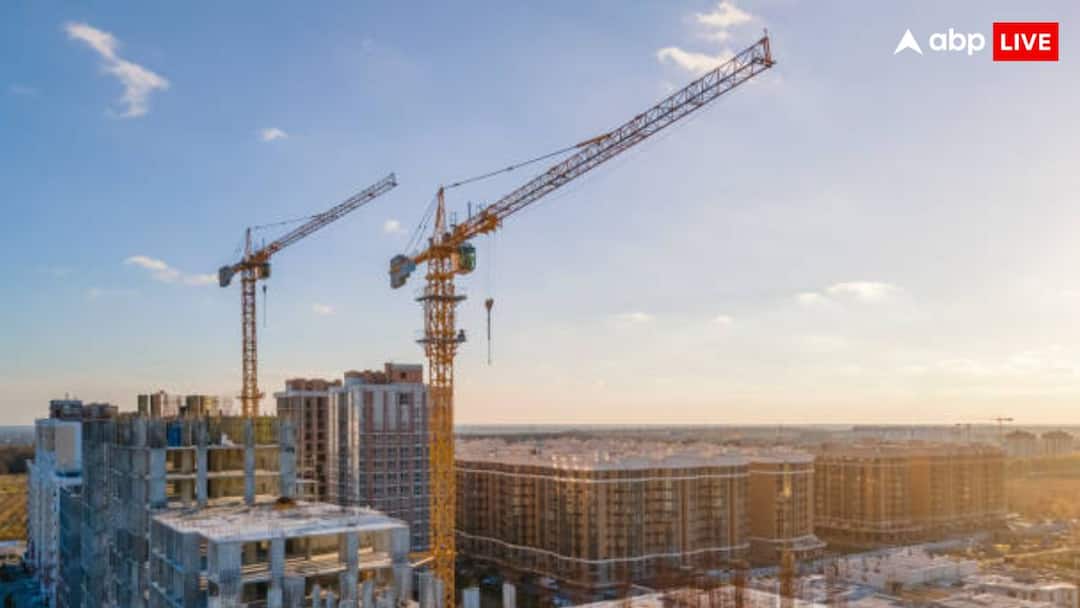
यूनियन बजट पर रियल एस्टेट की नजरें टिकी; उद्योग का दर्जा मिलने की बढ़ी उम्मीद, जानिए डिटेल

यूनियन बजट पर रियल एस्टेट की नजरें टिकी; उद्योग का दर्जा मिलने की बढ़ी उम्मीद, जानिए डिटेल


Real Estate Budget 2026: इस बार बजट 2026 को लेकर रियल एस्टेट सेक्टर की नजरें खास तौर पर सरकार पर टिकी हुई हैं. रविवार 1 फरवरी को पेश होने वाले इस बजट से रियल स्टेट सेक्टर को कई बड़े फैसलों की उम्मीद है.

बिल्डर्स और डेवलपर्स चाहते हैं कि सरकार उन्हें उद्योग का दर्जा दे. साथ ही जमीन से जुड़े काम ऑनलाइन करने, मंजूरी मिलने की प्रक्रिया में तेजी और आसान सिंगल-विंडो क्लीयरेंस सिस्टम शुरू करने की उम्मीद की जा रही हैं. आइए जानते हैं, इस बारे में….

क्या है संस्थाओं का कहना?

रियल एस्टेट सेक्टर से जुड़े संगठनों और बिल्डरों का मानना है कि अगर इस क्षेत्र को उद्योग का दर्जा मिलता है, तो उन्हें कम ब्याज पर लंबे समय के लोन लेने में आसानी होगी. साथ ही फंडिंग के बेहतर विकल्प भी मिल सकेंगे.

डेवलपर्स का कहना है कि, यह मांग काफी समय से की जा रही है. अब उन्हें बजट से पॉलिसी सपोर्ट मिलने की उम्मीद है, जिससे सेक्टर को स्थिरता और मजबूती मिल सके.

जीडीपी और रोजगार में रियल एस्टेट की भूमिका

मनीकंट्रोल में छपी एक रिपोर्ट के अनुसार, सिग्नेचर ग्लोबल (इंडिया) लिमिटेड के संस्थापक और चेयरमैन प्रदीप अग्रवाल का कहना है कि रियल एस्टेट सेक्टर अभी देश की जीडीपी में करीब 7 प्रतिशत का योगदान दे रहा है. इससे 200 से ज्यादा जुड़े हुए सेक्टरों में रोजगार मिलता है.

उन्होंने बताया कि अगर इस क्षेत्र को उद्योग का दर्जा मिल जाता है, तो बड़ी संस्थाओं से फंडिंग मिलने में आसान होगी. उन्होंने कहा कि, आगे चलकर यह सेक्टर आर्थिक विकास में और मजबूत भूमिका निभा सकता है. सरकार से सही नीतियों का साथ मिलने पर साल 2047 तक इसका योगदान जीडीपी में 15 प्रतिशत तक पहुंच सकता है.

वहीं, ट्राइबेका डेवलपर्स ग्रुप के सीईओ रजत खंडेलवाल ने कहा कि सेक्टर को ऐसी स्थायी नीतियों की जरूरत है, जिससे घर बनाने वालों और खरीदने वालों दोनों को फायदा हो. उनका मानना है कि उद्योग का दर्जा मिलने से सस्ता लोन और लंबी अवधि की पूंजी मिल सकेगी. जिससे बिल्डरों के काम करने के तरीके में मदद मिलेगी.  

सिंगल-विंडो सिस्टम की जरूरत

रियल एस्टेट डेवलपर्स सिंगल-विंडो क्लीयरेंस सिस्टम लागू करने की उम्मीद कर रहे हैं. जिससे अलग-अलग विभागों की सभी मंजूरियां एक ही डिजिटल प्लेटफॉर्म पर मिल सकेंगी. जिससे सरकारी प्रक्रियाएं आसान बनेंगी. उनका मानना है कि इस व्यवस्था से प्रोजेक्ट समय पर पूरे होंगे और पूरे सिस्टम में पारदर्शिता भी बढ़ेगी.

यह भी पढ़ें: India- EU के बीच ऐतिहासिक समझौते की तैयारी, रक्षा से लेकर व्यापार तक आएगा बदलाव, 2 अरब लोगों का बनेगा बाजार


Source link

IIFL may consider IPO for housing finance company arm in 3-6 months, says MD

IIFL may consider IPO for housing finance company arm in 3-6 months, says MD


Nirmal Jain, Founder, IIFL Group and Managing Director, IIFL Finance

Non-bank major IIFL Finance’s board could consider planning an initial public offering (IPO) for its housing finance company (HFC), IIFL Home Finance, over the next 3-6 months, group Founder Nirmal Jain told businessline. The IIFL group could also consider onboarding newer investors to its microfinance subsidiary IIFL Samasta Finance, he said.

“Listing plans are material information and we will have to disclose to (the) exchanges. At this point, we will take it to the board and discuss in maybe the next 3-6 months. The HFC (IIFL Home Finance) also has external stakeholders,” Jain said. “We will try to onboard new investors (to IIFL Samasta Finance). The MFI sector has revived, business has revived, the trough is behind us and things are looking up. We will find good investors or partners, and talks would happen going ahead. As of now we have not held talks for a divestment,” he added.

IIFL Finance holds 80 per cent stake in its housing finance arm, with Abu Dhabi Investment Authority (ADIA) holding the rest. The microfinance subsidiary is 100 per cent owned by IIFL Finance. The assets under management of IIFL Home Finance stood at ₹39,628 crore in Q3, while IIFL Samasta Finance’s AUM was at ₹9,681 crore.

I-T special audit

IIFL Finance’s shares had cracked up to 15 per cent last Thursday, after it informed exchanges that the Income Tax (I-T) department has directed the company to get its account audited for a specified block period and appoint a special auditor for the same. Jain said that he does not foresee any penalty or additional liability from this audit.

“When the search was conducted a year ago, officials could not see entire accounts and recommended special audit. Special audit is a very generic term. There are certain areas where they collected transactions data like, for instance, in gold loans cash payments, or cash receipts from customers, reconciliation etc.,” Jain said.

“They took 2-3 days just to take backup because there are millions of transactions…So, this is not a new development and if you ask me it may be a good thing for us. It puts things to rest rather than the assessing officer not being able to estimate liable tax and assesses on worst estimate. I don’t expect any penalty or additional liability,” he added.

Business guidance

IIFL Finance last week also reported its consolidated net profit for Q3FY26 at ₹501 crore, up over six-fold from same period last year, as income from off-book assets improved sharply. The NBFC’s AUM rose 38 per cent on-year to ₹98,336 crore.

Jain said that the NBFC has a large scope for increasing return on equity (RoE) going ahead, now that the Reserve Bank of India (RBI) has lifted the restriction on IIFL Finance from offering gold loans.

“(Even) when our loan AUM had reduced, we did not reduce our operating cost. We held on to our employees, hiked their salaries and bonuses across branches so our fixed overheads were present even during RBI-ordered embargo on gold loans. At that time, our gold loan book reduced by 70 per cent,” he said.

“Now, as the book grows, we get the operating leverage. Historically, our RoE used to be 20 per cent. So, we can expand on current RoE,” he said, adding that the NBFC is targeting 20-25 per cent AUM growth going ahead, and improvement in net interest margin. IIFL Finance will also consider raising ₹1,000-₹1,500 crore via NCDs in February, he said.

Published on January 26, 2026


Source link

India- EU के बीच ऐतिहासिक समझौते की तैयारी, रक्षा से लेकर व्यापार तक आएगा बदलाव, 2 अरब लोगों का

India- EU के बीच ऐतिहासिक समझौते की तैयारी, रक्षा से लेकर व्यापार तक आएगा बदलाव, 2 अरब लोगों का


India EU Trade Deal: भारत-यूरोपीय संघ शिखर सम्मेलन में मंगलवार को मुख्य घोषणा में मुक्त व्यापार समझौते पर बातचीत पूरी होने, रणनीतिक रक्षा समझौते को अंतिम रूप देने और भारतीय और यूरोपीय नागरिकों की आवाजाही से जुड़ा ढांचा तय किए जाने की संभावना है.

प्रधानमंत्री नरेन्द्र मोदी शिखर सम्मेलन में यूरोपीय आयोग की अध्यक्ष उर्सुला वॉन डेर लेयेन और यूरोपीय परिषद के अध्यक्ष एंटोनियो कोस्टा की मेजबानी करेंगे. संभावना है कि इस शिखर सम्मेलन में दोनों पक्ष व्यापार और सुरक्षा पर अमेरिका की नीतियों से उत्पन्न भू-राजनीतिक उथल-पुथल से निपटने के लिए एक व्यापक दृष्टिकोण विकसित करेंगे. 

गणतंत्र दिवस समारोह में मुख्य अतिथि के रूप में  की शिरकत

कोस्टा और वॉन डेर लेयेन ने कर्तव्य पथ पर आयोजित 77वें गणतंत्र दिवस समारोह में मुख्य अतिथि के रूप में शिरकत की. वॉन डेर लेयेन ने सोमवार को कहा, एक सफल भारत दुनिया को अधिक स्थिर, समृद्ध और सुरक्षित बनाता है और हम सभी को इससे लाभ होता है.

पिछले हफ्ते यूरोपीय संघ के शीर्ष नेता ने कहा कि भारत और यूरोपीय संघ एक ‘ऐतिहासिक व्यापार समझौते’ के करीब हैं. जिससे दो अरब लोगों का एक बाजार बनेगा. जो वैश्विक सकल घरेलू उत्पाद (जीडीपी) का लगभग एक चौथाई हिस्सा होगा. 

दोनों पक्षों के बीच काफी समय से हो रही वार्ता

यूरोपीय संघ और भारत ने मुक्त व्यापार समझौते के लिए बातचीत पहली बार 2007 में शुरू की थी. लेकिन महत्वाकांक्षाओं में अंतर के कारण 2013 में बातचीत स्थगित कर दी गई थी. बातचीत जून 2022 में फिर से शुरू हुई. संभावना है कि यह मुक्त व्यापार समझौता कई क्षेत्रों में द्विपक्षीय संबंधों को और मजबूत करने में गुणात्मक बदलाव लाएगा.

इन मुद्दों पर रहेगा ध्यान?

शिखर सम्मेलन का मुख्य फोकस व्यापार, रक्षा एवं सुरक्षा, जलवायु परिवर्तन, महत्वपूर्ण प्रौद्योगिकियों और नियम-आधारित वैश्विक व्यवस्था को सुदृढ़ करने पर होगा. मुक्त व्यापार समझौते को अंतिम रूप देने के अलावा, दोनों पक्ष शिखर सम्मेलन में एक रक्षा ढांचागत समझौता और एक रणनीतिक एजेंडा भी प्रस्तुत करेंगे.

भारत और यूरोपीय संघ 2004 से रणनीतिक साझेदार रहे हैं. अधिकारियों ने बताया कि प्रस्तावित सुरक्षा एवं रक्षा साझेदारी (एसडीपी) दोनों पक्षों के बीच रक्षा एवं सुरक्षा सहयोग को और गहरा करने में सहायक होगी.

एसडीपी से रक्षा क्षेत्र में आपसी तालमेल बढ़ेगा और भारतीय कंपनियों के लिए यूरोपीय संघ के ‘सेफ’ (सिक्योरिटी एक्शन फॉर यूरोप) कार्यक्रम में भागीदारी के रास्ते खुलेंगे. शिखर सम्मेलन में भारत और यूरोपीय संघ सूचना सुरक्षा समझौते (एसओआईए) पर बातचीत भी शुरू करने वाले हैं. 

भारतीय कामगारों को होगा फायदा

भारतीय कामगारों की यूरोप आवाजाही को आसान बनाने से जुड़ा समझौता ज्ञापन भी शिखर सम्मेलन का एक अहम नतीजा रहने की उम्मीद है. अधिकारियों के मुताबिक, यह समझौता यूरोपीय संघ के सदस्य देशों और भारत के बीच आवाजाही से जुड़ी पहल को आगे बढ़ाने का ढांचा प्रदान करेगा. 

यह भी पढ़ें: PVR INOX ने बेचा अपना 4700BC ब्रांड! 226.8 करोड़ रुपये में इस कंपनी से हुआ सौदा, जानिए डील के बारे में


Source link

Markets eye capex push, steady fiscal math in Budget run-up

Markets eye capex push, steady fiscal math in Budget run-up


For equity investors, the policy message is likely to reinforce preference for capital-goods, construction, metals and infrastructure-linked stocks
| Photo Credit:
scyther5

Indian equities are heading into the Union Budget with expectations of a steady fiscal stance and a renewed push on capital expenditure, as investors position for infra-linked earnings growth amid limited room for fresh stimulus.

Market participants broadly expect the government to stick to its fiscal consolidation path, with the FY27 deficit likely to be set in the low-4 per cent range of GDP even as gross market borrowing remains elevated to meet heavy bond redemptions and sustain infrastructure outlays.

“The upcoming Budget is expected to take a steady and disciplined approach. We see the FY27 fiscal deficit at around 4.3 per cent of GDP, with the government remaining committed to its medium-term 50 ± 1 per cent debt-to-GDP target. Gross market borrowing is likely to stay elevated at roughly ₹16 lakh crore, reflecting heavy redemptions and a continued focus on capex,” said Churchil Bhatt, Executive Vice-President – Investment, Kotak Mahindra Life Insurance.

For equity investors, the policy message is likely to reinforce preference for capital-goods, construction, metals and infrastructure-linked stocks, which stand to benefit directly from continued public spending on roads, railways and manufacturing capacity. With committed revenue expenditure already absorbing a large share of government receipts, economists see little headroom for broad consumption-boosting measures this year.

Export support

Instead, markets are tracking targeted support for export-oriented sectors facing global headwinds, alongside incentives tied to manufacturing and employment schemes that could support earnings visibility in select segments.

“The need of the hour is to encourage both government and private sector capex. Some tax relief measures for sovereign funds investing in India could also serve as a strong catalyst. Financials and pharma remain well placed, while metals may continue to perform but are running a bit ahead of fundamentals,” said Arpit Jain, Joint MD at Arihant Capital Markets Ltd.

Tax reforms aimed at improving ease of doing business could also influence sentiment, particularly for mid-caps and deal-driven sectors. “On the ease of doing business front, industry is looking for greater tax clarity and simplification, from rationalising multiple TDS rates and extending deductions for research and development, to linking buyback taxation with accumulated profits,” said Abhishek Mundada, Partner, Dhruva Advisors, adding that clearer rules could reduce disputes and encourage corporate restructuring.

Start-ups’ demand

Start-ups and technology firms are watching out for deferment in taxation on employee stock options until the point of sale to avoid double taxation. There is also a request to align capital gains tax treatment for unlisted shares with that of listed ones. “Start-ups are riskier, less liquid and demand longer holding periods — yet are taxed more harshly. Correcting this imbalance is critical to encourage private capital into India’s innovation economy,” said Devansh Lakhani, Director, Lakhani Financial Services.

Real estate-linked stocks may also be in focus if the Budget delivers relief for homebuyers. There is also demand for taxation rationalisation for real estate AIFs, and an emerging framework for asset tokenisation.

Published on January 26, 2026



Source link

BIS norms to weed out mis-selling in lab-grown diamond market, says industry

BIS norms to weed out mis-selling in lab-grown diamond market, says industry


The BIS’ new diamond disclosure standard requires jewellers and retailers to clearly distinguish laboratory-grown diamonds from natural diamonds at every stage of sale 
| Photo Credit:
Arivarasu M 10957@Bengaluru

In Ayodhya, far from India’s traditional diamond hubs, shoppers are buying lab-grown diamonds without hesitation — a trend Surat-based Greenlab Diamonds says reflects rising consumer awareness, just as the Bureau of Indian Standards (BIS) rolls out mandatory disclosure norms to bring clarity and trust to the fast-evolving market. 

For Greenlab, the impact is already visible on the ground: a six-month-old store in the temple town is clocking ₹30–40 lakh in monthly sales, showing how lab-grown diamonds are finding eager buyers beyond India’s metros. Industry players say the BIS notification is set to significantly enhance transparency and build consumer trust, especially as lab-grown stones — priced nearly 90 per cent lower than natural diamonds — gain wider acceptance. Mandatory disclosure across invoices, exports, and advertising is expected to curb mis-selling, clearly distinguish lab-grown diamonds from natural ones, and weed out unscrupulous players, while supporting rising demand in smaller cities.

Greenlab believes the certification will strengthen confidence in the segment, even as consumer acceptance has reached a stage where education is no longer a barrier. “Six months ago we launched a retail store in Ayodhya. We launched it after a two-month trial and since then we have been crossing ₹30–40 lakh in lab grown diamond sales every month and, that too in a store which is not even 800 square feet. People are coming in to buy diamonds in small cities, and we no longer need to explain to them what a lab-grown diamond is,” Sanket Patel, Director (R&D and Marketing), Greenlab Diamonds, told businessline.

The BIS’ new diamond disclosure standard requires jewellers and retailers to clearly distinguish laboratory-grown diamonds from natural diamonds at every stage of sale — including invoices, certificates, marketing material and consumer communication. Under the rules, only natural stones can be referred to simply as “diamonds,” while lab-grown stones must be disclosed using the full terms “laboratory-grown diamond” or “laboratory-created diamond,” along with details of the production method such as CVD (Chemical Vapour Deposition) or HPHT (High Pressure High Temperature).

The company said it has operated with full transparency since 2017, when it exited the natural diamond business to focus entirely on lab-grown diamonds. According to Greenlab, clear disclosure and traceability have helped build consumer trust well ahead of regulatory intervention. “We have always been open about it. We were never hiding and selling the stone. We are also giving a certification from IGI (International Gemological Institute) for the diamonds sold by us. In the last three years we have not only become the largest exporter of laboratory-grown diamonds, we have also launched six retail stores for selling these diamonds in the domestic market, including Surat, Jaipur, Ayodhya, Hyderabad, Delhi and Bengaluru,” Patel added. With demand now expanding rapidly beyond metros, Greenlab expects formal BIS standards to accelerate adoption rather than disrupt the market. The company is looking to scale its retail presence further, confident that consumer awareness and acceptance of lab-grown diamonds are already firmly in place.

Industry experts point out that laboratory-grown diamonds are priced nearly 90 per cent lower than natural diamonds at the retail level, making them significantly more affordable and appealing to younger and first-time buyers. On the export front, both natural and laboratory-grown diamonds faced headwinds this year amid a global slowdown.

According to provisional data from the Gems & Jewellery Export Promotion Council (GJEPC), exports of cut and polished natural diamonds fell 7.8 per cent year-on-year during April–December 2025, while exports of polished laboratory-grown diamonds declined 10.3 per cent over the same period.

Surat-based Gautam Kanani, who runs an online platform — Pure Light Diamond — that sells both laboratory grown diamonds as well as natural diamonds from suppliers to B2B and B2C clients, says the BIS notification is yet to be implemented on ground, but will go a long way in creating awareness among consumers and weeding out players from the market who used to mis-sell laboratory grown diamonds as natural diamonds.

“Lab-grown diamonds are 90 per cent cheaper than natural diamonds, so there is a high possibility of lab-grown diamonds being misrepresented and sold as natural diamonds. With the recent BIS notification, sellers have to clarify in their invoice — if you are exporting or selling locally — or while advertising if the product is a natural diamond or a laboratory-grown diamond. This, I believe, will bring in greater transparency in the market and among customers. It will weed out unscrupulous elements from the market,” Kanani added.

Similar sentiments were expressed by N Anantha Padmanabhan, managing director of Chennai-based NAC Jewellers. “It will help increase the sales of diamonds,” he said. On the other hand, NAC Jewellers does not have a problem in selling lab-grown diamonds. “We have already been selling it as grown diamonds, drawing a clear distinction,” Padmanabhan added.

Parag Shah, CEO of KISNA Diamond and Gold Jewellery—the flagship natural diamond and jewellery brand of Hari Krishna Group says, “The BIS guideline brings much-needed clarity to how diamonds are represented in the market and in their marketing as well. When a product is labeled simply as a ‘diamond,’ consumers naturally associate it with rarity, legacy and long-term value. Natural diamonds are more than a commodity, they carry emotional, historical value and market-linked price appreciation, along with strong liquidity, including up to 90% buyback at prevailing rates. Lab-grown diamonds serve a different purpose and value expectation, and that distinction must be clearly communicated. Transparent disclosure ensures consumers know exactly what they are buying, protects trust at the point of purchase, and allows both categories to grow on honest and well-defined terms.”

(Input from Subramani Ra Mancombu in Chennai)

Published on January 26, 2026


Source link

India’s success vital for a stable world: EU's Ursula von der Leyen

India’s success vital for a stable world: EU's Ursula von der Leyen


Prime Minister Narendra Modi receives chief guest President of the European Commission Ursula von der Leyen during the 77th Republic Day Parade, in New Delhi.
| Photo Credit:

A successful India makes the world more stable, prosperous and secure, European Commission President Ursula von der Leyen said on Monday, after witnessing the 77th Republic-Day celebrations at the majestic Kartavya Path here, a day ahead of the India-EU summit.

Von der Leyen and European Council President Antonio Costa attended the Republic-Day parade as chief guests, joining a select group of global leaders to have graced the country’s biggest ceremonial event in the last seven decades.

President Droupadi Murmu, Prime Minister Narendra Modi, Defence Minister Rajnath Singh, several other Union ministers, the country’s top military brass, foreign diplomats and senior officials were among the spectators.

“It is the honor of a lifetime to be Chief Guests at the Republic Day celebrations. A successful India makes the world more stable, prosperous and secure. And we all benefit,” Von der Leyen said on social media after the ceremony.

It was the first time that two top leaders of the European Union (EU) attended India’s Republic-Day celebrations as chief guests.

Costa and von der Leyen, accompanied by a high-powered delegation, will hold summit talks with Modi on Tuesday.

A small EU military contingent, led by Colonel Frederik Simon Spruijt, also participated in the Republic-Day parade.

At the parade, India displayed its military might that included elite marching contingents, missiles and indigenous weapon systems.

Every year, India invites world leaders to attend its Republic-Day celebrations.

Last year, Indonesian President Prabowo Subianto was the chief guest, while French President Emmanuel Macron graced the occasion in 2024 and Egyptian President Abdel Fattah El-Sisi in 2023.

There was no Republic-Day chief guest in 2021 and 2022 in view of the COVID-19 pandemic.

In 2020, then Brazilian President Jair Bolsonaro was the chief guest at the event.

In 2019, South African President Cyril Ramaphosa was the chief guest at the Republic-Day parade, while in 2018, the leaders of all 10 ASEAN countries attended the celebrations.

In 2017, Crown Prince of Abu Dhabi Sheikh Mohamed bin Zayed Al Nahyan was the chief guest at the celebrations, while then French President Francois Hollande graced the occasion in 2016.

In 2015, then US President Barack Obama watched the parade as the chief guest. The previous year, then Japanese Prime Minister Shinzo Abe was the chief guest at the celebrations, while Bhutan king Jigme Khesar Namgyel Wangchuck attended the parade in 2013.

The heads of states and governments who have attended the Republic-Day celebrations also include Nicolas Sarkozy, Vladimir Putin, Nelson Mandela, John Major, Mohammed Khatami and Jacques Chirac.

The then British Prime Minister Major attended the celebrations in 1993, Mandela participated as the then South African President in 1995, while South Korean President Lee Myung Bak witnessed the parade in 2010.

In 2008, Sarkozy participated in the celebrations as the French president, while another French president, Jacques Chirac, graced the occasion in 1998.

Other world leaders who have attended the celebrations include Nepal’s King Birendra Bir Bikram Shah Dev in 1999, Iran’s the then President Khatami in 2003, Indonesian President Susilo Bambang Yudhoyono in 2011 and the President of the Maldives, Maumoon Abdul Gayoom, in 1991.

Published on January 26, 2026


Source link

YouTube
Instagram
WhatsApp



