Natural diamond ownership among Indian women increasing, says De Beers study

Natural diamond ownership among Indian women increasing, says De Beers study


The ownership of natural diamond jewellery among Indian women has increased by 4 percentage points from 11 per cent in 2022 to 15 per cent in 2025, with Gen Z and Millennials accounting for 86 per cent of the market value, says a De Beers India Diamond Acquisition Study 2025. 

It reflects rising aspiration, accessibility, and desirability for natural diamonds in India, the study said. 

“The category’s resilience is being driven significantly by younger consumers, with Gen Z and Millennials now accounting for 86 per cent of India’s total natural diamond market value. This demographic increasingly views natural diamonds as symbols of individuality, authenticity, and emotional meaning, with consumers spending an average of ₹1,98,000 per piece,” it said. 

Seen growing at 12% CAGR

The Indian market is further projected to grow at a 12 per cent CAGR, reaching ₹1.52 lakh crore by 2030. India’s growing affinity towards diamonds is also reflected in evolving consumer preferences. 

A press release from Natural Diamonds Council (NDC) said a recent Deloitte study found that diamonds are second only to gold in jewellery material preference among 20–25-year-olds, with 58 per cent of respondents in the age group choosing diamonds. 

“This signals a significant cultural shift where natural diamonds are increasingly becoming part of everyday luxury and self-expression for younger Indian consumers,” said the release.

NDC said leading jewellery retailers, who reported that the natural diamond category is consistently outpacing overall market growth. Saurabh Gadgil, Chairman of jewellers P N Gadgil, said the company’s diamond segment grew at a remarkable 61 per cent year-on-year, significantly higher than their gold segment’s growth. 

Akashaya Tritiya sales

Malabar Gold & Diamonds Chairman MP Ahammed said diamond studded jewellery sales were up 45 per cent during the Akshaya Tritiya period this year. 

These are pointers that Indian consumers are redefining the category as an essential expression of individuality and lasting value in an era of fleeting trends.  

Richa Singh, Managing Director, Natural Diamond Council said, “In just three years, natural diamond ownership among Indian women has grown from 11 per cent to 15 per cent. Numbers like that tell us that for a growing number of Indian women, natural diamond is a deliberate choice, real, rare, and made to be passed on, an expression of who she is rather than just an occasion she marks.” 

The natural diamond’s place in India is no longer a matter of sentiment. It is a matter of record. 

She said as India’s personal disposable income is projected to grow by 11 per cent annually, the natural diamond is uniquely positioned to remain the definitive standard for luxury. 

Published on May 29, 2026


Source link

Crude oil set for 19% collapse in May as traders bet on truce renewal

Crude oil set for 19% collapse in May as traders bet on truce renewal


Crude has weakened in May on speculation some form of accord would be reached, although the warring parties have hailed progress before, only for the stalemate to drag on. During the conflict, the effective closure of Hormuz — which is subject to blockades by Washington and Tehran — has triggered a global energy shock, with millions of barrels of daily oil supply shut off.
| Photo Credit:
iStockphoto

Oil fell as the US and Iran tentatively agreed to extend a ceasefire by 60 days, with Brent set for the biggest monthly drop since 2020 on optimism that flows through the Strait of Hormuz may resume.

Brent dropped toward $92 a barrel, down 19% this month, while West Texas Intermediate was below $88. President Donald Trump has yet to agree to the terms of the agreement, according to a person familiar with the matter, after Axios reported that shipping through the strait would be “unrestricted.”

Still, Vice President JD Vance told reporters that it was too early to know “when or if” a deal with Iran would be reached. Earlier, Treasury Secretary Scott Bessent said only that “the teams have been going back and forth,” when pressed if an interim agreement had been clinched. 

Crude has weakened in May on speculation some form of accord would be reached, although the warring parties have hailed progress before, only for the stalemate to drag on. During the conflict, the effective closure of Hormuz — which is subject to blockades by Washington and Tehran — has triggered a global energy shock, with millions of barrels of daily oil supply shut off.

“We’re slowly and excruciatingly pulling toward what is being framed as a deal,” said Aaron Stein, president of the Foreign Policy Research Institute. “If it’s an extension of the ceasefire, then nothing fundamentally changes. What will differentiate this from all those that have come before it, is it does seem like there’s at least consensus on the need for a lift-for-lift on the two blockades.”

At this stage, it remains unclear how sticking points in the negotiations — including the Islamic Republic’s nuclear program, Iran retaining control over Hormuz, and sanctions relief — stand to be addressed. The waterway reopening, and Iran turning over highly enriched uranium were Trump’s “red lines” necessary for any pact, Treasury Secretary Bessent said.

Even if a truce extension is agreed, multiple hurdles stand to impede the resumption of oil flows. Among them, mines in the Hormuz waterway must be removed, shut-in fields may take months to restart, and damage to energy infrastructure from drone and missile strikes needs to be repaired. In addition, vessels would take weeks to reach importing nations.

“I would expect flows to remain heavily constrained due to the time lag of tanker travel and time to get production back online,” said Ryan McKay, senior commodity strategist at TD Securities. “We can end up losing another 1 billion barrels of supply during a ‘recovery’ period.”

Data this week highlighted growing tightness in the US as the crisis dragged on. Among the figures, distillate stockpiles sank to the lowest in more than two decades, and holdings of crude at the Cushing, Oklahoma, hub fell for a fifth week to 23 million barrels, pushing them closer to the 20-million-barrel mark that’s generally seen as the minimum operating level.

More stories like this are available on bloomberg.com

Published on May 29, 2026


Source link

Crude oil futures fall on reports of possible US-Iran ceasefire extension

Crude oil futures fall on reports of possible US-Iran ceasefire extension


Crude oil futures traded lower on Friday morning following reports that the US and Iran have agreed to extend the ceasefire by 60 days, though there was no confirmation on this from US President Donald Trump or Iranian authorities.

At 10.03 am on Friday, August Brent oil futures were at $91.75, down by 1.02 per cent, and July crude oil futures on WTI (West Texas Intermediate) were at $87.79, down by 1.25 per cent. June crude oil futures were trading at ₹8406 on Multi Commodity Exchange (MCX) during the initial hour of trading on Friday against the previous close of ₹8537, down by 1.53 per cent, and July futures were trading at ₹8262 against the previous close of ₹8378, down by 1.38 per cent.

Speaking to reporters in Washington, US Vice President JD Vance said there were a few points in talks with Iran regarding its enriched uranium stockpile and the question of enrichment. “I can’t guarantee that we’re going to get there, but right now I feel pretty good about it,” he said.

In their Commodities Feed for Friday, Warren Patterson, Head of Commodities Strategy of ING Think, and Ewa Manthey, Commodities Strategist, said the oil market continues to edge lower amid growing optimism that the US and Iran are moving toward a deal. Reports suggest that both sides reached a memorandum of understanding (MoU) that would extend the ceasefire by 60 days and reopen the Strait of Hormuz. Yet this still needs to be signed off on by Trump.

They said a reopening of the strait would offer some immediate relief to the oil market with tankers leaving the Persian Gulf. However, the recovery is still uncertain. Firstly, shipowners could be reluctant to send vessels into the Persian Gulf initially, with fears that the ceasefire could break down, potentially trapping vessels once again in the Gulf. Secondly, upstream oil production has fallen significantly since the war, with producers shutting in production in order to manage storage constraints. They said that the recovery in upstream production will be gradual rather than immediate.

Stating that the market has increasingly priced in a resolution this week, they said any confirmation of a deal that reopens the strait means that significant further downside is likely limited, particularly during the early stages of a ceasefire.

“The market is more vulnerable now than it was pre-war, given the significant inventory drawdowns we have seen over the last three months. A tighter market means that prices are likely to remain volatile. A slow recovery in supply means that the oil market is unlikely to return to surplus anytime soon,” they added.

Meanwhile, the weekly petroleum status report by the US EIA (Energy Information Administration) for the week ending May 22 indicated a decrease in US crude oil inventories. According to EIA, US commercial crude oil inventories decreased by 7.9 million barrels for the week ending May 22. At 445 million barrels, US crude oil inventories were about 2 per cent below the five-year average for this time of year.

Total motor gasoline inventories decreased by 1.5 million barrels from last week and were 5 per cent below the five-year average for this time of year. Distillate fuel inventories increased by 0.4 million barrels last week and were about 9 per cent below the five-year average for this time of year.

Total products supplied in the US over the last four-week period averaged 20.2 million barrels per day, up by 3.1 per cent from the same period last year. Over the past four weeks, motor gasoline product supplied averaged 8.9 million barrels per day, up by 0.5 per cent from the same period last year. Distillate fuel product supplied averaged 3.6 million barrels per day over the past four weeks, up by 1.4 per cent from the same period last year. Jet fuel product supplied was up 1 per cent compared with the same four-week period last year.

June natural gas futures were trading at ₹316.80 on MCX during the initial hour of trading on Friday against the previous close of ₹313.90, up by 0.92 per cent.

On the National Commodities and Derivatives Exchange (NCDEX), June guargum contracts were trading at ₹11480 in the initial hour of trading on Friday against the previous close of ₹11385, up by 0.83 per cent.

June turmeric (farmer polished) futures were trading at ₹16300 on NCDEX in the initial hour of trading on Friday against the previous close of ₹16216, up by 0.52 per cent.

Published on May 29, 2026


Source link

AI and office space

AI and office space


Flexible working has become the decisive factor in hiring tech talent
| Photo Credit:
triloks

Strategy consulting firm Redseer’s new report ‘AI and the future of flexible workspaces’ describes how AI adoption is beginning to reshape enterprise workplace strategies in India. It estimates that the knowledge-economy office stock could see an incremental addition of 79 million sq ft between CY2025 and CY2030. A significant share of this demand is expected to flow toward managed and flexible workspace formats. Nearly 82 per cent of the enterprises surveyed plan to increase flex workspace adoption, while AI-led hiring is seen to contribute 31 per cent of flex seat leasing demand by 2030. India’s AI job postings grew 6x since CY2019.

The hybrid era

Flexible working has become the decisive factor in competing for leading tech talent, says new research from the International Workplace Group, which has brands like Regus and Spaces. Nearly 72 per cent of business leaders say hybrid or flexible working is vital to attract tech talent, rising to 79 per cent among millennial and 80 per cent among Gen Z leaders. Hybrid working (37 per cent) is the strategy most used to compete for tech talent, ahead of competitive pay (35 per cent). About 23 per cent of firms are appointing tech professionals under 30 in leadership roles, rising to 45 per cent in Gen Z-led businesses.

Published on May 25, 2026


Source link

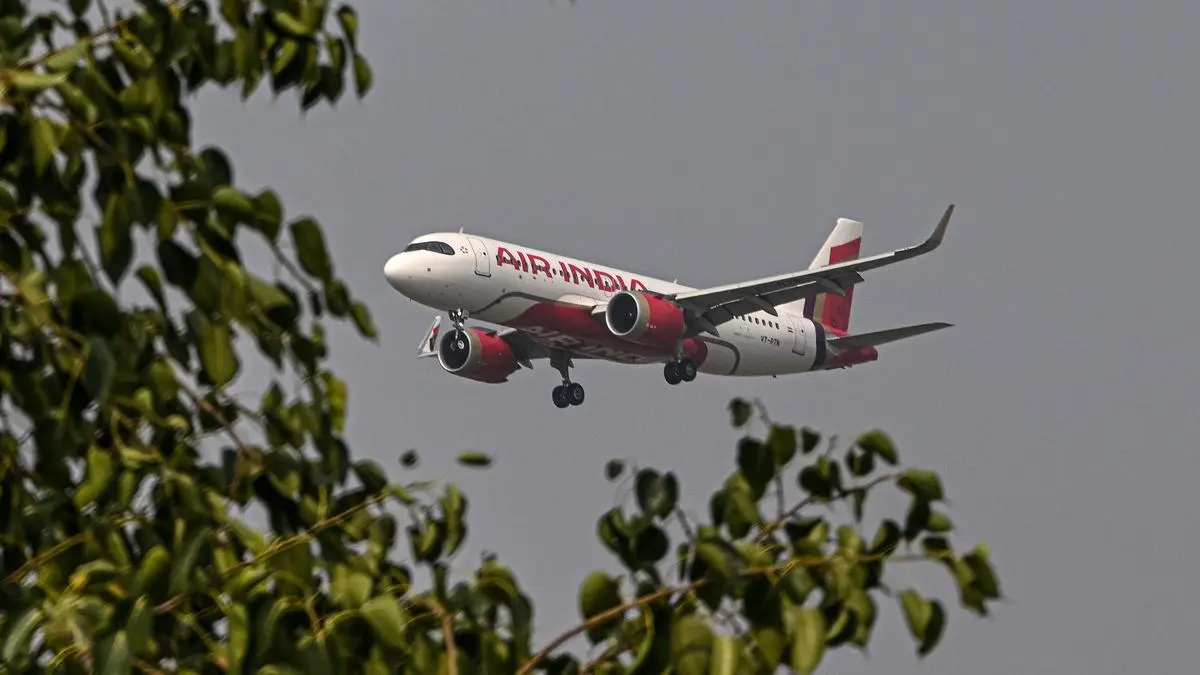
Air India: Flying from turbulence to turnaround

Air India: Flying from turbulence to turnaround


Tata Group-led Air India is facing its most difficult phase since privatisation, with losses crossing ₹26,000 crore in FY2025-26 amid geopolitical disruptions, elevated fuel costs, safety scrutiny, and leadership uncertainty. And yet, this cloud of troubles has a silver lining — the airline retains the strong backing of shareholders Tata Sons and Singapore Airlines as it pushes ahead with its multi-year transformation programme.

The scale of Air India’s financial strain became visible when minority stakeholder (25.1 per cent) Singapore Airlines group disclosed in its annual report that the Indian airline had posted a loss of S$3.56 billion during FY2025-26, and this was a primary reason for the Singapore airline’s 57 per cent slide in annual net profit to S$1.184 billion.

Critical support

Importantly, despite the losses and operational pressures at Air India, Singapore Airlines did not write down its investment. Instead, it described Air India as a “core component” of its long-term multi-hub strategy and committed to support the Indian airline’s transformation.

Industry observers said the willingness of both shareholders to support the airline financially is critical at a time when Air India is dealing with simultaneous operational, financial and regulatory pressures.

“India’s aviation market needs patient, well-capitalised and operationally experienced long-term players to build a truly mature and globally competitive ecosystem,” Jagannarayan Padmanabhan, Senior Director and Global Head, Consulting, Crisil Intelligence, told businessline.

The enduring support from Tata Sons and Singapore Airline is important not just for Air India’s turnaround but also the long-term resilience of Indian aviation, he said.

The airline’s troubles intensified during FY2025-26 after multiple external disruptions hit operations simultaneously and sharply increased costs across its international network.

Air pockets galore

A core challenge was the closure of Pakistan’s airspace to Indian carriers from April 24, 2025, forcing Air India’s connections to Europe and North America to fly longer routes via the Arabian Sea and Gulf hubs. Several flights became two to three hours longer.

Industry estimates pegged the additional annual cost burden at $600–750 million.

The extended flight durations have also affected aircraft rotations, crew deployment and network scheduling in parts of Air India’s long-haul operations.

At the same time, supply disruptions in West Asia throughout FY26 had pushed aviation turbine fuel (ATF) prices higher. However, the ongoing Gulf crisis has pushed prices sharply higher.

At present, fuel accounts for nearly 40 per cent of international operating costs, placing additional pressure on long-haul profitability at a time when Air India is already dealing with elevated fleet and maintenance expenses.

Kinjal Shah, SVP and Co-Group Head, Corporate Sector Ratings, ICRA, points out that the sharp hardening of ATF prices has been compounded by the rupee’s depreciation against the dollar.

“While policy interventions such as tax rationalisation on ATF and continued liquidity support can provide incremental relief, they are unlikely to fully address the high cost base and competitive intensity inherent in the Indian aviation market,” Shah added.

Compounding the airline’s woes was the devastating June 2025 crash of Flight AI171 operating between Ahmedabad and London Gatwick.

The massive human tragedy triggered intensified oversight from regulators, fleet inspections and scrutiny of operational processes.

Changing course

Against this backdrop, Air India has initiated corrective measures aimed at preserving liquidity, stabilising operations and improving cost discipline.

The airline temporarily suspended six international routes, including Delhi-Chicago, Delhi-Shanghai, and Mumbai-New York (JFK). It also reduced frequencies across North American, European, Australian, and Southeast Asian services between June and August 2026.

Phased fuel surcharge increases were introduced on domestic and international routes. According to sources, the airline is also evaluating rationalisation of more routes, improved aircraft utilisation and more efficient redeployment of capacity.

Cost cuts are in focus to contain losses. CEO and Managing Director Campbell Wilson had asked employees to maintain a “relentless focus on costs” during a recent town hall meeting.

This includes reducing discretionary spending, review of vendor contracts, and deferring non-essential expenditure. Annual salary increments have been deferred by at least one quarter. The airline, however, clarified that it does not anticipate layoffs, and variable pay and planned promotions will continue.

Industry observers point out that Air India’s immediate challenge is no longer limited to managing temporary disruptions but also ensuring that operational restructuring keeps pace with the scale of its long-term expansion plans.

One of the key focus areas remains safety oversight.

Additionally, the airline would need to move beyond compliance-driven inspections to establish stronger monitoring systems across engineering, maintenance, and flight operations, the observers said.

Fleet modernisation will become increasingly important over the next few years. Air India’s order for nearly 470 aircraft — one of the largest globally — is expected to be delivered from 2027 onwards.

The airline expects the newer aircraft to improve fuel efficiency, reduce maintenance cost and support network restructuring.

But analysts note that the benefits are dependent on Air India’s ability to improve aircraft availability, manage supply-chain constraints and accelerate the retrofit of existing widebody aircraft.

Leadership continuity is another area of focus for the airline and its shareholders.

According to sources, former Vistara Chief Executive Officer and current Senior Vice President of Singapore Airlines Vinod Kannan, and Air India Chief Commercial Officer Nipun Aggarwal are in the reckoning for the top job, with Wilson conveying his intention to step down.

Transformation journey

According to industry observers, the incoming leadership will inherit an airline that has already undergone substantial integration and restructuring but continues to face execution challenges across operations, customer experience, safety oversight, and profitability.

Even amid the financial and operational pressures, some operating indicators have shown gradual improvement over the past year. For instance, domestic on-time performance improved to 76 per cent in FY2025-26 from 73 per cent a year earlier.

Similarly, the customer net promoter score improved to 30 in March 2026 from minus-19 in 2023.

The airline has also expanded its Southeast Asia feeder network from two destinations to seven and increased coordination with Air India Express by eliminating overlapping routes and improving network integration.

Overall, analysts said, these improvements indicate that parts of Air India’s broader transformation programme are beginning to show operational results despite the difficult external environment.

Nonetheless, industry observers noted that Air India’s recovery trajectory will depend on how consistently shareholder support, operational execution and management stability align over the next few years.

Published on May 25, 2026


Source link

Fiduciary feuds threaten Tata’s legacy

Fiduciary feuds threaten Tata’s legacy


“Tatas need a leader with guts, intelligence and grit!” This cry from a person close to the storied corporate group comes at a time when internal differences at the highest level are shaking its foundations.

The ongoing tensions among the Tata trustees, which is threatening to spill over into the holding company Tata Sons, stems from the lack of a formal succession planning process at the group, its stability being threatened by people who have a fiduciary responsibility towards it.

“Tata’s succession history has been non-linear, often within the Tata fold but not strictly hereditary. That flexibility was once a strength. Today, it must be converted into a formal succession architecture,” says a well-known corporate governance exponent who sits on the board of several companies, declining to be named.

“The Tata group’s present challenge is not merely a personality issue. It is the transition from charismatic stewardship to institutional stewardship,” he adds.

However, according to another person, who has had direct dealings with the group for a long time, the group risks diluting its legacy if it becomes overly process driven or focused on shareholder pressures through moves such as a potential listing of Tata Sons.

“Tata cannot be run by process. It is run by moral authority. The moment you try to take away the moral authority, it’s over.”

Corporate India is strewn with several succession battles and many large business houses have splintered in the process. Through it all, however, the Tata group stood firm, mostly because there were no family members laying claim to the inheritance or wanting control. Now that decades-old stability is being threatened by people who have a fiduciary responsibility towards it.

Personality dominated

Like most family-run enterprises in India, the Tata group had for long functioned and flourished under a system in which moral authority combined with formal authority held undisputable sway. While board structures, trusteeship arrangements and institutional processes existed, they were ultimately held together by the stature and credibility of individuals — JRD Tata for a significant part of the 20th century and, later, Ratan Naval Tata, who took over in 1991.

Both headed Tata Sons for long periods, and expanded the group through strategic acquisition, while venturing into new areas. “JRD Tata and Ratan Tata carried unusual moral authority,” says an insider. “Their presence converted disagreement into alignment.”

The person quoted above said resistance to leadership transitions was not new within the group and RNT eventually earned legitimacy through moral authority and personal stature rather than operational intervention.

When Tata Sons saw a leadership change in 2012, RNT stepped down at the age of 75 but continued to lead Tata Trusts and, thus, exercised authority over the group. Witness the way he summarily ejected the late Cyrus Mistry from chairmanship in 2016 as he felt the group was not being governed according to Tata principles.

After RNT’s death the centripetal force is visibly weaker and the group has to rely more on written protocols, trustee discipline, conflict resolution processes and transparent communication.

Noel Tata, who married into the Shapoorji Pallonji family and has been associated with the Tata group for over four decades, was overlooked by RNT both times when the chairmanship for Tata Sons opened up — in 2012 and 2016. After a year of searching post the Cyrus Mistry episode, the decision went in favour of N Chandrasekaran, a Tata veteran with a solid 30 years in Tata Consultancy Services, including eight as its MD and CEO.

RNT told his biographer Thomas Mathew at the time that Noel Tata lacked the experience to handle difficult assignments. “For Noel to compete successfully for the top post he should have greater exposure than he has had,” RNT was quoted in the book. “Partly, his not having it has been his own choice.”

Post Ratan Tata

Noel Tata may have “formal authority, but he is still being tested for convening authority”, says an insider. “He may yet build that legitimacy, but it cannot be presumed merely from title or lineage,” he adds. He also points out that Noel Tata hasn’t been given the time to prove his chops. 

But time is running out. Noel will be 70 this November and would have to step down as chairman from various boards.

While he possesses deep operational experience and unquestioned family legitimacy, the challenge before him is not managerial but institutional. Can he command the same broad-based authority that previously helped contain disagreements within the group’s internal structures.

A person who knows Noel Tata well described him as a ‘fine human being and purpose driven’ but personally reserved and lacking the visibility that Ratan Tata cultivated over time.

But Noel’s elevation as Chairman of Tata Trusts in October 2024, soon after RNT’s death, was not without drama. Some trustees were not in favour and former trustee Mehli Mistry had to compel them to vote for Noel on the grounds that the Trusts should be headed by a Tata. However, relations soured subsequently.

The first to show open rebellion was Mehli Mistry himself, who was then voted out of the Trusts. With the decision to retain N Chandrasekaran as Tata Sons chairman for a third term, it looked like peace may reign in the group.

That hope, however, was short-lived.

The year 2026 started on a tumultuous note for the Tata group. At a Tata Trusts meeting in February to consider Chandra’s reappointment, Noel Tata questioned the group’s performance, especially with regard to new investments, the revival of Air India and acquisitions such as BigBasket.

It seemed like a repeat of what RNT did with Cyrus, except no one was sacked and Chandra has been given time to prepare a growth strategy for the group. Noel was also blindsided by his two allies Venu Srinivasan and Vijay Singh, who have openly come out in favour of listing Tata Sons. This is interesting because unanimous resolutions have been passed by trustees as well as the Tata Sons board to keep the holding company unlisted.

Is this self-interest at work or genuine concern over corporate governance?

Noel retaliated. He voted against the reappointment of Srinivasan and Singh to the board of Tata Education and Development Trust, an allied body of the Sir Ratan Tata Trust. He is also expected to get Srinivasan off the Tata Sons board, where the latter is a nominee of Tata Trusts.

The Tata group has also been fighting a rear-guard action against complaints filed with the Maharashtra Charity Commissioner that the board of Sir Ratan Tata Trust was not in compliance with the Maharashtra Public Trusts Act, which prescribes that not more than one-fourth the number of trustees in a public trust shall be perpetual or life trustees.

Another legal notice alleges that a transfer of Tata Sons shares from the Navajbai Ratan Tata Trust to Naval H Tata in 1989 was unlawful, void, and a breach of fiduciary duty by trustees. Those shares are now in the possession of Noel and Jimmy Tata (the son of Naval Tata).

Corporate governance experts are also pointing to the dual role of Tata Trusts — it is a philanthropic institution, yet holds about 66 per cent of Tata Sons, whose dividends support the Trusts’ social work in education, health, livelihoods, arts and culture. “When trustees appear divided over control, succession, listing or influence, the public inevitably asks whether charitable purpose is being overshadowed by promoter power,” said another expert.

The board meeting of Tata Sons on May 26 is expected to discuss the contentious issue of its listing as well as Chandra’s plan for the group. He and Noel are expected to meet before that. The conflict over the leadership of the Trusts remains unresolved, however.

“The remedy is not another towering individual but a governance compact: clear trustee role definitions, a formal conflict-resolution mechanism, codified succession planning, transparent criteria for trustee appointments, a public position paper on Tata Sons listing, and a disciplined communication protocol,” sums up a corporate governance expert.

A Tata loyalist sums it up, saying, “The Tata name is what differentiates them (the group). The DNA has been brought into that name — the philosophy of giving, of being charitable.

“If you remove the Tata name from this, it become like any other company.”

Published on May 25, 2026



Source link

YouTube
Instagram
WhatsApp