Fiduciary feuds threaten Tata’s legacy

Fiduciary feuds threaten Tata’s legacy


“Tatas need a leader with guts, intelligence and grit!” This cry from a person close to the storied corporate group comes at a time when internal differences at the highest level are shaking its foundations.

The ongoing tensions among the Tata trustees, which is threatening to spill over into the holding company Tata Sons, stems from the lack of a formal succession planning process at the group, its stability being threatened by people who have a fiduciary responsibility towards it.

“Tata’s succession history has been non-linear, often within the Tata fold but not strictly hereditary. That flexibility was once a strength. Today, it must be converted into a formal succession architecture,” says a well-known corporate governance exponent who sits on the board of several companies, declining to be named.

“The Tata group’s present challenge is not merely a personality issue. It is the transition from charismatic stewardship to institutional stewardship,” he adds.

However, according to another person, who has had direct dealings with the group for a long time, the group risks diluting its legacy if it becomes overly process driven or focused on shareholder pressures through moves such as a potential listing of Tata Sons.

“Tata cannot be run by process. It is run by moral authority. The moment you try to take away the moral authority, it’s over.”

Corporate India is strewn with several succession battles and many large business houses have splintered in the process. Through it all, however, the Tata group stood firm, mostly because there were no family members laying claim to the inheritance or wanting control. Now that decades-old stability is being threatened by people who have a fiduciary responsibility towards it.

Personality dominated

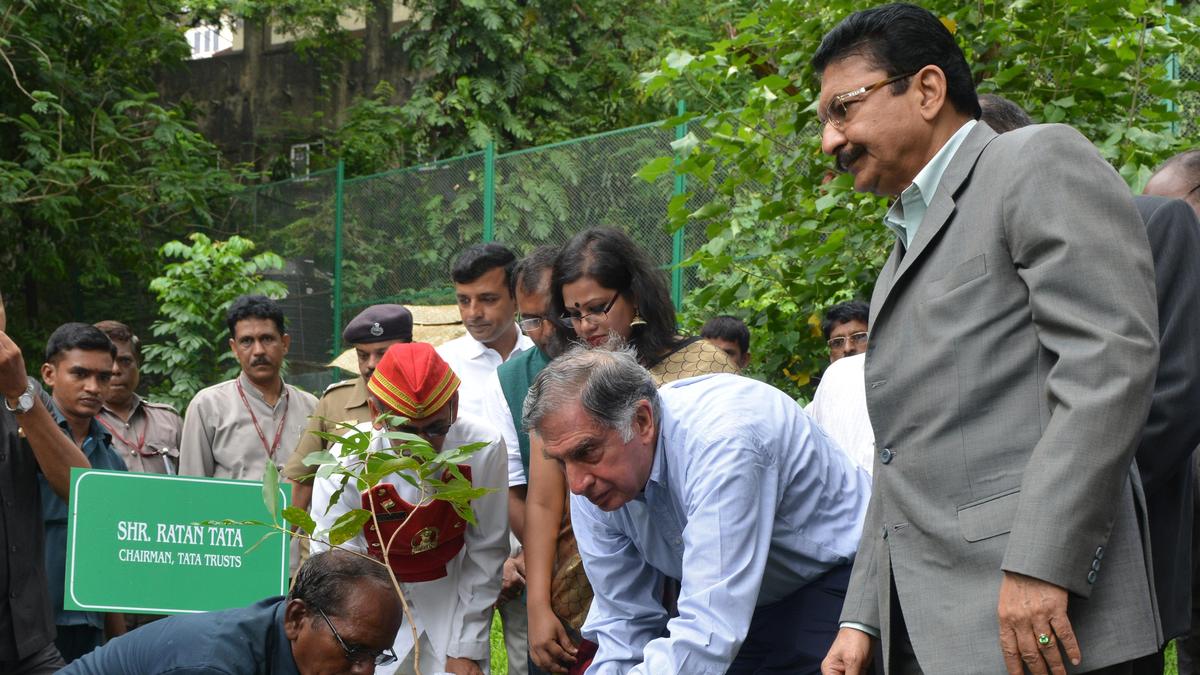
Like most family-run enterprises in India, the Tata group had for long functioned and flourished under a system in which moral authority combined with formal authority held undisputable sway. While board structures, trusteeship arrangements and institutional processes existed, they were ultimately held together by the stature and credibility of individuals — JRD Tata for a significant part of the 20th century and, later, Ratan Naval Tata, who took over in 1991.

Both headed Tata Sons for long periods, and expanded the group through strategic acquisition, while venturing into new areas. “JRD Tata and Ratan Tata carried unusual moral authority,” says an insider. “Their presence converted disagreement into alignment.”

The person quoted above said resistance to leadership transitions was not new within the group and RNT eventually earned legitimacy through moral authority and personal stature rather than operational intervention.

When Tata Sons saw a leadership change in 2012, RNT stepped down at the age of 75 but continued to lead Tata Trusts and, thus, exercised authority over the group. Witness the way he summarily ejected the late Cyrus Mistry from chairmanship in 2016 as he felt the group was not being governed according to Tata principles.

After RNT’s death the centripetal force is visibly weaker and the group has to rely more on written protocols, trustee discipline, conflict resolution processes and transparent communication.

Noel Tata, who married into the Shapoorji Pallonji family and has been associated with the Tata group for over four decades, was overlooked by RNT both times when the chairmanship for Tata Sons opened up — in 2012 and 2016. After a year of searching post the Cyrus Mistry episode, the decision went in favour of N Chandrasekaran, a Tata veteran with a solid 30 years in Tata Consultancy Services, including eight as its MD and CEO.

RNT told his biographer Thomas Mathew at the time that Noel Tata lacked the experience to handle difficult assignments. “For Noel to compete successfully for the top post he should have greater exposure than he has had,” RNT was quoted in the book. “Partly, his not having it has been his own choice.”

Post Ratan Tata

Noel Tata may have “formal authority, but he is still being tested for convening authority”, says an insider. “He may yet build that legitimacy, but it cannot be presumed merely from title or lineage,” he adds. He also points out that Noel Tata hasn’t been given the time to prove his chops. 

But time is running out. Noel will be 70 this November and would have to step down as chairman from various boards.

While he possesses deep operational experience and unquestioned family legitimacy, the challenge before him is not managerial but institutional. Can he command the same broad-based authority that previously helped contain disagreements within the group’s internal structures.

A person who knows Noel Tata well described him as a ‘fine human being and purpose driven’ but personally reserved and lacking the visibility that Ratan Tata cultivated over time.

But Noel’s elevation as Chairman of Tata Trusts in October 2024, soon after RNT’s death, was not without drama. Some trustees were not in favour and former trustee Mehli Mistry had to compel them to vote for Noel on the grounds that the Trusts should be headed by a Tata. However, relations soured subsequently.

The first to show open rebellion was Mehli Mistry himself, who was then voted out of the Trusts. With the decision to retain N Chandrasekaran as Tata Sons chairman for a third term, it looked like peace may reign in the group.

That hope, however, was short-lived.

The year 2026 started on a tumultuous note for the Tata group. At a Tata Trusts meeting in February to consider Chandra’s reappointment, Noel Tata questioned the group’s performance, especially with regard to new investments, the revival of Air India and acquisitions such as BigBasket.

It seemed like a repeat of what RNT did with Cyrus, except no one was sacked and Chandra has been given time to prepare a growth strategy for the group. Noel was also blindsided by his two allies Venu Srinivasan and Vijay Singh, who have openly come out in favour of listing Tata Sons. This is interesting because unanimous resolutions have been passed by trustees as well as the Tata Sons board to keep the holding company unlisted.

Is this self-interest at work or genuine concern over corporate governance?

Noel retaliated. He voted against the reappointment of Srinivasan and Singh to the board of Tata Education and Development Trust, an allied body of the Sir Ratan Tata Trust. He is also expected to get Srinivasan off the Tata Sons board, where the latter is a nominee of Tata Trusts.

The Tata group has also been fighting a rear-guard action against complaints filed with the Maharashtra Charity Commissioner that the board of Sir Ratan Tata Trust was not in compliance with the Maharashtra Public Trusts Act, which prescribes that not more than one-fourth the number of trustees in a public trust shall be perpetual or life trustees.

Another legal notice alleges that a transfer of Tata Sons shares from the Navajbai Ratan Tata Trust to Naval H Tata in 1989 was unlawful, void, and a breach of fiduciary duty by trustees. Those shares are now in the possession of Noel and Jimmy Tata (the son of Naval Tata).

Corporate governance experts are also pointing to the dual role of Tata Trusts — it is a philanthropic institution, yet holds about 66 per cent of Tata Sons, whose dividends support the Trusts’ social work in education, health, livelihoods, arts and culture. “When trustees appear divided over control, succession, listing or influence, the public inevitably asks whether charitable purpose is being overshadowed by promoter power,” said another expert.

The board meeting of Tata Sons on May 26 is expected to discuss the contentious issue of its listing as well as Chandra’s plan for the group. He and Noel are expected to meet before that. The conflict over the leadership of the Trusts remains unresolved, however.

“The remedy is not another towering individual but a governance compact: clear trustee role definitions, a formal conflict-resolution mechanism, codified succession planning, transparent criteria for trustee appointments, a public position paper on Tata Sons listing, and a disciplined communication protocol,” sums up a corporate governance expert.

A Tata loyalist sums it up, saying, “The Tata name is what differentiates them (the group). The DNA has been brought into that name — the philosophy of giving, of being charitable.

“If you remove the Tata name from this, it become like any other company.”

Published on May 25, 2026


Source link

How Diageo’s doubled investment is scaling up Sober

How Diageo’s doubled investment is scaling up Sober


Vansh Pahuja, Founder, Sober

When the Indian arm of a global spirits giant takes a 15 per cent stake in a startup creating non-alcoholic beverage, and a year and a half later ups the stake to 25 per cent, it makes one take notice. In June 2024, Diageo India (USL) invested in alcohol-free drinks producer V9 beverages, known for its brand Sober, and in January this year it increased the investment.

The alcohol market in India — valued at roughly $39.7 billion — has seen growing consumption across categories with a steady overall CAGR of 3–4 per cent, though premium products have grown faster. Diageo has been upping its focus on premiumisation, but why invest in non-alcohol?

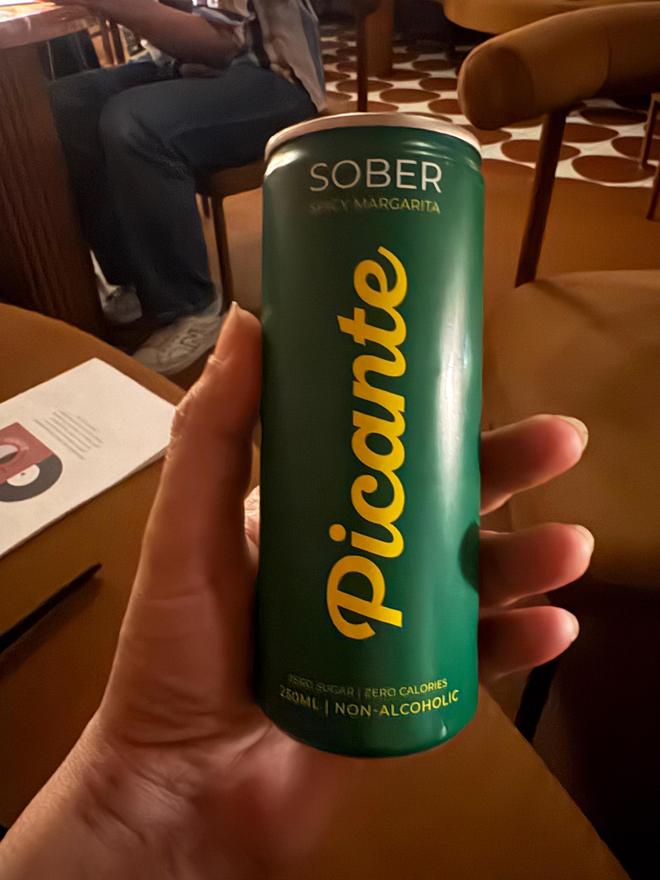
No-alcohol, no-sugar Picante from Sober

No-alcohol, no-sugar Picante from Sober

Explains Praveen Someshwar, MD and CEO, Diageo India, “As consumer preferences evolve, demand for moderation-led choices and premium zero-proof experiences continues to grow. This fast-growing category complements our core business, and our increased investment in Sober reflects our confidence in its future potential.”

On a hot summer evening, one meets Vansh Pahuja, the 32-year-old founder of Sober, at his bar Somewhere Nowhere in Delhi’s GK2 market. It’s a concealed bar in true speakeasy style, with a hidden entrance and an amazing vibe. Pahuja is excited as he has just launched a ready-to-drink canned non-alcoholic version of the cocktail Picante. “It’s zero-sugar, zero-calories, zero-alcohol — globally people have done non-alcoholic Picante, but with sugar. This is the first without sugar,” he says. But he is quick to add that it is not promoted as healthy. “Rather I would call it ‘mindful’,” he says.

Sober non-alcoholic drink

Sober non-alcoholic drink

Is there a big enough market for non-alcoholic spirits? After all, the consumer can simply drink juice or cola or abstain? Pahuja says there are many who enjoy a tipple, but cannot drink for medical reasons — he cites his father and a pregnant friend. This prompted him to explore the category.

Pahuja grew up in Delhi, went to Boston for higher studies (a course in marketing innovation at Northeastern University) and found a job in GE but returned when his maternal grandfather died. “My mom called me back,” he says, adding, “I also wanted to start restaurants and bars here.” He started a pizza chain called Baked, which was modelled on the Subway concept — customers could build their own pizza, health-conscious ones choosing whole wheat or cauliflower crust with toppings of their choice.

This was in 2019, and soon Covid and lockdown happened, and the outlets had to be closed. Around this time, he was introduced to Aditya Aggarwal, founder of craft gin brand Sasra Gin, who mentioned how excise duties vary from State to State, alongside various other policy hurdles. That’s when Pahuja jokingly floated the idea of a non-alcoholic product. But upon reflection, he realised it had a market. Aggarwal came in as a 10 per cent shareholder and manufacturing partner, says Pahuja. They started with 600 bottles of zero-alcohol gin to test the market and sold out within a month.

How does it taste like gin without alcohol? There are two ways to do it, responds Pahuja. One is by using the same formulation as for gin, with all the botanicals, but with water as the base instead of ethanol. The other way is to make regular gin and then remove the alcohol, which is an expensive process and the reason why imported non-alcoholic brands did not take off in India.

Currently, Sober has a range that includes non-alcoholic whiskey, gin, pink gin, rum, red wine and white wine, apart from sodas and tonic water.

Contrary to perception, Pahuja says it is not Gen Z but an older set that is consuming non-alcoholic drinks. “We sell to people who enjoy their drink, but drink in moderation,” he says.

With the Diageo investment, Pahuja has his scale-up plans ready. “We want to be a household name for everything non-alcoholic. So we want to grab you at a ₹60 price point with our sparkling water. If you want to pour sparkling water into a glass and add lime to it, we have that. We upgrade you a little bit when you say you like gin and tonic… and so on.” Sober is available in the top 100 bars in the country, says Pahuja. High on growth, Sober is ready to pour, changing how India drinks.

Published on May 25, 2026


Source link

How Indian IT majors are decoding AI

How Indian IT majors are decoding AI


Outside the rarefied world of agri-business, not many may have heard of Olam Group. Nevertheless, headquartered in Singapore and majority owned by Temasek, it is a global behemoth with revenues exceeding $50 billion. It is one of the world’s major suppliers of food and industrial raw material, with operations in more than 60 countries.

In April, Wipro, India’s fourth-largest IT services company by revenue, secured a massive eight-year, $1 billion-plus strategic transformation deal from Olam. Wipro will deliver end-to-end transformation services using its AI-powered suite, Wipro Intelligence, across Olam’s ‘farm-to-fork’ value chain — farming, forecasting, trading, supply chain operations, and customer engagement.

This deal is not unusual.

The Indian IT services industry currently faces its biggest structural shift, driven by AI. It is changing not just the nature of services firms deliver, but also how they price projects, hire talent, structure teams, and compete globally. As Venu Lambu, CEO and MD of LTM, says, AI is fundamentally reshaping the industry.

At Wipro, for instance, during the company’s Q4 earnings conference call, CEO and MD Srini Pallia highlighted a strategic pivot: “We have launched a dedicated AI-native business and platforms unit to expand beyond a services-only model to a services-as-a-software approach. This unit will operate with dedicated leadership, focused investments, and a distinct operating model to accelerate enterprise-grade agentic AI solutions.

“Together with core services, this creates a dual-engine model, driving transformation at scale while building AI-native platforms that differentiate services, enable repeatable deployments, and unlock non-linear growth,” he said.

Meanwhile, Tata Consultancy Services CEO and MD K Krithivasan has consistently maintained that AI is “an opportunity rather than a threat”. During recent management commentary, he said that “while AI models exist, large enterprises need partners to implement them safely and effectively into complex, legacy systems”.

Threat or opportunity?

The Indian IT industry has been a spectacular success post the 1991 liberalisation of the economy, accounting for nearly 6 million white-collar jobs and contributing about 8 per cent of India’s GDP. IT industry body Nasscom estimates that last year Indian IT services firms cumulatively had revenues of $283 billion, of which $224 billion was exports alone. Between 2010 and 2019, before AI became a buzzword, Indian IT services grew at 10–12 per cent. Now the growth rates have nearly halved.

Over the last few decades, Indian IT scaled up through the classic pyramid model, where a large base of junior engineers was billed on an hourly basis to handle repetitive development, testing, maintenance, and support work. But AI has essentially disrupted this model, as tasks like code generation, testing, documentation, migration, application maintenance, and customer support are increasingly automated.

Five years ago, a large-scale SAP deployment, or a full-scale ERP transformation involving modules across finance, supply chain, manufacturing, HR, and analytics would typically take 24-36 months. Today, with AI, it can be rolled out in 6–9 months.

DD Mishra, VP Analyst, Gartner, notes that decision-making cycles for small-scale GenAI pilot projects have compressed from several months to just 2–4 weeks. Enterprises are eager to fail fast or quickly capture productivity gains, often funding these initiatives through innovation budgets rather than traditional IT allocations. This shift allows projects to bypass lengthy procurement cycles and brings AI deal approvals under the direct scrutiny of CFOs and CEOs.

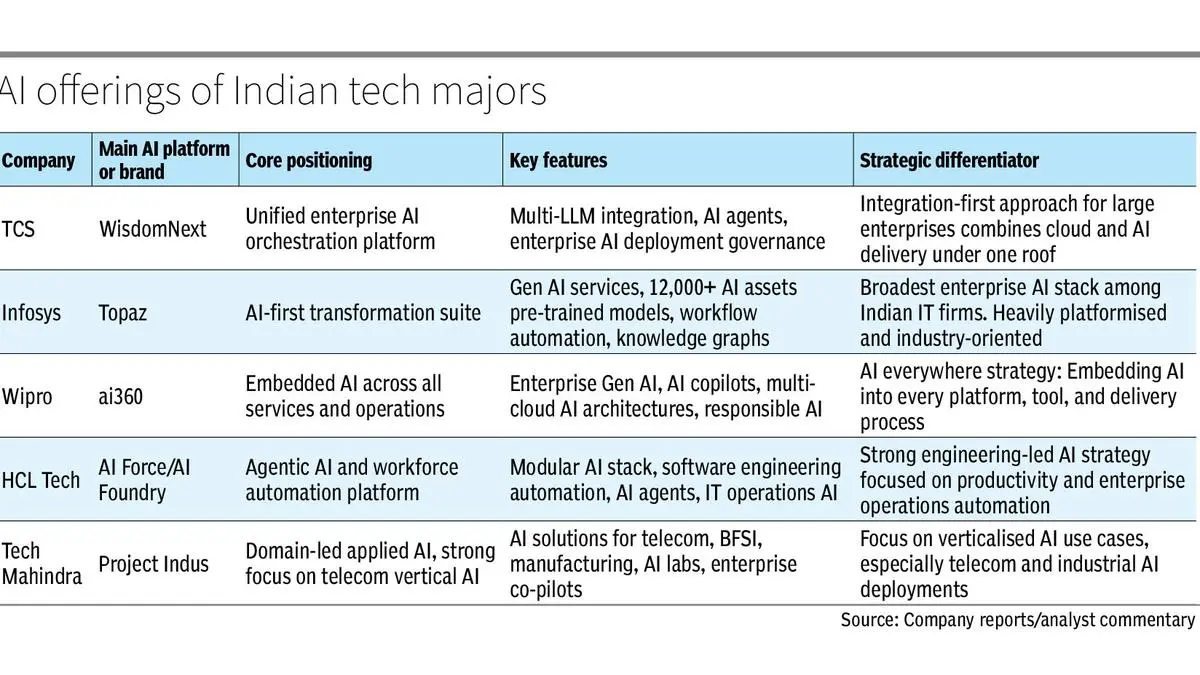
Earlier, in traditional IT services, more people meant more revenue. AI has broken this equation, with clients expecting fewer engineers, lower costs, productivity-linked pricing, and faster delivery. Indian IT companies, therefore, have tried to evolve from mere order takers to AI-led transformation partners. Hitherto dependent on services revenue rather than IP-led or proprietary products, they are now leaning more towards AI orchestration platforms, domain-specific co-pilots, reusable enterprise AI agents, and industry AI stacks.

Mishra says Indian IT companies are rapidly reworking their AI strategies, moving beyond the traditional labour arbitrage model towards platform-driven and outcome-based solutions. Unlike their global counterparts, which are taking a consulting-centric and acquisition-heavy route, Indian firms are emphasising the integration of AI through scalable platforms and measurable outcomes.

Jimit Arora, CEO of Everest Group, observes that the competition is over operating model reinvention capability. “Indian IT firms have a structural advantage in delivery scale and process depth. Global peers like Accenture and the Big Four have an advantage in business advisory and C-suite access. The firms that close the gap are the ones to watch. We are already seeing a K-shaped separation in the growth trajectory of the Tier-1s. Further separation will happen through execution — execution creates trust, which permits getting more business, and drives more execution,” he says.

AI-tagged vs AI-led

According to Biswajeet Mahapatra, Principal Analyst, Forrester, most of the AI offerings are extensions of existing digital, data, and automation practices rather than net-new AI-first service lines.

While there are pockets of genuine AI-led engineering, most client-facing portfolios reflect re-bundling and re-positioning of prior capabilities with incremental AI components embedded into delivery.

“A minority of active pipelines are truly AI-led, where AI is the primary buying driver. A much larger portion is AI-tagged, where AI is positioned as an enhancement to transformation, modernisation, or productivity programmes,” Mahapatra says.

He adds that AI will remain a modest contributor to overall revenues in the near term. Meaningful revenue impact is more likely once AI transitions from feature-level inclusion to operating model and business process transformation at scale. This shift depends on clients funding structural change rather than incremental automation.

Over 3-7 years, there should be significant acceleration for the services space, even as the nature of the winner changes, according to Arora. Every prior service era — outsourcing, offshoring, and digital — followed this exact curve.

“The firms winning in this era will be doing three things simultaneously. Playing defence by managing the run-off in their legacy business intelligently. Playing offence by taking a share in vendor consolidation deals where clients are reducing their supplier count and concentrating spend. Creating new plays by shaping client demand through operating model evolution rather than just responding to RFPs (request for proposals). The race is over how much new growth can be captured through the operating model shift before that ice cube gets too small,” he says.

Over the next 3-5 years, concludes Mahapatra, providers who successfully productise IP, standardise AI delivery, and align AI with industry workflows are likely to emerge as AI leaders than those focused primarily on labour-based scale-up.

More Like This

Published on May 11, 2026


Source link

When we are starstruck!

When we are starstruck!


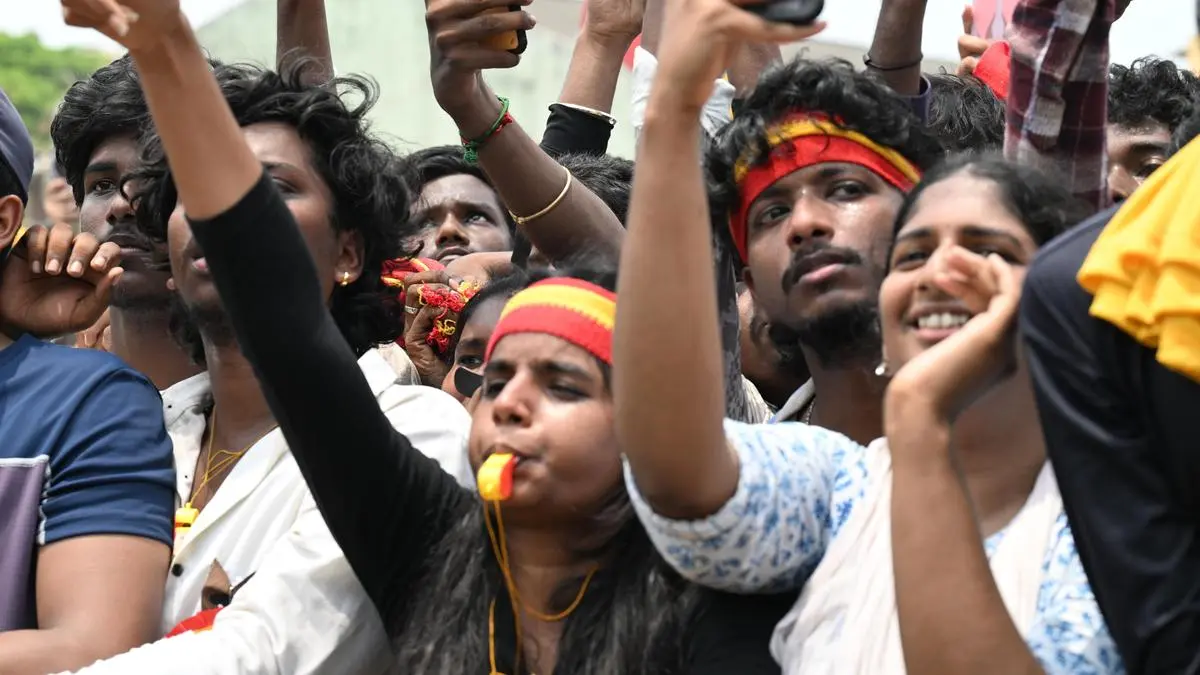
HERO’S WELCOME. Fan frenzy at TVK leader Vijay’s poll rally
| Photo Credit:
JOTHI RAMALINGAM B

Did voters in Tamil Nadu see actor Vijay as an agent of change, or were they simply starstruck? Enterprises are no different; they have a penchant for hiring leaders with aura. “I want resumes from Google, Apple, Amazon,” is something you will frequently hear if you are in the technology industry. When hiring, organisations are often enamoured by qualifications, brands, and persona, and tend to throw caution to the winds. The usual filters applied when recruiting or promoting take a back seat due to the star allure and lead to wrong appointments.

If you are of my era and follow cricket, you wouldn’t forget how the experiment of appointing the once-in-a-generation batter Sachin Tendulkar as captain and India’s possibly best all-rounder Kapil Dev as coach went.

Star tantrums

A senior sales head of a Fortune 100 company was being assessed for a rival firm, and he kept posturing in different ways during the interviews as though he wasn’t even interested in this career move. He would say things like “you know I travel only business class” when he had to meet the board members in another city. For the next round of interviews, he made sure the chairman got invited to the golf club he was part of, to show off his peer network there. But then his demeanour, pedigree, the brand he was employed with, and his social status influenced all the people who processed him. The HR team struggled to manage him through the offer process, as he would deny them easy access. However, he had managed to charm the board and the CEO so much that all the enabling functions had to put up with his tantrums during his onboarding.

The brand

When I joined the recruiting industry a couple of decades ago, the craving to hire leaders from GE was rampant as there was a big aura around its leadership development. Whether it’s Microsoft, Meta, and Nvidia in the tech world, or Unilever, P&G, and Britannia in the consumer industry, every segment has a set of marquee brands. The innovation, the product range and their longevity have come from the quality of the people they have hired and developed over decades. The adulation by their rivals and the aspiration to hire them is definitely understandable. I once had a huge argument with a client as to why she was so biased about hiring from big brands. She said, “Look, these Fortune 500 enterprises have evolved processes to hire, train, and develop employees. So, when someone has long tenures in such reputed companies, I believe they imbibe many of the qualities those companies have institutionalised.”

I could relate to it. When I quit my first job at Eli Lilly, many competitors interviewed me and that feeling was special, even though none offered me a job. Remember the expectations shareholders had when Starbucks hired its CEO from McKinsey. Alongside BCG and Bain & Company, the Big Three consulting companies are a huge draw with students at campuses too.

The pedigree

Try slipping in the resume of your favourite nephew who has great grades from a non-IIT engineering college in a FAAMNG — Meta (formerly Facebook), Amazon, Apple, Microsoft, Netflix, and Google (Alphabet) — company. You may be told that they only go to IITs and BITS for internships and campuses. Though we keep hearing that skills matter more than pedigree for graduate recruitment, large enterprises are quite hardwired to favour premium institutes. How can we ever deny our biases towards people from IITs and IIMs? I know of leaders who have interviewed Stanford and Wharton graduates, even though they didn’t have any matching roles. I am sure you’ve seen people flaunting their Harvard alumni status on LinkedIn even if they were there for just a five-day course. If your kids want to study abroad, wouldn’t you want them to go to an Oxford, Yale or NYU?

Devil wears Prada

One of my bosses had a habit of walking up to the gate to see off the jobseekers he interviewed. Many of us, including the candidates, thought of him admiringly: “What a gesture and a humble leader”. But turns out he was merely observing people, to find out which vehicle they drove and, in turn, their taste. Sounds crazy, right? But when hiring CXOs in service industries, their look, manner of speaking and behaviour become crucial.

Many years ago, during a merger, we had a new boss from Australia. Our thoughts were on the new plans for the region and our career growth after the acquisition. However, the post-town hall discussions were about the Tiffany’s bag she carried, the branded jewellery she wore, and the Range Rover she arrived in. It wasn’t her fault that she dressed stylishly; she possibly knew by then the importance of first impressions, and she was right.

The reality is that enterprises like to hire leaders who have the gift of the gab, an executive presence, and a pedigree from marquee brands, if they can get all in one. Even if this hack has failed many times, the pedigree and the brand of the company you hire from act as insurance.

“Your bag, your scarf, your umbrella tell the world who you are, what you care about” — Emily (Devil Wears Prada 2)

(Kamal Karanth is the Co-Founder of Xpheno, a specialist staffing company)

More Like This

Published on May 11, 2026


Source link

Fire me if I fail: Pirojsha Godrej

Fire me if I fail: Pirojsha Godrej


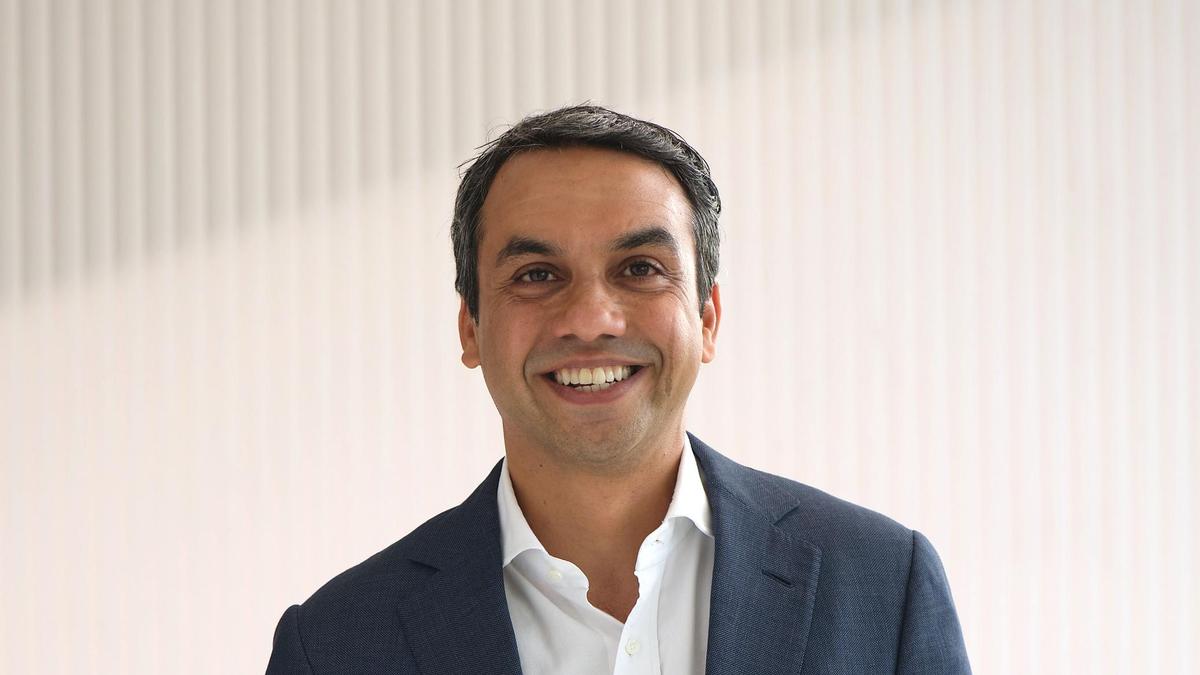
LEGACY-PLUS PUSH. Pirojsha Godrej, chairman-designate, Godrej Industries group
| Photo Credit:
SUPPLIED PIC

“The first person who should be fired if my performance is poor is me,” declares Pirojsha Godrej, the incoming chairman of the Godrej Industries group. Asked who in the company would dare to fire its top leader, Pirojsha points to the management and governance structure he reports to, underlining how the 129-year-old group is attempting to combine legacy values with sharper accountability, faster execution and disciplined scale-up.

That structure spans both family leadership and professional management. Pirojsha will oversee the broader Godrej group while continuing to chair Godrej Properties, Godrej Capital and Godrej Ventures. Burjis Godrej will chair Godrej Agrovet, while executives such as Sudhir Sitapati at Godrej Consumer Products and Sunil Kataria at Godrej Agrovet are being given larger operating mandates.

As the Godrej group prepares for a generational transition later this year, it is quietly reshaping how it operates, giving businesses greater independence, institutionalising board-led oversight and pushing each vertical to meet stricter return and execution thresholds. Internally, businesses are expected to deliver 18–20 per cent returns or demonstrate a credible path to leadership and scale. If they don’t then restructuring or even exits are on the table, irrespective of who is in charge.

Focus on the future

For decades, the Godrej group represented stability and stewardship-led growth.

“The key, as we see it, is combining the best of our past, the incredible set of values built consistently over generations, while avoiding the risk of looking backwards too much and keeping focus firmly on the opportunity ahead,” Pirojsha says

Portfolio discipline has been building for years under the next generation’s leadership. Businesses considered peripheral to the group’s long-term priorities were either exited, de-prioritised or realigned. For instance, Godrej sold premium grocery chain Nature’s Basket to the RP-Sanjiv Goenka group in 2019, while the 2024 family settlement formally separated capital-intensive businesses such as appliances, aerospace and heavy engineering into the Jamshyd Godrej-led Godrej Enterprises group.

At the same time, the group sharpened its focus on consumer products, real estate and financial services while increasingly shifting operating control toward professional executives rather than family-led management.

Capital first

Unlike conglomerates rushing into semiconductors, infrastructure and data centres, Godrej is avoiding sectors where capital intensity and execution complexity outweigh strategic advantage.

The group evaluated data centres but stayed away, citing technology risk and management bandwidth constraints, while newer bets such as Taj The Trees, a mixed-use community project in Vikhroli, Mumbai, aligns more closely with its strengths in urban real estate and premium consumption.

Fiscal discipline is most visible in Godrej Properties, which scaled up nationally through joint development agreements rather than warehousing large land banks. The company closed FY26 with ₹34,171 crore in booking value, making it India’s largest listed residential developer by sales value for the third consecutive year.

There’s a similar approach at Godrej Consumer Products, as managing director Sitapati initiated a “2040 backcast” strategy to identify categories that were likely to grow as India becomes wealthier and build portfolios around them.

That thinking drove bets in liquid detergents, fragrances and digital-first grooming categories, and acquisitions such as Raymond Consumer Care and men’s grooming brand Muuchstac. “Capital and management bandwidth are not infinite,” Pirojsha says, adding that the “99 per cent rule” will apply to all situations.

The ‘99% rule’

“Ninety-nine per cent of what the businesses do should not rely on each other,” elaborates Pirojsha. This highlights how the Godrej Industries group differs from other newer integrated conglomerate models.

So, while the businesses operate independently, the group centre focuses on talent, culture, sustainability and strategic alignment. The family name may be on the door, but the operating mandate is increasingly not a family matter.

Ironically, the biggest challenge identified by Pirojsha is not macroeconomic volatility but culture. Godrej Capital, which did not exist five years ago, now has around ₹25,000 crore worth assets under management. “We are a fast-growing organisation with a lot of new people coming in,” he says. “What we deliver is very important, but so is the ‘how’.”

That also explains why the Godrej group is relaunching its identity around the tag “Crafting Tomorrow Since 1897” — an attempt to balance continuity with reinvention. The transition is, ultimately, less about succession and more about redesigning how a legacy conglomerate functions in an India increasingly defined by scale, speed and execution.

The group has thrived for 129 years by being careful, deliberate and slow to overextend itself. What Pirojsha is attempting now is something more difficult: preserving the institutional trust while pushing the group to be faster, sharper and more performance-driven.

The redesign

When Nadir Godrej steps down in August to become chairman emeritus, the formal succession process will conclude. Operationally, however, the redesign is already underway. The 2024 split of the broader Godrej empire into the Godrej Industries group and Godrej Enterprises group removed ownership ambiguity and forced each side to define a clearer strategic identity.

“Values without performance is a bit empty, because our reputation and relevance ultimately depend on our ongoing results, not just what someone did in a previous generation,” Pirojsha sums up, on the need for a clear plan ahead.

More Like This

Published on May 11, 2026


Source link

Tech giant Adobe opens seventh office in India

Tech giant Adobe opens seventh office in India


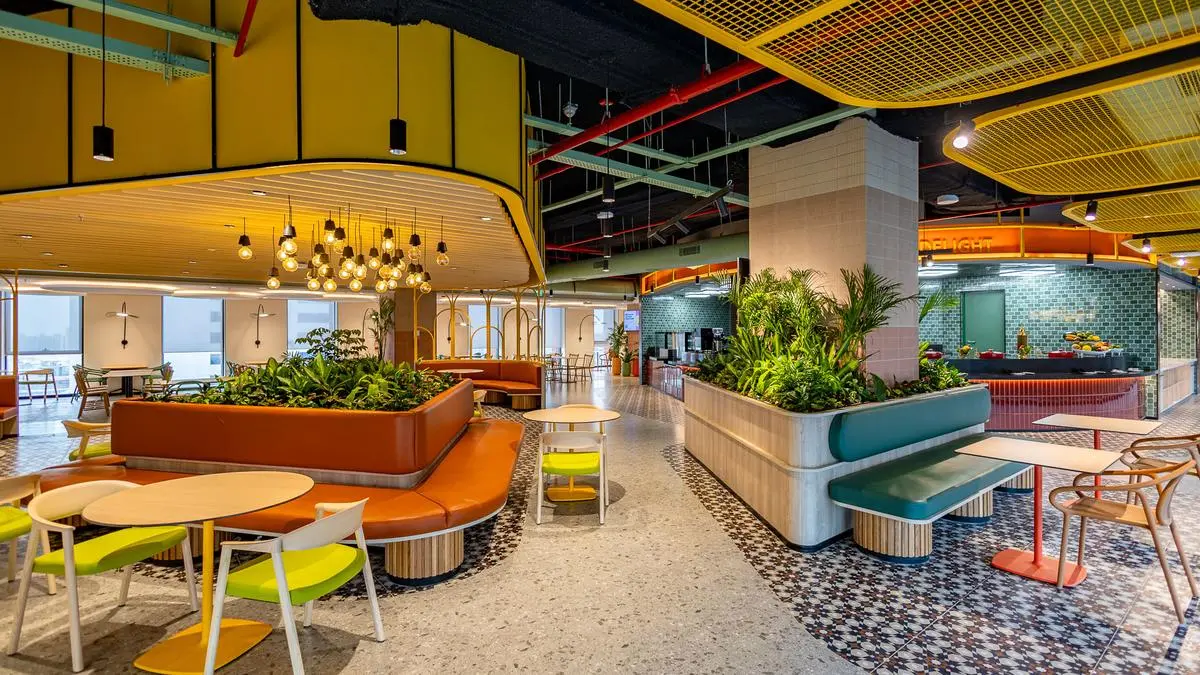
Tech leader Adobe, which began operations in India in 1997, has just opened its seventh office in the country. The IGBC Platinum certified facility in Noida underscores Adobe’s continued investment in India as a key hub for innovation and growth. The 8,000-strong workforce in India is Adobe’s largest outside the US, contributing to more than a third of its innovation.

The campus brings together over 700 employees across engineering and customer-focused roles. Abhigyan Modi, Country Manager–Adobe India and Senior Vice President, Document Cloud, Adobe, said the teams in India play a critical role in advancing its AI-driven future.

Swati Rustagi, Head of Employee Experience, Adobe India, said, “The office space is designed to inspire our people — through connection, conversation and teams coming together… to unlock their full potential.”

CIEL HR inaugurates new, 100-seat Mumbai office

CIEL HR has inaugurated its new office in Mumbai, marking a significant step in its journey to building a unified “PeopleOS” ecosystem. The new workspace brings together all CIEL HR entities under one roof, enabling closer collaboration and seamless delivery of end-to-end HR solutions. Designed to accommodate over 100 employees, the Mumbai office will serve as a key hub for growth, the company said. CIEL HR plans to expand its team in the city, in line with the rising demand for integrated, technology-led HR services.

“At CIEL, we believe that organisations function best when every aspect of people management works in tandem. Our PeopleOS approach is about connecting the dots across the employee lifecycle, from building to development to operations. This new office reflects that philosophy, bringing our capabilities together to serve clients more effectively,” said K Pandiarajan, Executive Chairperson of CIEL HR Group.

More Like This

Published on May 11, 2026


Source link

YouTube
Instagram
WhatsApp