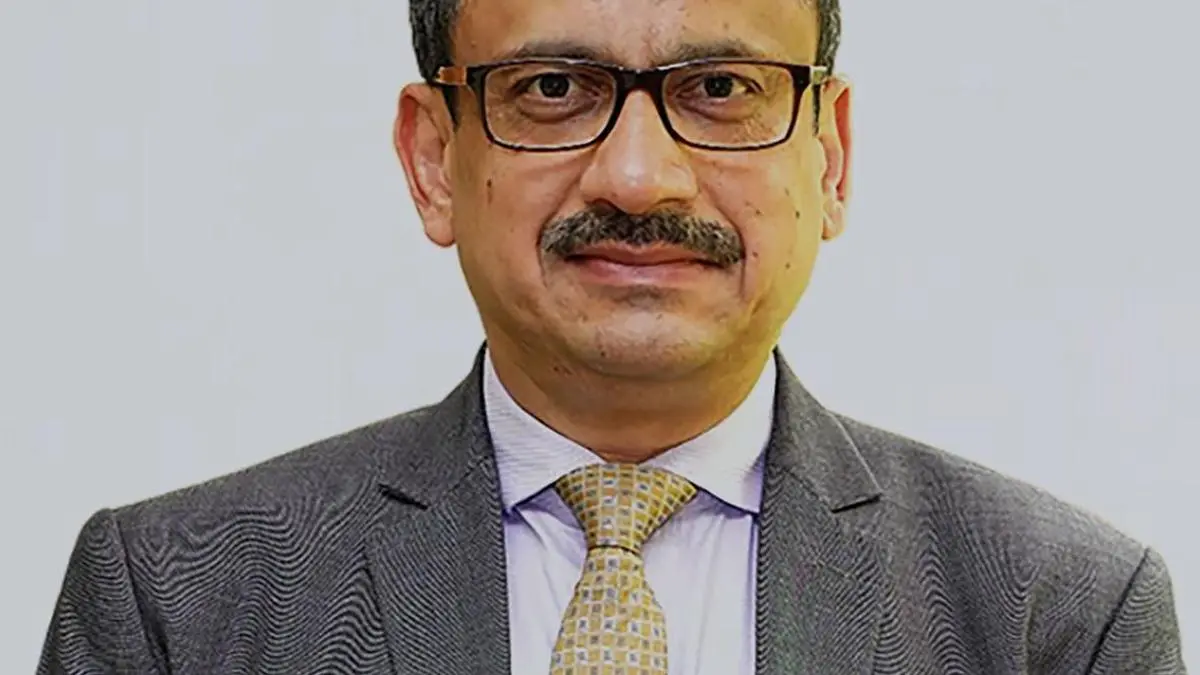
SEBI reviews HDFC Bank disclosures after Chakraborty’s exit

SEBI reviews HDFC Bank disclosures after Chakraborty’s exit


SEBI’s has begun a review of the HDFC Bank episode, with the focus initially on disclosure hygiene and could widen into a broader governance probe if the resignation of former chairman Atanu Chakraborty points to deeper concerns, sources said.

“The examination is to verify the claims made in the resignation letter and check if anything material has been left out or misreported,” a person familiar with the discussions said, adding that further action would be taken if required.

Under SEBI’s Listing Obligations and Disclosure Requirements (LODR) rules, listed entities are required to disclose such independent director resignations within prescribed timelines, along with detailed reasons and the resignation letter.

The regulator’s action follows Chakraborty’s resignation last week citing “certain happenings and practices within the bank” over the last two years that were “not in congruence” with his personal values and ethics. The resignation letter triggered an 8.7 per cent fall in the stock the following day, and wiped out about ₹1.35 trillion in market value over three sessions.

“This begins as a disclosure matter under LODR… but can shift to an accountability review if non-compliance or ethical lapses surface,” said Alay Razvi, managing partner at Accord Juris.

The immediate regulatory focus is expected to be on whether the bank’s stock exchange filings fully and accurately reflect internal board discussions. “SEBI is essentially examining whether what reached the market accurately reflects what transpired inside the institution,” said Ankit Rajgarhia, designate partner at Bahuguna Law Associates.

If discrepancies are found, SEBI can call for board and committee minutes, internal correspondence, audit reports and written explanations from the company, its management and directors. It may also summon individuals and seek records under Sections 11 and 11C of the SEBI Act.

“The intent to examine board minutes signals it is widening into a full corporate governance review, not stopping at disclosure compliance,” said Diviay Chadha, partner at Singhania & Co.

Without commenting on specific cases, SEBI Chairman Tuhin Kanta Pandey at a recent press meet said, “No one can make insinuations without proper evidence being recorded… Independent directors have to be responsible in terms of what they say,” he said.

The Reserve Bank of India said it had found “no material concerns on record” regarding the bank’s conduct or governance. Emailed queries to SEBI and HDFC Bank remained unanswered.

An independent director must raise concerns of ethics or governance within the board, ensure they are recorded in minutes and escalate to committees before resignation. “The company must thoroughly deliberate on such concerns, minute the objections and take remedial measures,” said Supriya Majumdar, partner at Elarra Law Offices.

If unresolved, escalation through whistleblower mechanisms or resignation with recorded reasons may follow, said B. Shravanth Shanker, managing partner at B. Shanker Advocates LLP.

The direction of SEBI’s review will depend on whether disclosures are found to be complete and whether the resignation points to a larger governance issue.

* SEBI’s preliminary review to focus on disclosure adequacy

* Checking for omissions, misreporting in filings under LODR

* Board conduct, fiduciary duties under scrutiny

* Probe may widen into governance review

* RBI finds no material concerns on record

Published on March 26, 2026


Source link

India’s wheat output may drop by over 1% from initial 120 million tonnes estimate, says private survey

India’s wheat output may drop by over 1% from initial 120 million tonnes estimate, says private survey


Uttar Pradesh emerges as the most extensively affected State, with damage ranging from high (only in Bijnor district) to moderate and low categories in 23 districts, reflecting widespread impact
| Photo Credit:
PTI

Four districts in three States — Punjab, Bihar and Uttar Pradesh — are likely to lose 10-15 per cent of their wheat production due to unseasonal rainfall, according to a preliminary report by private agency Agriwatch. The agency was commissioned by the Roller Flour Millers’ Federation of India. On the other hand, 5-10 per cent crop damage has been reported from as many as 21 districts in five States.

The overall yield loss in wheat at the pan-India level could be 1-1.5 per cent, sources said, adding the loss may be 2–3 per cent in highly affected States. The government has estimated India’s wheat production this year to touch a record 120.21 million tonnes.

According to the India Meteorological Department, unseasonal rains along with sporadic hailstorms were observed during March 11-22 in many districts of wheat-growing Punjab, Haryana, Uttar Pradesh, Bihar, Rajasthan and Madhya Pradesh. Though some damage to the wheat crop has been reported from West Bengal and Gujarat, those were negligible, sources said.

2 major concerns

Farmers in many of the affected districts said that lodging and damage to matured crops from hailstorms were two major causes of concern, which may affect the quality, potentially causing lustre loss in the grain. Shrivelling of grain has also been reported as before the rain there was a sudden spurt in day temperatures as high as 35 degrees Celsius in some States.

“Unlike in 2022 when temperature rise was sudden and persisted for a longer period in March, this time the unseasonal rain helped cool down the temperature and even if there is loss where the rainfall was heavy and there were strong winds, overall impact may be lower,” said Balbir Tyagi, a farmer in UP’s Hapur district.

Quoting the Agriwatch report, sources said the rain impacted wheat-growing regions across northern and central India, particularly affecting crops at the grain filling to maturity stage. The impact varied spatially, with localised pockets of moderate to high damage amid largely low-intensity losses.

High damage pockets (10–15 per cent) are limited and scattered in parts of northern Uttar Pradesh, Punjab, Bihar and West Bengal, the sources said. Moderate damage zones (5–10 per cent) are more widely distributed, especially across Haryana, Uttar Pradesh and Punjab, indicating rainfall-induced stress during critical crop stages.

UP most hit

However, low to very low impact areas (less than 5 per cent) cover a majority of districts across Madhya Pradesh, Rajasthan and Gujarat, suggesting partial yield and quality loss rather than severe crop failure. In the remaining areas, dispersed across all States, the damage is negligible, the sources said.

Uttar Pradesh emerges as the most extensively affected State, with damage ranging from high (only in Bijnor district) to moderate and low categories in 23 districts, reflecting widespread impact. Punjab too has high damage only in Rupnagar (formerly Ropar) though 14 districts in total have been affected.

As many as 10 districts of Bihar have reported damage, out of which only Begusarai and Supaul may have higher losses (10-15 per cent) whereas Madhubani, Nalanda and Sitamarhi districts may have 5-10 per cent yield drop.

On the other hand, Haryana recorded widely distributed but mostly low to moderate losses due to lodging and moisture stress, the sources said. Madhya Pradesh and Rajasthan also have low-intensity impacts in isolated pockets.

Published on March 26, 2026


Source link

CSK’s unlisted shares see gains as franchise sales spur investor demand ahead of IPL 2026

CSK’s unlisted shares see gains as franchise sales spur investor demand ahead of IPL 2026


CSK reported revenues of ₹643 crores in FY25 and reported a profit after tax of ₹180 crores, according to its annual report
| Photo Credit:
RAGU R

The big ticket buyouts of IPL teams Royal Challengers Bengaluru and Rajasthan Royals has led to a rise in investor interest in other teams with price hike and buying action of IPL franchises on unlisted markets. As the only actively traded IPL stock in the unlisted space after its demerger from India Cements, Chennai Super Kings (CSK) is seeing initial gains from this sentiment.

The Chennai franchise in IPL has seen its share price gone up from around ₹225–₹240 at the start of March to ₹300–335 now, indicating a move of 25–40% in under a month, according to data from Wealth Wisdom India, a platform that facilitates the trade of unlisted shares. In fact, the share prices have doubled from the 52 week low of ₹174. 

Similarly, data from InCred Money, another such platform also showed a growth of 24 per cent in the month.

Season Fever

Other platforms such as UnlistedZone note a sharp spike in the shares on March 23, a day after the franchise hosted a large scale fan event in the run up to the IPL this year.

The increase comes at a time when RCB and RR have attracted record-breaking bids, underscoring IPL franchises’ soaring global investor appeal. Rajasthan Royals is set to be sold to a consortium led by US-based tech entrepreneur Kal Somani for a reported $1.63 billion, while Royal Challengers Bengaluru has been acquired by a consortium comprising the Aditya Birla Group, the Times Group, Bolt Ventures and Blackstone for $1.78 billion.

Discount Price

Krishna Patwari, Founder & Managing Director of Wealth Wisdom India believes that the shares of CSK are available at a discount when compared to other franchises. “With a market cap of about ₹11,000 – ₹11,500 crore, CSK is effectively trading at a 30% discount to the RCB benchmark,” he said. 

Patwari notes that the discount could be attributed to the unlisted markets factoring in issues like the absence of a clean controlling stake, dispersed ownership structure and a lack of immediate strategic sale visibility. Moreover, the sharp increase in the share’s price over a relatively short period indicate that the shares are being bought not only by retail investors but also institutional players and HNIs, he added.

Vijay Kuppa, CEO, InCred Money, says that when deals as large in scale as RR/RCB get disclosed, listed investors instinctively benchmark comparable assets, and CSK, given its track record and brand equity, was an obvious one. “At the current price of ₹335, the market cap of CSK is around ₹12,710 crore; it remains to be seen how much further the price can move from here,” he added.

IPL Revenues

CSK reported revenues of ₹643 crores in FY25 and reported a profit after tax of ₹180 crores, according to its annual report. Comparatively, RCB posted revenues of about ₹504 crore.

Similarly, shares of companies associated with other IPL teams have also seen a rise.

Sun TV which controls Sunrises Hyderabad went up as high as 5.4 per cent on Wednesday, while RPSG Ventures Limited who own Lucknow Super Giants , went up by 20 per cent to hit its upper circuit.

Published on March 26, 2026


Source link

The “knot” restricting insurance and pension funds from investing in AIFs needs to be untied, says Kotak Alternate Asset Managers Chief

The “knot” restricting insurance and pension funds from investing in AIFs needs to be untied, says Kotak Alternate Asset Managers Chief


Domestic investors with deep pockets are warming up to putting money in Alternative Investment Funds (AIFs), channelling proceeds from stock market gains and sale of businesses, said Srini Sriniwasan, Managing Director, Kotak Alternate Asset Managers Ltd (KAAML), a wholly-owned subsidiary of Kotak Mahindra Bank.

In an interaction with businessline, Srini, who is managing funds aggregating about $10 billion invested across real estate, infrastructure, private equity and private credit, opined that until the “knot” restricting domestic insurance and pension funds is untied, India will remain overly dependent on foreign “Gangotris“ (source of capital) for its growth.

Are domestic investors becoming comfortable investing in AIFs?

Historically, 80–85 per cent of our capital came from foreign institutional investors. However, we are seeing a massive shift toward domestic capital. Two months ago, we announced the first close of the Kotak Yield and Growth Fund at ₹4,000 crore, with a final target of ₹5,000 crore. This scale of domestic fundraising was impossible just three years ago.

What has lead to the change in the Indian mindset towards AIFs?

Wealth creation and maturity. Investors who made money in the stock market or by selling businesses now have a higher risk appetite and a better understanding of AIF products.

What is hindering flow of domestic capital into AIFs?

While people get enamoured by global fund managers, they forget that these firms are just “tributaries.” The “Gangotri“ (the source of capital) is actually the US pension funds and endowments. Since 2005, our strategy has been to bypass the middlemen and go straight to the source. Our first major institutional breakthrough was a $250 million mandate from the Abu Dhabi Investment Authority (ADIA) in 2011.

The Indian “Gangotri” is “choked.” For example, under IRDAI regulations, LIC alone could invest ₹1 lakh crore (5 per cent of its corpus) into AIFs. Currently, they have invested less than ₹10,000 crore. When it comes to Indian PSU institutions, probably it is a case of “once bitten, twice shy.” Many of them lost money with unproven fund managers during the 2005–2007 boom. There needs to be a fundamental recognition that this is risk capital. The current “institutional” investors—insurance companies and pension funds like the NPS—have zero risk appetite. Regulations force them toward AA-rated and above companies. Until the “knot” restricting insurance and pension funds—is untied, India will remain overly dependent on foreign “Gangotris“ for its growth.

Is KAAML looking at any new fundraising?

We are currently raising our third Strategic Situations Fund (Corporate Credit), with a $2.0 billion target. Our existing investors are already committing capital, and we expect a final close by September or October 2026. The first two funds — Fund 1($1 billion) and Fund 2 ($1.5 billion) — have been fully invested.

How do you see the AIF industry and your firm growing over the next decade?

Our growth is tied to the three main vectors driving India’s economy: infrastructure, technology, and start-ups. None of these can scale without a robust credit ecosystem. There is a common misconception regarding “headline” investments. For instance, when a tech giant announces a $10 billion investment in data centres, roughly $7 billion of that is typically sourced as credit from banks. It isn’t all coming out of the investor’s pocket. To sustain these growth announcements, India needs a massive credit market—and we simply aren’t there yet.

Can the domestic banking sector meet this demand?

Our banks are pretty small compared to the size of the economy we aspire to build. They are fragmented and often lack the agility to meet rapid capital requirements. In developed markets, the corporate bond market provides this liquidity, but in India, the bond market is still dysfunctional.

The primary investors in our bond market are the banks themselves, creating a circular system with no real independent depth. Without a liquid bond market or specialised credit providers, the economy faces a significant bottleneck. Our role is to provide that necessary, non-bank credit to fuel these large-scale economic vectors.

India’s next generation entrepreneurs find it difficult as they don’t have the time for the slow processing cycles of PSU banks, and the bond market has no takers for them. So, in many cases, AIFs are the only viable primary source of funds. But even for the “big guys,” alternative funds are essential because they provide specialised financing that banks traditionally cannot.

What makes the AIF model relatively better suited for financing the three vectors you mentioned than a bank or an NBFC?

It comes down to capital structure and flexibility. Banks and NBFCs borrow money to lend; they must collect quarterly interest and principal to service their own debt. AIFs don’t borrow—they invest pooled capital. AIFs can sync repayment schedules with a project’s actual cash flow. We are a unique “animal” that can provide solutions that are part-debt and part-equity. Our investors are high-net-worth individuals who understand the risk-reward trade-off. They know things can go wrong, whereas a bank’s depositor expects absolute safety.

Traditional lenders are often blind to intangible value. In private credit, we value the brand equity and customer loyalty as the true collateral. We don’t just look at the plant; we look at the business’s ability to generate future cash.


Source link

CSK’s unlisted shares see gains as franchise sales spur investor demand ahead of IPL 2026

CSK’s unlisted shares see gains as franchise sales spur investor demand ahead of IPL 2026


CSK reported revenues of ₹643 crores in FY25 and reported a profit after tax of ₹180 crores, according to its annual report
| Photo Credit:
RAGU R

The big ticket buyouts of IPL teams Royal Challengers Bengaluru and Rajasthan Royals has led to a rise in investor interest in other teams with price hike and buying action of IPL franchises on unlisted markets. As the only actively traded IPL stock in the unlisted space after its demerger from India Cements, Chennai Super Kings (CSK) is seeing initial gains from this sentiment.

The Chennai franchise in IPL has seen its share price gone up from around ₹225–₹240 at the start of March to ₹300–335 now, indicating a move of 25–40% in under a month, according to data from Wealth Wisdom India, a platform that facilitates the trade of unlisted shares. In fact, the share prices have doubled from the 52 week low of ₹174. 

Similarly, data from InCred Money, another such platform also showed a growth of 24 per cent in the month.

Season Fever

Other platforms such as UnlistedZone note a sharp spike in the shares on March 23, a day after the franchise hosted a large scale fan event in the run up to the IPL this year.

The increase comes at a time when RCB and RR have attracted record-breaking bids, underscoring IPL franchises’ soaring global investor appeal. Rajasthan Royals is set to be sold to a consortium led by US-based tech entrepreneur Kal Somani for a reported $1.63 billion, while Royal Challengers Bengaluru has been acquired by a consortium comprising the Aditya Birla Group, the Times Group, Bolt Ventures and Blackstone for $1.78 billion.

Discount Price

Krishna Patwari, Founder & Managing Director of Wealth Wisdom India believes that the shares of CSK are available at a discount when compared to other franchises. “With a market cap of about ₹11,000 – ₹11,500 crore, CSK is effectively trading at a 30% discount to the RCB benchmark,” he said. 

Patwari notes that the discount could be attributed to the unlisted markets factoring in issues like the absence of a clean controlling stake, dispersed ownership structure and a lack of immediate strategic sale visibility. Moreover, the sharp increase in the share’s price over a relatively short period indicate that the shares are being bought not only by retail investors but also institutional players and HNIs, he added.

Vijay Kuppa, CEO, InCred Money, says that when deals as large in scale as RR/RCB get disclosed, listed investors instinctively benchmark comparable assets, and CSK, given its track record and brand equity, was an obvious one. “At the current price of ₹335, the market cap of CSK is around ₹12,710 crore; it remains to be seen how much further the price can move from here,” he added.

IPL Revenues

CSK reported revenues of ₹643 crores in FY25 and reported a profit after tax of ₹180 crores, according to its annual report. Comparatively, RCB posted revenues of about ₹504 crore.

Similarly, shares of companies associated with other IPL teams have also seen a rise.

Sun TV which controls Sunrises Hyderabad went up as high as 5.4 per cent on Wednesday, while RPSG Ventures Limited who own Lucknow Super Giants , went up by 20 per cent to hit its upper circuit.

Published on March 26, 2026


Source link

ईरान वॉर के बीच तेल के गहराते संकट को लेकर बड़ी चेतावनी, मई तक चरमरा सकती है ग्लोबल इकोनॉमी

ईरान वॉर के बीच तेल के गहराते संकट को लेकर बड़ी चेतावनी, मई तक चरमरा सकती है ग्लोबल इकोनॉमी


Middle East Tensions Impact on Global Economy: मिडिल ईस्ट में जारी तनाव को चार हफ्ते हो चुके हैं, लेकिन हालात लगातार बिगड़ते जा रहे हैं. अमेरिकी राष्ट्रपति डोनाल्ड ट्रंप के 15 सूत्रीय शांति प्रस्ताव को ईरान पहले ही खारिज कर चुका है, जिससे यह संकेत मिल रहे हैं कि आने वाले दिनों में तनाव और बढ़ सकता है. इस बीच Strait of Hormuz के बंद होने से वैश्विक ऊर्जा संकट गहरा गया है और कई देशों में ऊर्जा आपातकाल जैसी स्थिति पैदा हो गई है. ऐसे में ऊर्जा विशेषज्ञ भविष्य को लेकर गंभीर चेतावनी दे रहे हैं.

बिगड़ सकते हैं हालात

ऊर्जा अर्थशास्त्री Anas Alhajji ने वैश्विक अर्थव्यवस्था के लिए खतरे की घंटी बजाते हुए कहा है कि यदि यह ईरान से जुड़ा युद्ध जल्द खत्म नहीं हुआ, तो पूरी दुनिया की अर्थव्यवस्था पर भारी असर पड़ सकता है. उन्होंने सोशल मीडिया पर कहा कि यदि यह संघर्ष लंबा खिंचता है, तो कुछ ही हफ्तों में इसके गंभीर परिणाम सामने आने लगेंगे.

उन्होंने मौजूदा हालात को Strait of Hormuz से जोड़ते हुए बताया कि इस संकीर्ण मार्ग से दुनिया की लगभग 20 प्रतिशत तेल आपूर्ति गुजरती है. ऐसे में यहां किसी भी तरह की रुकावट वैश्विक व्यापार और ऊर्जा बाजार को बड़ा झटका दे सकती है. इसका असर मिडिल ईस्ट से दूर यूरोप तक दिखाई देने लगा है.

एशियाई बाजार में बेकाबू होगा तेल

अनस अल्हाजी के अनुसार, यूरोप में ऊर्जा संकट तेजी से गहराता जा रहा है और कीमतें लगातार बढ़ रही हैं, जिससे रूस के ऊर्जा स्रोतों पर निर्भरता फिर बढ़ सकती है. उन्होंने चेतावनी दी कि जिस रूसी तेल पर निर्भरता कम करने की कोशिश यूरोप कई वर्षों से कर रहा था, वह प्रयास इस संकट में कमजोर पड़ सकता है.

वहीं एशियाई बाजारों को लेकर उन्होंने कहा कि कच्चे तेल की कीमतें पहले ही 120 डॉलर प्रति बैरल के आसपास पहुंच चुकी हैं. अगर तनाव इसी तरह जारी रहा, तो क्रूड ऑयल की कीमतें और अधिक बढ़ सकती हैं, जिससे वैश्विक अर्थव्यवस्था पर दबाव और बढ़ेगा.

ये भी पढ़ें: पैन कार्ड और ITR से लेकर मील कार्ड तक… एक अप्रैल से लागू हो रहे नए इनकम टैक्स रूल्स, जरुर जानें ये नियम


Source link

YouTube
Instagram
WhatsApp