Credit Suisse’s AT1 bond crash fueled HDFC leadership crisis

Credit Suisse’s AT1 bond crash fueled HDFC leadership crisis


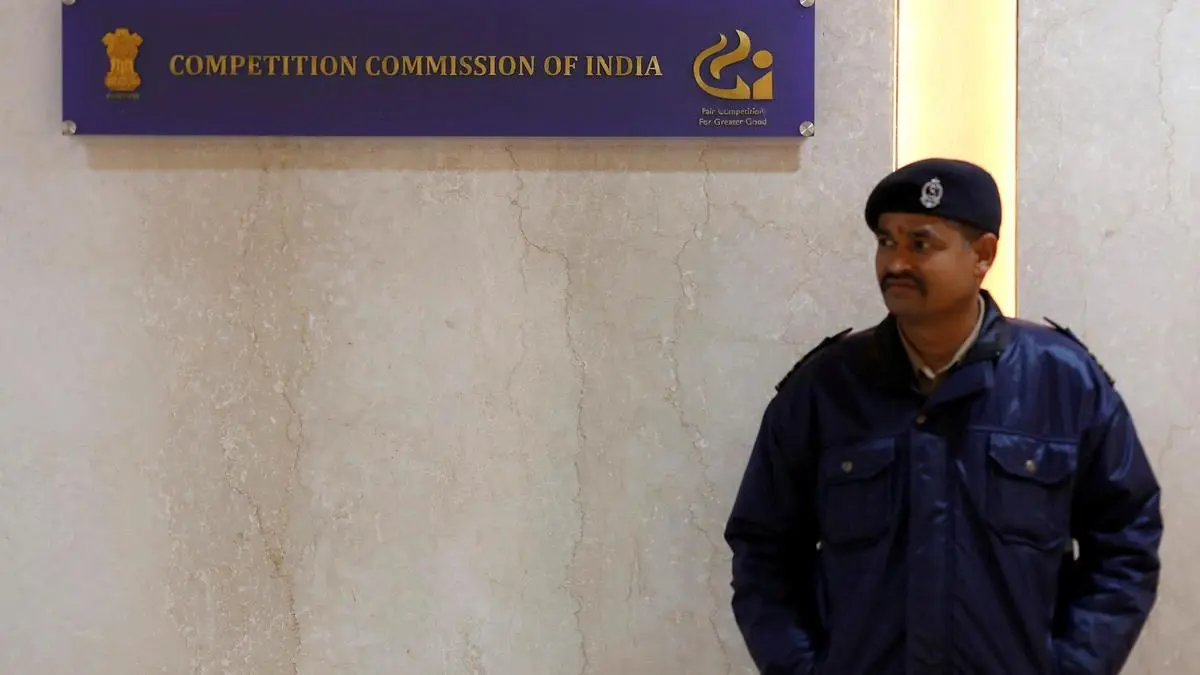
Shortly before midnight on the eve of a bank holiday in India, HDFC Bank Ltd., a favorite among global investors, stunned the market by announcing the abrupt exit of its chairman. One line in the statement jumped out: Atanu Chakraborty resigned over “ethical” differences with the bank going back two years.

Left unsaid was what exactly Chakraborty meant.

That’s now becoming clearer, four days after the boardroom fight burst into the open and wiped out more than a 10th of HDFC Bank’s market value, or about $16 billion.

People familiar with the matter say the rift came down to differing views over accountability, particularly over client losses tied to risky bonds sold by Credit Suisse and recent restrictions imposed on HDFC Bank in Dubai. In Chakraborty’s view, more senior bank officials should have been held responsible for the missteps. He also grew frustrated over the bank’s lackluster performance relative to peers, including its share price and profitability.

Chakraborty didn’t respond to a query from Bloomberg News. HDFC Bank said in a statement it has well established governance frameworks, “and continues to remain committed to maintaining high standards of compliance and regulatory adherence.” The bank’s shares fell for a fourth straight session on Monday, losing 4.7% in a weak broader market. 

The chain of events leading to the departure of Chakraborty late on Wednesday started behind the scenes a few days earlier.

Chakraborty, 65, had called a board meeting on short notice for March 18, offering few details of the agenda. Directors assembled on the sixth floor of the corporate offices in South Mumbai, the erstwhile headquarters of its parent. The nomination and remuneration committee convened first. It was there that Chakraborty, a former senior bureaucrat in the administration of Prime Minister Narendra Modi, submitted his resignation as part-time chair, before informing the board.

What followed was a tense exchange, as directors tried to persuade him to reconsider. When that failed, they urged him to soften the language in his resignation letter, which would later stun investors with its bluntness: “Certain happenings and practices within the bank that I have observed over last two years are not in congruence with my personal values and ethics,” he wrote.

Despite the board’s pleas, Chakraborty refused to budge on the wording, nor explain what he meant by ethical differences.

By late Wednesday, the lender had little choice but to move ahead. Chief Executive Officer Sashidhar Jagdishan and a few other board members met with the Reserve Bank of India — the country’s central bank and banking regulator — to inform them of Chakraborty’s decision. Within a few hours, Keki Mistry, a bank director and a doyen of India’s financial sector, was officially named interim chairman. Around 10:30 p.m., the disclosure hit the exchanges.

By the time markets opened the next morning, uncertainty snowballed into fear about governance at the lender. Retail investors flooded brokers with calls. Fund managers sought clarity on a testy conference call. Social media amplified speculation about a bank widely held by foreign institutional investors and often treated as a proxy for India’s economic success story.

“If you care about your company, if you care about the time you spent there, if you care about other stakeholders and shareholders – u do not resign with immediate effect in the middle of a week,” veteran fund manager and investor Samir Arora wrote in an X-post.

Other reactions were more nuanced, as some said the chairman wouldn’t have quit unless there was something seriously wrong. Chakraborty tried to walk back his comments a few hours later, telling a local television channel that his resignation was “routine,” and not indicative of any wrongdoing at the bank.

The market reaction prompted the RBI to defend the lender, saying there were no concerns about its conduct or governance. Such interventions by the central bank are typically reserved for cases of systemic stress. One 51-year old investor, Joydeep Shome, asked his broker if HDFC Bank’s stock was “buy at dips, or bye for all?”

By Thursday morning, the bank’s leadership went into overdrive. On the hastily arranged call with analysts and journalists, Mistry sought to draw a line under the speculation. He said that in large organizations, relationship issues among employees are common, and that there were no governance issues at the firm. Jagdishan, typically media shy, also stepped forward on the call in a bid to assuage investors. The board closed ranks.

Yet as the call stretched on, one question refused to go away: what exactly had driven the chairman to walk out so abruptly if, as the board claimed, there were no governance concerns or hidden financial stress?

At the heart of the rupture, according to people familiar with the internal discussions, was a long-simmering disagreement over accountability that came to a head over client losses tied to Credit Suisse debt. Global bondholders were wiped out when Switzerland’s regulator wrote down about $17 billion of the so-called Additional Tier 1 notes during the bank’s rescue by UBS Group AG in March 2023.

HDFC Bank, along with several other global firms, was caught up in the fallout and faced allegations of misselling. Some of its  customers claimed they were not properly informed about the high-risk nature of the bonds, though the lender has maintained it complied with all applicable laws.

While the Credit Suisse matter led to sanctions against some executives, Chakraborty pushed for broader accountability, arguing that more senior officials should be held responsible and made to come clean, the people said. The senior management didn’t agree, creating an impasse.

HDFC Bank was also barred from adding new customers last year at its Dubai branch after the Dubai International Financial Centre flagged lapses in its processes. 

In its response to Bloomberg News, the bank said it identified certain gaps in client‑onboarding requirements in Dubai and has completed a detailed and objective review of the matter. Appropriate remedial actions have been taken and personnel changes have been made.

Three employees were removed following an internal probe of the Dubai matter. None of them were members of senior management, the bank said in a statement late Monday. 

The Credit Suisse bond and Dubai episodes weren’t the only sources of friction.

Chakraborty grew dismayed over the bank’s lagging performance, including its profitability, customer service and technology systems. Over the last three years, HDFC Bank shares have barely budged, while rivals including State Bank of India and ICICI Bank Ltd. have soared, as has the benchmark index.

Over time, Chakraborty had developed a reputation for seeking more oversight of the bank. Some executives viewed it as micromanagement, ranging beyond what most non-executive, part-time chairmen typically do. He was said to be closely involved in decisions like extending tenures of senior employees, for example. Chakraborty grew frustrated with what he perceived as resistance to tighter oversight, particularly on issues involving whistleblower complaints.

This clashed with a management team shaped by a different legacy.

Under Aditya Puri, the bank’s long-time former CEO, operational autonomy for executives had been a defining feature. Jagdishan, his successor, largely continued that approach. The result was a growing trust deficit between Chakraborty and management. At some point, the relationship broke down.

For a bank already grappling with balance sheet challenges following its 2023 merger with a mortgage lender, the timing could hardly be worse. There’s also the possibility, still under discussion, of an independent review into the issues raised by Chakraborty, though the lack of specifics in his resignation letter complicates things. Regulators, too, are expected to keep a close watch.

The bank also has a looming decision on CEO succession, which will be discussed next month, Mistry said. Jagdishan’s term runs until October, and he is eligible for reappointment. Under normal circumstances, his continuation might have attracted little debate. Now, it has become a focal point.

The path forward for the bank will require more than just restoring calm, analysts said. It will involve reaffirming the balance between board oversight and executive authority, particularly as the institution grows larger and more complex, they said.


More stories like this are available on bloomberg.com

Published on March 24, 2026


Source link

Iranian oil offered to India at premium after US sanctions waiver

Iranian oil offered to India at premium after US sanctions waiver


Traders have offered Iranian oil to Indian refiners at a premium following a temporary US sanctions waiver aimed at easing the global energy crisis triggered by the ongoing conflict in the Gulf region.
| Photo Credit:
ANN WANG

​Traders have
offered Iranian oil to Indian refiners at a ⁠premium to ICE Brent
after Washington temporary removed sanctions to ease the energy
crisis caused by the U.S.-Israeli war on Iran, three industry
sources said.

India, the world’s third-biggest oil ‌importer and consumer,
has not received a cargo from Tehran since May 2019 after it
came under U.S. pressure not to ‌buy Iranian crude.

But India has been hit hard by the disruption ‌of ⁠energy
shipments via the Strait of Hormuz caused by the ⁠war on Iran,
which is now in its fourth week.
Its refiners have a month to maximise purchases of oil and
liquefied petroleum gas from Iran that is geographically close
to India, ​the sources said. Indian refiners ‌have already bought
millions of barrels of Russian oil after the U.S. lifted
sanctions on it to try to curb the surge in oil prices.

Apart from a lack of oil, India faces a severe shortage ‌of
LPG, primarily used for cooking.

PAYMENTS IN DOLLARS OR EVEN RUPEES

Traders ​and the National Iranian Oil Co are seeking payments
in dollars, the sources said, adding that some parties are even
willing ⁠to accept payments in Indian rupees.

The sources could not be named because they were not
authorised to speak to the media.
The current energy crisis is ‌worse than the two oil shocks of
the 1970s put together, Fatih Birol, executive director of the
International Energy Agency, said on Monday.

The Trump administration on Friday issued a 30-day sanctions
waiver for the purchase of Iranian oil already at sea, U.S.
Treasury Secretary Scott Bessent said.

The waiver applies to oil loaded on any vessel, including
tankers under sanctions, on or ‌before March 20 and discharged by
April 19, according to the Office of Foreign Assets ​Control.

Sources said Iranian oil has been offered at a premium of
$6-$8 per barrel over ICE Brent, with payment settled ⁠within
seven days of cargo arrival.

Indian refiners want to be sure about the payment ⁠mechanism
before signing any deal with NIOC as Iran is cut off from the
SWIFT payment system, they added.

Sujata Sharma, a joint ‌secretary in the federal oil
ministry, told reporters at an energy conference, any decision
to buy Iranian fuel would be “a techno-commercial decision” on
the ​part of the oil companies.

Published on March 24, 2026


Source link

Stock Market Live March 24: Dalal Street set for gap-up, but bears not out yet

Stock Market Live March 24: Dalal Street set for gap-up, but bears not out yet


G R Infraprojects: Company bags massive Rs 2,440.87 crore NHAI order; secures letter of award for 82.4 km greenfield NH-33 Bihar project (Positive)

Birla Corporation: RCCPL commissions third production line at Kundanganj unit on March 23 (Positive)

IRFC: Company signs term loan agreement with Hindustan Urvarak & Rasayan Limited (HURL) for ₹12,842 cr refinancing. (Positive)

Wipro: Company expands strategic presence in South Korea, launches innovation lab in Seoul (Positive)

NBCC (India): Company secures Rs 58.61 crore infrastructure order from maharaja Sriram Chandra Bhanja Deo University, Odisha (Positive)

DCX Systems: Company bags Rs 14.00 crore domestic & international orders for cable and wire harness assemblies (Positive)

PVR Inox: Company opened new 3-screen multiplex at DLF Midtown Plaza in Moti Nagar, New Delhi (Positive)

Astral: Company Al-Aziz plastics granted patent for ‘multiport water outlet’ by Government of India (Positive)

Coal India: Company plans to divest a 25% stake in its arm-Mahanadi Coalfields Limited (MCL), via an OFS. (Positive)

Olectra Greentech, JBM Auto, Ashok Leyland: Government to deploy 10,000 AC E-Buses By 2030 (Positive)

ACME Solar: Battery Energy Storage System project commissioning. (Positive)

GOCL Corp: Bengaluru land monetization worth Rs 2261 cr (Positive)

Electrosteel Castings: Electrosteel Thermal Coal acquired 6 lk shares (Positive)

SEPC: Company approves acquisition of Avenir International Engineers and Consultants LlC (Neutral)

HDFC Bank: Appoints external law firms to review Chakraborty’s resignation, says no ethical concerns were flagged and report is awaited within a reasonable timeframe. (Neutral)

Coal India: Board approves closure of arm MJSJ Coal. (Neutral)

Balkrishna Industries: Board approves ₹750 cr fundraise via NCDs (Neutral)

Asian Paints: Price hike of 6-8% from April 1 (Neutral)

Samvardhana Motherson: Company’s board approves a scheme for reduction of share capital of its arm, Motherson Technology Services. (Neutral)

Capri Global: Company approves allotment of 73 lakh shares on a rights basis at an issue price of Rs. 274 per share (Neutral)

\u0009

Gujarat State Petronet: Company receives a Rs. 78 crore demand order from the Income Tax Department for AY25. (Neutral)

LG Electronics India: Company receives a draft assessment order for FY23 involving disallowances worth Rs. 573 crore. It sees no financial impact and will file objections. (Neutral)

KPIT Technologies: Company completes transfer of a 26% stake in N‑Dream to its arm, which now holds a 90% stake in the entity. (Neutral)

Amber Enterprises: Company clarifies that addition of a customer is a normal part of business operations. (Neutral)

Persistent systems: Company appoints Ms. Ruchi Kulhari has been appointed as the Executive Vice President (EVP) and Chief of Staff. (Neutral)

NATCO Pharma: Company to consider Scheme of Arrangement for demerger. (Neutral)

Circuit filter change from 20% to 10%: Gujarat Alkalies, IDBI Bank. (Neutral)

List of stocks excluded from ASM Framework: Adani Total Gas (Neutral) 

List of stocks included in the short term ASM Framework: Nitco Limited, Websol Energy. (Neutral) 

Kilitch Drugs India Ltd Ex-Date Today, Bonus issue 1:1 (Neutral)

Times Green Energy (India) Ltd Ex-Date Today, Bonus issue 1:1 (Neutral)

Gujarat Intrux Ltd Ex-Date Tomorrow, Interim Dividend – Rs. – 7.5 (Neutral)

Manbro Industries Ltd Ex-Date Tomorrow, Stock Split From Rs.10/- to Rs.1/- (Neutral)

Regal Entertainment Ltd Ex-Date Tomorrow, Right Issue of Equity Shares (Neutral)

V2 Retail Ltd Ex-Date Tomorrow, Stock Split From Rs.10/- to Rs.1/- (Neutral)


Source link

Airtel, Vi back RJio’s bid to operate underground mobile infra in Mumbai Metro’s Aqua line

Airtel, Vi back RJio’s bid to operate underground mobile infra in Mumbai Metro’s Aqua line


Following the scrapping of the contract between MMRCL and its third-party service provider ACES, telcos noted that the metro authority floated a new tender for setting up IBS network along the aqua line
| Photo Credit:
iStockphoto

Airtel and Vodafone Idea have backed an application from Reliance Jio asking the Mumbai metro to grant rights to operate indoor mobile network on an immediate basis to resume cellular services in the city’s first underground metro line (Aqua line)

In a joint letter, Bharti Airtel, Vodafone Idea (Vi) and Jio asked the Mumbai Metro Rail Corporation Ltd (MMRCL) to let TSPs install new IBS network or purchase and use existing IBS network to avoid delays.

Following the scrapping of the contract between MMRCL and its third-party service provider ACES, telcos noted that the metro authority floated a new tender for setting up IBS network along the aqua line.

“All TSPs hereby extend their full support towards grant of Right of Way permission for Jio, in the larger interest of ensuring seamless connectivity across the Mumbai Metro network on a single network,” said the letter pointing out that Jio had already sought Right of Way permission from MMRCL for setting up mobile network in the area, a day before the tender was floated.

It also noted that the fresh tender too levied exorbitant charges for space, which does not align with the principle of “just compensation,” affecting the timely deployment of telecom infrastructure. The reserve price for rental is about ₹1,000 per sq. ft. in MMRCL tender for what telcos describe as “the most un-usable areas at the stations.” In comparison, most premium commercial space at Nariman Point charged ₹250 – 300 рer sq.ft. By granting RoW to Jio, TSPs will not have to provide any comfort letter to any IBS provider.

Earlier, telco representative body, Cellular Operators Association of India (COAI), was reported to be in talks with metro authorities to discuss managing of ACES infrastructure. As per sources, entities discussed one TSP serving as a lead operator buying existing equipment and offering it to others at cost based pricing.

Published on March 23, 2026


Source link

Kerala’s familiar LDF–UDF script faces disruption

Kerala’s familiar LDF–UDF script faces disruption


A worker arranging election materials of different political parties at a publicity materials store in Chalai market, Thiruvananthapuram

The Bharatiya Janata Party-led National Democratic Alliance has muscled its way to disrupt the near ritualistic two-front rivalry between the Left Democratic Front (LDF) and the United Democratic Front (UDF) in Kerala. This time, that familiar script faces disruption, with NDA pressing hard to transform the Assembly Elections into a three-cornered contest in the southern State.

Hardly have elections in Kerala promised a contest as competitive as the one now unfolding, with all three fronts striking aggressive postures early in the campaign. The incumbent LDF aims for a historic third consecutive term in what remains its last major bastion, while the Opposition UDF faces a fight to reclaim ground it considers familiar turf. The BJP, meanwhile, hopes to expand its footprint sufficiently to turn the contest triangular, and potentially force a hung Assembly that could allow it to play kingmaker.

The CPM-led LDF has set an ambitious target of winning 110 seats in the 140-member Assembly (it holds 99 in the outgoing House), while the Congress-led UDF is eyeing a tally of over 100 seats (from 41 at present). The BJP-led NDA, whose best showing so far has been one seat each in the Assembly and Lok Sabha, is seeking to push its tally into double digits, a threshold that could significantly alter post-election arithmetic.

The BJP’s attempt to break the LDF-UDF duopoly received a morale boost in the recent municipal polls, where the NDA scored a symbolic breakthrough by capturing the prestigious Thiruvananthapuram Corporation. The victory was significant enough for Prime Minister Narendra Modi to travel to the State to celebrate the win and address a rally, a move widely interpreted as signalling the party’s determination to expand its organisational base in Kerala.

Whether the electorate is ready for such a transition remains uncertain. The unusually short campaign window, among the briefest in the State’s history until polling day on April 9, leaves little time for course correction. Compounding this are logistical setbacks, including the fallout from SIR, which affected several BJP strongholds, including parts of Thiruvananthapuram.

Early campaign turbulence has also taken a toll on the UDF, where prolonged wrangling over candidate selection stretched across four days, costing valuable campaign time. Its rivals watched closely as the Opposition struggled to close ranks. Adding to the campaign uncertainty, a cooking gas shortage across parts of the State has threatened disruption to restaurants and street food vendors, an issue with the potential to influence voter sentiment at the grassroots level.

Signs of strain have surfaced within the ruling LDF as well. Internal dissensions, particularly in traditional strongholds such as Kannur, have dented the image of unity long associated with the Communist Party of India (Marxist). At least 10 senior LDF leaders, including former MLAs and a minister, have switched sides to contest under rival banners, hinting at fractures within the cadre base.

cadre fatigue

Analysts point to growing signs of political wear and possible cadre fatigue as the LDF attempts to secure a third straight term, a feat never before achieved in Kerala’s electoral history. The Congress-led UDF, for its part, continues to grapple with factionalism and leadership tussles that have periodically undermined its campaign momentum.

This evolving churn has created space for the NDA to position itself as a viable third alternative. Local body polls held in December, often viewed as a semi-final ahead of Assembly elections, provided a template for campaign strategies. While the UDF registered strong overall gains, the NDA’s capture of the Thiruvananthapuram Corporation stood out as a politically significant breakthrough, even though its vote share gains remained modest. The LDF, which performed below expectations in these polls, sought to stabilise its position by granting Assembly tickets to as many as 56 sitting MLAs, signalling continuity as a campaign theme.

anti-incumbency pressures

With anti-incumbency pressures, Opposition factionalism and an emboldened BJP seeking to expand its base, Kerala’s electoral landscape appears to be moving beyond its traditional binary. Whether that shift translates into a durable three-front contest, or merely reshapes margins within the existing order, will determine if this election marks a structural turning point in the State’s politics

Published on March 23, 2026


Source link

Rupee breaches the 94/dollar mark intraday; bond yields spike

Rupee breaches the 94/dollar mark intraday; bond yields spike


Yields of G-Secs jumped due to the possibility that rising crude oil prices could stoke inflation.
| Photo Credit:
anoopkrishnan

The rupee breached the 94 per dollar mark on Monday as the West Asia war continued to rage, leading to hardening of crude oil prices and FPIs persisting with selling in the domestic equity markets.

Yields of Government Securities (G-Secs) jumped due to the possibility that rising crude oil prices could stoke inflation.

The rupee closed at a new all-time low of 93.98 per dollar, down 27 paise over the previous close of 93.71. Intraday, it touched a low of 94.01 per dollar.

Siddhartha Khemka, Head of Research, Wealth Management, Motilal Oswal Financial Services Ltd, noted that currency markets reflected the stress arising from the escalating tensions between the US and Iran, with the rupee depreciating to a record low against the dollar, pressured by elevated crude prices and persistent foreign outflows.

FPIs remained net sellers, with cumulative outflows of ₹90,152 crore in March so far, adding to market pressure.

SBI, in a report, said “Since the start of the West Asia war, the rupee has depreciated by 2.74 per cent in just 21 days! Presently, one year NDF (non-deliverable forward) is trading at ₹96.43 while most volatility remains concentrated in near term NDFs.”

SBI economists said, going forward, if the war stretches beyond 10 days, the rupee is likely to face depreciation headwinds further (considering no significant intervention by the RBI).

They assessed that if the war continues for another month, the rupee might cross ₹96/$; if the war stops in another 7-10 days, the rupee is likely to be largely trading in the range of ₹91.5-94.5/$

Meanwhile, the 10-year benchmark government bond (6.48 per cent GS 2035) opened 5 basis points (bps) higher at 6.78 per cent due to an escalation in the West Asia war over the weekend and the subsequent rise in crude oil prices and US Treasury yields, according to a Nuvama Wealth report.

Over the day, yield of the aforementioned paper rose to 6.89 per cent as stop losses triggered and Brent crude for May delivery hovered above $112/barrel.

The 10-year G-Sec reversed and yields fell after US Trump said the US and Iran have held productive talks over a resolution to hostilities in the Middle East, Nuvama said The 10Y yield closed 11 bps higher at 6.84 per cent vs 6.73 per cent.

Published on March 23, 2026


Source link

YouTube
Instagram
WhatsApp