RBI approves Vikram Sahu as CEO of Bank of America in India for 3 years

RBI approves Vikram Sahu as CEO of Bank of America in India for 3 years


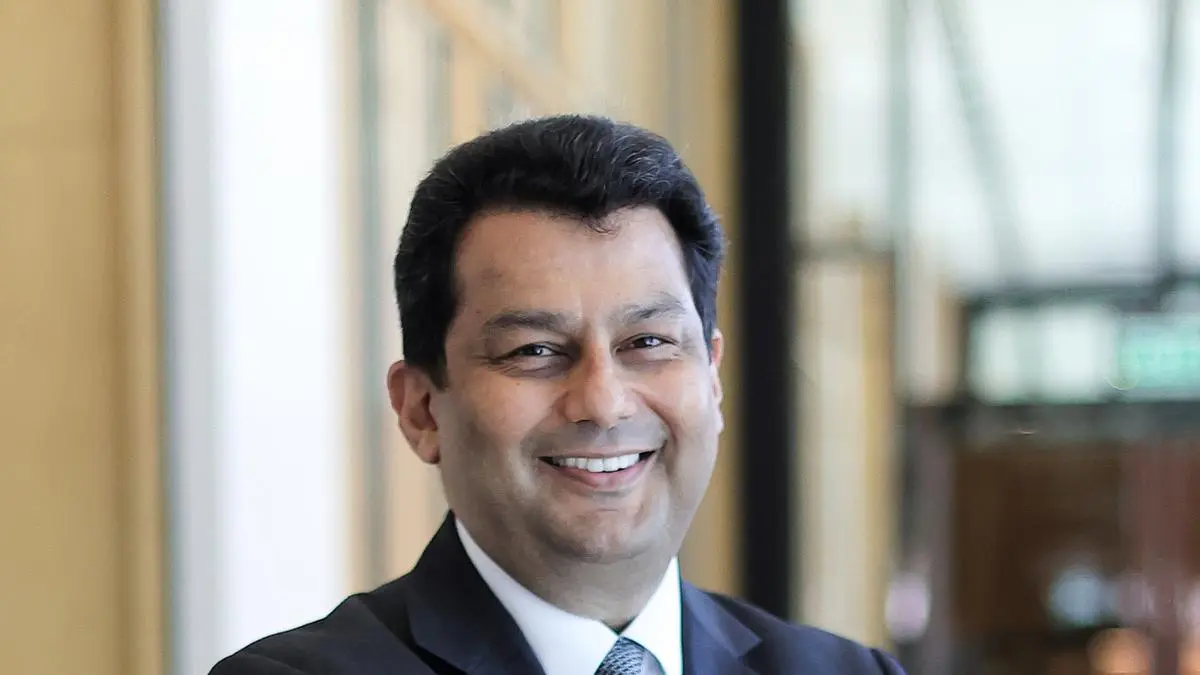
The Reserve Bank of India (RBI) has approved the appointment of Vikram Sahu as the chief executive officer (CEO) of Bank of America NA in India (BANA India) for three years. This is in addition to his current responsibilities as India Country Executive, according to an internal memo seen by businessline.

Kaku Nakhate, the earlier India CEO, has been appointed as chair of India and will focus on deepening relationships with key clients. Sahu will report to Jin Su, President of Asia Pacific.

“Since assuming the overall leadership of our India franchise earlier this year, Vikram has been focused on guiding our country leadership team, focusing on governance and regulatory matters, meeting key clients and reinforcing the bank’s responsible growth approach. As CEO of BANA India, he will chair the entity’s local management team, while remaining a member of our Asia Pacific Executive committee and chair of the India CLT. He will continue to have oversight of our strategic growth plan,” said the memo.

Published on December 3, 2025


Source link

Aiming for acquisitions in tech, payments companies: CMS Info System chief says

Aiming for acquisitions in tech, payments companies: CMS Info System chief says


CMS Info Systems is aiming to acquire companies across its business segments, and especially those in the payments and technology segment to beef up its HawkAI machine-learning based platform, said Rajiv Kaul, CEO and Executive VC of the company. He shares business guidance for H2FY26, talks about how ATM and UPI can co-exist, and possibility of hiving off technology business into a standalone entity over a period of time. Edited excerpts:

You mentioned about new contracts from a large public sector bank and private bank in recent analyst call. What is the new order pipeline in H2?

For the order book, the numbers have not changed. Our revenue growth rate in FY21-FY25 period has been roughly around 16-17 per cent CAGR, and profit has grown 20-21 per cent in same period. From FY25 to FY30, we are taking a base growth goal of 12 per cent for revenue. This is across our three businesses including ATM, retail and consumption linked platform and third is technology and payments.

The opportunities for us look promising right now. And if we are able to execute that, which will really come from expansion through M&A. Our businesses are fairly high cash flow generative. Our return on capital expenditure (RoCE) over last four years has been averaging around 24-26 per cent post tax and if we are able to deploy it sensibly for expansion or diversification of businesses, I think we can aim to grow our topline at around 15-16 per cent over next four-five years. This can surprise some people as they feel there is limited growth opportunity in ATM business. I think cash and UPI can co-exist, there are pockets of high cash usage. Semi urban areas, for instance, have high cash usage. Urban consumption is a lot more UPI dependent today…Our ATM business line has almost doubled in last five years. There is consolidation happening in our industry, which plays to the benefit for larger players like us. With consolidation happening, either weaker players are exiting or customers are prioritising higher quality companies to get better services.

You added 5,000 new retail points in H1FY26. What is the outlook for H2?

Cash management is one segment of our business. Currency needs to move efficiently in the country. Velocity of cash is very important globally and especially in India, where working capital is always a challenge and cost of working capital is huge. If you think of a bank or a SME company, they want all forms of payments whether in cash or digital, to be in their system as soon as possible.

Think of a very low margin business in retail segment, there are X number of transaction happening via credit, debit, UPI, and then cash. Now settlement for digital transactions is instant. But for cash, the settlement is tedious. First the reconciliation process happens, then cash has to be physically checked, verified and then deposited to a bank account. Then a banker will have to reconcile the bank note in their ERP system and then close the transaction. In a low margin business, you cannot afford even 2-4 per cent mistake. So we are looking at how do we increase velocity of cash? For retailer to get access money for growth is very critical, so we try and get them back the money within 24 hours.

Further, we have built system to digitise cash for them in a better way. For instance, when our team member is at the physical store, collecting the money, we will update our system that X amount of money has been collected from Y or Z business. And that collection will be reflected in their internal systems. Then physically we make sure the data is fine, we check the amount and currency validity and we ensure that physically this money reaches the bank account of that retailer…We believe that there should be at least 5 lakh retailers using such services and today only around 1 lakh retailers maybe use it.

What is your strategy on using AI and how much of your revenue is generated from tech and payments business?

I think tech and payments business contribute roughly about 10 per cent right now, it should reach 15 per cent over next five years as other businesses are also growing at a healthy trend. Our HawkAI business is a machine learning based platform. It is a lot about predicting patterns and seeing how to prevent security incident from happening, basis certain triggers. If there are three people walking on ATM site, normally it isn’t common, if they are wearing helmet or mask, there could be something going on. If there is a lot of movement, there are sensors that detect it. We have trained our ML platform extensively over 3-4 years, and as and when any bad incident happens, you learn and work on it…We use this tool across ATMs, branches and quick commerce. This is one of the fastest SaaS business growth in India, around 30,000 sites are running HawkAI platform today. We have taken an aggressive goal that in next five years, around 80,000 sites must use this tool, the growth opportunity is immense as it is even cost efficient.

What are the inorganic growth opportunities that you see?

There will be M&A opportunities across our businesses. We already have very large market share on ATM side, so I don’t think we’re very hungry for acquisitions there necessarily. On tech and payment side, which is smaller part of business, we are growing it fast and would like to grow it even faster. Also it’s a large universe so if there are good companies we can think of partnering with or acquire, we’d love to. We are very first principles company, having grown our average revenue by 15-16 per cent CAGR and profit by 18-20 per cent since inception in 2009 till now. Banks today spend a lot of money on tech and payments services. Therefore we keep looking for niche options, let’s say B2B payments play or players making software for banks. Some fintechs post negative EBITDA, PAT. But for us, we are focused on profitable growth. Profits should be there and sustainable one. We want to build a company which will keep 20 per cent plus RoCE. I think we have good opportunities…we have done one deal this year, and given that market consolidating, we could go for a deal at a right price. If we get machine learning based platform on surveillance side, which is into some niche that we aren’t, we could consider such company. If you’re already on ATM side and help us scale faster, we will consider it, like we did with Securens. So more acquisition on HawkAI platform, it will definitely be more interest to us.

Would you consider hiving off tech business into separate entity?

Our largest revenue comes from ATM side, roughly ₹1,300 crore. That’s a good size. Tech size is only ₹250 crore, now if it gets to ₹1,000 crore, does it get to be hived off?

Firstly why do we need to hive off, one is unlocking value or the markets may not understand it in a conglomerate manner, but right now that’s not needed. Three-four years later, if our tech business revenue rises to over 500 crore, or if we get lucky and scale much faster, I think we should think about it. A Rs 1,000 crore tech company making 15-20 per cent EBITDA margin with 30 per cent RoCE, could do much better as a stand-alone platform. The main reason for hiving off is that opportunity to grow much faster is better as a stand-alone company.

Your guidance on EBITDA margin?

They have remained in range for us. It was a bit low in first half as there were investments made, cost went up, but we want to go back to FY25 level by March 2026. Our EBITDA margin is world class. Therefore I won’t want unnecessary pressure on team to keep aspiring for a very high number and sacrifice growth or market share.


Source link

Jyoti Global Plast launches AeroCrop drone for precision agriculture

Jyoti Global Plast launches AeroCrop drone for precision agriculture


Jyoti Global Plast today announced the launch of the AeroCrop Agricultural UAS, a precision-agriculture drone designed to deliver reliable, accurate, and high-output field performance.

Leveraging more than four decades of expertise in precision plastic and FRP moulding, the company has steadily expanded into unmanned systems and now brings its manufacturing capability to agriculture with a platform built around the real operational needs of farmers.

Engineered for dependable use in field conditions, the AeroCrop offers up to 29 minutes of flight time without payload and 22 minutes with payload, supported by a robust 27.5-kg maximum take-off weight. It is equipped with a 10-litre tank and both flat-jet and centrifugal nozzles to ensure uniform droplet quality and consistent spraying. The system can cover one acre in five to eight minutes, enabling up to 30 acres of spraying a day with reduced chemical wastage and even coverage across different terrains.

Standout feature

A standout feature of the AeroCrop is its intelligent radar-based navigation system, which maintains constant height, follows terrain profiles, avoids obstacles, and executes autonomous missions with precision. This enhances operational safety and predictability while making the spraying process far easier for operators. Designed to simplify the traditionally labour-intensive task of manual spraying, the system enables uniform application, reduces input wastage, improves field-staff safety, and supports more efficient resource use. It is suitable for both farmers already using drones and those transitioning to mechanised spraying for the first time.

With AeroCrop, Jyoti Global Plast strengthens its position within India’s expanding UAV ecosystem and aims to contribute to wider adoption of reliable, efficient, and cost-effective drone solutions across agriculture, surveillance, industrial cleaning, and infrastructure support.

Deven Shah, Whole Time Director and Chief Executive Officer, Jyoti Global Plast, said, “AeroCrop is a direct extension of our manufacturing philosophy, which has always centered on dependable performance and practical design. We believe this drone will help farmers adopt precision spraying easily and safely. Our goal is to make modern agricultural tools accessible without compromising on engineering quality or operational stability.”

Published on December 3, 2025


Source link

SEBI launches SWAGAT-FI single-window system to ease foreign investor access

SEBI launches SWAGAT-FI single-window system to ease foreign investor access


SEBI has introduced a new single-window framework called SWAGAT-FI (Single Window Automatic & Generalised Access for Trusted Foreign Investors), designed to make participation in Indian securities markets easier for low-risk foreign investors.
| Photo Credit:
REUTERS/HEMANSHI KAMANI

Markets regulator SEBI has made it easier for low risk foreign investors to participate in the Indian securities market with the introduction of a single window access, a move aimed at simplifying compliance and enhancing the country’s attractiveness as an investment destination.

The new framework — Single Window Automatic & Generalised Access for Trusted Foreign Investors (SWAGAT-FI) — would provide easier investment access to low risk foreign investors, enable a unified registration process across multiple investment routes and reduce repeated compliance and documentation for such entities.

The low risk foreign investors identified by SEBI include government-owned funds, central banks, sovereign wealth funds, multilateral entities, highly regulated public retail funds, and appropriately regulated insurance companies, as well as pension funds.

Unified investment gateway

According to two separate notifications dated December 1, SEBI introduced the SWAGAT-FI framework for FPIs and Foreign Venture Capital Investors (FVCIs).

To give this effect, SEBI has amended FPIs and FVCIs regulations, which would come into force on June 1, 2026.

The amendment comes after the SEBI board approved a proposal in this regard in September.

Simpler compliance regime

Under the new framework, the regulator has granted an option to SWAGAT-FIs applying for registration/ already registered as FPIs to also register as FVCI, without the need for any further documentation.

Registration under both FPI and FVCI regulations will enable SWAGAT-FIs to invest in listed equity instruments and debt securities of Indian companies as FPI, and in unlisted Indian companies engaged in specified sectors and startups as FVCI under respective regulations.

To enhance ease of compliance, the regulator increased the periodicity for continuance of registration, including payment of fee and review of KYC documentation to 10 years, up from the current three-year or five-year periods.

IFSC clarity issued

To enhance the ease of doing business for FPIs operating from International Financial Services Centres (IFSCs), SEBI allowed retail schemes in IFSCs with a resident Indian sponsor or manager, to register as FPIs.

Currently, Alternative Investment Funds in IFSCs with a resident Indian sponsor or manager are permitted to register as FPIs.

Sebi noted that limits on sponsor contribution by resident Indian non-individuals in funds set up in IFSC, as specified by SEBI and International Financial Services Centres Authority (IFSCA), were at variance, leading to the risk of non-compliance by such entities.

To address this, the regulator amended FPI Regulations so that such sponsor contributions be subject to a maximum of 10 per cent of corpus of the Fund (or assets under management in case of retail schemes).

As of June 30, 2025, India had 11,913 registered FPIs, holding assets worth Rs 80.83 lakh crore and SWAGAT-FIs are estimated to contribute more than 70 per cent of total FPIs’ assets under custody, according to SEBI data.

Published on December 3, 2025


Source link

Silver ने बाजार में मचाया तूफान | Gold–Silver Record High Explained | Rupee Crash Impact| Paisa Live

Silver ने बाजार में मचाया तूफान | Gold–Silver Record High Explained | Rupee Crash Impact| Paisa Live


अगर आपको लगता था कि सिर्फ सोना ही सबसे महंगा होता है, तो अब तस्वीर बदल चुकी है। चाँदी ने बाजार में जबरदस्त उछाल लाते हुए कमाल कर दिया है। जिसे कभी poor man’s gold कहा जाता था, आज वही चाँदी सोने को बराबरी की टक्कर दे रही है। 3 दिसंबर 2025 को Silver ने ₹3,126 की बड़ी तेजी के साथ ₹1,84,727 प्रति किलोग्राम का नया रिकॉर्ड हाई बनाया। Gold futures भी मजबूत global trend को फॉलो करते हुए ₹1,30,766 प्रति 10 ग्राम तक पहुँच गए। इस उछाल की सबसे बड़ी वजह है रुपये का भारी गिरना। Dollar के मुकाबले Indian Rupee all-time low पर फिसल गया और उसी दबाव ने gold और silver दोनों को और ऊपर धकेला। MCX पर भी पूरा बाजार action में था। Gold February 2026 futures ₹1,007 चढ़कर ₹1,30,766 तक पहुँचे, जबकि Silver March 2026 futures ने ₹3,126 की rally के साथ ₹1,84,727 को फिर से all-time high बना दिया। Global markets में भी silver record levels के आसपास ट्रेड हो रही है। पिछले सात sessions में करीब 17% की तेज रफ्तार देखने को मिली है, जिसे US monetary easing expectations और supply tightness का समर्थन मिला। Silver international market में $58 के आसपास ट्रेड कर रही है, जबकि gold $4,200 के करीब स्थिर है। US Federal Reserve की expected rate cuts का global sentiment पर बड़ा असर है और इसी buzz के बीच Comex Silver December contract 1.6% चढ़कर $58.90 per ounce और March contract $59.65 per ounce के lifetime high पर पहुंच गया।


Source link

Markets extend losing streak as rupee slumps, small-and mid-caps hit badly

Markets extend losing streak as rupee slumps, small-and mid-caps hit badly


Benchmark indices extended their losing streak to a fourth consecutive session on Wednesday, with the Nifty50 closing at 25,986, down 46.20 points or 0.18 per cent, while the Sensex ended marginally lower at 85,106.81, shedding 31.46 points or 0.04 per cent.

The Indian rupee’s depreciation to a record low of 90.14 against the US dollar in early trade, eventually closing at 90.19, emerged as the key concern dampening investor sentiment.

The currency’s sixth straight session of weakness marked its longest losing run since July 2025, driven primarily by substantial foreign institutional investor outflows and restrained central bank intervention ahead of the crucial Monetary Policy Committee (MPC) decision scheduled for December 5.

“Sentiment was dampened by a weakening rupee, which hit a record low of 90.13 against the dollar, heightening concerns around import costs and triggering FII outflows,” said Ajit Mishra, SVP, Research, Religare Broking Ltd. “In addition, caution ahead of the MPC meeting and mixed global cues added to the subdued mood.”

The broader markets underperformed significantly, with the Nifty Midcap 100 declining 0.98 per cent to 60,315.65 and the Nifty Smallcap 100 shedding 0.71 per cent to close at 17,649.45.

Market breadth remained weak for the fourth consecutive session, with 2,767 stocks declining against 1,396 advances on the BSE. The advance-decline ratio slipped to 0.56, with 289 stocks hitting 52-week lows compared to just 85 at 52-week highs.

Among sectoral indices, Nifty IT emerged as the sole gainer, rising 0.8 per cent as export-oriented technology stocks benefited from rupee depreciation. Nifty PSU Bank slumped nearly 3 per cent after the government clarified it has no plans to raise the foreign direct investment limit in state-owned banks from 20 per cent to 49 per cent. Nifty Auto declined over 1.2 per cent amid profit booking.

Wipro led the gainers on the Nifty50, surging 1.61 per cent to ₹254.20, followed by Hindalco which gained 1.46 per cent to ₹818.65 and TCS which advanced 1.41 per cent to ₹3,180. ICICI Bank rose 1.38 per cent to ₹1,392, while HDFC Bank added 1.04 per cent to ₹1,000.10.

On the losing side, Max Healthcare tumbled 2.91 per cent to ₹1,085, followed by Tata Consumer which fell 2.25 per cent to ₹1,136 and Adani Enterprises which declined 2.14 per cent to ₹2,191.60. BEL dropped 2.03 per cent to ₹404.65, while Shriram Finance shed 1.83 per cent to ₹828.

“Nifty broke psychological level of 26000 but managed to close above its 20 DEMA support, which was breached during the session,” said Nandish Shah, Deputy Vice President, HDFC Securities. “A level above 20 DEMA and previous swing low of 25842 have kept the hope alive for Nifty bulls. However, on the upside, the band 26150-26200 could offer resistance in short term.”

In the commodities market, gold traded positive on MCX with gains of ₹500 at ₹130,275 as the rupee weakness provided additional support.

“Rupee weakness continues to give MCX Gold an additional lift, but the current zone is overbought and a retracement toward the ₹127,000 support cannot be ruled out,” said Jateen Trivedi, VP Research Analyst, LKP Securities.

Rahul Kalantri, VP Commodities, Mehta Equities Ltd, noted that “this week, INR is expected to remain volatile as ahead of RBI monetary policy, with USD/INR likely moving within the 89.10–90.85 range.”

The primary market witnessed action with three IPOs—Meesho, Aequs and Vidya Wires—opening for subscription, collectively looking to raise approximately ₹6,643 crore. Globally, focus remains on Russian President Putin’s visit to India on December 4-5 and US nonfarm employment data.

Looking ahead, analysts expect markets to remain range-bound, tracking currency trends, RBI monetary policy cues on Friday, and developments on the trade negotiation front. The sustainability of recovery in private banking heavyweights and IT will be crucial for any meaningful market rebound.

Published on December 3, 2025


Source link

YouTube
Instagram
WhatsApp




