CRED enables biometric authentication for UPI payments up to ₹5,000

CRED enables biometric authentication for UPI payments up to ₹5,000


Fintech platform CRED has introduced biometric authentication for UPI payments, allowing its members to authorise transactions using face recognition or fingerprint instead of a PIN. The feature went live on March 25, 2026, and is available on both iOS and Android devices.

The rollout covers transactions up to ₹5,000 and applies across all UPI use cases on the platform — including credit card bill payments, utility payments, merchant payments, scan and pay, peer-to-peer transfers, and balance checks. CRED said the change reduces the number of steps needed to complete a payment, lowering the incidence of failed or delayed transactions.

The feature has been built in partnership with the National Payments Corporation of India (NPCI), which governs the UPI ecosystem. It is compliant with regulatory guidelines and uses the authentication method already set up on a user’s own device.

CRED positioned the move as a security upgrade, citing reduced risk from PIN exposure and fewer transaction errors caused by incorrect PIN entry. The biometric layer is intended to strengthen fraud protection while improving the overall payment experience.

CRED, which claims over 1.5 crore users, restricts membership to individuals with high credit scores. The platform offers credit card management, credit score tracking, and access to financial products alongside its payments infrastructure.

Published on March 26, 2026


Source link

गलत विमान वैंकूवर भेजने के चलते एयर इंडिया को DGCA की फटकार, एक अधिकारी पर गिरी गाज

गलत विमान वैंकूवर भेजने के चलते एयर इंडिया को DGCA की फटकार, एक अधिकारी पर गिरी गाज


DGCA Wraps Air India: एयर इंडिया की लापरवाही का एक गंभीर मामला सामने आया है, जिसके बाद नागरिक उड्डयन महानिदेशालय Directorate General of Civil Aviation (DGCA) ने Air India को फटकार लगाई है. एयर इंडिया ने वैंकूवर जाने वाली फ्लाइट के लिए गलती से बोइंग 777-200 LR विमान भेज दिया, जबकि इस रूट के लिए केवल Boeing 777-300ER को ही मंजूरी दी गई थी. इसके चलते विमान को करीब 7 घंटे उड़ान भरने के बाद दिल्ली वापस लौटना पड़ा, क्योंकि वह उस रूट के लिए अनुमोदित नहीं था.

एयर इंडिया की बड़ी लापरवाही

इस घटना के तुरंत बाद DGCA ने एयर इंडिया को सुधारात्मक कदम उठाने के निर्देश दिए और इस लापरवाही के लिए एयरलाइन के एक अधिकारी पर कार्रवाई भी की गई. यह मामला इसलिए गंभीर है क्योंकि हर अंतरराष्ट्रीय रूट के लिए अलग-अलग विमानों को उनकी रेंज, सुरक्षा मानकों और नियामकीय अनुमोदन के आधार पर अनुमति दी जाती है. ऐसे में गलत विमान भेजना न केवल नियमों का उल्लंघन है, बल्कि इससे सुरक्षा जोखिम भी पैदा हो सकता है और यात्रियों के समय व संसाधनों की भी बर्बादी होती है.

इस तरह की घटनाएं एयरलाइन की विश्वसनीयता पर सवाल खड़े करती हैं. ऐसे में DGCA की सख्ती के बीच यह जरूरी हो गया है कि भविष्य में फ्लाइट प्लानिंग और अनुमोदन प्रक्रिया को और मजबूत बनाया जाए, ताकि इस तरह की गलतियों की पुनरावृत्ति न हो.

क्या होता है अंतर?

बोईंग 777-200LR और बोईंग 777-300ER दोनों ही बोईंग 777 सीरीज के विमान हैं. लेकिन इनके बीच काफी अंतर है. 777-300ER आकार में बड़ा और लंबा होता है, जिससे इसमें 350–400 तक यात्री बैठ सकते हैं, जबकि 777-200LR अपेक्षाकृत छोटा होता है और इसमें लगभग 250–300 यात्री ही समा पाते हैं.

रेंज के मामले में 777-200LR को अल्ट्रा-लॉन्ग रेंज विमान माना जाता है और यह ज्यादा दूरी तय कर सकता है, जबकि 777-300ER की रेंज थोड़ी कम होती है, लेकिन यह ज्यादा यात्रियों को ले जाने के कारण व्यावसायिक रूप से अधिक उपयोगी माना जाता है.

ये भी पढ़ें: ईरान वॉर के बीच न्यारा एनर्जी ने बढ़ाई पेट्रोल-डीजल की कीमत, जानें शहरवार क्या है नए रेट्स


Source link

Iran, US harden their positions as Tehran keeps its grip on Strait of Hormuz

Iran, US harden their positions as Tehran keeps its grip on Strait of Hormuz


Iran and the United States hardened their positions as diplomacy aimed at reaching a ceasefire in the war in the Middle East appeared to be faltering on Thursday.

Tehran moved to formalise its control over the crucial Strait of Hormuz while Washington prepared for the arrival of US combat forces in the region that could be used on the ground in the Islamic Republic.

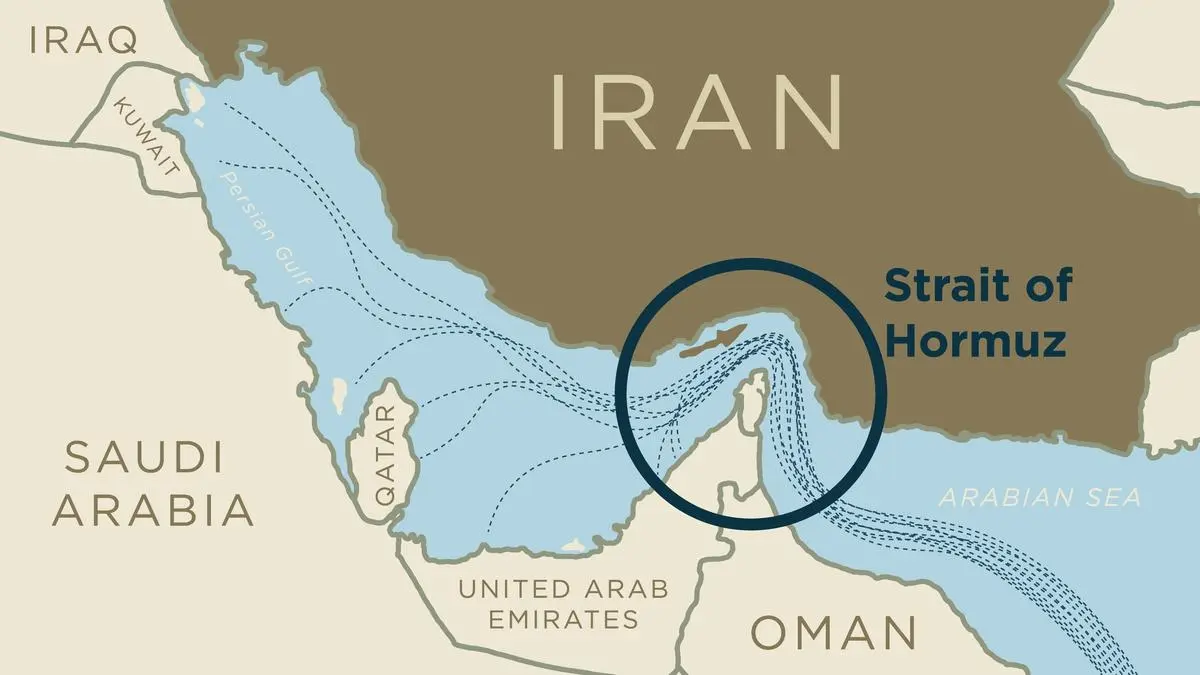
Iran is instituting a “de facto toll booth’ regime”, industry experts say, with some ships paying in Chinese yuan to pass through the strait, where 20 per cent of all traded oil and natural gas is transported in peacetime.

Meanwhile, a strike group anchored by the amphibious assault ship USS Tripoli drew closer to the Mideast with some 2,500 Marines. Also, at least 1,000 paratroopers from the 82nd Airborne have been ordered to the region.

The troop movements don’t guarantee US President Donald Trump will try to use force to compel Iran to open the strait and halt its attacks on Gulf Arab states.

Trump previously deployed a large force in the Caribbean before the American military captured former Venezuelan leader Nicolás Maduro in January. In the current situation, the US is seen as focused on possibly seizing Iran’s oil terminal at Kharg Island or other sites near the strait.

US Navy Adm. Brad Cooper, who commands the American military in the region, said his forces have hit more than 10,000 targets since Israel and the US started the war February 28, destroying 92 per cent of Iran’s largest ships and more than two-thirds of the country’s missile, drone and naval production facilities.

“We’re not done yet,” said Cooper, who heads the US Central Command, in a video message. “We are on a path to completely eliminate Iran’s wider military apparatus.” Iran seen as operating Strait of Hormuz as de facto toll booth With its stranglehold on traffic through the Strait of Hormuz, which leads from the Persian Gulf toward the open ocean, Iran has been blocking ships it perceives as linked to the US and Israeli war effort, but letting through a trickle of others.

The Fars and Tasnim news agencies, both close to Iran’s paramilitary Revolutionary Guard, quoted lawmaker Mohammadreza Rezaei Kouchi as saying that parliament was working to formalise the process of charging fees to let ships pass.

“We provide its security, and it is natural that ships and oil tankers should pay such fees,” he was quoted as saying.

Lloyd’s List Intelligence called it a “de facto toll booth’ regime”.

The shipping intelligence firm said vessels have to provide manifests, crew details and their destination to Iran’s Guard for sanctions screening, cargo alignment checks that currently prioritises oil over all other commodities, and for what is described as geopolitical vetting”.

“While not all ships are paying a direct toll, at least two vessels have and the payment is settled in yuan,” Lloyd’s List said, referring to China’s currency.

Iran’s grip on the strait and relentless attacks on Gulf regional energy infrastructure has sent oil prices skyrocketing and concerns of a global energy crisis surging. Brent crude, the international standard, traded at USD 104 early Thursday, up more than 40 per cent from the day the war started.

“To make it crystal clear, this war is a catastrophe for world’s economies,” German Defence Minister Boris Pistorius told reporters during a vist to Australia.

US maintains negotiations are ongoing but Iran says there are no talks Using Pakistan as an intermediary, Washington has delivered to Iran a 15-point ceasefire proposal, which includes the reopening of the Strait of Hormuz.

Trump, speaking at a fundraiser Wednesday night in Washington, insisted that Iran still wants to cut a deal.

“They are negotiating, by the way, and they want to make a deal so badly, but they’re afraid to say it because they figure they’ll be killed by their own people,” Trump said.

Iran’s Foreign Minister Abbas Araghchi said in an interview on state TV, however, that his government has not engaged in talks to end the war, “and we do not plan on any negotiations”.

Araghchi said the US had tried to send messages to Iran through other nations, “but that is not a conversation nor a negotiation”.

Press TV, the English-language broadcaster on Iranian state television, said Iran has its own five-point proposal, which includes “sovereignty over the Strait of Hormuz”.

A wave of Israeli airstrikes hits as Iran fires on Gulf neighbours Israel said it carried out a wave of attacks early on Thursday targeting Iranian infrastructure, and air defences were heard in Tehran, while heavy strikes were also reported around Isfahan, a city some 330 kilometers (205 miles) south of the Iranian capital.

Ifahan is home to a major Iranian air base and other military sites, as well as one of the nuclear sites bombed by the US during the 12-day war between Israel and Iran in June.

Sirens sounded very early on Thursday morning in parts of Tel Aviv and cities in central Israel. Rescue workers said two people were injured in a blast in Kfar Qasim.

Saudi Arabia’s Defence Ministry said it intercepted multiple drones over its oil-rich Eastern Province, the United Arab Emirates’ air defences also worked to intercept incoming fire, and Bahrain reported extinguishing a blaze in a neighbourhood that is home to the Bahrain International Airport.

Since the war began, more than 1,500 people have been killed in Iran, its Health Ministry says. Twenty people have been killed in Israel; two Israeli soldiers have also been killed in Lebanon. At least 13 US military members have been killed. More than a dozen civilians in the occupied West Bank and Gulf Arab states have also died.

Nearly 1,100 people have died in Lebanon, authorities said. In Iraq, where Iranian-supported militant groups have entered the conflict, 80 members of the security forces have been killed. (AP)

Published on March 26, 2026



Source link

WazirX launches zero trading fee subscription model to shake up India crypto trading

WazirX launches zero trading fee subscription model to shake up India crypto trading


Crypto exchange WazirX introduced a flat-fee subscription model with its platform restart, aimed at reducing trading costs for retail investors, as digital asset adoption accelerates in India.

The platform’s ‘ZERO’ plan replaces traditional percentage-based brokerage fees with a fixed monthly charge of Rs 99, allowing users to execute unlimited trades for zero-fee across more than 300 tokens.

“WazirX’s ZERO model represents a structural shift from transaction-based pricing to access-based pricing. By introducing a flat Rs 99 monthly subscription, whether a trader executes a few trades or dozens within a month, the platform cost remains fixed, removing the uncertainty associated with per-trade charges,” said Founder Nischal Shetty.

Crypto exchanges typically charge users up to 0.5 per cent per transaction, costs that can compound significantly for frequent traders. For instance, a user trading Rs 10,000 ten times a month could incur annual costs of nearly Rs 25,000 when factoring in brokerage fees. In addition, there’s a 1 per cent tax deducted at source (TDS) on crypto transactions, which get added to the trading fees.

Shetty said the model was designed to rethink how exchanges serve retail participants by shifting revenue generation from transaction-based fees to subscriptions. “The idea behind the ZERO model was to rethink how exchanges serve retail participants… the platform aligns its incentives more closely with user access rather than trading activity revenue,” he added.

While exchanges must continue to comply with regulatory requirements such as TDS, industry participants say pricing innovations could improve accessibility for smaller investors by simplifying cost structures and enhancing transparency.

The move comes as competition intensifies in India’s crypto market, with other exchanges also exploring similar subscription-based models following WazirX’s announcement.

As adoption grows, such models could enable traders to focus less on transaction costs and more on market participation in the evolving crypto ecosystem.

Published on March 26, 2026


Source link

Asian stocks mostly fall, oil climbs again over Iran war de-escalation uncertainties

Asian stocks mostly fall, oil climbs again over Iran war de-escalation uncertainties


Asian stocks were mostly lower and oil prices gained on Thursday as a de-escalation of the Iran war remained uncertain.

US futures were down 0.1 per cent.

Tokyo’s Nikkei 225 was trading 0.3 per cent lower at 53,607.75. South Korea’s Kospi lost 1.9 per cent to 5,537.30.

Hong Kong’s Hang Seng fell 1.4 per cent to 24,978.71, while the Shanghai Composite index was down 0.6 per cent to 3,909.16.

Oil prices were up again on Thursday after an earlier dip. Brent crude, the international standard, rose 1.3 per cent to USD 98.51 per barrel. It was below USD 95 on Wednesday. Benchmark US crude was 1.6 per cent higher at USD 91.75 a barrel.

The rise in oil prices came as Tehran on Wednesday dismissed a ceasefire plan by the US, after the administration of US President Donald Trump offered a 15-point proposal to Iran and Trump this week delayed a self-imposed deadline to “obliterate” its power plants in order to force Iran to reopen the Strait of Hormuz.

Iran also launched more attacks on Israel and Gulf Arab countries as Israel launched airstrikes on Tehran and the US prepared to deploy more American troops to the region.

With the Strait of Hormuz, a crucial waterway between Iran and Oman where roughly a fifth of the world’s oil typically passes through, remaining largely closed after the Iran war began, oil prices have fluctuated, climbing around 40 per cent since the beginning of the war, which is now in its fourth week.

US-listed shares of Arm Holdings jumped 16.4 per cent, following an announcement by the UK company that it would be launching and selling its own chips which is expected to drive future revenue.

On Holding, the Swiss sportswear company selling On running shoes, fell 11.2 per cent in the US. Its CEO Martin Hoffmann is stepping down and the company has named two co-founders as co-CEOs.

In other dealings early Thursday, gold and silver prices fell. Gold prices dropped 0.8 per cent to USD 4,513.90 per ounce. Silver prices lost 0.9 per cent to USD 71.97 an ounce.

The US dollar fell to 159.42 Japanese yen from 159.47 yen. The euro was trading at USD 1.1570, up from USD 1.1559. (AP)

Published on March 26, 2026



Source link

Saudi oil sales to top Asia buyers China and India to drop on Hormuz disruptions

Saudi oil sales to top Asia buyers China and India to drop on Hormuz disruptions


The global oil market has been upended by the conflict between the US, Israel and Iran, which is nearing the one-month mark.

Saudi Arabia’s oil sales to Asia’s two biggest importers are set to come in at lower-than-usual levels next month, as the war raging across the Middle East disrupts supplies from the energy powerhouse.

Saudi Aramco, the world’s top exporter, is due to ship about 40 million barrels of crude to customers in China in April, according to traders familiar with the matter. That’s lower than usual — exports were set at 48 million barrels in February. Flows to buyers in India are also set to come in lower.

Crude spike

The global oil market has been upended by the conflict between the US, Israel and Iran, which is nearing the one-month mark. Crude has spiked as Tehran launched attacks against energy infrastructure across the region and also forced the near-total closure of the Strait of Hormuz, the waterway that links the Persian Gulf to global markets, including Asia’s largest economies.

The prospect of lower crude volumes going from Saudi Arabia to some of its principal buyers highlights the growing economic fallout from the war, with importers facing higher costs, as well as a need to source alternative barrels.

BlackRock Inc President Rob Kapito warned on Thursday that investors may be underestimating the risks stemming from the war, which are likely to hurt economic growth and boost inflation even if the conflict were to end soon.

Arab Light grade

The disruption at Hormuz prompted Saudi Aramco to reroute some crude supplies, channeling a portion of production via a pipeline across the Arabian peninsula to the alternative port of Yanbu on its Red Sea coast. However, the ambitious measure is only a partial workaround. 

Yanbu has an export capacity of around 5 million barrels a day. That’s lower than the 7.2 million barrels a day shipped last month before the war, mainly from facilities within the Persian Gulf. The oil that the Asian refiners are being offered via Yanbu is only the Arab Light grade, the traders said.

For India, exports were set at roughly 23 million barrels for next month, the traders said, asking not to be identified due to the sensitivity of the matter. That’s also slightly lower than recent months. Flows in February were seen at 25 million to 28 million barrels, according to Kpler Ltd and Vortexa Ltd.

Earlier, Saudi Arabia had given long-term oil customers the option of receiving their so-called allocated supply from Yanbu, instead of from within the Persian Gulf. Meanwhile, at least two European refiners had their April-loading volumes cut, with one of them receiving nothing at all.

Aramco didn’t respond to a request for comment.

More stories like this are available on bloomberg.com

Published on March 26, 2026


Source link

YouTube
Instagram
WhatsApp