Asian stocks mostly fall, oil climbs again over Iran war de-escalation uncertainties

Asian stocks mostly fall, oil climbs again over Iran war de-escalation uncertainties


Asian stocks were mostly lower and oil prices gained on Thursday as a de-escalation of the Iran war remained uncertain.

US futures were down 0.1 per cent.

Tokyo’s Nikkei 225 was trading 0.3 per cent lower at 53,607.75. South Korea’s Kospi lost 1.9 per cent to 5,537.30.

Hong Kong’s Hang Seng fell 1.4 per cent to 24,978.71, while the Shanghai Composite index was down 0.6 per cent to 3,909.16.

Oil prices were up again on Thursday after an earlier dip. Brent crude, the international standard, rose 1.3 per cent to USD 98.51 per barrel. It was below USD 95 on Wednesday. Benchmark US crude was 1.6 per cent higher at USD 91.75 a barrel.

The rise in oil prices came as Tehran on Wednesday dismissed a ceasefire plan by the US, after the administration of US President Donald Trump offered a 15-point proposal to Iran and Trump this week delayed a self-imposed deadline to “obliterate” its power plants in order to force Iran to reopen the Strait of Hormuz.

Iran also launched more attacks on Israel and Gulf Arab countries as Israel launched airstrikes on Tehran and the US prepared to deploy more American troops to the region.

With the Strait of Hormuz, a crucial waterway between Iran and Oman where roughly a fifth of the world’s oil typically passes through, remaining largely closed after the Iran war began, oil prices have fluctuated, climbing around 40 per cent since the beginning of the war, which is now in its fourth week.

US-listed shares of Arm Holdings jumped 16.4 per cent, following an announcement by the UK company that it would be launching and selling its own chips which is expected to drive future revenue.

On Holding, the Swiss sportswear company selling On running shoes, fell 11.2 per cent in the US. Its CEO Martin Hoffmann is stepping down and the company has named two co-founders as co-CEOs.

In other dealings early Thursday, gold and silver prices fell. Gold prices dropped 0.8 per cent to USD 4,513.90 per ounce. Silver prices lost 0.9 per cent to USD 71.97 an ounce.

The US dollar fell to 159.42 Japanese yen from 159.47 yen. The euro was trading at USD 1.1570, up from USD 1.1559. (AP)

Published on March 26, 2026



Source link

Saudi oil sales to top Asia buyers China and India to drop on Hormuz disruptions

Saudi oil sales to top Asia buyers China and India to drop on Hormuz disruptions


The global oil market has been upended by the conflict between the US, Israel and Iran, which is nearing the one-month mark.

Saudi Arabia’s oil sales to Asia’s two biggest importers are set to come in at lower-than-usual levels next month, as the war raging across the Middle East disrupts supplies from the energy powerhouse.

Saudi Aramco, the world’s top exporter, is due to ship about 40 million barrels of crude to customers in China in April, according to traders familiar with the matter. That’s lower than usual — exports were set at 48 million barrels in February. Flows to buyers in India are also set to come in lower.

Crude spike

The global oil market has been upended by the conflict between the US, Israel and Iran, which is nearing the one-month mark. Crude has spiked as Tehran launched attacks against energy infrastructure across the region and also forced the near-total closure of the Strait of Hormuz, the waterway that links the Persian Gulf to global markets, including Asia’s largest economies.

The prospect of lower crude volumes going from Saudi Arabia to some of its principal buyers highlights the growing economic fallout from the war, with importers facing higher costs, as well as a need to source alternative barrels.

BlackRock Inc President Rob Kapito warned on Thursday that investors may be underestimating the risks stemming from the war, which are likely to hurt economic growth and boost inflation even if the conflict were to end soon.

Arab Light grade

The disruption at Hormuz prompted Saudi Aramco to reroute some crude supplies, channeling a portion of production via a pipeline across the Arabian peninsula to the alternative port of Yanbu on its Red Sea coast. However, the ambitious measure is only a partial workaround. 

Yanbu has an export capacity of around 5 million barrels a day. That’s lower than the 7.2 million barrels a day shipped last month before the war, mainly from facilities within the Persian Gulf. The oil that the Asian refiners are being offered via Yanbu is only the Arab Light grade, the traders said.

For India, exports were set at roughly 23 million barrels for next month, the traders said, asking not to be identified due to the sensitivity of the matter. That’s also slightly lower than recent months. Flows in February were seen at 25 million to 28 million barrels, according to Kpler Ltd and Vortexa Ltd.

Earlier, Saudi Arabia had given long-term oil customers the option of receiving their so-called allocated supply from Yanbu, instead of from within the Persian Gulf. Meanwhile, at least two European refiners had their April-loading volumes cut, with one of them receiving nothing at all.

Aramco didn’t respond to a request for comment.

More stories like this are available on bloomberg.com

Published on March 26, 2026


Source link

Cairn looks to hire Americans to build India’s shale sector

Cairn looks to hire Americans to build India’s shale sector


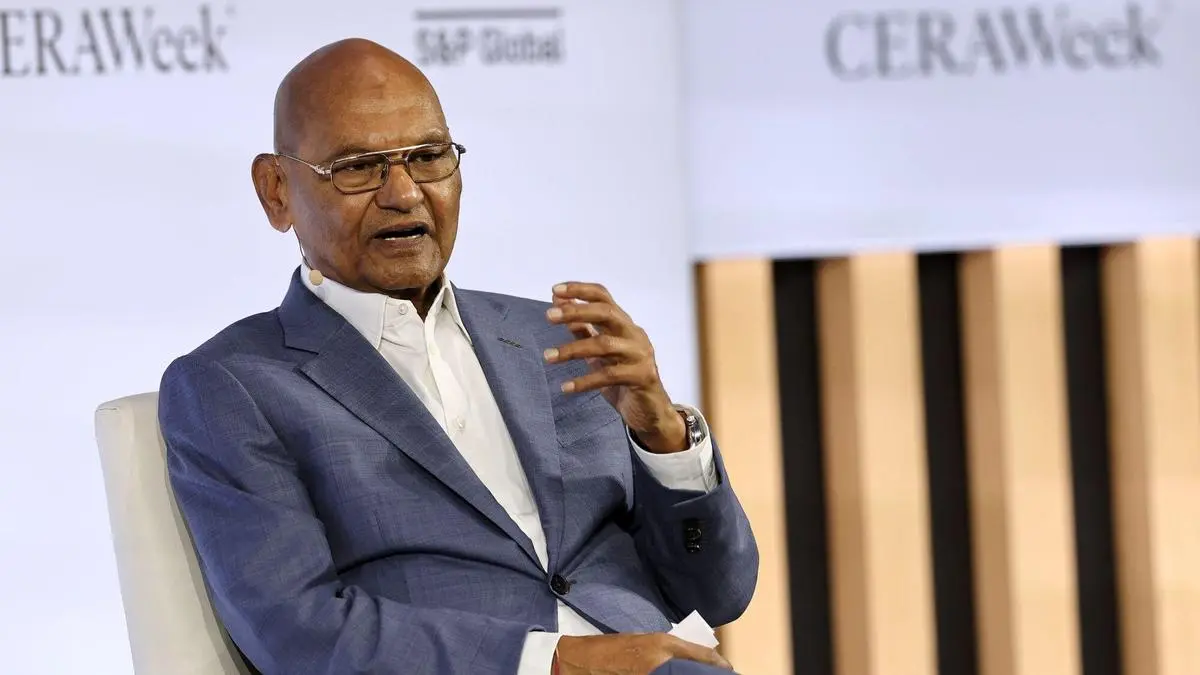
Anil Agarwal, founder and chairman of Vedanta Group, at the CERAWeek by S&P Global conference in Houston, Texas, US, on Wednesday, March 25, 2026.
| Photo Credit:
AARON M. SPRECHER

Vedanta Ltd’s Cairn Oil & Gas is looking to quadruple daily output to the equivalent of 1 million barrels over the better part of the next decade as India’s largest private sector oil producers basks in the war-driven surge in crude prices.

Cairn executives are in Houston this week looking to spend as much as $5 billion with oilfield contractors who will help the company develop fields at home that include shale formations, Vedanta Chairman Anil Agarwal said during an interview. 

Cairn’s aim is to hire 10 Americans to apply the US shale playbook in India, where the company hopes to shave drilling and completion times by one-third to accelerate the ramp up of output, he said. It’s a significant move for the broader India economy, which is almost wholly reliant on imported cargoes for crude.

“They produce the fastest shale in the world — they’re the master — so we would like to take that also to India,” Agarwal said on the sidelines of the CERAWeek by S&P Global conference on Wednesday. “If we are not at least 50 per cent energy secured, we are in bad shape. So we are friendly with everybody.”

Cairn’s outreach to the hired hands of the North American crude sector dovetails with efforts by oil contractors to expand internationally as activity in the US shale patch decelerates.

Cairn has drilled four shale wells that are awaiting completion, said Agarwal, the 72-year-old founder of Vedanta. War in the Middle East that has closed the vital Strait of Hormuz to most tanker traffic for weeks has left Agarwal feeling “definitely miserable.”

“Our prime minister is very focused to make sure there is not a single day you have a gas connection that goes away or there is no petrol in the petrol pump,” he said.

More stories like this are available on bloomberg.com

Published on March 26, 2026


Source link

Crude oil futures gain as West Asia ceasefire uncertainty continues

Crude oil futures gain as West Asia ceasefire uncertainty continues


Meanwhile, petroleum status report by the US EIA for the week ending March 20 showed an increase in crude oil inventories in the US.

Crude oil futures traded higher on Thursday morning due to conflicting statements about the ceasefire proposal to end the war in West Asia.

At 9.28 am on Thursday, June Brent oil futures were at $98.54, up by 1.32 per cent, and May crude oil futures on WTI (West Texas Intermediate) were at $91.76, up by 1.59 per cent.

On Wednesday, US President Donald Trump said: “Iranian leaders are negotiating, by the way, and they want to make a deal ⁠so badly, but they’re afraid to say it because they will be killed by their own people. They’re also afraid they’ll be killed by us.”

Speaking on state television, Iranian Foreign Minister Abbas Araqchi said the exchange of messages through mediators does not mean negotiations with the US. “They put forward ideas in their messages that were conveyed to top authorities, and if necessary, a position will be announced by them,” he said.

Earlier Iran had denied holding talks with the US, and it had set its own conditions that included sovereign control over the Strait of Hormuz.

A Reuters report, which quoted sources, said Israel was sceptical Iran would agree to the terms, and that Israel was concerned US negotiators might make concessions. Israel also wants any agreement to preserve its option to conduct pre-emptive strikes, the report said.

US inventories up

Meanwhile, petroleum status report by the US EIA (Energy Information Administration) for the week ending March 20 showed an increase in crude oil inventories in the US.

According to EIA, US commercial crude oil inventories increased by 6.9 million barrels for the week ending March 20. Total motor gasoline inventories decreased by 2.6 million barrels from last week, and distillate fuel inventories increased by 3 million barrels last week.

Total products supplied in the US over the last four-week period averaged 20.7 million barrels per day, up by 2.4 per cent from the same period last year.

US crude oil refinery inputs averaged 16.6 million barrels per day during the week ending March 20, which was 366,000 barrels per day more than the previous week’s average. Refineries operated at 92.9 per cent of their operable capacity last week.

US crude oil imports averaged 6.5 million barrels per day for the week ending March 20, a decrease of 730,000 barrels per day from the previous week. Over the past four weeks, US crude oil imports averaged about 6.6 million barrels per day, 15.5 per cent more than the same four-week period last year.

Published on March 26, 2026


Source link

Stock Market Holiday on March 26; Sensex, Nifty settle higher in previous session

Stock Market Holiday on March 26; Sensex, Nifty settle higher in previous session


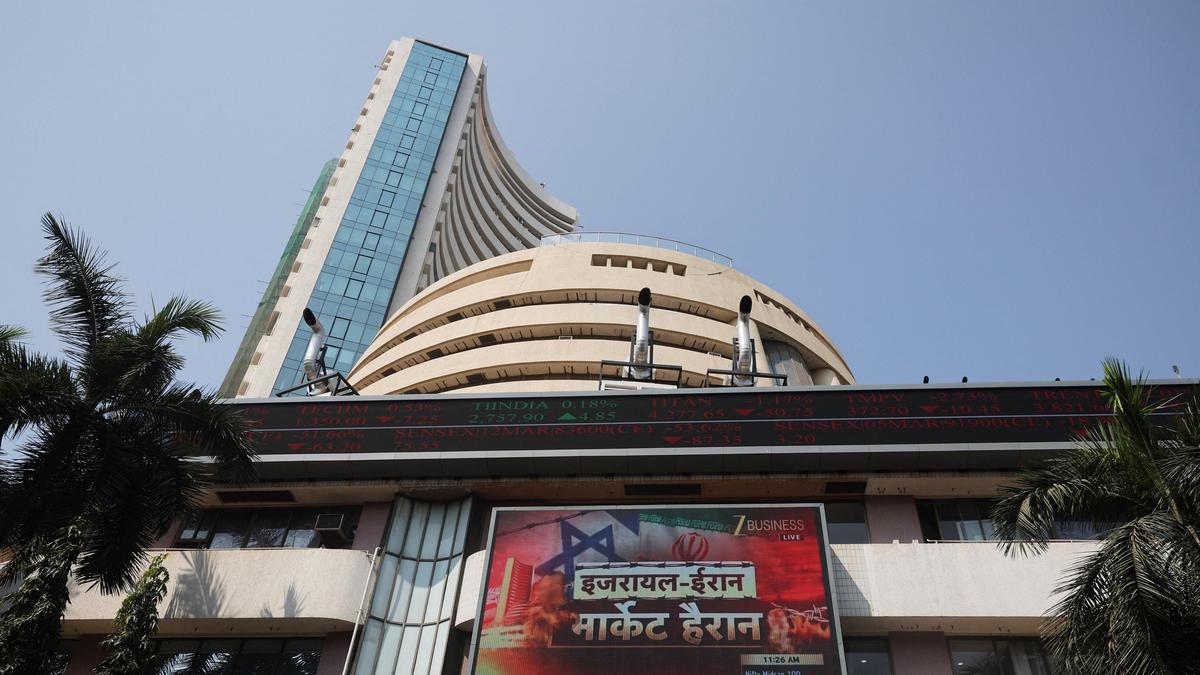
A view of the Bombay Stock Exchange (BSE) in Mumbai, India, March 2, 2026.
| Photo Credit:
FRANCIS MASCARENHAS

Equity markets remained closed on Thursday, March 26, on account of Ram Navami, with trading across equity, currency and debt segments set to resume on Friday, March 27.

Markets ended the previous session on a strong note, marking a second consecutive day of gains. The Nifty climbed 1.72 per cent to close at 23,306.45, while the Sensex advanced 1.63 per cent to settle at 75,273.45 on Wednesday. The rally was largely driven by easing global concerns, as expectations of a potential ceasefire in West Asia led to a decline in crude oil prices. Lower oil prices are seen as supportive for India’s growth outlook, given its position as the world’s third-largest crude importer.

In the currency market, the rupee weakened slightly, falling 0.1 per cent against the US dollar to close at 93.97. The currency faced pressure from increased dollar demand tied to maturing non-deliverable forwards and foreign portfolio outflows. However, losses were limited as the central bank stepped in to support the rupee.

Investors will closely track global cues and oil price movements when markets reopen on Friday.

Market holidays ahead

  • Good Friday — April 3, 2026
  • Babasaheb Ambedkar Jayanti — April 14, 2026
  • Maharashtra Day — May 1, 2026
  • Bakri Id — May 28, 2026
  • Muharram — June 26, 2026

Published on March 26, 2026


Source link

UK to ban cryptocurrency donations to political parties, says Keir Starmer

UK to ban cryptocurrency donations to political parties, says Keir Starmer


Britain’s Prime Minister Keir Starmer said the move aims to safeguard democracy, with the ban set to be backdated once approved by Parliament.
| Photo Credit:
Jordan Pettitt

British political parties will be banned from accepting donations in cryptocurrencies, Prime Minister Keir Starmer announced Wednesday, saying illicit finance poses a “stark” danger to the country’s democracy.

Starmer told lawmakers that “we will act decisively to protect our democracy” from outside meddling. “That will include a moratorium on all political donations made through cryptocurrencies,” he said during the weekly Prime Minister’s Questions session in the House of Commons.

The move could be a financial blow to the hard-right party Reform UK. The party led by Nigel Farage is one of the few in Britain to accept cryptocurrency donations.

The government also said it will put an annual cap of 100,000 pounds (USD 134,000) on donations by British voters living abroad. Reform has received 12 million pounds in the past year from Christopher Harborne, a British businessman based in Thailand, according to Electoral Commission figures.

Reform UK deputy leader Richard Tice said the government was trying “to stop the incredible progress of Reform.” The party holds just eight of the 650 seats in the House of Commons but consistently leads both Starmer’s governing Labour Party and the main opposition Conservatives in opinion polls.

Tice told broadcaster GB News that “cryptocurrencies are a perfectly legitimate way of investing, of earning within the law.” Britain has strict limits on how much political parties can spend on elections, but they can accept unlimited donations, as long as the donors are UK voters or companies registered in Britain.

In a report published Wednesday, former senior civil servant Philip Rycroft expressed concern that untraceable digital currency donations could be “used as the vehicle to channel foreign money into the political system in the UK.” The government ordered Rycroft to review foreign financial interference in politics in December after several high-profile incidents, including the jailing of former Reform UK politician Nathan Gill for taking bribes to make pro-Russian statements in the European Parliament.

Rycroft said that “the number of donations made in cryptoassets is currently unknown” and advised that crypto donations should be banned temporarily until regulation catches up with the technology.

The changes announced by Starmer must be approved by Parliament but will be backdated to take effect Wednesday, the government said.

Starmer’s centre-left government has previously introduced other measures it says will strengthen democracy, including tightening corporate donation rules for political parties and lowering the voting age from 18 to 16.

Published on March 26, 2026


Source link

YouTube
Instagram
WhatsApp