“Iran will open Strait of Hormuz sans tolls, there will be demining exercise,” say US officials

“Iran will open Strait of Hormuz sans tolls, there will be demining exercise,” say US officials


Senior US officials said that President Donald Trump is going to make a deal with Iran, and it is going to be a ‘great’ one.The officials told ANI that Iran must open the Strait of Hormuz sans any tolls.

The officials said, “The President has been clear, and you saw comments today from the Prime Minister of Pakistan that we think we have a deal, it’s a great deal and a very strong deal… There is a lot that the G7 countries have said that they can do once that deal goes forward.”

The officials further said that there is a lot of capacity among the G7 countries, and the UK and France have collaborated in the de-mining of the Strait of Hormuz.

“Iran is going to open up the Strait of Hormuz; that is a requirement. It could be open with no tolls. As they do that, we will lift our blockade. It is going to happen in conjunction; the phase after that is going to be the demining of the Straits… There is also a lot of capacity that some of the G7 countries have, and that they volunteered to put together, there is a coalition that the UK and France have talked about they have some ships already in the water, some of them close by, and so as the Straits open, we are going to be very involved in demining, and to the extent that G7 countries can participate in that,” they said.

When asked whether the India-US trade deal would be discussed during President Donald Trump’s meeting with Prime Minister Narendra Modi at the G7 Summit, senior US officials said that the latter is very ambitious about India’s role.

“There is a lot the United States should be selling to India in terms of energy, industrial products, and certain agricultural products, and we know that Prime Minister Modi is quite ambitious about the role he sees for India, the importance of the US-India relationship. We think a potential trade deal is part of that. President Trump’s approach is always that we won’t have a deal unless it’s a very good deal. We think a very good deal is possible. We will not close that deal at the G7. We have further technical discussions to accomplish, but the leaders will have a good opportunity to touch base and take stock of where we are and how forward-leaning they want to be in closing a deal in the coming weeks,” they said.

The officials then said that a US team will be travelling to India to see if further discussions can be done on a deal.

“I think that the potential trade deal will come up. We signed a joint framework agreement earlier this year. We have been having quite intensive negotiations with the Indians over the past year. The United States had a team in India a few weeks ago. We have frequent conversations with them. I will personally be travelling to India the following week to see if we can make further progress on the deal,” they said.

“The United States and India have never had a trade deal before. There are a lot of latest approaches to the economy in India that make it difficult for our companies to do business, so we are trying to work through some of those. We think that the US and India are natural economic partners and can add a lot to each other,” they said.

Talking about Trump’s upcoming trip to France, senior US officials said that he will work with G7 partners to boost critical mineral supply chain resilience and other areas of interest.

“President Trump will depart the White House early Monday morning, following UFC Freedom 250 to travel to Evian, France, where he will land on Monday afternoon, local time, for the G7 summit. During this visit, President Trump will meet with G leaders to address key issues of shared importance, including economic growth and development, supply chain resilience, illegal immigration, and artificial intelligence… President Trump will also work with our G7 partners to boost critical mineral supply chain resilience, driving economic security and strengthening responses to illegal immigration and drug smuggling,” they said.

“Additionally, President Trump will promote the adoption of AI technology… When the President arrives in France on Monday, his schedule will include a bilateral meeting with French President Emmanuel Macron on Monday evening, followed by an official greeting and working dinner with G7 leaders on Tuesday morning,” the officials added.

The Officials said that Trump will participate in a working session with G7 leaders and the President of Ukraine, Volodymyr Zelenskyy. “President Trump will participate in a working session with G7 leaders and President Zelenskyy of Ukraine. Then the President will participate in a bilateral meeting with the Emir of the state of Qatar, followed by a bilateral meeting with the President of the United Arab Emirates. That afternoon, he will participate in a working lunch with G7 leaders and leaders from the Middle East, as well as a working session with G7 leaders and G outreach partners on international investment partnerships,” they said.

The officials said that, further, Trump will participate in an additional working session with G7 leaders and G7 outreach partners on promoting economic growth. “On Tuesday evening, President Trump will participate in a social dinner and enjoy a cultural performance. On Wednesday morning, President Trump will participate in an additional working session with G7 leaders and G7 outreach partners on promoting economic growth. The President will then participate in a bilateral meeting with President El Sisi of Egypt, a bilateral meeting with Prime Minister Modi of India, and a working lunch with G7 leaders, G outreach partners, and global tech CEOs on innovation and AI before departing Evian, and finally, he will also have dinner at the Palace of Versailles with President Macron before departing France,” they said.

Published on June 14, 2026


Source link

India's Russian oil imports rise in May as refiners boost purchases

India's Russian oil imports rise in May as refiners boost purchases


India remained the world’s second-largest buyer of Russian fossil fuels in May, importing an estimated 5.8 billion euros (USD 6.7 billion) worth of Russian hydrocarbons as refiners stepped up crude purchases from Moscow, European think tank Centre for Research on Energy and Clean Air (CREA) said in a report.

Crude oil accounted for about 83 per cent of India’s imports from Russia during the month, valued at 4.8 billion euros, while oil products and coal imports stood at 550 million euros and 429 million euros, respectively.

“India’s total crude import volumes recorded an 8 per cent month-on-month increase in May. This is partially explained by a 21 per cent month-on-month increase in Russian imports,” CREA said.

Some of India’s largest refining hubs recorded notable increases in Russian crude arrivals. Unloaded volumes at the Vadinar refinery in Gujarat rose 36 per cent from April levels, while deliveries to the Jamnagar refining complex in the state increased 14 per cent.

According to CREA, state-run refiners also expanded purchases after resuming imports earlier this year. The New Mangalore and Visakhapatnam refineries, which had halted Russian crude imports at the end of November 2025, continued buying Russian oil after restarting purchases in March.

Russian crude deliveries to New Mangalore rose 13 per cent month-on-month in May, while imports at Visakhapatnam jumped 42 per cent, it said.

The Paradip refinery on Odisha’s east coast also unloaded its highest volume of Russian crude in two years, underscoring the continued attractiveness of discounted Russian barrels for Indian refiners despite evolving geopolitical and sanctions-related pressures.

India emerged as one of the largest buyers of Russian oil since Western sanctions and trade restrictions reshaped global energy flows following Moscow’s invasion of Ukraine. Indian refiners have consistently increased purchases of discounted Russian crude, helping offset higher energy costs while boosting refining margins and exports of petroleum products.

The latest figures suggest Russian oil continues to account for a significant share of India’s crude import basket, even as the country diversifies supplies from the Middle East, Africa and the United States.

According to CREA, China bought 50 per cent of Russia’s crude exports in May, followed by India (36 per cent), Turkiye (6 per cent), and the EU (5 per cent).

“In May 2026, China remained the largest global buyer of Russian fossil fuels, accounting for 38 per cent (Euro 7.0 billion) of Russia’s export revenues from the top five importers. Crude oil made up 69 per cent (Euro 4.8 bn) of China’s purchases, followed by pipeline gas (Euro 618 million), then coal (Euro 525 million), and lastly LNG (Euro 510 million). Oil products (Euro 479 million) constituted the remainder of China’s imports,” it said.

CREA said despite the EU’s ban on imports of oil products made from Russian crude on January 21, 2026, 10 shipments of oil products from refineries using Russian crude were unloaded at EU ports in the month of May.

“Refineries using Russian crude in India, Turkiye, Brunei, and Georgia exported Euro 641 million of oil products to sanctioning countries in May 2026. The importers included the EU (Euro 174 million), Australia (Euro 275 million), the US (Euro 147 million) and New Zealand (Euro 45 million). An estimated Euro 214 million of these products were refined from Russian crude,” it said.

Exports to the US originated at Reliance Industries Ltd’s Jamnagar refinery, the SOCAR-owned STAR refinery in Turkiye, and the Tupras Izmit refinery as well. “In the prior three months, 39 per cent of the STAR refinery’s crude oil feedstock and 15 per cent of the Jamnagar refinery’s feedstock came from Russia,” it added.

Published on June 14, 2026


Source link

India approves E100 fuel framework, paving way for ethanol-powered cars and bikes

India approves E100 fuel framework, paving way for ethanol-powered cars and bikes


India has approved a regulatory framework for 100% ethanol (E100) as a vehicular fuel, allowing automakers, fuel retailers and testing agencies to develop and deploy ethanol-powered vehicles. The move goes beyond the E20 blending programme and aims to reduce crude oil imports, promote biofuels and support farmers.

India has formally cleared the regulatory framework for the use of 100% ethanol (E100) as a vehicular fuel, a move that could accelerate the rollout of ethanol-powered cars and two-wheelers while deepening the country’s push to cut crude oil imports.

Union Road Transport and Highways Minister Nitin Gadkari on Saturday said he had signed the regulations authorising E100 fuel, creating a legal framework for automakers, fuel retailers and testing agencies to begin commercial deployment of pure ethanol-powered mobility solutions.

“I signed the file at 8 pm today,” Gadkari said while addressing the Sugar, Ethanol & Bio-Energy India Conference in Nagpur. The approval, he said, would help reduce India’s dependence on imported fossil fuels and expand the use of domestically produced biofuels.

Beyond E20

The decision marks a significant step beyond India’s ethanol-blending programme, which has focused on increasing ethanol content in petrol and is now nearing nationwide implementation of E20.

By creating a regulatory pathway for E100, the government is effectively enabling vehicles designed to run entirely on ethanol, opening a new technology route alongside electric, CNG, hybrid, and hydrogen-powered mobility.

Gadkari said flex-fuel vehicles are already entering the market. “Maruti Suzuki has launched the WagonR flex-fuel vehicle, and Hero has introduced motorcycles that can run on 100% ethanol,” he said.

The minister added that more automakers are preparing to enter the segment. “Toyota and Hyundai are also expected to launch vehicles that can run on 100% ethanol,” he said.

The regulatory clearance gives manufacturers the certainty needed to accelerate investments in flex-fuel engines and ethanol-compatible fuel systems after years of pilot projects and prototype showcases.

New opportunity for automakers

For the automotive industry, the move creates an additional decarbonisation pathway at a time when manufacturers are investing across multiple technologies.

Unlike conventional petrol-powered vehicles, E100-compatible vehicles require specialised engine calibration and fuel-system components because ethanol absorbs moisture more readily and can be more corrosive than petrol.

The approval could spur fresh investments in dedicated flex-fuel platforms, localisation of components and ethanol-compatible powertrains, particularly among manufacturers seeking alternatives to full electrification.

Farm economy boost

The government also views ethanol as a strategic tool for agricultural policy.

Describing the sugar and bio-energy sector as “the backbone of rural development,” Gadkari said expanding ethanol production could strengthen farm incomes by creating additional demand for sugarcane, maize and other feedstocks used in biofuel production.

Higher ethanol consumption could provide an outlet for surplus agricultural production while supporting investments in bio-refineries and rural industrial infrastructure.

The minister also urged the industry to focus on more water-efficient sugarcane cultivation as ethanol production scales up.

Import bill in focus

The move is also aimed at reducing India’s dependence on imported oil. The country imports more than 85% of its crude requirement, making fuel one of the largest contributors to the import bill.

By increasing the use of domestically produced ethanol, the government hopes to lower exposure to volatile global crude prices while creating additional demand for agricultural feedstocks and biofuel production.

Infrastructure challenge

While the regulatory approval removes a key hurdle, nationwide adoption will depend on fuel availability and supporting infrastructure.

Oil marketing companies are expected to gradually roll out dedicated E100 dispensing stations, while storage and transportation systems may require upgrades due to ethanol’s moisture-absorption properties and handling requirements.

Vehicle homologation standards, emission certification protocols and fuel-distribution systems will also need to align with the new framework before large-scale adoption becomes possible.

Saturday’s regulatory sign-off moves ethanol from a blending strategy to a standalone fuel option, potentially setting the stage for the country’s first large-scale market for ethanol-only vehicles.

Video Credit: Businessline

Published on June 14, 2026


Source link

RBI Governor Sanjay Malhotra meets Bengal CM Suvendu Adhikari

RBI Governor Sanjay Malhotra meets Bengal CM Suvendu Adhikari


In this image received on June 13, 2026, Reserve Bank of India (RBI) Governor Sanjay Malhotra, left, being greeted byWest Bengal Chief Minister Suvendu Adhikari during a meeting at ‘Nabanna’, the state secretariat, in Howrah.
| Photo Credit:
PTI

Reserve Bank of India (RBI) Governor Sanjay Malhotra on Saturday met West Bengal Chief Minister Suvendu Adhikari at the state secretariat here and discussed economic and financial issues, officials said.

Adhikari shared pictures of the RBI governor meeting him at the state secretariat in a Facebook post.

No official statement was issued on the deliberations. However, sources said the two discussed matters relating to the state’s economy, financial sector and development initiatives.

The meeting comes days before the BJP-led government is scheduled to present its first budget on June 22.

The state government has indicated that fiscal consolidation, revenue mobilisation, industrial growth and infrastructure development would be among its priorities in this budget.

The RBI governor’s visit also assumes importance amid efforts by the state government to improve its financial position and attract investments.

The state faces strained finances and a debt burden of Rs 7.6 lakh crore.

Published on June 13, 2026


Source link

Trump to meet PM Modi on G7 Summit sidelines in France, White House says

Trump to meet PM Modi on G7 Summit sidelines in France, White House says


FILE PHOTO: US President Donald Trump and Indian Prime Minister Narendra Modi shake hands as they attend a joint press conference at the White House in Washington, DC, US, February 13, 2025.
| Photo Credit:
KEVIN LAMARQUE

Prime Minister Narendra Modi and United States President Donald Trump are set to meet on the sidelines of the G7 Summit, which will be held in France, according to senior White House officials on Saturday.

The officials have said that there might be discussions on a trade deal, and while it might not be finalised then and there, there will be a lot of technical discussions between India and US.

Senior US officials told ANI that a deal will probably not be closed during their meeting, but technical discussions will be pored over.

“I think that the potential trade deal will come up. We signed a joint framework agreement earlier this year. We’ve been having quite intensive negotiations with the Indians over the past year. The United States had a team in India a few weeks ago,” the official said.

“We have free good conversations with them. I’ll personally be traveling to India the following week to see if we can make further progress on the deal. The United States and India have never had a trade deal before. Our economy’s function very differently. There’s a lot of data approaches–the economy in India that make it difficult for our companies to do business,” the official added.

The official said that while the deal will not be finalised during the meeting, a lot of “technical discussions” will take place.

“I don’t think we’ll close that deal at the G7. I think we have further technical discussions to accomplish, but I think that the leaders will have a good opportunity to touch base and take stock of where we are and how forward leaning they want to be in closing a deal in coming weeks.”

Prime Minister Narendra Modi on Saturday departed from New Delhi to France for his official visit to France to participate in the G7 Summit and hold a bilateral meeting with French President Emmanuel Macron and also pay a State-visit to Slovakia — the first by an Indian Prime Minister since its independence.

At the invitation of the French President Emmanuel Macron, Prime Minister Modi will be undertaking an official visit to France from 13 – 14 June 2026 at Nice, and 16 – 19 June, 2026 at Evian and Paris.

Earlier on February 2, Trump announced a trade deal between the United States and India and lowered tariff from 25 per cent to 18 per cent.

Trump announced that India will buy over $500 billion of US Energy, Technology, Agricultural, Coal, and many other products.

Trump announced that PM Modi has agreed to stop buying Russian Oil, and to buy much more from the United States and, potentially, Venezuela.

Published on June 13, 2026


Source link

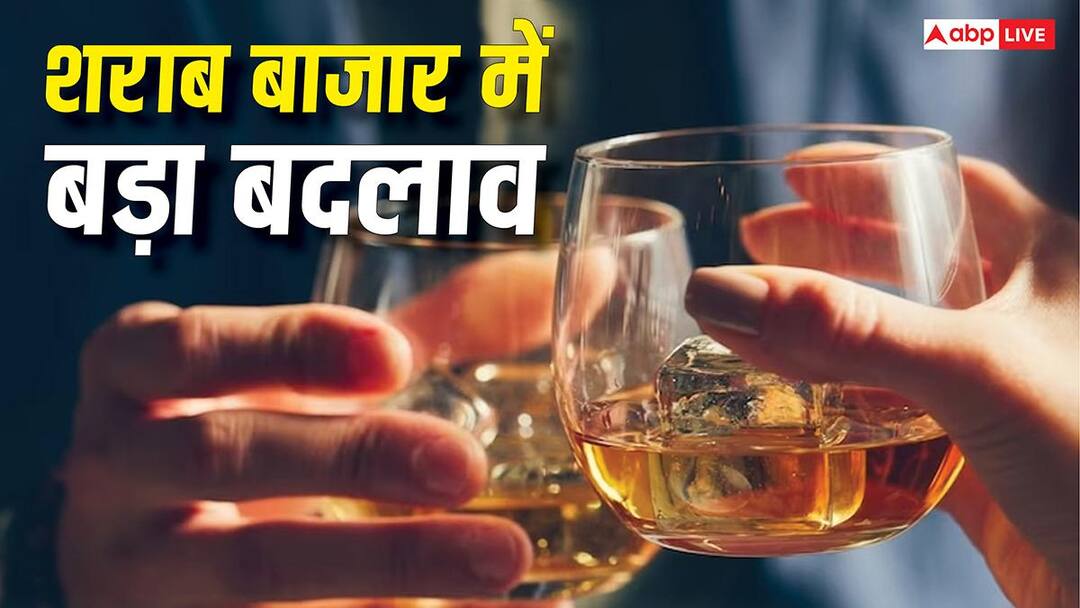
पूरी दुनिया में घटेगी शराब की बिक्री, लेकिन भारत में क्यों बढ़ रहा है दारु का बाजार?

पूरी दुनिया में घटेगी शराब की बिक्री, लेकिन भारत में क्यों बढ़ रहा है दारु का बाजार?


Liquor News: एक समय था जब शराब कंपनियां अमेरिका, यूरोप और चीन जैसे बड़े बाजारों पर सबसे ज्यादा निर्भर रहती थीं. लेकिन अब तस्वीर बदल रही है. दुनिया के कई बड़े देशों में शराब की खपत घटने की आशंका जताई जा रही है, जबकि भारत शराब उद्योग के लिए उम्मीद की नई किरण बनकर सामने आ रहा है. मार्केट रिसर्च फर्म IWSR की रिपोर्ट के मुताबिक अगले 10 सालों में वैश्विक शराब खपत में गिरावट देखने को मिल सकती है. इसके बावजूद भारत में मांग लगातार बढ़ने की उम्मीद है.

क्यों गिर रहा है शराब का बाजार?

शराब उद्योग के सामने कई नई चुनौतियां खड़ी हो गई हैं. बढ़ती महंगाई के कारण लोगों के पास खर्च करने के लिए कम पैसा बच रहा है. इसके अलावा स्वास्थ्य के प्रति जागरूकता भी तेजी से बढ़ी है, जिसके चलते कई लोग शराब का सेवन कम कर रहे हैं. एक्सपर्ट्स का कहना है कि अमेरिका, ब्रिटेन, जापान, जर्मनी और चीन जैसे देशों में युवा पीढ़ी पहले की तुलना में कम शराब पी रही है. यही वजह है कि आने वाले सालों में इन बाजारों में मांग कमजोर रहने की संभावना है.

मिडिल क्लास पर चौतरफा मार! सब्जी से लेकर ईंधन तक सब महंगा, अब कैसे चलेगा घर?

भारत में क्यों बढ़ी शराब की मांग?

भारत की कहानी पूरी तरह अलग है. यहां की युवा आबादी, बढ़ती आय और तेजी से हो रहा शहरीकरण शराब बाजार को मजबूती दे रहे हैं. जैसे-जैसे लोगों की कमाई बढ़ रही है, वो सस्ते उत्पाद की जगह प्रीमियम और ब्रांडेड शराब खरीद रहे हैं. IWSR के आंकड़ों के अनुसार भारत में कुल बेवरेज अल्कोहल की बिक्री पिछले कुछ सालों में लगातार बढ़ी है और आने वाले समय में ये और ज्यादा बढ़ सकती है.

शराब कंपनियों की नजर भारत पर

वैश्विक मांग कमजोर पड़ने के बीच बड़ी शराब कंपनियां भारत को अपने सबसे अहम ग्रोथ मार्केट के रूप में देख रही हैं. यही कारण है कि कई अंतरराष्ट्रीय कंपनियां भारतीय बाजार में निवेश बढ़ा रही हैं और प्रीमियम उत्पादों पर फोकस कर रही हैं. एक्सपर्ट्स का अनुमान है कि 2032 तक भारत दुनिया का दूसरा सबसे बड़ा शराब बाजार बन सकता है. यह बदलाव वैश्विक शराब उद्योग के लिए बेहद महत्वपूर्ण माना जा रहा है.

HDFC के बाद अब इन बैंकों ने भी बढ़ा दीं ब्याज दरें, अब लोन पर ज्यादा भरनी होगी EMI

क्या चुनौतियां भी हैं?

भारत में शराब का बाजार बढ़ रहा है, लेकिन उद्योग के सामने कई चुनौतियां भी मौजूद हैं. अलग-अलग राज्यों के अलग नियम, ऊंचे टैक्स, लाइसेंसिंग व्यवस्था और कई तरह के नियम कंपनियों के लिए बड़ी परेशानी बनी हुई है. इसके अलावा कुछ राज्यों में शराबबंदी और सख्त नियंत्रण नीतियां भी कारोबार को प्रभावित करती हैं.


Source link

YouTube
Instagram
WhatsApp