Efficient brakes and EV range

Efficient brakes and EV range


Researchers at Indian Institute of Technology, Madras, have developed a control framework for electric vehicle (EV) traction systems that can extend driving range by improving the efficiency of regenerative braking, without requiring hardware changes.

Regenerative braking allows EVs to recover energy during deceleration, but it becomes ineffective below a certain speed. In most systems, this low-speed cut-off is fixed using empirical methods that do not adapt to operating conditions, leading to energy loss.

The IIT-Madras team addresses this by introducing an analytical method to determine the speed below which regenerative braking should be disabled. It is derived from first principles and computed offline, avoiding additional computational load during real-time vehicle operation.

In addition, the researchers developed a model-based algorithm that dynamically adjusts the motor’s magnetic flux depending on speed and torque conditions. This replaces conventional fixed-flux operation, reducing power losses and extending the effective range over which regenerative braking can function.

The framework has been tested using both international and Indian driving cycles, including the modified Indian drive cycle (MIDC). Results show a reduction in traction system losses of up to 13 per cent under MIDC conditions and about 7 per cent under the US EPA highway cycle.

The paper, published in the journal IEEE Transactions on Transportation Electrification, was co-authored by research scholar MK Deepa, Prof Srikanthan Sridharan and Prof CS Shankar Ram.

The team plans to test the framework on full-scale EVs to assess system-level effects, including battery performance and thermal behaviour, and explore its integration with battery state-of-charge management.

Stable aluminium-ion battery

Researchers have developed a composite electrode material that improves the durability of aluminium-ion batteries, potentially making them cheaper, safer and longer-lasting.

Aluminium batteries are being explored as an alternative to lithium-ion systems because aluminium is abundant, inexpensive and can store more charge per atom. However, poor durability is a major hindrance: The electrode material tends to crack or dissolve into the electrolyte during repeated charging and discharging cycles, leading to rapid loss of performance.

A commonly used cathode material, vanadium oxide, can store high energy and allows aluminium ions to move through its layered structure. But in water-based aluminium batteries, it dissolves into the electrolyte, causing the battery to lose capacity quickly.

To address this, a team led by Kavita Pandey at the Centre for Nano and Soft Matter Sciences, working with researchers from the Shiv Nadar Institution of Eminence, combined vanadium oxide with MXene, a highly conductive, ultra-thin material.

In this composite, MXene forms a conductive network that stabilises the vanadium oxide and provides smooth pathways for ion movement. “This significantly reduces the dissolution of vanadium into the electrolyte — from 28.3 ppm in pure vanadium oxide to 5.4 ppm in the composite,” says a press release.

As a result, battery performance improves markedly. The composite retains over 73 per cent of its original capacity after 100 charge cycles and about 59 per cent even after 500 cycles, substantially better than conventional designs.

Further analysis showed that the MXene framework helps preserve the electrode’s structure during operation, preventing the cracks and damage that typically degrade aluminium-ion batteries.

More Like This
Visual Generation

Published on April 20, 2026


Source link

Micro-mining for critical rare earth minerals

Micro-mining for critical rare earth minerals


Rare earth elements (REEs) are critical to the manufacture and working of electric vehicles, wind turbines, and defence equipment. However, mining for these minerals harms the environment, not to mention the lack of mature and patented refining processes in India, unlike in China.

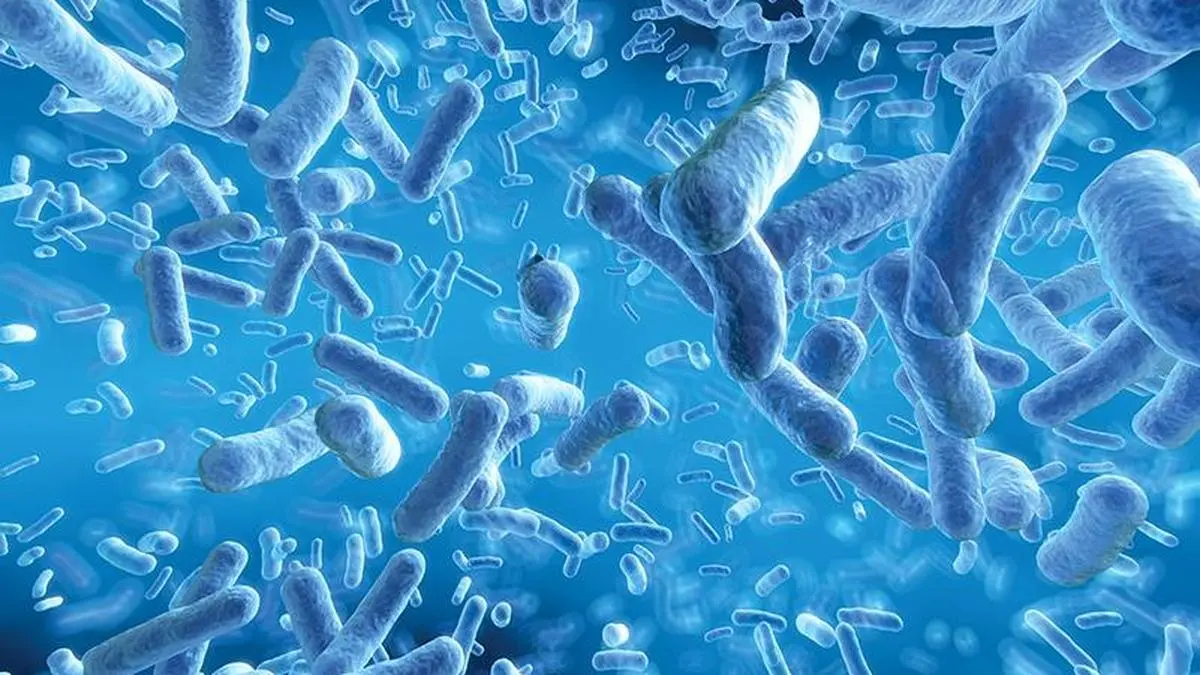
Enter biometallurgy — namely the recovery of metals using microbes. It is a sustainable, low-carbon means of extracting critical rare earth minerals from sources such as electronic waste and industrial byproducts.

The recovery process typically involves several biological steps. In bioleaching, microbes make metals soluble with the aid of molecules such as siderophores and lanthanophores, or dissolve them through the secretion of organic acids.

Biosorption is the process in which living or dead microbial biomass acts as a ‘sponge’ — negatively charged functional groups on cell walls trap positively charged REE ions.

Lanmodulin — a game changer

The discovery of the protein lanmodulin has helped ramp up the ability to selectively weed out REE minerals, since it has 100 million times more affinity for REEs than common metals such as calcium.

Unlikely feedstock

Research has shown that laterite and coal/lignite mines are good sources of REEs. These deposits contain REE in way higher concentrations than land surface.

Research at Cornell University identifies microbes that offer ‘two-for-one’ benefit: harvesting REEs while simultaneously capturing atmospheric carbon dioxide.

Certain bacteria use carbon dioxide to build biomass, secreting the acids required for leaching while permanently fixing the carbon into organic matter. Currently these successes have been achieved under lab conditions and may require more testing and proofs of concept before transferring to the real world.

Research shows that a consortium of microbes is 20 per cent more effective at dissolving magnets than single strains. Growing microbes in a nutrient-rich environment before adding waste prevents metal toxicity, allowing for higher processing densities. The biological process requires 90 per cent less energy than traditional smelting, while making use of cheap ‘fuels’ such as elemental sulphur.

For India, these advancements are essential to help cut dependence on imports for REEs.

The side effects of mining include toxic orange water or acid mine drainage which, together with other unsafe byproducts such as coal ash, can be transformed into a resource refinery for high-purity REE magnets.

Akhilesh Bagaria, co-founder of NavPrakriti, a company that mines discarded batteries for materials, says ‘bio-hydrometallurgy’ is the next frontier in extracting value from waste. “Integrating biological processes like bioleaching with established hydrometallurgical techniques isn’t just about cutting emissions” but also changing how we extract value from waste. The company is exploring collaborations with research institutions to adapt microbial technologies for Indian conditions.

Will his company adopt bio-filters such as lanmodulin in its processes? “For India, where strategic resource recovery is critical, these bio-based filters could redefine standards for purity and efficiency. NavPrakriti sees real potential for adapting them to local industrial processes.”

He adds that the ultimate test for sustainable recycling is “not just in what we recover, but also how responsibly we do it. For us, carbon-negative recovery isn’t just an ambition, it’s also the next logical step”. The way forward involves integrating carbon dioxide capture and exploring bioleaching approaches that can sequester carbon, he says.

More Like This

Published on April 20, 2026


Source link

Artemis-2: Hurtling moon-ward on an epochal mission

Artemis-2: Hurtling moon-ward on an epochal mission


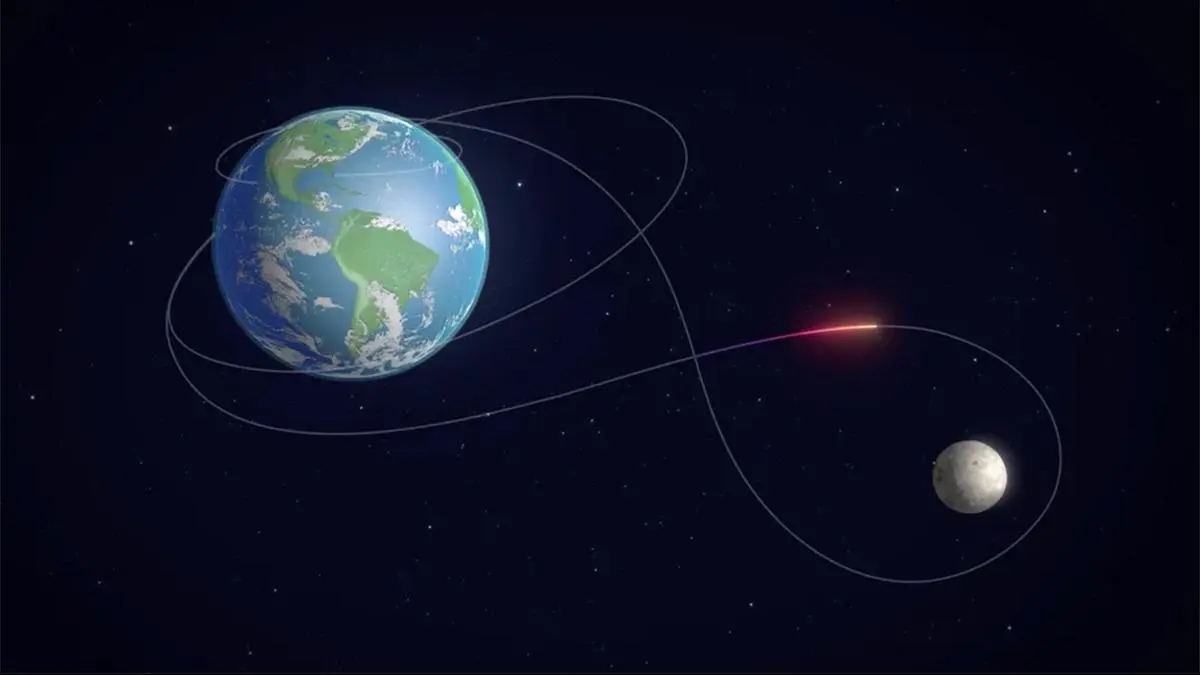
The Artemis 2 mission will fly a figure-eight pattern that will take the crew around the Earth and then around the moon
| Photo Credit:
NASA/JSC/Goddard

As you are reading this, three Americans (including a woman) and a Canadian are hurtling moon-ward on an epochal mission, whose success will ginger up global deep-space activities.

Apollo, after whom the moon missions between 1969 and 1972 were named, was the son of Zeus, the mythical Greek king of gods, and Leto.

More than half a century after the last Apollo mission, it is the turn of twin sister, Artemis, to lend her name to a moon mission.

Artemis-2 is truly wow. Since the Orion capsule — the temporary residence of the four astronauts — will circle the moon without entering the moon’s orbit, the team will go farther than any human ever has — close to 4,00,000 km from the Earth to the moon, and nearly 4,000 km beyond the far side of the moon — slightly exceeding the record set by Apollo 13.

Like Apollo 8, which took humans around the moon for the first time ever, Artemis-2 will fly by the moon during its 10-day mission.

Along the way, it will have to brave many demons such as van belt radiation, unexpected solar storms and galactic cosmic rays, and guard against even the tiniest of errors in navigation that could lead it astray.

And its return to the earth’s atmosphere will be anything but easy — zipping in from that distance, the speed at re-entry will be far more than in a low-earth orbit mission, calling for ultra-advanced heat shields.

The success of Artemis-2 will mean that humans will walk again on the moon soon.

More Like This

Visual Generation
INSIDE A TOKAMAK. The doughnut-shaped nuclear fusion reactor chamber

Published on April 6, 2026


Source link

Power supply lessons for AI

Power supply lessons for AI


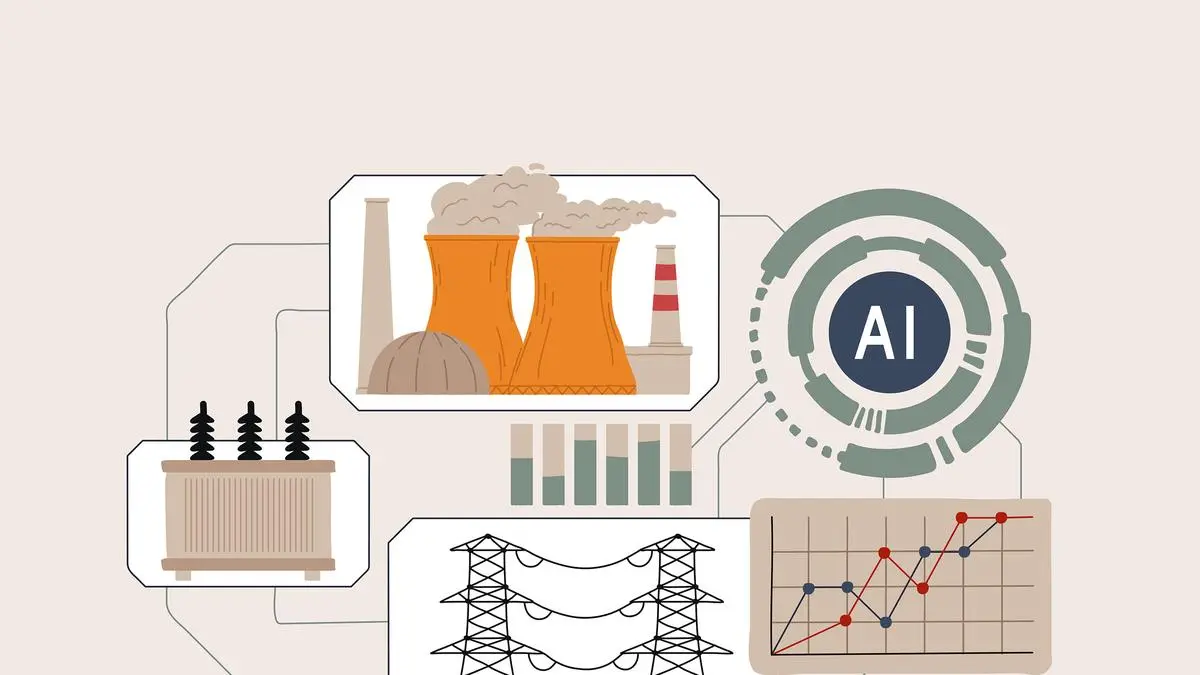
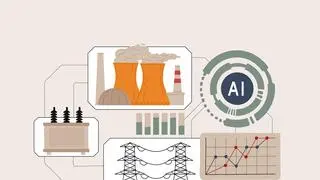
India’s electricity grid has long resisted the forecasting methods that work elsewhere. A recent study, ‘Indian peak power demand forecasting: Transformer-based implementation of temporal architecture’, by Vishvaditya Luhach and Shashwat Jha, applied a transformer-based architecture to Indian peak power demand and achieved a mean absolute percentage error of 4.15 per cent across a six-year daily dataset. The number matters less than what the attempt reveals about the problem.

The structural difficulty of India’s demand curve has several layers. Agricultural irrigation draws heavily on subsidised, largely unmetered power that follows crop cycles and monsoon patterns across States with different cropping calendars, groundwater conditions and seasonal rainfall. Historical consumption data carries all of this embedded complexity without labelling it.

The pre-monsoon months compound this. From April through June, cooling demand peaks as temperatures climb toward their annual high, while reservoirs depleted through the dry season constrain hydro-generation capacity. Supply tightens precisely when demand is most acute. A temperature variable captures one side of this; it cannot capture the reservoir cycle, which moves adversely against it at the same time.

Most fundamentally, India’s observed peak demand strains supply and is hence expensive. Large portions of the population remain underserved or unconnected, and the training signal understates latent consumption by an uncertain margin, which will shift as electrification expands.

Mature grids in western Europe have stable, metered and climatically moderate demand profiles. India’s grid has none of these properties.

The temporal fusion transformer handles this environment better than its competitors for a specific architectural reason: It processes three input types simultaneously — historical observations, known future variables such as calendar dates and public holidays, and static metadata — without requiring the analyst to pre-specify how they interact. It learns the weighting. Its variable selection mechanism highlights which inputs drove a given forecast, making its reasoning available for inspection. For regulators, a model that can be audited is qualitatively different from one that produces only a number.

Domain fit

The study’s most telling result involves a model that did not perform well. The temporal convolutional network, a sophisticated deep-learning architecture with a creditable record in sequence modelling, was outperformed by naive seasonal forecasting: A method that essentially extends yesterday’s pattern with a drift adjustment. The paper is limited enough that a more rigorous investigation — with regional disaggregation, more model comparisons and finer-grained data — might tell a different story about the TCN.

The result still points to something real. General purpose architectures designed to handle heterogeneous, multi-layered inputs fared better on India’s demand curve than a deeper model optimised for sequential pattern extraction. Domain fit outweighed architectural sophistication, and India’s grid exposed the difference.

A more accurate forecast only improves outcomes if the institution receiving it can act on it. Decisions about generation capacity, transmission investment and storage procurement require forecasts that look years ahead; infrastructure takes years to build and decades to pay off. Acting on those forecasts requires procurement flexibility, regulatory frameworks and pricing signals, which most State electricity boards and central planners do not yet have.

The transformer’s migration from language parsing to power grid management reflects something specific: A compact set of mathematical operations, designed to identify which parts of a sequence matter most for predicting what comes next, generalises across domains defined by long-range temporal dependencies. India’s grid, with its accumulated complexity, is among the most demanding tests of that generalisation. Passing it is a result worth examining.

More Like This

Published on April 6, 2026


Source link

India contributes ₹745 crore to multi-country ITER

India contributes ₹745 crore to multi-country ITER


India will “maintain its contribution” to the International Thermonuclear Experimental Reactor (ITER), a multi-country fusion reaction plant coming up in France, at ₹745 crore, according to government documents. ITER is a long-term project; according to the latest Energy Technology Perspectives 2026 report of the Internati- onal Energy Agency, the ITER, if successful, could pave the way for a 500 MW demonstra- tion plant connected to the grid, by around 2050. India’s contribution is part of a growing global interest in fusion, even if the results are expected far in the future (see related report ‘Why nuclear fusion is gaining funding’).

Next-gen material for efficient energy storage

Newly developed polymeric materials could significantly improve energy storage and green hydrogen production, advancing access to clean energy.

Scientists have created coordination polymers, Zn (DAB) and Cd (DAB), in which zinc or cadmium ions combine with organic molecules to form stable, layered structures.

A key advantage is that these materials can be easily synthesised at room temperature, without complex equipment, making them suitable for largescale use.

Researchers from the Centre for Nano and Soft Matter Sciences, in collaboration with Christ University, tested the materials for two critical clean-energy applications — energy storage and hydrogen generation.

In laboratory tests, the materials demonstrated high energy storage capacity and retained performance even after thousands of charge–discharge cycles, indicating strong durability, according to a press release.

They also performed well in more practical, device-like conditions.

Equally important, the materials showed strong potential as electrocatalysts for water splitting, requiring relatively low energy input to produce hydrogen. This makes them competitive with some of the best existing materials.

Graphite from spent battery

A new technology for the reuse of spent graphite recovered from end-of-life lithium-ion batteries could convert battery waste into a high-value functional material that improves fuel cell efficiency.

Researchers from the International Advanced Research Centre for Powder Metallurgy and New Materials (ARCI) recovered graphite from spent lithium-ion batteries and chemically peeled (exfoliated) it to increase surface area and the number of edge functional groups.

They also carried out extensive physicochemical characterisation, electrochemical evaluation for oxygen reduction reaction and methanol tolerance, and optimisation of composition for maximum performance and stability.

When integrated with platinum catalysts, the exfoliated graphite formed a conductive network that enhanced both electronic conductivity and oxygen transport while selectively adsorbing methanol molecules. This also acted as a chemical barrier, suppressing methanol oxidation and platinum CO poisoning. An optimum composition of 10 wt per cent exfoliated graphite was identified, offering superior performance and durability.

More Like This

Published on April 6, 2026


Source link

Why nuclear fusion is gaining funding

Why nuclear fusion is gaining funding


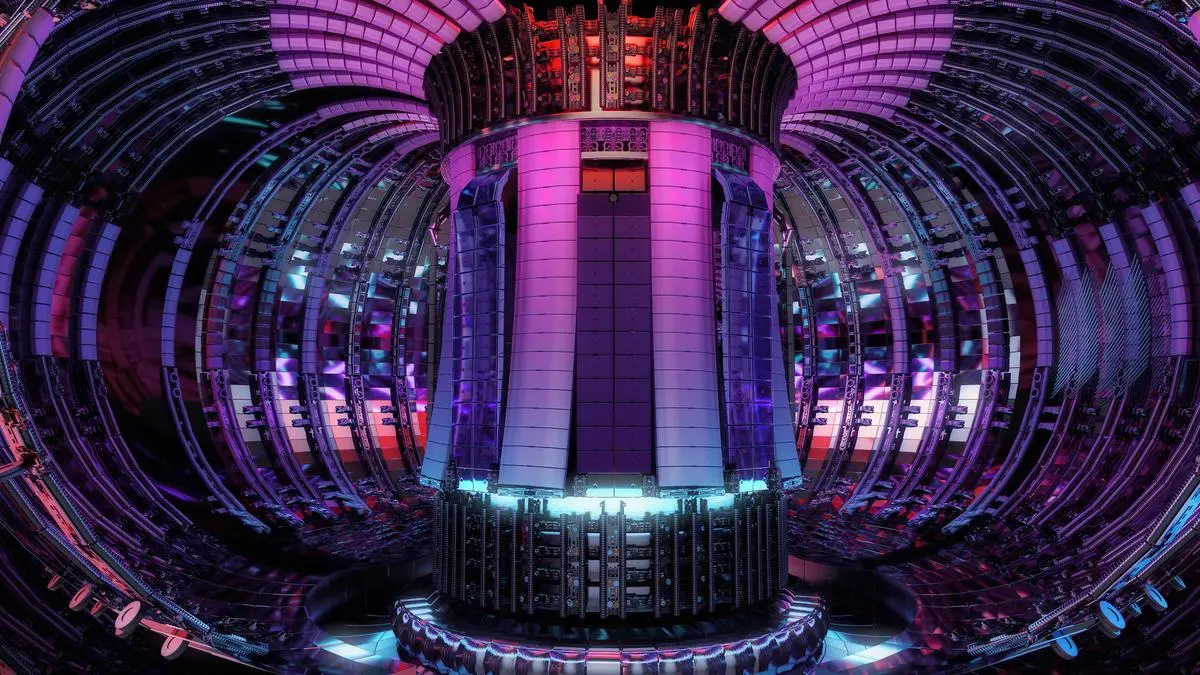
INSIDE A TOKAMAK. The doughnut-shaped nuclear fusion reactor chamber
| Photo Credit:
quantic69

Nuclear fusion, arguably a yet-to-be-proven commercial energy source — and a big-bucks game — is gaining traction. You have large research projects, such as the International Thermonuclear Experimental Reactor (ITER), a multi-country endeavour located in France (to which, incidentally, India is contributing ₹745 crore in 2026-27), alongside many fusion start-ups, which have been receiving investor interest and aim to produce energy in the next decade.

According to the recently released Energy Technology Perspectives (2026) report of the International Energy Agency, cumulative venture capital in fusion energy companies has reached about $11 billion. A few are from India, such as Anubal Fusion, which is technically assisted by the Tata Institute of Fundamental Research (TIFR), and Pranos Fusion, which raised ₹63 crore last month.

At least three other fusion energy companies have announced fund-raise in February. US-based Shine Technologies, which is into businesses such as nuclear medicine, nuclear fuel recycling and nuclear fusion, has received about $750 million since 2018, including $240 million in February this year.

Another American company, Realta Fusion, received a loan of $9.5 million from the Silicon Valley Bank in February, complementing the $36 million of equity funding it secured from a host of investors, including Khosla Ventures. Realta Fusion is a startup spun out of research work at the University of Wisconsin-Madison; the company says it is “developing linear magnetic mirror machines that utilise high-temperature super-conducting magnets”.

OpenStar Technologies of New Zealand got a $21 million loan from its government to set up a “bespoke fusion energy research and development facility”. This, read in conjunction with the UK government releasing last month a fusion energy strategy paper, illustrates the keenness of governments in supporting home-grown fusion technologies — a lesson for India.

What explains the sudden and growing interest in fusion, which still stands on shaky ground? The IEA report reasons that “falling computation costs, more data and technical breakthroughs have driven AI capabilities to accelerate energy innovation”, while cautioning that “the extent of its real-world impact remains to be seen”.

Recent advances

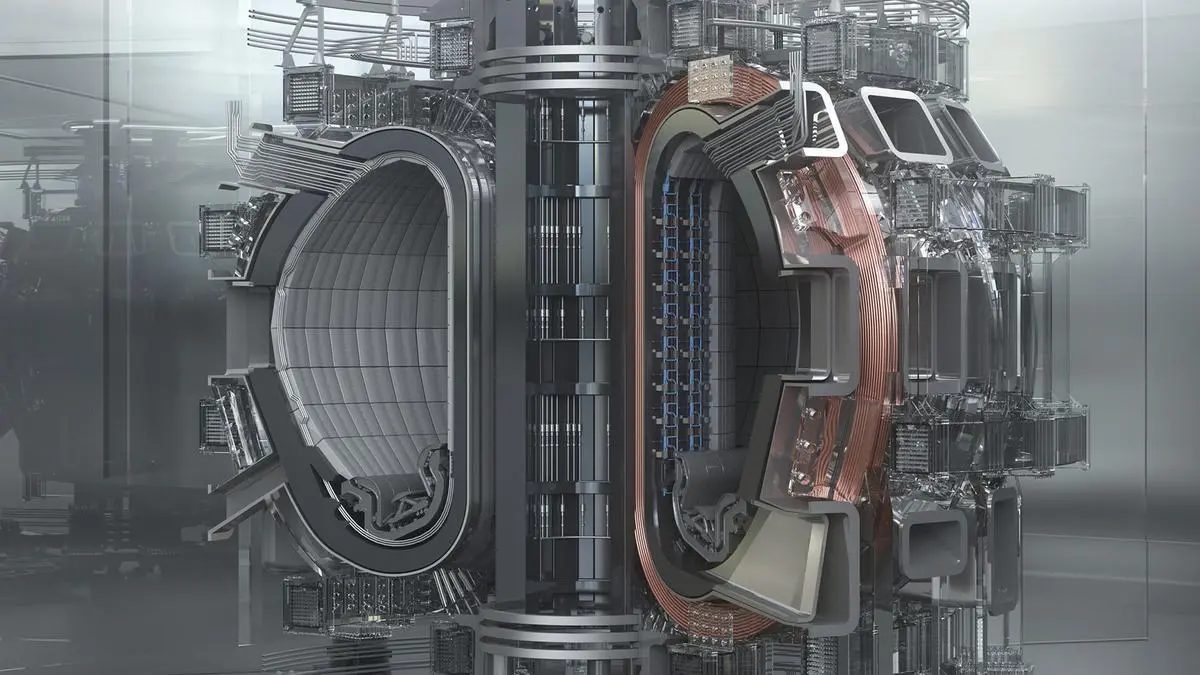
The report speaks of “some important advances in fusion technology” in recent times. Fusion energy is all about getting two atoms — mostly from the two isotopes of hydrogen, deuterium and tritium — to merge, producing heat in the process. For this, you need a pool of plasma confined in extremely high temperatures. Adding to that challenge is the problem of neutrons flying off and hitting the walls of the vessel, typically the doughnut-shaped tokamak, making the walls brittle.

Tackling these problems calls for innovative thinking — this is where start-ups, born in university research labs, see a play for themselves. For example, Germany’s Gauss Fusion, which aims to have a commercial plant in the early 2040s, is working on enhanced tritium generation using an isotope of lithium (Li-6). Tritium (unlike deuterium) is a key ingredient and in short supply. Bengaluru-based Anubal Fusion, backed by Speciale Invest, is toying with the idea of bombarding boron-11 with protons using TIFR-made high-power lasers, an approach that could side-step some challenges encountered in conventional reactors.

While nuclear fusion is dressing up for commercialisation, it is not happening anytime soon. However, as the IEA report notes, “if realised, the prize will be extraordinary”. Fusion produces a lot of cheap energy, with no emissions and shorter-lived radioactive waste, an irresistible prospect for venture capital.

‘Not hype’

“The renewed investor interest in fusion isn’t hype,” says Vishesh Rajaram, Founding Partner at Speciale Invest. “It is a rational response to the scale of the climate challenge and the real progress being made in the lab,” he told Quantum.

Speciale Invest funds deep-tech startups; its portfolio has over 40 investees. The fund house said its investment in Anubal Fusion reflected the belief that “India can, and should have a seat at the table in defining the energy technologies of the next century”. Fusion sits at the core of these technologies.

More Like This

peterhowell

Published on April 6, 2026


Source link

YouTube
Instagram
WhatsApp