Medical micro-bots cruising towards reality

Medical micro-bots cruising towards reality


A scientist who has sensitive information falls into a coma and must be saved. A submarine and its crew are miniaturised to the size of a microbe and introduced into the scientist’s blood stream to repair the problem-causing clot. This was the plot of a 1966 science-fiction movie, Fantastic Voyage.

What was ‘fantastic’ half a century ago, is cruising towards reality today. Physics and biology are joining hands to produce very tiny robots that could enter a person’s bloodstream and perform important tasks, such as delivering drug to specific sites—for applications like treating cancer and reproductive medicine.

Bradley J Nelson of the Institute of Robotics and Intelligent Systems, Zurich, Switzerland, is a known name in this field. In a co-authored article published in Annual Reviews last year, he writes that “over the past decade, significant progress has been made in the construction of intelligent micromachines, evolving from simple micromachines to soft, compound, reconfigurable, encodable, multifunctional and integrated micromachines, as well as from individual to multiagent, multiscale, hierarchical, self-organising and swarm micromachines.” That is quite a lot for a machine that may only be a few hundred nanometres in size.

A word of caution: medical microrobotics is not yet a market-ready technology—but is getting there.

Last year, a group of scientists from the Colorado University, Boulder, USA, put a fleet of microrobots carrying dexamethasone—a steroid—to the bladders of lab mice. Their bubble-based, polymeric microrobots were able to “swim with non-linear trajectories”, mechanically pin themselves to the epithelium (inner lining of hollow organs) and “slowly release therapeutic drugs”, the scientists say in a paper published in Small. “The sustained release of the drug is shown to temper inflammation in a manner that surpasses the performance of free drug controls,” the paper says, adding that the system “provides a potential strategy to use microrobots to efficiently navigate large volumes, pin at soft tissue boundaries, and release drugs over several days for a range of diseases.

Swallow a surgeon

Medical microrobotics is an excellent illustration of how a wild dream could become a reality. The origins of this field traces back to an epoch-making speech delivered by the American theoretical physicist, Richard Feynman, on December 29, 1959, on the topic ‘There’s Plenty of Room at the Bottom’, in which he said that “small machines might be permanently incorporated in the body to assist some inadequately functioning organ.” Feynman is said to have credited the “very wild idea of swallowing the surgeon” as originally proposed by mathematician Albert Hibbs.

But, manufacturing these microrobots presents a huge challenge. All the components need to be packaged in an ultra-tiny space. Even within that space, some onboard computing capabilities must be given to impart some intelligence to the microrobot. The design also varies with the degree of autonomy the microrobot will have, be it internally (they pick up energy from their interactions from other bodies) or externally (ultrasound) powered.

“Medical microbots for surgery use two methods to guide its motion inside the human body. One is optical-based guidance and the other is magnetic field-based guidance. In India, researchers have worked intensely in both ways of navigation in the last decade. The microbots are fabricated in-house using nanotechnology techniques and tested specifically for the purpose of cell specimen reshaping, drug delivery and cell removal from target area,” Dr Jayant Kumar Mohanta, Assistant Professor, Department of Mechanical Engineering, IIT Jodhpur, told quantum.

In Fantastic Voyage, the scientist’s immune system thinks of the rescue submarine as an enemy and starts attacking it. Today’s microrobots will face the same problem, so they must either become invisible to the body’s immune system or advertise themselves as friends. Therefore, scientists are developing microrobots with materials that are compatible with the body’s immune reactions. They may design surface coatings or camouflage techniques that help microrobots avoid detection. Some strategies involve bio-mimetic coatings that resemble cells or tissues in the body, which can deceive the immune system into recognising the microrobots as ‘self’ rather than ‘foreign’.

In a paper published in Surgery, scientists at the University of Sheffield, UK, note that medical microrobots can be classified into three categories, depending upon their task difficulty level (TDL). TDL-1 microrobots are devices like sensing devices including remotely activated stents and scaffolds and capsule endoscopes “that can carry out telemetry and send information about the internal environment.” TDL-2 robots show basic levels of local environment sensing, motion and simple decision-making capabilities which enable them to assist medical professionals with a series of one-time treatments including drug delivery and biopsies. This is where much of the current research is on. These are not yet robots with onboard intelligence and hence require human control. TDL-3 microrobots, are “still in the exploration stage and are far from realisation.” They are fully autonomous and can carry out various diagnostic and treatment processes.

Microrobotics can—will—revolutionise medicine. Microrobots for drug delivery at site seems to be the nearest hanging fruit. Take cancer treatment (chemotherapy) for example. A microrobot can be enabled to detect acidity or temperature gradients of a tumor and move towards the tumor, carrying a drug.

The submarine crew of Fantastic Voyage did come out successfully through a tear drop out of the scientist’s eye (even if one of them—a baddie—was killed by the scientist’s antibodies.) In real life too, by the looks of it microrobotics will be similarly successful. When it happens, it will be a huge breakthrough in medicine.



Source link

COP28 Climate Talks: Decoding the Phase Out of Fossil Fuels and its Impact on India

COP28 Climate Talks: Decoding the Phase Out of Fossil Fuels and its Impact on India


n this episode of GreenShift, M Ramesh delves deep into the much-talked-about UAE Consensus that the COP28 climate talks produced, to separate reality from the hype in the now-famous ‘transition away from fossil fuels’ agreement. Unravelling the nuances of the decision text, he recognises the positive aspects of the decision text, but cautions against unbridled optimism. 

He also analyses the usefulness of COP meetings and weighs the progress brought in by the conferences.

Watch the video to learn more.


Source link

ATOM’s alloy solution to prevent fuel explosions

ATOM’s alloy solution to prevent fuel explosions


Between 2016 and 2020, fire-related accidents killed 35 people every day in India, according to the data from National Crime Records Bureau (NCRB). Increasing consumption of flammable fuels have also added to the risk of fuel-caused explosions.

This is where ATOM, a companythat “provides tested and easy integration fuel storage solutions” to prevent fuel explosions comes in.

Establishing in 2011, with the aim of finding a solution for safely transporting oil and gas, the company gained initial momentum when the Special Protection Group (SPG) was looking for explosion-resistant fuel tanks for their VIP bulletproof vehicles. This marked the starting point of ATOM’s journey in providing bulletproof and explosion-resistant solutions for vehicles, saysVinod Menon, CTO of the company.

Since then, they have successfully developed various products for the safe storage and transportation of hydrocarbon fuels. They have also expanded its expertise to include pressurised vessels for LPG and propane.

The science behind it

Ninety per cent of global accidents result from human error, with major explosions often originating from small, mobile fuel storage tanks, says Ajit Tharoor, CEO, ATOM.

Their technology involves the addition of a proprietary alloy inside fuel storage tanks. This alloy takes care of the explosive vapour inside the tanks by employing flame quenching techniques.

Without the addition of any mechanical, chemical or electrical triggers, this simple physical solution breaks the vapour down into smaller units, allowing for confined burning through the process of ‘controlled deflagration’.

In addition, the alloy’s high heat conductivity reduces hot points and structured packing optimises tank volume without compromising on the fuel’s capacity. These principles collectively make the technology effective in preventing explosions inside fuel tanks.

The alloy structures itself into a honey comb structure and fills more than 85 per cent of the tank so that there are no hot points. The fuel is distributed within the molecules of the honey comb structure which causes it to burn inside but prevents it from exploding.

The company said that it has also entered into a research and development agreement with the Foundation for Science Innovation and Development, Indian Institute of Science, Bangalore.

“This is part of ATOM’s road map towards research on multiple fronts to actively innovate and develop explosion-resistant fuel tanks and storages tailored for future fuels, including hydrogen,” says a release from the company.

Beyond this, the technology also addresses carbon footprint concerns, says Tharoor. As the tech utilises an alloy with high conductivity to address evaporation loss during fuel transportation, there is potential to reduce the carbon footprint of transportation by up to 60 per cent, says Tharoor.

While many countries have given ATOM the go-ahead to enter their markets, the Indian Petroleum and Explosives Safety Organisation (PESO) has yet to approve the technology. Since “it’s a completely new set of technology, they have no idea how to certify it,” says Anil Nair, Chairman of ATOM. The start-up applied for approval two years ago.

As they wait for approval, they continue conducting trials with the Indian Army to store fuel at high altitudes and deserts.

“We must react to which market comes to us faster, but for us, the prime market is India, and we hope India will soon turn around for us,” hopes Nair.


Source link

Carbon capture by algae-assisted microbial fuel cell shows promise

Carbon capture by algae-assisted microbial fuel cell shows promise


It is becoming increasingly evident that carbon capture and sequestration (CCS), which is central to ‘abated coal use’ approaches, is not much of a bang-for-the-buck technology. But recent research work from IIT Jodhpur may have a better solution. In its algae-assisted method, you can not only capture CO2, but also treat wastewater and generate power.

Researchers Arti Sharma et al, from the IIT-J tested out their technology and have documented the results in a paper published in Chemical Engineering. What they have developed is to first cool the flue gas (the gas produced from the flue or chimneys of thermal power stations and other industrial plants) in a heat exchanger and then direct it to a sieve-plate absorption column. Here, the sodium carbonate supplemented wastewater absorbs the CO2, generating flue-gas-derived bicarbonates (FGDBs). The FGDBs are added in plastic bag photobioreacors (PBRs), coupled with algae-assisted microbial fuel cells (MFC). “This study offers a biochemical CO2 sequestration process that generates power, algae biomass and treats water by utilising algae-assisted MFC for flue gas carbon capture,” the paper says.

The conventional method of carbon capture from flue gases is not only energy intensive but also requires dilution of the gas with nitrogen, which restricts implementation. Further, the absorbent used — monoethanolamine (MEA) — is corrosive, has low oxidative stability and takes energy for regeneration, the authors say, adding that bioenergy with CCS technologies (BECCS) is promising.

Using flue gases to produce useful algae is nothing new, but the paper notes that the conventional method of doing this has been to bubble the flue gases into algal ponds or photo-bioreactors. The problem, however, is the limited solubility of CO2 in water (0.583 mg per litre) when exposed to the atmosphere at 25o C.

So, the authors have suggested a more efficacious “indirect method” for converting CO2 into carbonates and then use it for algal growth. Solubility of sodium bicarbonate in water is significantly higher (93.2 g/l) at room temperature and atmospheric pressure. “Therefore, the indirect biochemical route of CO2 fixation is advantageous since more inorganic carbon can stay in the water,” the paper notes.

First of its kind

“The integration of algae MFC with flue gas carbon capture has not been attempted before,” Dr Meenu Chhabra, Professor, Department of Bioscience and Bioengineering, IIT Jodhpur, told quantum. There have been other attempts to make flue gas-generated bicarbonate for algae growth in open ponds. However, the bicarbonate in water strives to achieve equilibrium with the CO2 in the atmosphere when kept in open ponds. This can cause the bicarbonate to decompose and release CO2 into the atmosphere. Moreover, this decomposition reaction is endothermic and it causes the pH to become alkaline. “Therefore, closed systems like PBRs are desirable,” the authors note. Further, the process outlined by IIT Jodhpur scientists uses wastewater, where the chosen algal strain —Chlorella vulgaris— is thermo-tolerant and can grow in wastewater.

Once you have the algae, you can put it into a microbial fuel cell to generate electricity. A MFC is a bio-electrochemical device that generates electricity by harnessing the metabolic activity of microorganisms. (When microorganisms break down organic matter — which wastewater is rich in — into simpler molecules, electrons are released in the process. If these electrons are made to flow through an external circuit, you get electric current.)

The researchers say that for a cubic meter of wastewater and FGDB in the microbial fuel cell, they got energy of 0.0066 kWhr. Only a small fraction of algae is used for power generation. The remaining is available for bioenergy. “A major outcome of the present study was an increase in power production through high algae growth,” the authors say.

Theoretically, all the available flue gas can be used to grow algae, but the limitation is with respect to the scale of operation. A tonne per day of CO2 capture requires 2 sq km algae culture area (aerial) in vertically aligned pipes, says Dr Chhabra. Further, the algae can be filtered out and the rest of it can be used again for CO2 capture. Typically one tonne of algae captures 180 tonnes of flue gas CO2.

This, however, is not to conclude that the technology is ready for use—it requires further refinement. The next steps are in this direction and could include developing more robust microbial consortia or genetically engineered strains. And, studies on comprehensive mass balances, feed flow rates and retention times for the efficient CO2 capture need to be carried out. Also, the device itself could be fine-tuned by adding specialised spargers (gas diffusing devices) to ensure a stable supply of gas for sustained algal growth.


Source link

What do rocket engines, cyclones and Covid-19 have in common?

What do rocket engines, cyclones and Covid-19 have in common?


Complex systems. Rocket engines, cyclones, gas turbines, stock markets and epidemiology are all complex systems. And all complex systems have one fundamental characteristic: one small change in the initial variables and the system can behave in wildly different ways. Other characteristics include nonlinearity, emergence, spontaneous order, adaptation and feedback loops, among others.

The nature of complex systems makes them multi-disciplinary and specifically, Multi-physics, multi-scale and multi-layered. For example, in a climate system, we have multiple layers such as land, ocean and atmospheric systems that interact with each other.

It is in the nature of complex systems to undergo critical transition. During such critical transitions, the system shifts from one state to another for a slight change in control parameter. For example, a slight change in climate—and CO2 levels in the ocean—lead to destroyed coral reef ecosystems in the oceans. Nature unleashes fury through critical transitions in extreme weather and climate events.

Such critical transitions occur not only in obvious and visible scale in a large system like a climate system, but also in machinery, particularly in thermo-fluid machinery like rocket engines, jet engines and gas turbines. Thermoacoustic instability can lead to catastrophic failures in such machinery.

The Indian Institute of Technology Madras (IIT Madras) has established a research centre—with funding from the ‘Institute of Eminence’ initiative of the Government of India—to develop tools and techniques that detect and predict critical transitions, called ‘Critical Transitions in Complex Systems (CTCS) Centre of Excellence (CoE)’.

Enriched with researchers from engineering as well as natural sciences, the centre aims to study the emergence of spatial and temporal ordered patterns that can prove to be catastrophic.

Some of the focus areas of the centre include: Predicting and controlling instabilities (large-amplitude oscillations) in turbulent thermo-fluid and thermoacoustic systems such as those in combustors of rocket and gas-turbine engines; Studying and forewarning active-break phases of monsoon and extreme weather phenomena such as intense synchronised rainfall, which can cause flooding; Understanding and developing tools for predicting the occurrence of cyclones and super cyclones and merging of multiple cyclonic systems; and, Investigating the formation and the microphysical dynamics of clouds to understand the onset of precipitation and extreme weather events such as cloud bursts.

One might wonder how the focus areas of the centre will be approached given the vastly different areas of application. Therein lies the uniqueness in approach — that of critical transitions in complex systems.

For example, Covid-19 transmission and flame blowout in combustors are two unrelated phenomena; however, a research team (Indhuja Pavithran and Prof RI Sujith, IIT Madras) unravelled the striking similarities between the two. They identified the presence of a hyper exponential growth decorated with log-periodic oscillations preceding flame blowout and during the early phase of extreme Covid-19 waves.

In both cases, hyper exponential growth without a limit can cause problems.

Flame blowout (jet engines) in real-world systems, as well as diseases that spread quickly such as the Covid-19, are undesirable. Contrary to the commonly believed exponential growth, the faster-than exponential growth phase is hazardous and would need stricter regulations to be controlled. By studying the characteristics of these log-periodic oscillations, we can better predict the finite-time singularity in both cases.

Many complex systems transition towards a critical point following cascading events, and this process has a hierarchical structure that results in log-periodic oscillations. For instance, the accelerating occurrence of financial bubbles often ends in large market crashes and many smaller earthquakes presage larger earthquakes. Even though these are different systems, there is a striking similarity in their behaviour near the critical point among complex systems that are otherwise quite different in nature.

While the examples in this article are about disparate concepts like Covid spread and climate systems, there are practical applications in developing early warning systems. As Prof Sujith says, he is “focussed on the CoE’s contribution to energy security, national security, space exploration and early warning systems for natural disasters and extreme events.


Source link

How LUCY can save lives by listening to cries for help from the sky

How LUCY can save lives by listening to cries for help from the sky


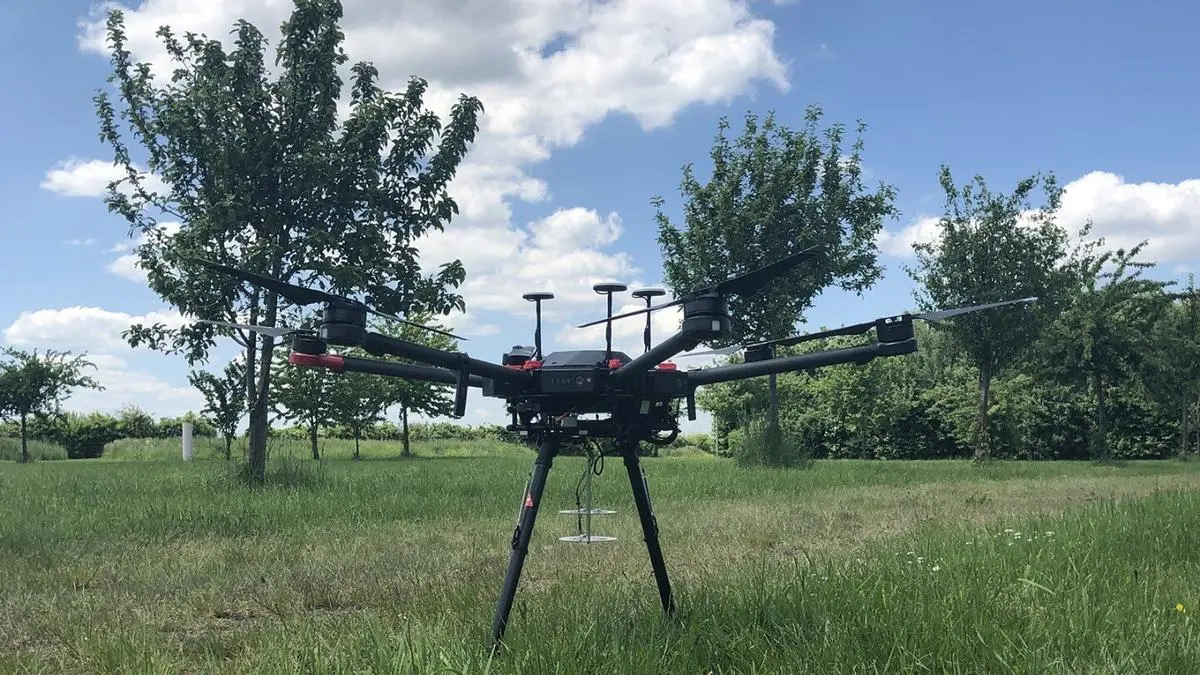
Researchers at the Fraunhofer Institute for Communication, Information Processing and Ergonomics (FKIE) are now looking to close a gap in the provision of disaster management services with a new technology. In the future, drones equipped with microphone arrays will be able to precisely locate cries for help and other acoustic signals from victims, from the air and supply information about their location, to the rescue teams. This significantly increases the chances of a rapid rescue for victims who cannot be spotted by camera.

LUCY (Listening system Using a Crow’s nest arraY) is an array of MEMS microphones — known as a crow’s nest array — is mounted on drones. It is used to determine the direction of noises such as cries for help, clapping or knocking signals. The tiny MEMS microphones are inexpensive and are used in applications such as smartphones. They microphones are attached to the underside of the drone in a special geometric configuration and can perceive sound from all directions.


Source link

YouTube
Instagram
WhatsApp



