Aqueous electrolyte for ammonia synthesis

Aqueous electrolyte for ammonia synthesis


A new aqueous electrolyte has been discovered that can help in the electrochemical synthesis of ammonia.

Electrochemical ammonia synthesis is largely limited by the poor solubility of nitrogen in an aqueous electrolyte environment as well as the competitive hydrogen evolution reaction. The obstacle faced was the reduction of nitrogen in the aqueous medium. In an attempt to solve these issues, the “ambient” conditions are mostly overseen. Researchers mostly work on catalyst development, while electrolyte improvisation is still in infancy, says a press release.

Scientists from the Institute of Nano Science and Technology (INST), Mohali, an autonomous institute of the Department of Science and Technology (DST), have introduced a new electrolyte that not only acts as a nitrogen carrier but also full-fledged “co-catalyst”, along with active material transition metal-doped nanocarbon, to deliver a high yield of ammonia at ambient experimental conditions. The ammonia production rate approached industrial scale and exceeded almost all standard catalysts.

Low-cost milk inspection

Adulteration of milk is a big problem; scientists at IIT-Madras have developed a novel low-cost method to detect it. Food Safety and Standards Authority of India (FSSAI) has stated that more than 70 per cent of tested milk samples do not conform to standards.

A team led by Prof Pallab Sinha Mahapatra of the Micro Nano Bio-Fluids Group, Department of Mechanical Engineering, used a three-dimensional paper-based portable device to detect different adulterants in milk samples, based on the colorimetric technique.

The adulterants chosen for this study included urea, detergents, soap, starch, hydrogen peroxide, sodium hydrogen carbonate, and salt.

Just 1-2 ml of sample is required for each test; the result is known in less than 30 seconds. This lightweight, low-cost, simple-to-use, environment friendly method can also be used to inspect water and other liquid foods such as protein shakes and fruit juices, says a note published on the IIT-Madras website.

Graphene nanoribbons

A group of researchers from the University of Punjab, Chandigarh and the Institute of Nano Science and Technology, Mohali, have developed graphene nanoribbons from carbon nanotubes, which are good for making supercapacitors. They took acid-processed carbon nanotubes and reduced them with microwaves to get graphene nanoribbons (GNRs). It showed 97.3 per cent of initial capacitance retention after 10,000 cycles, which proves good cycle stability and retention capability of the multi-walled GNRs based electrode with gel electrolyte. MWGNRs have more reactive edges and high specific surface area as compared to pristine carbon nanotubes and therefore exhibit high specific capacitance. They fabricated a super capacitive device with MWGNRs based electrodes and 1M H 2SO 4–PVA gel electrolyte. It has showen high super capacitive performance during tests.

This method of production “is highly scalable and can pave a way to develop high performance low cost supercapacitors,” the scientists say in a research paper published in Materials Chemistry and Physics.



Source link

Why are some snowy peaks pink-tinted?

Why are some snowy peaks pink-tinted?


In some high mountain peaks in the US, in the shimmering snow powders an odd spectacle can startle an unsuspecting beholder — patches of pink. What is this? Perhaps the blood of some animal? Not really.

This is a phenomenon caused by the blooming of a green algae known as  Chlamydomonas nivalis, according to an article in the Smithsonian magazine. And it is a cause for concern, because the algae’s presence increases snowmelt.

Bright white snow has a high albedo — it reflects back sunlight. But when the algae bloom and turn red, they absorb more light, and heat up. This causes the snow to melt. The algae, which love water, then eat more nutrients and multiply, adding to the problem.

The higher algal growth these days has been attributed to climate change.

The western US is facing its worst drought in more than 1,200 years, which has been exacerbated by climate change, says the article.

Researchers are still unsure why the algal blooms are occurring, how exactly they’re impacting the snowmelt, and how climate change is contributing to the algae’s spread.

But for now, if you are up there in the mountains and chance upon the pink patches in white snow, leave the worrying to scientists and just enjoy the beauty of the sight.


Source link

Biodiesel from used cooking oil that burns better

Biodiesel from used cooking oil that burns better


Biodiesel is seen as a non-fossil replacement for carbon dioxide-spewing diesel. On the flip side, biodiesel emits more nitrous oxide, is unstable when stored for long, does not always burn well, and is costly to make.

Scientists are searching for solutions to these problems.  Quantum dated December 26, 2022, highlighted the discovery, by Prof Anand Krishnaswamy of IIT-Madras, of a surfactant that can emulsify karanja oil-based biodiesel.

Now, Dr J Jayaprabhakar et al find a way to process used cooking oil to derive biodiesel that burns better.

Jayaprabhakar, who teaches at Sathyabama Institute of Science and Technology, Chennai, and seven other researchers came up with a catalyst made of nanoparticles of zinc oxide and tungsto phosphoric acid (TPA) to convert used cooking oil into biodiesel. Usually hydroxides of potassium or sodium are used as catalysts.

Jayaprabhakar’s goal was “to synthesise biodiesel using solid acid catalysts at a low cost… without compromising yield.”

The catalysts were designed to improve their effectiveness, making production cost-effective. They mixed TPA and zinc oxide in the ratio 9:1 by weight.

They discovered an optimal set of parameters, through which 94 per cent of waste cooking oil could be converted to biodiesel.

Their conclusion: Biodiesel fuel technology laden with zinc oxide nanoparticles can cut compression injection’s reliance on fossil fuel.

You can cut nitrous oxide emissions, Jayaprabhakar says, but that will reduce efficiency. Instead, use catalytic converters to deal with nitrous oxide outside the combustion chamber, he says.


Source link

Golden edge to the battle against tuberculosis

Golden edge to the battle against tuberculosis


Each year, more than a million people die of tuberculosis, a disease caused by the pathogen  Mycobacterium tuberculosis. The only available defence against it today is a vaccine named Bacillus Calmette-Guérin, commonly known as BCG, which is an attenuated (weakened) form of the pathogen. But BCG is not evenly effective and poses safety issues for patients with weakened immune systems. Scientists, therefore, have been trying to develop a better vaccine against TB.

In this quest, a group of scientists at the Indian Institute of Science (IISc), Bengaluru, has achieved significant success. Instead of attenuated mycobacterium, they decided to try the pathogen’s secretion, known as outer membrane vesicles (OMV). Vesicles are membrane bubbles that hold several proteins and lipids.

OMVs are good antigens — substances that prod our immune system to produce antibodies to kill invading pathogens. Attenuated pathogens are still pathogens — therefore, instead of teaching our bodies to produce antibodies to fight the invaders they might, like a good vaccine, end up producing a severe disease that could even kill. But OMVs, which also trigger an immuno-response, cannot cause disease — hence they are safe. Further, OMVs contain a variety of antigens and can, therefore, elicit a better immuno-response.

However, the disadvantage is that OMVs come in many sizes and shapes, and are not stable.

The scientists, led by Edna George, of the IISc’s Centre for BioSystems Science and Engineering, have overcome this problem by bringing into the picture gold nanoparticles. OMVs that swallowed gold nanoparticle became uniform in size and lived longer (more stable).

An article on the IISc website quotes George as saying that to synthesise OMV coated on gold nanoparticles, “the OMVs and gold nanoparticles are forced through a 100 nm filter”. The OMVs break up in the process and encapsulate the gold nanoparticles.

For the research, the scientists used OMVs derived from another bacterium,  Mycobacterium smegmatis, which is related to the deadly  Mycobacterium tuberculosis but is not disease-causing.

In the next phase, the team intends to use OMVs derived from  Mycobacterium tuberculosis and test the vaccine on animals. When this work is taken to its logical end, after clinical trials, the world would have a brand new weapon to fight TB.


Source link

Water-biodiesel cocktail cuts greenhouse gas emissions

Water-biodiesel cocktail cuts greenhouse gas emissions


Using biodiesel to run truck engines can help reduce automotive greenhouse gas emissions, but the problem is that biodiesel releases more nitrogen oxide emissions than fossil diesel does. It further has a lower calorific value, which means you need more of it in your tank.

Scientists say mixing water with biodiesel addresses these problems. You get better engine performance, lower emissions and less soot. A recent scientific paper published in  Fuel magazine describes this in scientific terms: “Early vaporisation of water inside the fuel droplet increases its temperature, thus resulting in a phenomenon called ‘micro-explosion’, which in turn results in small fuel fragments, thus improving air-fuel mixing and reducing soot formation.”

But mixing water with diesel — bio or otherwise — is counter-intuitive, because the two don’t mix.

However, getting them together is not an insurmountable problem — you need an emulsifier, which is usually one of the chemicals that are called surfactants. Usually, a mixture of surfactants called Span80 and Tween80 is used for this purpose, says the paper, which is titled ‘Novel surfactants for stable biodiesel-water’, authored by Sudarshan Gowrishankar and Prof Anand Krishnasamy of the Department of Mechanical Engineering, IIT-Madras.

But Span80-Tween80 is for diesel — you’d need a different concoction for biodiesel. The stability of the emulsifier is critical because you can’t afford to have water separate from the oil, which would bring its own problems such as corrosion, Prof Krishnasamy told  Quantum.

So, Gowrishankar and Krishnasamy prepared a new emulsifier — a cocktail of Span80-Tween80 and two novel surfactants, polyglycerol poly ricinoleate (PGPR) and raw karanja oil (RKO). The karanja ( Pongamia pinnata) tree’s merits were earlier discussed in these columns.

PGPR is a commercially available low-cost food ingredient. RKO is a tree product. The novel surfactant is, therefore, a viable one. First, the researchers tested the stability of the surfactant. “We carried out experiments with the new emulsions on a light-duty diesel engine at rated speed and varying loads,” Prof Krishnasamy said. The researchers found that their cocktail worked well.

Next, the challenge is to find the optimum mix of water and biodiesel, with the surfactant thrown in. More water means reduced tailpipe emissions, but also lower heat content of the fuel.

They found that the optimum water concentration is 18 per cent, which reduced nitrogen oxide by 40 per cent, smoke by 52 per cent and carbon monoxide by 69 per cent.


Source link

Fusion energy may not be too far away

Fusion energy may not be too far away


The ‘breakthrough’ announced by the US National Ignition Facility has focused the spotlight on nuclear fusion. NIF reported a net energy gain (more output than input), which is deduced to have come from two nuclei of hydrogen atoms fusing to form a helium nucleus. But this is a baby step; there is a lot of runway to cover before nuclear fusion takes off, experts say.

But developments elsewhere seem to challenge this view.

Headquartered in Cambridge, Massachusetts, USA, Commonwealth Fusion Systems (CFS) was set up in 2018 “on the basis of decades of MIT (Massachusetts Institute of Technology) fusion research”. It has raised $2 billion from the likes of Bill Gates, Google, Eni, Khosla Ventures, Soros Fund Management, and Temasek.

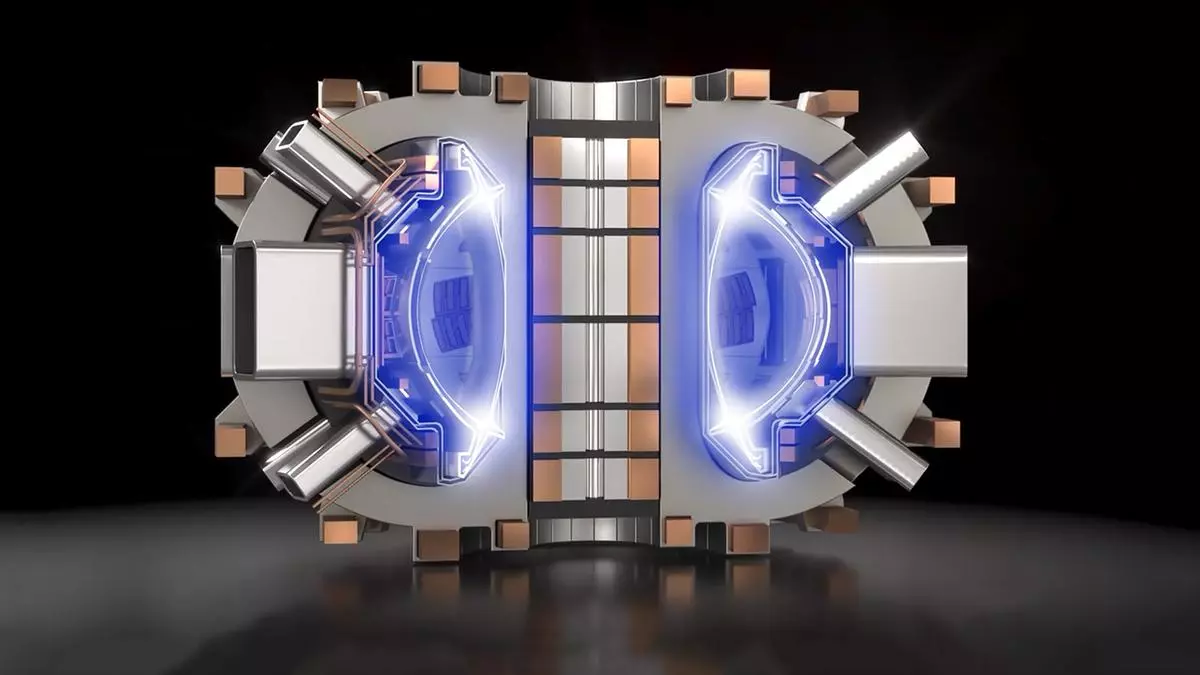
In collaboration with MIT’s Plasma Science and Fusion Center, CFS is building “the world’s first fusion device that produces plasmas which generate more energy than they consume, becoming the world’s first net-energy fusion machine”. The device, named SPARC, is for demonstration but a commercial plant is expected to follow.

CFS says its technology is similar to that of ITER, a multi-country collaborative research on fusion underway in France. Like ITER, CFS uses magnetic fields to confine the fusion process. However, CFS “will use a new high-temperature superconducting (HTS) magnet to enable a similar performance as ITER, but built more than 10 times smaller”, according to information provided by CFS.

Investors’ backing

CFS aims to build the demonstration plant, SPARC, by 2025 and the commercial plant by 2030.

Claims like this are usually not taken seriously, especially after the experience with the Italian engineer Andrea Rossi, who maintains that he has a device that can produce a net energy gain. Rossi made a big splash a decade ago, but nobody talks about him today.

However, CFS’s claims deserve attention because the company has the backing of investors and energy companies. Claudio Descalzi, CEO of Eni, is quoted in a January 2021 press release from CFS as saying, “Thanks to their monumental breakthroughs, a commercial fusion plant is soon going to be within reach.”

The press release also quotes Randy Glein, Partner, DFJ Growth, as saying, “The team at CFS has finally done it, breaking through longstanding technological barriers with an innovative design that promises to provide a safe, sustainable, and scalable source of clean fusion power.”

In October 2022, the United Kingdom Atomic Energy Authority (UKAEA) selected CFS to support work on the magnetic confinement system for its spherical tokamak for energy production (STEP). Describing the HTS magnets as “groundbreaking technology”, Paul Methven, Director of STEP, noted, “We believe superconducting magnets are a key part of putting fusion electricity on the grid, both economically and reliably.”

Low-energy fusion

Moving from Cambridge, Massachusetts, to Berkeley, California, you find another company that raises hopes for fusion energy.

Within nuclear fusion, there are two segments — hot and cold. While NIF, ITER and CFS work on hot fusion, where the temperature needs to be six times hotter than the core of the sun, you also have low-energy nuclear reactions, or LENR.

Brillouin Energy of Berkeley says it is building a commercial reactor that “can use the hydrogen in a glass of water to power 30,000 homes a year.” Sounds too fantastic, but the company demonstrated its ‘hydrogen hot tube’ (HHT) machine at an international conference, ICCF24, in July. Brillouin says that SRI International, a US-based not-for-profit research institute, has “independently validated the technology and heat output of the HHT boiler”.

In a press release in August, Brillouin Energy CFO David Firshein said the company “is now ready to enter into the next phase: commercialisation”.

“The HHT test system that we are demonstrating at ICCF24 is the first ever licensable system that is transportable — it can be packed up and shipped to potential OEM license partners for further testing and evaluation,” the release said.

Unexpected benefits

Perhaps fusion energy is not as far off as commonly believed.

The world is still very sceptical about LENR (for good reason, because it is still a poorly understood phenomenon), but is not ready to dismiss it either. In September, the US Advanced Research Projects Agency–Energy (ARPA-E) announced $10 million funding to “establish clear practices to determine whether LENR could be the basis for a potentially transformative carbon-free energy source”.

While some termed it a “waste of money”, others were more charitable, noting that when billions of dollars are thrown into hot fusion research, a few millions into cold fusion might be worth it.

A 2019 paper titled ‘Revisiting the cold case of cold fusion’, by a group of American scientists, noted that “the search for a reference experiment for cold fusion remains a worthy pursuit”. Also, there seem to be spin-off benefits from LENR experiments. “We set out looking for cold fusion, instead benefited contemporary research topics in unexpected ways,” the paper says.

Closer home, a team of researchers at IIT-Kanpur are working on LENR experiments, not to achieve net energy gain, but to see if transmutation can be achieved.


Source link

YouTube
Instagram
WhatsApp



