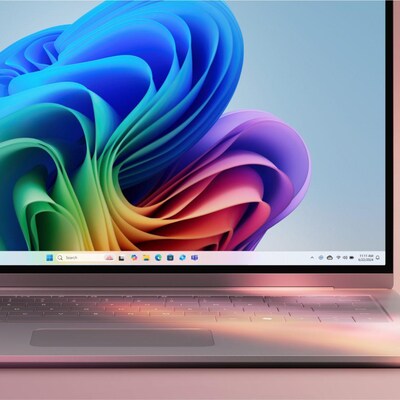
ASUS launches Vivobook S series laptops with OLED displays: Price, specs

ASUS launches Vivobook S series laptops with OLED displays: Price, specs


Taiwanese PC maker ASUS on May 21 launched in India the Vivobook S series. The series comprises three consumer laptops – VivoBook S 14, Vivobook S 15, and Vivobook S 16. All three laptops in the series boast OLED displays. Intel Core Ultra 9 processor-185H with Intel ARC graphics and Intel AI Boost NPU powers the Vivobook S 15 and Vivobook S 16 models, and the Vivobook S 14 is powered by AMD Ryzen 5 7535HS. The ASUS Vivobook S series laptops will be available online on ASUS e-shop and Flipkart and at select retail stores from Rs 89,990 onwards.


ASUS Vivobook S 16


The ASUS Vivobook S 16 is powered by Intel Core Ultra 9 processor-185H and boasts Intel EVO certification. It is offered in up to 16GB LPDDR5X RAM and 1TB PCle b4.0 SSD storage configuration. The Vivobook sports a 16-inch 3.2K OLED display of a 120 Hz refresh rate, stretched in a 16:10 aspect ratio. ASUS said the display offers 600 nits as peak brightness and comes with VESA DisplayHDR 600 True Black certification.


Additional features include ASUS AI-sense Camera, 3D noise reduction and automatic framing. The device features ASUS Ergosense keyboard with personalised RGB backlighting option and an array of ports. Accompanied by a dedicated Copilot key, ASUS said, the device allows access of Windows AI-powered tools with a single press in applications like Microsoft 365, Word, PowerPoint, Excel, and Outlook.


Priced at Rs 102,990 onwards, the ASUS Vivobook S16 will be available online on ASUS e-shop and Amazon India. It will also be available at ASUS exclusive stores and select retail channels.


ASUS Vivobook S 15


Weighing about 1.5 Kg, the ASUS Vivobook S 15 is powered by Intel Core Ultra 9 processor-185H. The Vivobook S 15 sports a 15.6-inch 3K OLED display of 120Hz refresh rate. It is a 16:9 aspect ratio display with peak brightness of 600 nits certified by VESA for DisplayHDR 500. Other features include military grade durability, dedicated Copilot key, Windows Hello face login support, and ASUS Antimicrobial Guard Protection.


The Vivobook S 15 is priced at Rs 96,990 onwards. It will be available on e-commerce platform Flipkart and ASUS e-shop.


ASUS Vivobook S 14


The ASUS Vivobook S 14 OLED is powered by the AMD Ryzen 5 7535HS processor and built to military- grade MIL- STD-819H standards. It comes with ASUS Lumina OLED display, ergonomic keyboard, USB-C 3.2 Gen 1 and HDMI 2.1 and ASUS Ai-Sense camera. It boasts an audio system tuned by Harman Kardon and Dolby Atmos certified.


The Vivobook S 14 will be available on Amazon India, Flipkart and ASUS e-shop at 89,990 onwards.

First Published: May 21 2024 | 3:08 PM IST


Source link

Vivo Y200 Pro 5G smartphone launched in India at Rs 24,999: Specs, features

Vivo Y200 Pro 5G smartphone launched in India at Rs 24,999: Specs, features


Chinese smartphone brand Vivo has launched the Y200 Pro 5G smartphone in its Y-series portfolio in India. The Y200 Pro 5G smartphone is the slimmest smartphone with 3D curved display in the segment, Vivo said in a press note. Offered in Silk Green and Silk Black colours, the Vivo Y200 Pro 5G smartphone is now available for purchase with introductory offers on Flipkart, Vivo India e-store, and select retail stores.


Vivo Y200 Pro 5G: Introductory offers


Customers purchasing the Vivo Y200 Pro 5G can avail an instant cashback of Rs 2,500 from SBI Card, IDFC First Bank, IndusInd Bank, and Federal Bank.


Vivo Y200 Pro 5G: Details


The Vivo Y200 Pro smartphone sports a 6.78-inch 3D curved AMOLED display with FHD resolution and 120Hz refresh rate. The smartphone weighs 172g and has a silk cloud texture design. Vivo said the smartphone has a 2.3mm narrow frame and an ultra-slim body. For imaging, the smartphone has a 64-megapixel main camera with optical image stabilisation. The camera system supports value-added features from Vivo such as Super Night mode for night photography, Wedding Style Portrait, Vlog Movie Creator mode, and Live photo.


The Vivo Y200 Pro is powered by Qualcomm Snapdragon 695 5G, paired with 8GB RAM and 128GB on-board storage. The phone is powered by 5,000mAh battery, supported by 44W wired charging. The smartphone boots Android 14 operating system-based Vivo’s FuntouchOS 14.


Vivo Y200 Pro 5G: Specifications


Display: 6.78-inch 3D curved AMOLED


Processor: Qualcomm Snapdragon 695 5G


RAM: 8GB


Storage: 128GB


Rear Camera: 64MP


Battery: 5000mah


Charging: 44W wired


OS: Android 14 based FunTouchOS 14


Weight: 172g

First Published: May 21 2024 | 2:16 PM IST


Source link

Microsoft prepares Windows as AI platform, powered by ARM chips: Details

Microsoft prepares Windows as AI platform, powered by ARM chips: Details


Copilot+ PCs (Photo: Microsoft)


Microsoft is going all in on artificial intelligence by making its Windows operating system (OS) ready for AI with the new Copilot+ platform, powered by ARM architecture-based chips. Microsoft is calling Copilot+ PCs the fastest and most intelligent Windows devices, which leverages the Neural Processing Unit (NPU) on the supported ARM chips for handling AI workloads.


Announcing the new features and tools for Windows, Microsoft said that most of the apps that people use have native Arm versions available. And for those that are not designed to run on ARM architecture, Microsoft has integrated a new “Prism” emulator within the operating system to make the apps compatible on Arm PCs. The company said that emulated apps on PCs running the Qualcomm Snapdragon X Elite chip offer twice the speed as any previous generation Windows Arm device running Windows 11 OS.

This is also the first time Microsoft has announced features exclusive to Arm-based devices running its Windows platform. This is mainly because the ARM-based Qualcomm X-series chips have a dedicated NPU capable of running on-device AI operations that some of Microsoft’s new features for Windows require.

Also Read: Microsoft debuts Copilot Plus PCs with Surface Pro, Laptop launch: Details


Microsoft said that the devices based on its Copilot+ PCs platform makes a foundation for “chip-to-cloud solution” with small scaled AI models running locally on-device while AI tools based on large language models (LLMs) are offered to customers through cloud services such as Microsoft Azure.


Here are some of the features that are coming to Windows on Copilot+ PCs:


Recall


The new Recall feature for Copilot+ PCs works like a photographic memory, allowing the user to access anything they have seen or done on the PC. The feature presents a timeline across any app, website, document and more, which the user can scroll and find what they were looking for. Additionally, users can input a text describing what they are searching for and the Recall feature will present a relevant snapshot from that timeline. Users can also delete a particular snapshot or adjust the range of timeline.


The Recall features utilises the “personal semantic index”, which Microsoft said is built and stored entirely on the device itself, ensuring privacy for users. Recall is an opt-in feature, which can be enabled/disabled from Windows settings.

Recall on Copilot+ PCs


Recall on Copilot+ PCs


Cocreate with AI


Utilising the NPU on the Copilot+ PCs and the small language models (SLM) running on-device, Microsoft allows Windows users to generate images and graphics using text prompt on Windows apps such as Paint and Photos. These are part of Microsoft’s Image Creator feature, powered by AI.


The integrated feature on Paint is called “Cocreator” and users can utilise it to refine, edit and adjust their work with text prompt. On the Photos app, the feature is called Restyle image, which the company said will allow users to “reimagine personal photos with a new style combining image generation and photo editing.” It contains pre-set styles such as Cyberpunk or Claymation and also allows users to make an entirely new style using generative AI.

Restyle Image on Windows


Restyle Image on Windows


Creative apps


Microsoft said that it has partnered with select developers to bring support for many creative apps from the likes of Adobe and more to the ARM-based platform. While Adobe apps such as Photoshop, Lightroom and Express will be supported out-of-the-box on Copilot+ PCs, more apps like Illustrator and Premiere Pro will join the suit later.


Other creative apps that will be supported on the new platform includes DaVinci Resolve Studio, CapCut, Cephable, LiquidText, djay Pro, and more.


Live Captions and real-time translation


Leveraging the dedicated NPU and on-device AI, Windows on Copilot+ PCs gets Live captions feature to translate more than 40 languages into English in real-time for live video calls, recording, and even streamed content such as videos. 

Live Captions on Windows


Live Captions on Windows

First Published: May 21 2024 | 1:51 PM IST


Source link

Sony launches Bravia 2 series with Google TV in India: Know price, specs

Sony launches Bravia 2 series with Google TV in India: Know price, specs


Japanese electronics maker Sony on May 21 launched in India a range of Google TV platform-based smart television in the Bravia 2 series. The series is offered in S20 and S25 variants with the latter focused on gaming-oriented features. Offered in four screen options, with top-end 65-inch model priced at Rs 95,990, the Sony Bravia 2 series boasts X1 picture processor, 4K resolution, and Dolby Atmos audio.


Sony Bravia 2 series: Price and availability


The Bravia 2 series encompasses four display options – 43-inch, 50-inch, 55-inch, and 65-inch. While the 43-inch and 50-inch models are part of the S20 variant, the 55-inch and 65-inch models are gaming-focused smart televisions offered under the S25 variant. Sony has not announced the pricing and availability details of the models in the S20 variant. Models in the S25 variant are priced at Rs 74,990 and Rs 95,990 for 55-inch and 65-inch displays, respectively. Both these models will be available across Sony Centers, major electronic stores, and e-commerce portals from May 24.


Sony Bravia 2 series: Details


All four models in the Sony BRAVIA 2 series are powered by Sony X1 processor, which it said uses advanced algorithms to cut noise and boost detail. The processor, Sony said, supports 4K X-Reality Pro and Motionflow XR features that enables content upscaling to 4K resolution and frame interpolation for smooth visuals. For audio, the Bravia 2 series comes with a twin-speaker system of 20W peak output.


Based on Google TV platform, the Bravia 2 series works with Apple AirPlay and Apple HomeKit. Sony said the TV has access to over 10,000 apps from Google Play Store for TV. Additionally, there is support for Google Assistant.


As for the game-focused features, the S25 variant includes an HDMI 2.1 port for connecting the PS5 and other gaming consoles. The Bavia 2 series also comes with a voice enabled remote.


Sony Bravia 2 series: Specifications


Display: LED


Size: 43, 50, 55, and 65-inch


Audio: 20W, Dolby Atmos


Connectivity: Wi-Fi, Bluetooth 5.0


OS: Google TV


Storage: 16GB

First Published: May 21 2024 | 1:29 PM IST


Source link

Tech competition: China wants AI academies to keep tech talent supply going

Tech competition: China wants AI academies to keep tech talent supply going


China is preparing to establish independent AI academies in Shanghai and Beijing, a move aimed at nurturing the talent needed to grow the artificial intelligence industry, reported the South China Morning Post, citing an award-winning AI expert.


Zhu Songchun, a distinguished member of the Chinese People’s Political Consultative Conference (CPPCC) and the head of the School of Intelligence Science and Technology at Peking University said that the Ministry of Education, entrusted with overseeing these academies, intends to push for more of the institutes in more provinces.


Advocating for a more globally inclusive approach, Zhu stressed the importance of Chinese academic institutions embracing international collaboration to spearhead the nation’s technological innovation.


Speaking at a CPPCC assembly on May 11, Zhu emphasised the imperative to invigorate the academic landscape and attract talent from across the globe.


“[We] should revitalise the academic community and intensify efforts to attract international talents,” Zhu was quoted as saying by CPPCC Daily, a media outlet affiliated with China’s top political advisory body.


“Currently, artificial intelligence is at the forefront of global technological competition and presents both challenges and opportunities for the quality of China’s population, job market, educational reform and technological innovation,” he added.


While the timeline for establishing these AI academies remains unspecified, Zhu said China should ensure equitable treatment of foreign AI experts and students seeking opportunities in China. He also proposed leveraging private foundations to attract global talent in the AI domain.


Zhu also advocated the development of an “innovation vitality index” and expanding AI education initiatives in Chinese universities. This includes integrating AI training across various disciplines to equip college students with essential skills.


Responding to Zhu’s propositions, Long Teng, China’s vice-minister of science and technology, affirmed the nation’s commitment to promoting international talent exchanges, particularly in fields like AI. He said he would create standards for recognising foreign talent with expertise in high-demand areas.


This comes as Beijing intensifies its efforts in artificial intelligence to build a high-quality, talented tech force and revitalise its sluggish economy.


Recognising AI as a potentially transformative force, Beijing seeks to address long-standing economic challenges, such as a shrinking workforce and declining fertility rates, which have persisted since the emergence of California-based OpenAI over a year ago.


The pursuit of international talent becomes pronounced as AI assumes a pivotal role in the escalating competition between the United States and China in science and technology, further accentuating rivalries encompassing the South China Sea, trade, and ideology.

First Published: May 21 2024 | 12:24 PM IST


Source link

YouTube
Instagram
WhatsApp