Gmail's next AI feature will draft your emails using simple voice prompts

Gmail's next AI feature will draft your emails using simple voice prompts


Gmail users may soon experience a shift in email drafting with the introduction of a new AI feature called ‘Help Me Write.’ This function will allow users to instruct Gmail on the type of email they wish to compose, and the Google-owned app will autonomously generate the email based on text prompts. The tech giant is now looking to add a voice command option to this, further simplifying email drafting, according to a report by the Android Police.


The ‘Help me Write’ feature, announced at Google’s I/O 2023 event, initially focused on creating email drafts swiftly using text prompts. The concept of voice-driven email composition comes as a part of Google’s broader initiative to integrate advanced AI into its products. Google, at the time, emphasised the utilisation of its advanced machine learning algorithms to enhance the results produced by the feature.


In a blog post, Google explained the functionality: “Just type in the prompt of what you want, hit create, and a full draft appears… It looks pretty close to what you want to send, but maybe you want to refine it further.”


The feature is anticipated to roll out in the coming months as part of Workspace updates, likely accessible to both web and mobile users of Gmail.


How it works


The anticipated ‘Draft email with voice’ feature will bring a voice typing interface to Gmail. When users initiate a new email or reply, a microphone icon will appear, triggering voice and recording upon tapping. Once users finish speaking, they can click on the ‘Create’ prompt. Gmail will then utilise artificial intelligence to draft the email in line with the voice instructions.


While highlighting this feature, the report by Android Police cautioned that the official release date remains uncertain, as the code strings linked to the update were initially identified in October 2023.


Google’s Smart Reply function


This new feature will be an update to Google’s Smart Reply function, which was released in 2017. This offered quick response options, followed by Smart Compose, which provided writing suggestions as users typed in real-time. The upcoming ‘Draft email with voice’ feature aims to revolutionise email composition, aligning with the continuous evolution of AI-powered tools in Gmail.


First Published: Jan 23 2024 | 5:08 PM IST


Source link

Apple iOS 17.3 brings 'Stolen Device Protection' feature to iPhone: Details

Apple iOS 17.3 brings 'Stolen Device Protection' feature to iPhone: Details


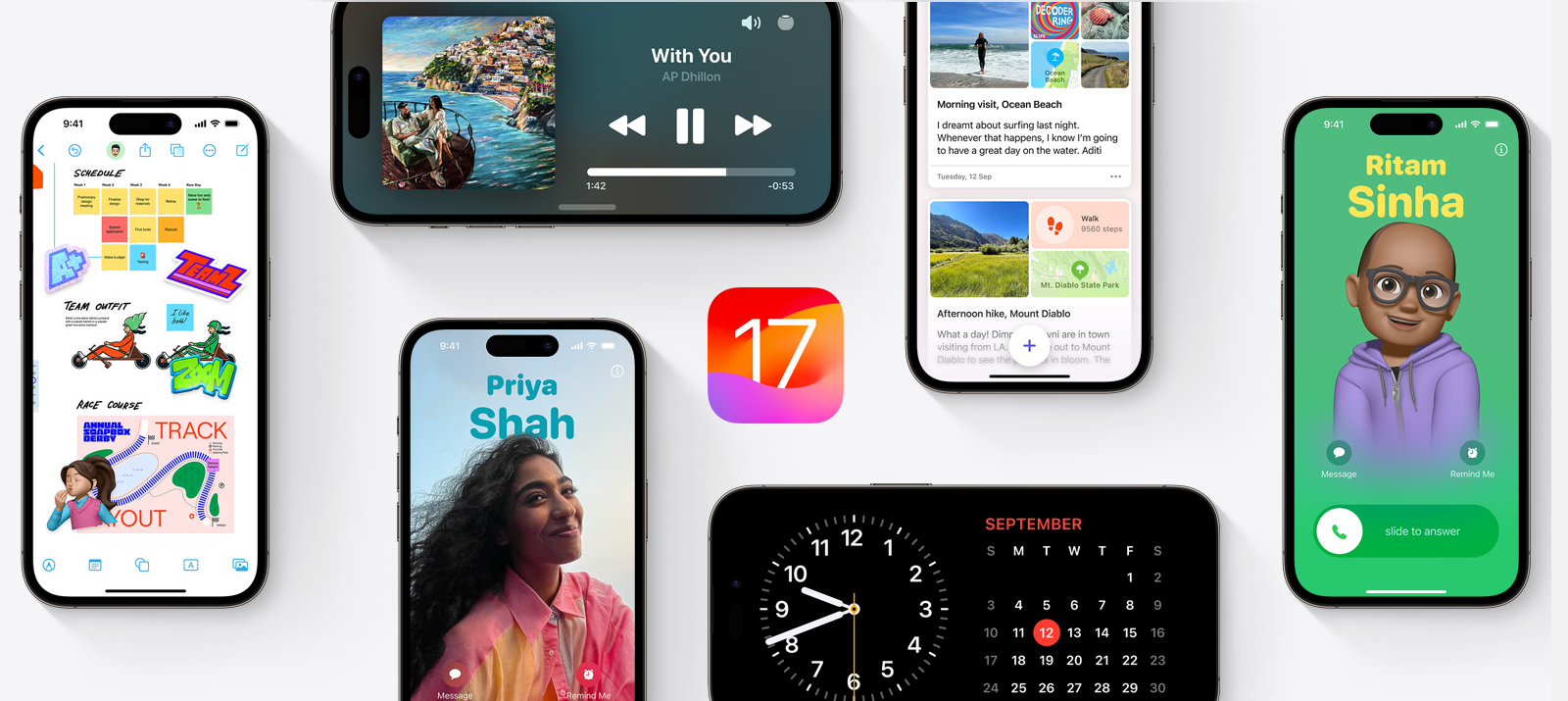
Apple has started rolling out iOS 17.3 update to eligible iPhone models, starting January 22. This update introduces additional security measures with the “Stolen Device Protection” feature. Besides, it brings a new Unity wallpaper, new features to Apple Music, and more. Here are all the new features coming to iPhones with iOS 17.3 update:


Stolen Device Protection


Apple has added an extra layer of protection to iPhones with Stolen Device Protection. When enabled, some sensitive actions such as accessing stored passwords and bank card details will require a biometric authentication with Face ID without any alternatives such as passcode. In case of security delay, actions such as changing Apple ID passwords and device passcodes will require the user to wait for an hour to perform a second biometric authentication. Additionally, if your iPhone is in a familiar location, these steps are not required and the user can use the device passcode to authenticate like usual.


To enable the feature, go to Settings >>> tap Face ID & Passcode >>> enter your device passcode >>> Tap to turn Stolen Device Protection on.


Music


With the iOS 17.3 update, users can start a collaborative playlist with friends on Apple Music. Users can invite friends to join their playlist where every member can add, reorder and remove tracks from the playlist. Apple Music will also let each individual react to a track within the playlist using emojis.


Follow the steps to collaborate on a playlist in Apple Music:  


  • Open the Apple Music app.

  • Create a new playlist or open an existing playlist.

  • Tap on the ‘Add members’ button at the top of the playlist.

  • Turn on Approve Collaborators to approve those you invite to join your playlist.

  • Tap Start Collaboration.


Lock Screen


Apple has added a new Unity wallpaper with iOS 17.3 update. Apple said that this addition honours Black history and culture in celebration of Black History Month.


Other changes


The new iOS update includes AirPlay hotel support for streaming content to the TV at select hotels. The updated Apple care and Warranty section in Settings now shows coverage of all devices signed in with users Apple ID. Crash detection features on all iPhone 14 and 15-series have received updates with iOS 17.3.

First Published: Jan 23 2024 | 2:58 PM IST


Source link

Samsung, Google to bring royalty free Dolby Atmos competitor soon: Report

Samsung, Google to bring royalty free Dolby Atmos competitor soon: Report


Samsung will be rolling out its 3D spatial audio technology called Immersive Audio Model and Formats (IAMF) later this year. According to a report on Android Authority, stating analyst Chris Chinnock, Samsung last year announced that it has been working in collaboration with Google to develop a new Immersive Audio model for TVs, sound bars and more. Recently, it spoke with industry professionals about its plans for IAMF at the Consumer Electronic Show 2024 (CES 2024) and confirmed that the new audio format will start rolling out later this year.


Google’s YouTube would likely be the first to adopt IAMF. It is said to roll out content supporting the IAMF format on its platform soon after the formal launch. However, IAMF 3D audio support on YouTube may be limited to smartphone and TV apps since most browsers only support stereo output. Important to note, YouTube has support for multi-channel surround sound and high dynamic range content, but not for Dolby Atmos and Dolby Vision.


Unlike Dolby Atmos, IAMF is said to be royalty free and open source. Besides, customers will not be required to purchase new devices with IAMF support, the upcoming audio format will work on existing TV’s and sound systems with a firmware update.


The report on Android Authority stated that the IAMF may go through rebranding before its global roll-out. Samsung is likely to announce the complete roll out plan and a list of supported devices for its spatial audio format in the coming months.


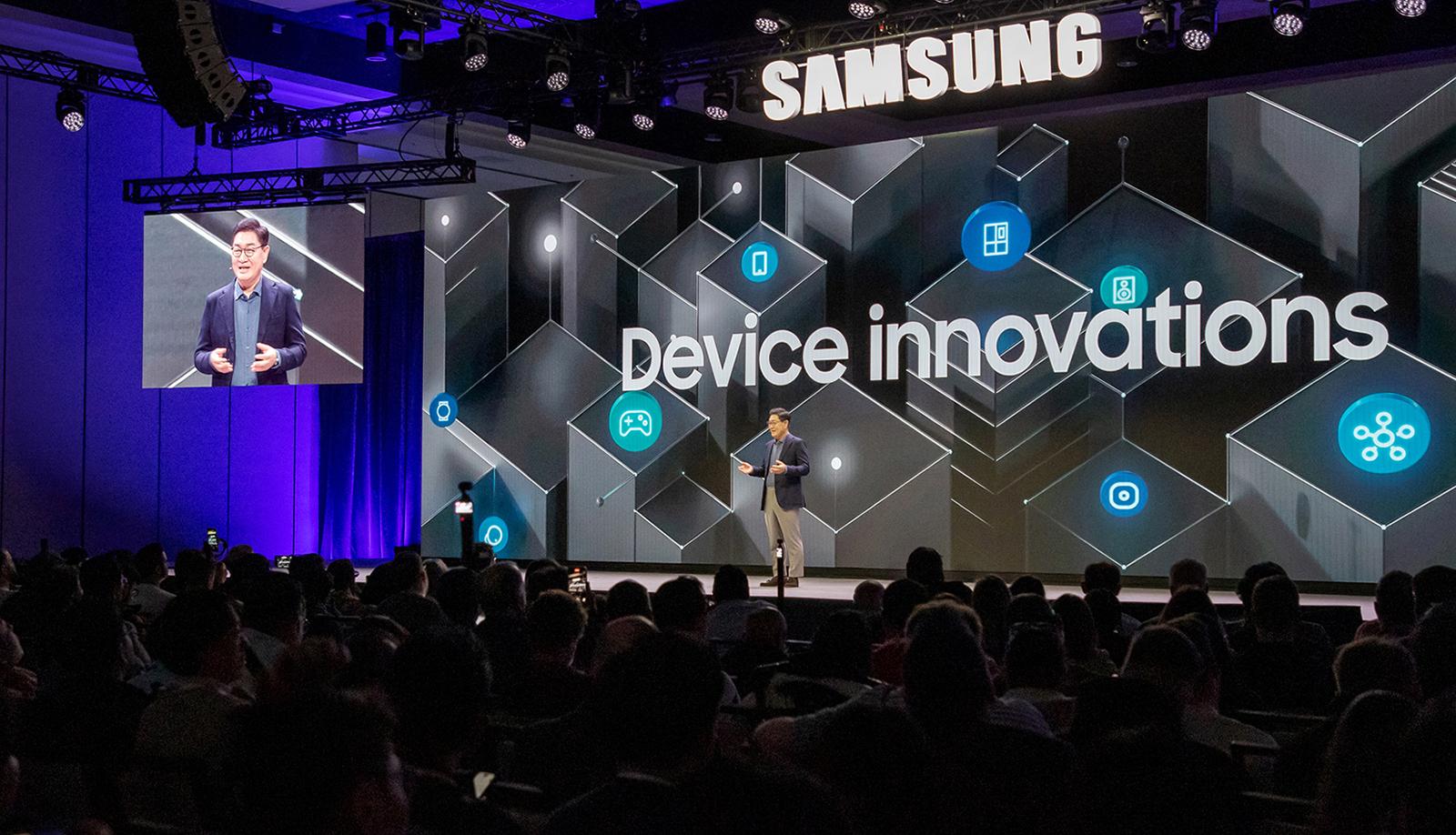
Earlier, Samsung displayed various upcoming entertainment devices at CES 2024 including AI chip-powered displays, next version of Tizen operating system, a wireless 8K projector, and more.

First Published: Jan 23 2024 | 1:42 PM IST


Source link

OnePlus 12, 12r, Buds 3 launch: Where to watch 'Smooth Beyond Belief' event

OnePlus 12, 12r, Buds 3 launch: Where to watch 'Smooth Beyond Belief' event


OnePlus is hosting a “Smooth Beyond Belief” event in Pragati Maidan, New Delhi on January 23. At the event, the Chinese electronics brand would launch the OnePlus 12-series smartphones and Buds 3 wireless earphones in India. The event will kick off at 7:30 pm (IST). It will livestream on the company’s website and official channel on YouTube. Alternatively, you can watch the livestream in the video embedded towards the end of this article.


OnePlus Smooth Beyond Belief: What to expect

OnePlus will unveil its flagship OnePlus 12-series, which comprises the premium OnePlus 12 and its trimmed down version the OnePlus 12r. OnePlus has regarded the upcoming smartphones as “dual flagship” and said that the OnePlus 12 and OnePlus 12R smartphones would have their own unique attributes.

READ: OnePlus to introduce Google WearOS-powered smartwatch at MWC: Details here


OnePlus 12: Specification


The OnePlus 12 smartphone was launched in the company’s home country on December 5. The global variant of the smartphone is expected to be along the same line in terms of specification and features. Here is a roundup of all the specifications already confirmed by the company:


  • Display: 2K 120Hz ProXDR display, 4500nits peak brightness, 2160Hz PWM dimming, TUV Rheinland Eye Care certification

  • Processor: Qualcomm Snapdragon 8 Gen 3 chipset

  • RAM: 24GB LPDDR5X RAM (Chinese variant)

  • Storage:  1TB UFS 4.0 (Chinese variant)

  • Camera:  50MP (Sony LYT-808) + 64MP 3X periscope telephoto + 48MP ultra-wide-angle

  • Battery: 5400mAh battery, 100W SUPERVOOC fast wired charging, 50W AIRVOOC wireless charging

  • OS: OxygenOS 14 based on Android 14

READ: Samsung Galaxy Ring will feature ‘leading sensors and technologies’: Report


OnePlus 12R: Expected specification


  • Display: 6.74-inch AMOLED, ProXDR, 120Hz (refresh rates)

  • Processor: Snapdragon 8 Gen 2

  • OS: OxygenOS 14 based on Android 14

  • Camera: 50MP (Primary) + 8MP (ultra-wide) + 32MP (Telephoto with 2X zoom)

  • Battery: 5,500mAh, 100W SUPERVOOC fast charging


OnePlus Smooth Beyond Belief: Watch livestream

First Published: Jan 23 2024 | 12:36 PM IST


Source link

US-China tech rivalry keeps South Korean chipmakers in costly limbo

US-China tech rivalry keeps South Korean chipmakers in costly limbo


By Bloomberg News

A memory chip plant located halfway between Seoul and Beijing illustrates the tough choices South Korean business leaders and policymakers face as they try to limit the damage from the US technology war with China.


South Korean chipmaker SK Hynix Inc.  bought its Dalian plant in northeast China from Intel Corp. in a $9 billion deal in 2020 that was supposed to help the world’s No. 2 memory maker shore up capacity and expand into cutting-edge chips in the world’s largest chip market. Instead, the factory has ensnared SK Hynix in a complex web of US restrictions aimed at limiting China’s access to materials and equipment considered key to dominating the battlegrounds and industries of the future.


Intel


In the years since the deal closed, SK Hynix has remained in limbo, unable to commit to big capex plans at the factory. The company had quickly built a shell for a new fab at the back of site, but it remains unclear if it contains any equipment to produce chips at all, let alone the advanced semiconductors that might secure solid returns on its hefty investment. Intel’s logo still sits atop the gleaming marine-blue glass façade of the factory complex, with the final payment for the plant due in 2025.


The company appeared to find a solution to its predicament  in the fall after the US gave SK Hynix and Samsung Electronics Co. indefinite waivers to keep bringing some high-end equipment into China.


South Korea’s government has attributed those concessions in part to President Yoon Suk Yeol’s charm offensive during his meeting with US President Joe Biden, aided by promises of investment and a surprise rendition of “American Pie.”  The US side was also likely swayed by the need to keep major tech firms supplied with chips.


But there’s no guarantee those waivers will stay in place, especially if Republican frontrunner Donald Trump wins November’s US presidential election and returns to the White House.


“The SK Hynix plant in Dalian captures the difficult position South Korea chipmakers are in as a result of US restrictions,” said Masahiro Wakasugi at Bloomberg Intelligence. “Even with the latest US concessions it still probably doesn’t make sense for SK Hynix to expand capacity in Dalian given uncertainty over the US presidential election and US policy after that.”


South Korea’s economy is heavily reliant on the semiconductor sector to drive growth. That makes it especially vulnerable to Washington’s drive to cut supply chain dependence on China and constrain Beijing’s access to key chip technology. The International Monetary Fund has warned that South Korea would be the largest potential loser in the Asia-Pacific region if the two superpowers’ economies were to decouple.


“Korea needs to walk a delicate tightrope in balancing its relations with the United States and China,” said Troy Stangarone, senior director at the Korea Economic Institute. “It is at the forefront of critical technologies related to semiconductors and EV batteries that create economic opportunities, but also vulnerabilities for Korean firms.”

The SK Hynix factory in Dalian specializes in 3D NAND flash memory used in smartphones and other devices. NAND accounts for an increasing portion of the company’s revenue, around 27% of which comes from China. Including DRAM, South Korea has a combined global memory chip share of more than 60%.

Chart


Chart


The existing legacy output at the Dalian plant largely falls outside the US restrictions on advanced technology, but SK Hynix was likely looking beyond those parameters for the new fab to ensure its competitiveness over the longer-haul, according to BI’s Wakasugi.


The waivers from the US government allow SK Hynix and rival Samsung Electronics Co. to import US chip equipment while still leaving limits on the most advanced dual-use technology, although companies that receive Chips Act subsidies are barred from expanding advanced chip-making  in China by more than 5% over 10 years. 


The option of cutting losses and selling the plant would likely require US government approval and Washington is unlikely to green light the sale to a Chinese bidder.


The waiver “considerably lowered” the risks surrounding SK Hynix’s operations in China, SK Hynix Chief Executive Officer Kwak Noh-jung said earlier this month at a press briefing. The company separately declined to comment on the implications of a possible Trump presidency and denied rumors it was looking to sell.


“We are not considering selling our fabs in Dalian at all,” it said in a statement. “SK Hynix will maintain its China operations, while abiding by regulations and laws in the jurisdictions in which it does business and will do its part for the development of the semiconductor industry.”


Diplomatic Drive


From the moment the Commerce Department released its restrictions on use of advanced US chip technology just over a year ago, South Korean policymakers worked around the clock to negotiate with their US colleagues to try and hone their impact.

President Yoon led the way with highly visible efforts to strengthen ties with Washington and repair relations with a shared US ally: Japan. A summit meeting with Biden in April was followed by a three-way Camp David meeting with Japanese Prime Minister Fumio Kishida in August.


For their part, SK Hynix and Samsung bumped up spending on lobbyists in the US as they tried to get their concerns reflected in Washington while also communicating closely with South Korea’s trade ministry.


South Korean Trade and Industry Minister Ahn Duk-geun views Yoon’s efforts as a game-changer that “substantially alleviated” the situation for chipmakers in China, laying the groundwork for Korean officials to convince US authorities that Hynix products from Dalian were innocuous.


But even with the “exceptional arrangement,” Ahn acknowledges that the outlook isn’t entirely clear for Korean chipmakers and other trade-reliant businesses.


“Depending on unexpected geopolitical risk, you never know what kind of policy will come, right?” he said. “We still have a huge political risk in the coming years, not just in the US. Many countries are now waiting for new results of elections. So we do have many new political risks and, as a government, that is a big challenge.”


Apple Supplies


The decision to grant waivers for Samsung and SK Hynix to bring US equipment into China reflects the need to keep a steady stream of chips flowing to major US companies including Apple Inc., Microsoft Corp. and Google parent  Alphabet Inc. 


Apple gets almost 20% of its revenue from China and is SK Hynix’s largest customer, according to Bloomberg supply chain analysis. The iPhone maker is also the biggest consumer of Samsung’s components even though the Korean company’s Galaxy phones are its biggest competitor. 


On that basis alone continuing access to output from Korean factories in China remains crucial to the supply chain for many of Apple’s products.


But Washington maintains leverage over its ally as a guarantor of South Korea’s security and its largest trading partner after China. The US also has influence through its control of chip manufacturing knowhow and through the Chips and Science Act, which offers $100 billion in funds to firms building plants on American soil. 


Although neither firm has received any subsidies yet, SK Hynix has said it will invest $15 billion in a chip-packaging plant in the US, and Samsung, the world’s biggest memory chipmaker, has applied for money from the US for its planned plant in Taylor, Texas.

Chart


Chart


The US is the dominant player in half of 10 key chipmaking stages singled out by Bloomberg Intelligence including etching, plasma deposition and sputtering, with Japan and the Netherlands controlling the rest including wafer cleaning and lithography. That means South Korea’s key role as a chip manufacturer is dependent on technology, materials and expertise provided mainly by the US and its allies. To ensure they stay at the forefront of the chip sector, South Korean chipmakers need the collaboration of US firms, not Chinese companies.


China’s Grip


South Korea has already seen what can happen when the US and China fight, with the nation’s economy collateral damage in a dispute almost a decade ago.


A decision in 2016 to allow the US to deploy a ballistic missile system in South Korea sparked a furious reaction from Beijing, which punished South Korean firms in China and squeezed the flow of Chinese tourists as it tried to force Seoul to change its mind. The Chinese actions damaged economic growth, inflicted billions of dollars of losses on the Lotte conglomerate and triggered a slump in car sales from which Hyundai Motor Co. and Kia Corp. never recovered.


China’s recent controls on graphite exports are another example of the country getting caught up in bigger geopolitical issues. While the actions was more likely a retaliation against US chip rules, the material is a key element needed by South Korea’s up-and-coming battery makers and is a reminder of the crosswinds buffeting Seoul from competition between its two largest trading partners.


Whether to stay or go is the biggest concern among Korean companies running businesses in China, according to Ryu Jin, chairman of the Federation of Korean Industries. “The relationship with China is so important, so that’s why they are still contemplating what to do,” Jin said at a press conference in Seoul in late December. 


China’s ascent up the value chain presents another cause for concern. Chinese smartphones and cars now outcompete South Korean equivalents, and that prompted a major withdrawal of Korean production in China, especially after the experience of the Thaad dispute. The experience of getting competed out of the market offers a glimpse of what the future might have in store for Korea’s chipmakers if they try to push ahead with advanced technology in China.


As some South Korean businesses reorient themselves away from the world’s second-largest economy, trade data shows a trend toward the US.

Chart


Chart


While China is still by far South Korea’s biggest trading partner, monthly exports to the US surpassed those to China for the first time in more than two decades in data released at the beginning of 2024.


That’s another indication that while South Korea is trying to keep its options in both China and the US as open as possible, it is already leaning  more in the direction of the US as policymakers and firms change strategies to deal with a technology battle that is reshaping trade, supply lines and alliances across the globe.


“Korea’s companies will need to make some tough decisions as it weighs the risks, pressures and opportunities emanating from both the United States and China,” said Wendy Cutler, vice president of the Asia Society Policy Institute, who once led US trade talks with Seoul.


“Even with these waivers, in many respects the handwriting is on the wall.”


Source link

Samsung races Apple to develop blood sugar monitor that doesn't break skin

Samsung races Apple to develop blood sugar monitor that doesn't break skin


Apple_Samsung (Photo: Bloomberg)

By Mark Gurman and Yoolim Lee

Samsung Electronics Co. is exploring the development of noninvasive glucose monitoring and continuous blood pressure checking, setting its sights on ambitious health-care goals in a race with Apple Inc. and other tech giants.

The work is part of a broader push to put health features in a range of devices, including its just-announced Galaxy Ring, said Samsung executive Hon Pak, who is overseeing the effort. The company aims to eventually give consumers a complete picture of their well-being via sensors on different parts of the body and around the home.


Health tracking is already a key selling point of smartphones and watches, with Samsung, Apple and Alphabet Inc.’s Google using the features to attract and retain customers. Creating sensors for continuous blood pressure tracking and glucose monitoring would be particularly valuable breakthroughs. Apple has been working for years on a glucose reader that wouldn’t require users to prick their skin for blood — a potential boon for millions of diabetics.


“If we can do continuous blood pressure and glucose, we’re in a whole different ballgame,” Pak, Samsung’s mobile digital health chief, said during a wide-ranging interview. “I think that’s where everyone is trying to get to. We’re putting significant investment toward that.”


He wouldn’t comment on a timeline for either feature, but said he hopes noninvasive glucose monitoring could come to the market in some form within five years. “We are looking at everything from miniaturization to the various different technology platforms that can do some type of glucose monitoring or anything in between,” Pak said.


The remarks follow Samsung’s announcement last week that it’s working on a ring with health sensors. The Galaxy Ring product is scheduled to be released before the end of 2024 and will come in a range of colors and sizes, Pak said. The company is eyeing activity and sleep tracking for the ring, with more health features to come later.


Smart rings from companies like Oura offer an alternative for people who don’t like to wear a watch but still want to track their health metrics and sleep patterns. 


“The ring represents that community of people who want health tracking that is more comfortable and less obtrusive,” Pak said. “It’s meeting a need of a specific population of people who want to track and measure, but in a different way.”


Pak said Samsung hasn’t finalized pricing on the Galaxy Ring, but — like the company’s Galaxy Watches — it probably won’t be compatible with Apple’s iPhone.


Developing a blood sugar monitor would be a more challenging task, but one that could have major rewards. Current products on the market typically require a blood draw or a prick in the skin — an obtrusive process. Apple has been working on a noninvasive approach since around 2010 and has since made major progress, Bloomberg News has reported. Even so, a product remains years away.


The two companies also are working to improve blood pressure monitoring. Samsung smartwatches have long offered the ability to determine a user’s blood pressure, but the monitoring isn’t constant throughout the day and requires calibration against a standalone blood pressure checker.


Pak said Samsung is “evaluating all options” to improve its blood pressure features. The aim is to go longer without needing calibration. “We’ve been thinking long and hard about this,” he said.


Apple, meanwhile, is planning to add hypertension detection to its smartwatch later this year in a way that doesn’t require calibration but also doesn’t provide exact readings. Instead, the watch will inform users that they may have elevated blood pressure. Apple’s expansion into health technology hasn’t gone entirely smoothly. It recently pulled a blood oxygen feature from the Apple Watch after a legal setback in its patent dispute with Masimo Corp.


Pak said traditional blood pressure readings aren’t “really that meaningful” other than showing a range of normal and abnormal. “Whether it’s Apple or others, I think we are trying to redefine blood pressure in a way that it was originally intended, which is: How much cardiovascular risk do you have?” he said.


Samsung also is exploring a range of different sensors for future versions of its earbuds. The company is studying new ways to measure body temperature and heart rates, adding that the ear is a closer pathway to the heart than the wrist. Data from the ear could be combined with wrist and ambient data to provide users with a more comprehensive picture of their health.


Mixed-reality headsets could be a new frontier for health as well, Pak said. Apple is poised to release its first product in that market next week when the Vision Pro goes on sale for $3,499. 


Meditation and mental health could be key areas for such devices, he said.


“We are right now looking at partnerships to address that,” Pak said.

First Published: Jan 23 2024 | 7:30 AM IST


Source link

YouTube
Instagram
WhatsApp