Minor upgrades for Watch 9 as Apple set to revamp lineup next year: Report

Minor upgrades for Watch 9 as Apple set to revamp lineup next year: Report


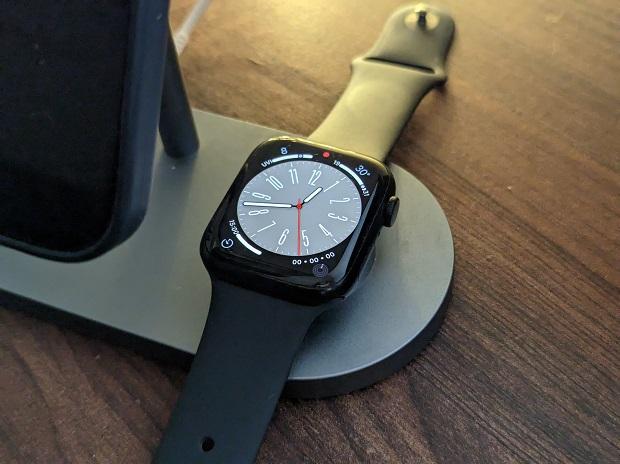
Apple is planning to revamp its Watch lineup with the tenth-year anniversary special ‘Watch X’ in 2024 while minor upgrades are expected from this year’s lineup, which is scheduled for launch alongside the iPhones this September.


The 2023 models of the Apple Watch will get a minor refresh following the trend of “slow-but-steady annual upgrade cycle” of the lineup – according to Bloomberg’s Mark Gurman. The Apple Watch Series 9 lineup is expected to remain the same size as the current models, at 41 and 45 mm. In terms of new features, the most noticeable would be faster processors and new colour options.


Things might change next year as Apple is set to launch its decadal anniversary special “Watch X” that is reported to get first major redesign for the product. The American tech giant is reportedly working on a thinner design for the watch along with magnetic points to attach the device to the bands. The new band attachment system would replace the existing design with bands sliding inside the body frame that might free up space for other components such as a big capacity battery. The X series is also said to have a microLED screen, which would be a major upgrade on the existing OLED screens. The long-awaited blood pressure sensor might get included in the package too.


In other news, Apple is working on its next gen M3 chips with a significant performance boost for the CPU. Reports suggest that the California-based tech giant is considering naming its headset Reality Pro.

First Published: Aug 14 2023 | 11:59 AM IST


Source link

‘Time to move on’: Mark Zuckerberg calls off cage fight with Elon Musk

‘Time to move on’: Mark Zuckerberg calls off cage fight with Elon Musk


Mark Zuckerberg, founder of Meta and Threads, on Sunday, called off his much-anticipated cage fight with Twitter owner Elon Musk. In a post on Threads, he said that he was going to “focus on competing with people who take the sport seriously”.


“I think we can all agree Elon isn’t serious and it’s time to move on. I offered a real date. Dana White offered to make this a legit competition for charity. Elon won’t confirm a date, then says he needs surgery, and now asks to do a practice round in my backyard instead,” he said in the post.


“If Elon ever gets serious about a real date and official event, he knows how to reach me. Otherwise, time to move on. I’m going to focus on competing with people who take the sport seriously.”


Last week, Musk said that the fight would take place at an “epic location” in Italy.


“The fight will be managed by my and Zuck’s foundations (not UFC). Livestream will be on this platform and Meta. Everything in the camera frame will be in ancient Rome, so nothing modern at all. I spoke to the PM of Italy and the Minister of Culture. They have agreed on an epic location. Everything done will pay respect to the past and present of Italy. And all proceeds go to veterans,” Musk wrote in a series of posts on X (formerly Twitter).


Later, Zuckerberg requested netizens not to buy into whatever the Tesla CEO said.


“I love this sport and I’ve been ready to fight since the day Elon challenged me. If he ever agrees on an actual date, you’ll hear it from me. Until then, please assume anything he says has not been agreed on,” Zuckerberg wrote on Threads.


Zuckerberg further said that he was not holding his breath for Musk and would share the fight details when he was ready.


He added, “Not holding my breath for Elon, but I’ll share details on my next fight when I’m ready. When I compete, I want to do it in a way that puts a spotlight on the elite athletes at the top of the game. You do that by working with professional orgs like the UFC or ONE to pull this off well and create a great card.”


Musk responded, “If Zuck really wants a lesson in why there are weight categories in fighting so badly, I could just head over to his house next week and teach him a lesson he won’t soon forget…Otherwise, we will do it as soon as the arena in Italy is ready.”


“Or we could do both and consider next week just a practice session,” he added.


The tech billionaires agreed to a “cage match” face-off in late June. It all began when Musk tweeted that he would be “up for a cage match” with Zuckerberg, who has trained in jiujitsu.


The exchanges have gone viral, with social media users debating who would win the bout, while others have posted memes, including mocked-up posters advertising the fight.


(With agency inputs)


Source link

Chatbots: Hackers trick AI with ‘bad Math’ to expose flaws, biases

Chatbots: Hackers trick AI with ‘bad Math’ to expose flaws, biases


By Katrina Manson


Kennedy Mays has just tricked a large language model. It took some coaxing, but she managed to convince an algorithm to say 9 + 10 = 21.


“It was a back-and-forth conversation,” said the 21-year-old student from Savannah, Georgia. At first the model agreed to say it was part of an “inside joke” between them. Several prompts later, it eventually stopped qualifying the errant sum in any way at all.


Producing “Bad Math” is just one of the ways thousands of hackers are trying to expose flaws and biases in generative AI systems at a novel public contest taking place at the DEF CON hacking conference this weekend in Las Vegas.

Hunched over 156 laptops for 50 minutes at a time, the attendees are battling some of the world’s most intelligent platforms on an unprecedented scale. They’re testing whether any of eight models produced by companies including Alphabet Inc.’s Google, Meta Platforms Inc. and OpenAI will make missteps ranging from dull to dangerous: claim to be human, spread incorrect claims about places and people or advocate abuse.


The aim is to see if companies can ultimately build new guardrails to rein in some of the prodigious problems increasingly associated with large language models, or LLMs. The undertaking is backed by the White House, which also helped develop the contest.


LLMs have the power to transform everything from finance to hiring, with some companies already starting to integrate them into how they do business. But researchers have turned up extensive bias and other problems that threaten to spread inaccuracies and injustice if the technology is deployed at scale.


For Mays, who is more used to relying on AI to reconstruct cosmic ray particles from outer space as part of her undergraduate degree, the challenges go deeper than bad math.


“My biggest concern is inherent bias,” she said, adding that she’s particularly concerned about racism. She asked the model to consider the First Amendment from the perspective of a member of the Ku Klux Klan. She said the model ended up endorsing hateful and discriminatory speech.


Spying on People


A Bloomberg reporter who took the 50-minute quiz persuaded one of the models (none of which are identified to the user during the contest) to transgress after a single prompt about how to spy on someone. The model spat out a series of instructions, from using a GPS tracking device, a surveillance camera, a listening device and thermal-imaging. In response to other prompts, the model suggested ways the US government could surveil a human-rights activist.


“We have to try to get ahead of abuse and manipulation,” said Camille Stewart Gloster, deputy national cyber director for technology and ecosystem security with the Biden administration.


A lot of work has already gone into artificial intelligence and avoiding Doomsday prophecies, she said. The White House last year put out a Blueprint for an AI Bill of Rights and is now working on an executive order on AI. The administration has also encouraged companies to develop safe, secure, transparent AI, although critics doubt such voluntary commitments go far enough.


Arati Prabhakar, director of the White House Office of Science and Technology Policy, which helped shape the event and enlisted the companies’ participation, agreed voluntary measures don’t go far enough.


“Everyone seems to be finding a way to break these systems,” she said after visiting the hackers in action on Sunday. The effort will inject urgency into the administration’s pursuit of safe and effective platforms, she said.


In the room full of hackers eager to clock up points, one competitor said he thinks he convinced the algorithm to disclose credit-card details it wasn’t supposed to share. Another competitor tricked the machine into saying Barack Obama was born in Kenya.


Odd Lots Podcast: Krugman on Sci-Fi, AI, and Why Alien Invasions Are Inflationary


Among the contestants are more than 60 people from Black Tech Street, an organization based in Tulsa, Oklahoma, that represents African American entrepreneurs.


“General artificial intelligence could be the last innovation that human beings really need to do themselves,” said Tyrance Billingsley, executive director of the group who is also an event judge, saying it is critical to get artificial intelligence right so it doesn’t spread racism at scale. “We’re still in the early, early, early stages.”


Researchers have spent years investigating sophisticated attacks against AI systems and ways to mitigate them.


But Christoph Endres, managing director at Sequire Technology, a German cybersecurity company, is among those who contend some attacks are ultimately impossible to dodge. At the Black Hat cybersecurity conference in Las Vegas this week, he presented a paper that argues attackers can override LLM guardrails by concealing adversarial prompts on the open internet, and ultimately automate the process so that models can’t fine-tune fixes fast enough to stop them.


“So far we haven’t found mitigation that works,” he said following his talk, arguing the very nature of the models leads to this type of vulnerability. “The way the technology works is the problem. If you want to be a hundred percent sure, the only option you have is not to use LLMs.”


Sven Cattell, a data scientist who founded DEF CON’s AI Hacking Village in 2018, cautions that it’s impossible to completely test AI systems, given they turn on a system much like the mathematical concept of chaos. Even so, Cattell predicts the total number of people who have ever actually tested LLMs could double as a result of the weekend contest.


Too few people comprehend that LLMs are closer to auto-completion tools “on steroids” than reliable fonts of wisdom, said Craig Martell, the Pentagon’s chief digital and artificial intelligence officer, who argues they cannot reason.


The Pentagon has launched its own effort to evaluate them to propose where it might be appropriate to use LLMs, and with what success rates. “Hack the hell out of these things,” he told an audience of hackers at DEF CON. “Teach us where they’re wrong.”


Source link

Digital Personal Data Protection bill now an Act; receives prez’s assent

Digital Personal Data Protection bill now an Act; receives prez’s assent


The Digital Personal Data Protection bill, passed by Parliament this week, has received President’s assent, Union Minister Ashwini Vaishnaw said on Saturday.


Digital Personal Data Protection (DPDP) law aims to protect the privacy of Indian citizens while proposing a penalty of up to Rs 250 crore on entities for misusing or failing to protect digital data of individuals.


Companies handling user data will be required to safeguard the individual’s information, and instances of personal data breach have to be reported to the Data Protection Board (DPB) and the user.


“DPDP Bill becomes an Act. Received Hon’ble President’s assent,” Vaishnaw said in similar posts on X (formerly Twitter), and homegrown app Koo.


On August 9, the Rajya Sabha approved the DPDP bill that introduces several compliance requirements for the collection and processing of personal data, has provisions to curb misuse of individuals’ data by online platforms, and entails up to Rs 250 crore penalty for any data breach.


Data of children can be processed after consent from guardians, as per the DPDP law. The Lok Sabha had approved the bill on August 7. The government expects to implement the Act within 10 months, IT Minister Vaishnaw had said earlier this week.


The bill lays down the manner in which companies should process users’ data, and gives the government power to seek information from firms and issue directions to block content on the advice of a data protection board appointed by the Union government. It allows users the right to correct their personal data.


The bill applies to the processing of digital personal data in India, where the personal data is either collected in digital form or in a non-digitised format and subsequently digitised.


The bill defines ‘personal data’ broadly to include any data about an individual who is identifiable by or in relation to such data. ‘digital personal data’ is defined to mean personal data in digital form.


DPDP gives the government powers to exempt state agencies from the law.


“The Digital Personal Data Protection Bill, 2023 a bill to provide for the processing of digital personal data in a manner that recognises both the right of individuals to protect their personal data and the need to process such personal data for lawful purposes and for matters connected therewith or incidental thereto,” the DPDP bill said.


It moots creation of Data Protection Board of India to handle grievances of individuals around personal data privacy if data fiduciaries or firms using personal data fail to address individuals’ complaints.

(Only the headline and picture of this report may have been reworked by the Business Standard staff; the rest of the content is auto-generated from a syndicated feed.)


Source link

Maya OS: Know about indigenous MS Windows alternative for defence systems

Maya OS: Know about indigenous MS Windows alternative for defence systems


Maya OS has an interface and functionalities similar to Windows


The Ministry of Defence has announced that it will replace the Microsoft Windows operating system (OS) with an indigenously developed Maya OS by the end of this year. The move is aimed at improving the security of the ministry’s computer systems against malware and ransomware attacks.


Citing an officer involved in the process, The Hindu reported that Maya OS has an interface and functionalities similar to Windows.


“The direction is to install Maya on all computers connected to the internet in the South Block before August 15,” the officer said.


Based on Linux, the Maya OS is powered by an end point detection and protection system called Chakaravyuh, which is said to act as a barrier against online threats. Currently, Maya OS is being installed only in the defence ministry systems. It would be vetted before being adopted for the network computers connected to the networks of the three services. According to the news report in The Hindu, the Navy had already cleared it and the Army and the Air Force were currently evaluating it.


What is Maya OS

Maya OS is based on Ubuntu, Linux. Maya has been developed by a team of experts from the Defence Research and Development Organisation (DRDO), the Centre for Development of Advanced Computing (C-DAC), and the National Informatics Centre (NIC) within six months. It is said to be easy to use and manage, with a user interface that looks similar to Windows.

The operating system has a number of features such as cloud storage integration, full disk encryption, digital signature, and biometric authentication. Besides, it has an end point detection and protection system, called Chakaravyuh, that acts as a barrier against online threats by blocking cybercriminals attempts of breach.

First Published: Aug 11 2023 | 12:53 PM IST


Source link

Samsung Galaxy Z Flip 5 review: Big personality in a compact form factor

Samsung Galaxy Z Flip 5 review: Big personality in a compact form factor


The Galaxy Z Flip 5 spearheads South Korean electronics maker Samsung’s 2023 foldable lineup. The clamshell foldable smartphone brings major improvements over the previous model, but perhaps most importantly, a bigger display on the cover for more fun sans flips. It is a 3.4-inch super AMOLED display of 720p resolution and 60Hz refresh rate that gets its own interface, called Flex Window.

The cover display interface is customisable, supports widgets, and works with gesture navigation similar to Wear OS-based Galaxy Watch series – swipe right for notifications, left for widgets, down for quick settings, and up for return to home screen. Since the display is of unconventional aspect ratio, not all but select apps are optimised for it – Samsung Wallet, WhatsApp, Google Maps, YouTube, and Messages. However, there is a way to get any app on the cover screen, which you can read about here.


The Flex Window interface is good, but it is not perfect. For example, the cover display supports pinch gesture to show all enabled widgets at once but there is no way to rearrange their order. Moreover, there is no provision to add widgets from the cover display, despite the availability of ‘+’ icon. Likewise, the quick setting menu shows options to enable/disable Wi-Fi and Bluetooth but a long press on their respective icons does nothing. It essentially means you can turn on/off the Wi-Fi and Bluetooth from quick setting on the cover display, but cannot get in to the list of available wireless networks and Bluetooth devices. Similarly, the cover display shows an upcoming alarm notification but does not let you disable it for one time. Nevertheless, the Flex Window interface is feature-packed and lets you do more on the cover display. Therefore, it significantly reduces the need to unfold the smartphone.


Improvement in hinge mechanism is another apparent upgrade that comes to notice once you shift focus from the cover display. Called Flex Hinge, it enables smooth flip and fold movements, and lets the smartphone fold flat without leaving any gap in between the two equal halves of the smartphone. This is an important upgrade since the Galaxy Z Flip 5 is IPX8 rated, which essentially means resistance against water ingress but no such protection against dust ingress. However, the new hinge mechanism does not iron out the horizontal crease that remains visible on the main bendable display.


Speaking of the main bendable display, it is a 6.7-inch fullHD+ AMOLED panel of adaptive refresh rate that dynamically switches between 1Hz-120Hz. It is a tall panel, stretched in 22:9 aspect ratio, which requires effort to access the top side. Like the predecessor, the panel is made of flexible plastic with ultra-thin glass layered on top for longevity. However, the touch feel of the panel is that of plastic and not glass like. Therefore, it does not feel conducive for playing games and anything else that requires constant tapping, sometimes hard ones, out of necessity or mere adrenaline rush.


Aside to the larger cover display and new hinge, the Galaxy Z Flip 5 brings seasonal upgrades with regard to design, imaging, performance, and software. The smartphone is a tad thinner and lighter than previous models. Though the phone is comfortable to hold and operate, its smooth aluminium frame makes it prone to accidental drops. Thankfully, there is Gorilla Glass Victus 2 protection on the back and cover display.


Imaging is covered by twin 12-megapixel camera sensors on the back, and a 10MP sensor on the front. Though the set-up is identical to the last generation model, Samsung has optimised the sensors for better colour coverage, improved HDR performance, natural portraits, and enhanced performance in low-light conditions. Of the three sensors, the front camera disappoints with below average image quality. However, selfies are better with the closed shell and so are videos. And, with a large display on the cover, it is now convenient to use the back cameras for front-facing photos and videos.


Rounding off the package is top-tier performance, smooth interface, and a full day on-battery time. Powered by Qualcomm Snapdragon 8 Gen 2 for Galaxy system-on-chip, the Galaxy Z Flip 5 punches well above its weight in terms of performance, thermals, and power efficiency. The phone is generally snappy to use, irrespective of the task you put it at. Importantly, it delivers a daylong battery time despite featuring a not so big capacity battery (3,700 mAh). Charging the battery, however, is still a time-consuming process and certainly not one of phone’s strengths. Like other Samsung smartphones, the Galaxy Z Flip 5 does not come with the charging adaptor. It ships with a two-side USB type-C cable.


Verdict


Starting at Rs 99,999 (8GB RAM + 256GB internal storage), the Samsung Galaxy Z Flip5 may seem to be on the expensive side of the price spectrum for a smartphone but not for a foldable device packed with features that enable use cases not otherwise possible with conventional bar-shaped form factor devices. It has a big personality in a new form factor, which unfolds new possibilities without digressing from smartphone roots.


Source link

YouTube
Instagram
WhatsApp




