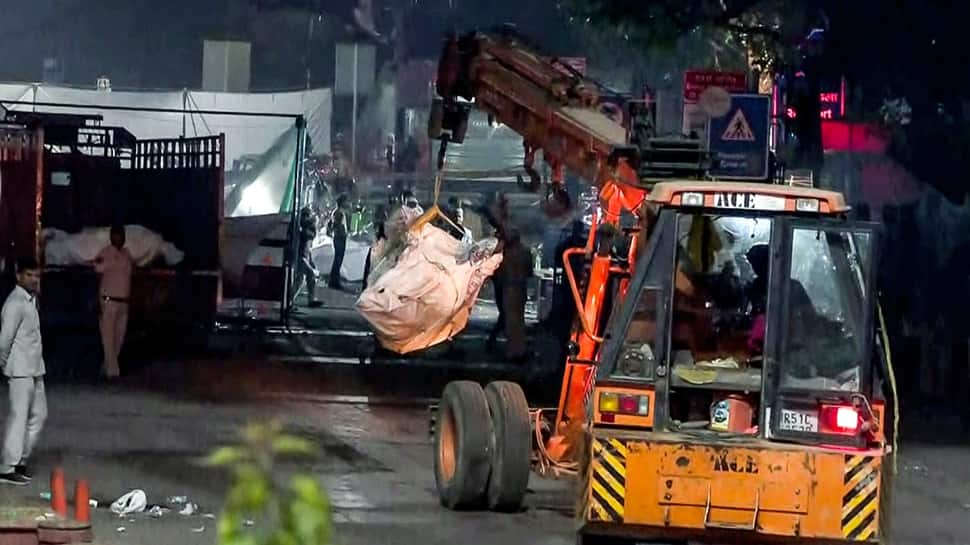
Jammu and Kashmir on high alert amid input of possible terrorist attack

Jammu and Kashmir on high alert amid input of possible terrorist attack


Jammu and Kashmir is currently on high alert following specific intelligence intercepts warning of major IED attacks targeting security convoys or movements on highways and in crowded areas. 

Intelligence inputs indicate that terror groups are planning major IED attacks specifically targeting Army, CRPF, and J&K Police convoys or their other movements. The threat is serious for the next 72 hours, starting from today. 

Agencies fear a tactic where an IED blast is immediately followed by indiscriminate firing to maximize casualties, potentially drawing responders into an ambush. 


Add Zee News as a Preferred Source


There is no official confirmation yet on which terror group may be behind the planned attack, as the alert does not name any specific group. However, sources point toward Pakistan-backed modules like Jaish-e-Mohammed (JeM) or Lashkar-e-Taiba (LeT) or their offshoots like The Resistance Front (TRF). 

Keeping in view the intensity of the threat, all security forces have been asked to take strict precautionary measures to mitigate risks. 

Forces have been advised to limit non-essential patrols and movement. Two days of dry days for security convoys or movements have been issued; no security forces convoy will do movement on any highway, be Jammu Kashmir highway, the Srinagar Leh Highway, the Srinagar-Baramullah, Srinagar- Kupwara, Srinagar-Uri highway. 

Mandatory use of bulletproof vehicles and bulletproof clothing for soldiers for all travel and operations has been made essential if movement is done on highways, towns, cities, and on checkpoints where frisking is being done. 

Mobile checkpoints have been established in crowded areas of cities; every passing vehicle and bike is being properly checked and searched. People have been asked to remain vigilant if any suspicious activity, movement, person, or vehicle is noticed; they have been asked to inform the nearest police stations or camps.

There is heightened focus on sanitising routes, camps, and installations to detect planted explosives. Surveillance has also been intensified along the Line of Control (LoC) and the International Border. Terrorists earlier also tried to do an IED attack, but alert forces foiled the attack in time. 

In February, security forces successfully detected and destroyed IEDs in Baramullah, Janbazpora, and Safapora in north Kashmir. 

Meanwhile, a Pakistani terrorist was recently eliminated during a foiled infiltration bid in the Uri sector on the night of March 14-15, 2026. Over the last 24 hours, massive searches operation were also launched in forest areas and villages living near the forest in Kashmir-Jammu, and in the Chenab Valley. 

Furthermore, a joint cordon and search operation was also launched by SOG Keller, CRPF 14th BN, and 20 RR in the forest areas and adjacent villages of Dunadoo, Pehlipora, Zampathri, Batfojan, and Shukroo in Shopian district.


Source link

Delhi CM Rekha Gupta inaugurates eye center in Shalimar Bagh

Delhi CM Rekha Gupta inaugurates eye center in Shalimar Bagh


Delhi Chief Minister Rekha Gupta today inaugurated an eye care centre in Shalimar Bagh. Appreciating the initiative by the Lions Club on the auspicious occasion of Ram Navami, she termed it a significant step towards public service.

The Chief Minister stated that the health sector has remained the government’s top priority over the past year. She added that Rs 12,645 crore has been allocated for healthcare out of the historic Rs 1,03,700 crore budget this year.

Earlier on Thursday, CM Gupta performed ‘Kanya Pujan’ in Pitampura and distributed bicycles to around 1,000 girl students from nine schools, reiterating her government’s commitment to ensuring uninterrupted education for girls in the national capital. 


Add Zee News as a Preferred Source


Addressing reporters, CM Gupta said the initiative aims to remove barriers that often prevent girls from continuing their studies.

“Every daughter in Delhi can complete her education without any hindrance, complete her schooling, graduate, and become what she wants to be. The government will work to remove all obstacles in her way,” she said.

Highlighting mobility challenges faced by schoolgirls, she added, “Many girls face challenges while travelling to and from school. Through this ‘Vidya Vahini’ initiative, we will provide bicycles to girls entering Class 9 so that they can commute easily during their school years.”

The Chief Minister also lauded girls as embodiments of divine strength, comparing them to forms of Durga and Saraswati, and expressed confidence in their future contributions.

“They will honour this city and our nation in the future. On behalf of the government, I commend each of my daughters and extend my heartfelt blessings to them. May she advance and thrive significantly, and may she become the person she aspires to be. The government will ensure she has all the support and resources necessary to finish her education,” she said.


Source link

Heavy security in Uttam Nagar for Ram Navami; 650 police personnel, CRPF units deployed

Heavy security in Uttam Nagar for Ram Navami; 650 police personnel, CRPF units deployed


The security grid in Uttam Nagar has been significantly strengthened on Thursday for Ram Navami celebrations, with authorities deploying extensive police and paramilitary forces to maintain law and order. A total of 650 police personnel have been stationed across the area, supported by 12 units of paramilitary forces, including CRPF personnel, to ensure a multi-layered security arrangement.

To closely monitor the situation, 25 special pickets have been set up at strategic and sensitive locations such as Uttam Nagar Thana Road, Kalai Basti, Kabristan/Eidgah Road, and Balmiki Mandir Chowk. Joint teams from Uttam Nagar, Dabri, and Bindapur police stations have been deployed, with personnel positioned at key intersections and narrow lanes to prevent crowding and any untoward incidents.

In addition to the visible deployment, the Dwarka District Operations Cell has also activated undercover teams in plain clothes. These teams are tasked with gathering real-time intelligence and identifying any suspicious activity, ensuring swift preventive action if required.


Add Zee News as a Preferred Source


The heightened security measures come in the wake of the recent Tarun murder case, in which a 26-year-old man was killed during a dispute on Holi.

Although no untoward incidents have been reported since Eid, officials said the heavy deployment is aimed at preventing any recurrence of tensions. So far, 14 arrests have been made in connection with the case, and continuous patrolling is being carried out in the area.

Authorities have reiterated that strict action will be taken against any attempts to disrupt peace during the festival. Senior police officials stated that maintaining communal harmony and ensuring the safety of residents remain the top priorities.

Ram Navami, which marks the birth of Lord Rama, the seventh incarnation of Lord Vishnu, is being celebrated across the country with great devotion and enthusiasm. The festival symbolises the victory of righteousness and truth over evil and is observed with prayers, fasting, and the recitation of religious texts.

According to the Hindu calendar, Ram Navami falls on the Navami Tithi of the Shukla Paksha in the month of Chaitra. This year, the festival is being observed on March 26, as the auspicious Madhyahna muhurat falls on this day. The Navami Tithi began at 11:48 AM on March 26 and will conclude at 10:06 AM on March 27.


Source link

To avoid another Pahalgam, Kashmir tourist places turn into high-security zones

To avoid another Pahalgam, Kashmir tourist places turn into high-security zones


From gardens and lakes to pastures and forests, every tourist destination in Kashmir is under strict security surveillance this year to prevent incidents like the Pahalgam terror attack. The Ministry of Home Affairs (MHA) has issued orders for heightened vigilance in and around tourist locations. Two days ago, during a high-level security review chaired by the Union Home Secretary, several specific measures were institutionalised to prevent a recurrence of the 2025 Pahalgam attack. One major directive from the MHA is to establish a high-tech security grid at tourist destinations across Jammu and Kashmir for the 2026 tourist season.

The directive comes at a time when the Kashmir tourism season for 2026 has opened with great enthusiasm. Tourism in the region is showing strong signs of recovery after a prolonged setback following the Pahalgam terror attack on tourists.

Security has been intensified at all prominent destinations that attract large numbers of visitors. Places such as Gulmarg in north Kashmir, Sonamarg in central Kashmir, and Pahalgam in south Kashmir, along with dozens of other smaller destinations, are under tight security. In Srinagar, special focus has been placed on high-footfall areas such as Dal Lake and Asia’s largest Tulip Garden. Personnel from the Jammu and Kashmir Police, the Central Reserve Police Force (CRPF), other paramilitary forces, and intelligence agencies—along with plainclothes officers—have been deployed in large numbers at strategic locations across the Valley, particularly in Srinagar.


Add Zee News as a Preferred Source


At the Tulip Garden, which opened just a few days ago and has witnessed a massive influx of visitors, security arrangements have been significantly scaled up. All entry and exit points are under strict surveillance, with a visible presence of armed personnel to prevent any untoward incidents.

Avinash Mishra, a tourist at the Tulip Garden, said, “Extensive security arrangements have been made. Wherever I go, I see police, army, and CRPF personnel on duty. It feels very safe. This place is like paradise, and people should visit without fear. I came here with my family and children.”

Tourists visiting the Valley have expressed confidence in the enhanced security measures, appreciating the government’s efforts to ensure their safety.

Harshita from Allahabad, daughter of an army officer posted in the region, said, “We live near BB Cantonment, which is about 10 km from here. Along the entire route, I saw a large number of army personnel deployed to ensure the safety of visitors. It is a very commendable effort by the Indian government and the Army. I have visited around eight tourist places so far, including Gulmarg, Dal Lake, and now the Tulip Garden. At all these places, I found CRPF and J&K Police personnel fully equipped and ready to handle any situation.”

The renewed focus on security comes at a crucial time for Kashmir’s tourism sector, which has been recovering after being severely impacted by the Pahalgam terror attack in April 2025. In recent months, tourist inflow has steadily increased. To sustain this growth, major routes, including the Jammu–Srinagar National Highway (NH-44), have also been placed under robust security arrangements.

Shiv Pratap Singh, another tourist, said, “While travelling from Jammu, including through Pulwama, we saw security personnel at every step. I salute them for ensuring our safety. Yesterday, we visited Gulmarg, where we also saw army and CRPF presence. We feel very safe here. There is no fear. I want to tell everyone watching—please come, Kashmir is safe.”

Officials noted that the opening of the Tulip Garden has already drawn significant crowds, with around 88,000 visitors recorded within the first ten days. Nearly 1.5 lakh tourists have arrived in Kashmir since the onset of the spring bloom. The surge in tourist arrivals has been a key factor behind the decision to further tighten security across the Valley.

Sources said approximately 550 specialised Special Operations Group (SOG) personnel, trained in jungle and mountain warfare, have been deployed across snow-bound heights and dense forests in areas such as Gulmarg, Sonamarg, Pahalgam, and Yousmarg, as well as other remote locations. Besides this, specialised anti-fidayeen units of the J&K Police have been stationed at sensitive, high-footfall areas to respond to any potential attacks. Quick Response Teams (QRTs) and mobile units have also been positioned for immediate intervention across major tourist circuits.

Continuous monitoring is being carried out along transit routes, including the Jammu–Srinagar National Highway (NH-44).

An advisory has also been issued for visitors. All tourists must carry original identity documents (Aadhaar card or passport) for routine checks. Only postpaid SIM cards function in the region; prepaid SIM cards from outside Jammu and Kashmir are not operational. A 24/7 tourist helpline (8899941010 / 8899931010) has been set up for immediate assistance.


Source link

Punjab’s youngest beneficiary of Mukh Mantri Sehat Yojna is 1-year-old child: AAP Govt

Punjab’s youngest beneficiary of Mukh Mantri Sehat Yojna is 1-year-old child: AAP Govt


CHANDIGARH: The Aam Aadmi Party government in Punjab said that a growing number of newborns and young children are getting treatment under the Mukh Mantri Sehat Yojna. The Punjab government said that under the leadership of Punjab Chief Minister Bhagwant Singh Mann, the administration is ensuring that medical care begins without delay during critical moments.

In Sri Muktsar Sahib, a 1-year-old child, Khwaish, was admitted with pneumonia requiring urgent medical attention and received free treatment, said the government. In many such cases earlier, families would have had to arrange funds, complete documentation, or wait for approvals before treatment could begin. However, under the Mukh Mantri Sehat Yojna, that gap has been removed.

With the Sehat Card already in place, treatment was initiated immediately at Deep Hospital under Dr. Monika Garg, without any upfront payment. The family did not have to arrange money or go through verification steps, allowing doctors to begin treatment at a critical time. In cases involving young children, even short delays can lead to complications, but immediate access to treatment ensured that the child received timely care and recovered safely.


Add Zee News as a Preferred Source


Similar instances are being reported from districts such as Sangrur and Mansa, where newborns requiring specialised care, including treatment for low birth weight and other critical conditions, are receiving medical attention under the scheme without financial barriers. The increasing number of such cases reflects how access to treatment is becoming faster and more seamless for families across Punjab.

Highlighting the impact of the scheme, Punjab Minister of Health and Family Welfare Dr. Balbir Singh said, “Under the leadership of Chief Minister Bhagwant Singh Mann, the Mukh Mantri Sehat Yojna ensures that treatment is not delayed by financial or administrative hurdles. In cases like this, where a young child required urgent care, even a short delay can have serious consequences. The scheme removes that risk entirely.”

The scheme provides cashless health coverage of up to ?10 lakh per family annually, enabling access to treatment across empanelled government and private hospitals. With more than 26 lakh Sehat Cards already issued, patients are accessing treatment at over 900 empanelled hospitals, supported by more than 2,300 medical packages.

The growing number of newborn and child cases being treated under the scheme reflects a shift towards faster, more accessible healthcare delivery, where treatment begins without financial hesitation. The Punjab Government continues to encourage residents to enrol for the Sehat Card at designated centres to avail cashless treatment benefits under the Mukh Mantri Sehat Yojna.


Source link

Healthcare should reach every resident, not selected few: Dr. Balbir Singh on Mukh Mantri Sehat Yojna

Healthcare should reach every resident, not selected few: Dr. Balbir Singh on Mukh Mantri Sehat Yojna


CHANDIGARH: At a time when rising medical costs continue to push Indian families into financial distress, a stark contrast is emerging in how healthcare is being funded and delivered. While the Centre’s Ayushman Bharat allocates Rs 9,500 crore for a population of 140 crore, Punjab’s Mukh Mantri Sehat Yojna commits Rs 2,000 crore for just 3 crore residents, translating into nearly ten times higher investment per person. 

The difference is not just financial, but structural. Where the national scheme limits both eligibility and coverage at Rs 5 lakh, Punjab’s model extends Rs 10 lakh cashless healthcare to every resident without conditions. Under the leadership of Chief Minister Bhagwant Singh Mann, the Punjab Government has positioned universal healthcare not as a targeted benefit, but as a guaranteed right, ensuring that access to treatment is determined by need, not by inclusion in a government list.

For most Indian families, a medical emergency brings two immediate worries: how quickly treatment can begin, and how the cost will be managed. Addressing both concerns through a universal approach, the Punjab Government under the leadership of CM Bhagwant Singh Mann has allocated Rs 2,000 crore in the 2026–27 Budget for the Mukh Mantri Sehat Yojna (MMSY), extending cashless health coverage of up to Rs 10 lakh per family to nearly 3 crore residents across 65 lakh families.


Add Zee News as a Preferred Source


Unlike targeted schemes such as Ayushman Bharat, the Punjab model is built on universal coverage, ensuring that every resident is included without eligibility barriers.

The difference between the two approaches is fundamental. MMSY does not ask who qualifies. Every resident of Punjab is covered, regardless of income. Ayushman Bharat, launched in 2018, is limited to families identified as economically vulnerable through the SECC database. A large section of the population, particularly the lower and middle-income groups not captured in that database, continues to remain outside its ambit.

The extent of coverage further highlights this gap. Ayushman Bharat has offered Rs 5 lakh per family per year since its launch, a limit that has remained unchanged despite rising healthcare costs. MMSY doubles this coverage to Rs 10 lakh, while also extending protection to families who were previously excluded from government-backed healthcare altogether.

The difference is equally visible in financial commitment. The Central Government’s allocation of Rs 9,500 crore for a population of 140 crore contrasts with Punjab’s Rs 2,000 crore for 3 crore residents. On a per capita basis, Punjab’s investment is significantly higher, reflecting a clear prioritisation of accessible and comprehensive healthcare.

MMSY also expands the scope of treatment. Beneficiaries can access cashless care for a wide range of serious conditions, including heart disease, cancer, kidney ailments, orthopaedic procedures, and accident-related injuries, across 2,300 treatment packages. In comparison, Ayushman Bharat covers around 1,900 packages. The underlying principle is clear: treatment decisions are driven by medical need, not financial capacity.

The process of accessing the scheme marks another shift. Under Ayushman Bharat, families must first verify whether they are listed in the SECC database, and those excluded must navigate additional documentation to establish eligibility. In contrast, MMSY simplifies access. Residents can enrol at Seva Kendras or Common Service Centres, or apply online using Aadhaar or Voter ID, without the need for income certificates or occupation proof. To ensure wider reach, trained youth club members are conducting door-to-door campaigns, helping families register and receive their Sehat Cards at home.

For families previously outside the scope of government healthcare, the impact is already visible. In Moga, a 98-year-old woman, Mukhtiar Kaur, received specialised treatment, including chemotherapy-related care, fully covered under the scheme. At an age where continuity of care is critical, access through the Sehat Card ensured that treatment began without delay or financial stress.

Minister of Health and Family Welfare Dr. Balbir Singh said the scheme reflects a deliberate shift in policy direction. “Under the leadership of Chief Minister Bhagwant Singh Mann, the Mukh Mantri Sehat Yojna is built on a clear approach, that healthcare coverage should extend to every resident, not just a selected few. With higher per-person investment, Punjab is ensuring that access to treatment is defined by need, not eligibility or income,” he said.

With more than 9 lakh Sehat Cards already issued, beneficiaries are accessing treatment across a growing network of 900 empanelled hospitals, expanding the reach of healthcare across Punjab.

In a country where a single hospital bill can push families into debt, the contrast is no longer just administrative, it is philosophical. One model limits care through eligibility lists; the other guarantees it as a public right.


Source link

YouTube
Instagram
WhatsApp