आजोबांच्या हातातून निसटलेले बाळ पुन्हा सापडले?; व्हायरल झालेल्या फोटोचे सत्य काय

आजोबांच्या हातातून निसटलेले बाळ पुन्हा सापडले?; व्हायरल झालेल्या फोटोचे सत्य काय


कल्याणः बुधवारपासून सुरू असलेल्या पावसाने मुंबईचे (Mumbai Rain News) जनजीवन विस्कळीत झाले आहे. अंबरनाथ, बदलापूरमध्ये रेल्वे रुळांवर पाणी आल्याने मध्य रेल्वे विस्कळीत झाली होती. त्याचदरम्यान पावसामुळं लोकल अडकून पडलेल्या 6 महिन्यांच्या बाळाला घेऊन जात असताना बाळ हातातून वाहत्या नाल्यात पडले. आईच्या डोळ्यांदेखत बाळ वाहून गेले. 

सोशल मीडियावर फोटो व्हायरल 

कल्याण-ठाकुर्लीदरम्यान ही घटना घडली आहे. या बाळाचा शोध घेत असतानाच काल बाळ सापडल्याची चर्चा होती. सोशल मीडियावरदेखील तसे फोटोही व्हायरल होते आहे. मात्र, हे फोटो ठाकुर्लीतील घटनेचे नसल्याचे उघड झाले आहे. 

नाल्यात मुलगी वाहून गेली 

रिषिका रुमाले असं या चिमुकलीचे नाव आहे. रिषिका हिच्यावर मुंबईतील रुग्णालयात उपचार सुरु होते. तिची आई योगिता रुमाले ही बुधवारी नेहमीप्रमाणे रिषिकाला घेऊन रुग्णालयात गेली होती. दुपारी रुग्णालयात निघून घरी निघाली होती. कल्याण- अंबरनाथ लोकलने ती निघाली होती. त्याचदरम्यान कल्याण – ठाकुर्लीमार्गात तासाभराहून अधिक वेळ लोकल उभी होती. त्यामुळं ते गाडीतून उतरुन चालत निघाले. 

आजोबांचा पाय घसरला 

योगिताही तिच्या वडिलांसह रुळांवरुन चालत निघाली होती. रिषिकाला तिच्या आजोबांनी घेतलं होतं. मात्र लोकल नाल्याच्या जवळून जात असताना आजोबांचा पाय घसरला आणि त्यांच्या हातातून बाळ खाली पडलं. लेक पाण्यात पडलेली पाहताच योगिताने हंबरडा फोडला. घटनेची माहिती मिळताच कल्याण आणि डोंबिवली रेल्वे पोलिसांनी घटनास्थळी धाव घेतली. अग्निशमन दलादेखील घटनास्थळी पोहोचले. मात्र रात्री उशिरापर्यंत बाळाचा शोध लागला नाही. 

21 तासांनंतरही शोध सुरुच

21 तासांनंतरही चिमुकलीचा शोध लागला नाही. एन डी आर एफ, कल्याण डोंबिवली अग्निशमन विभागाचे पथकाचे ठाकुर्ली खाडी परिसरात शोध कार्य सुरूच आहे. एनडीआरएफच्या पथकाने बोटीच्या सहाय्याने बाळाचा शोध सुरु केला आहे. सोशल मीडियावर व्हायरल होत असलेला हा फोटो खोटे आहेत. अद्यापही मुलीचा शोध सुरु आहे. 

ठाकुर्लीच्या या घटनेमुळं एकच हळहळ व्यक्त करण्यात येत आहे. हा प्रसंगाचा व्हिडिओ सोशल मीडियावर व्हायरल होत आहे. तो पाहणाऱ्या प्रत्येकाच्याच अश्रूंचा बांध फुटला आहे. 


Source link

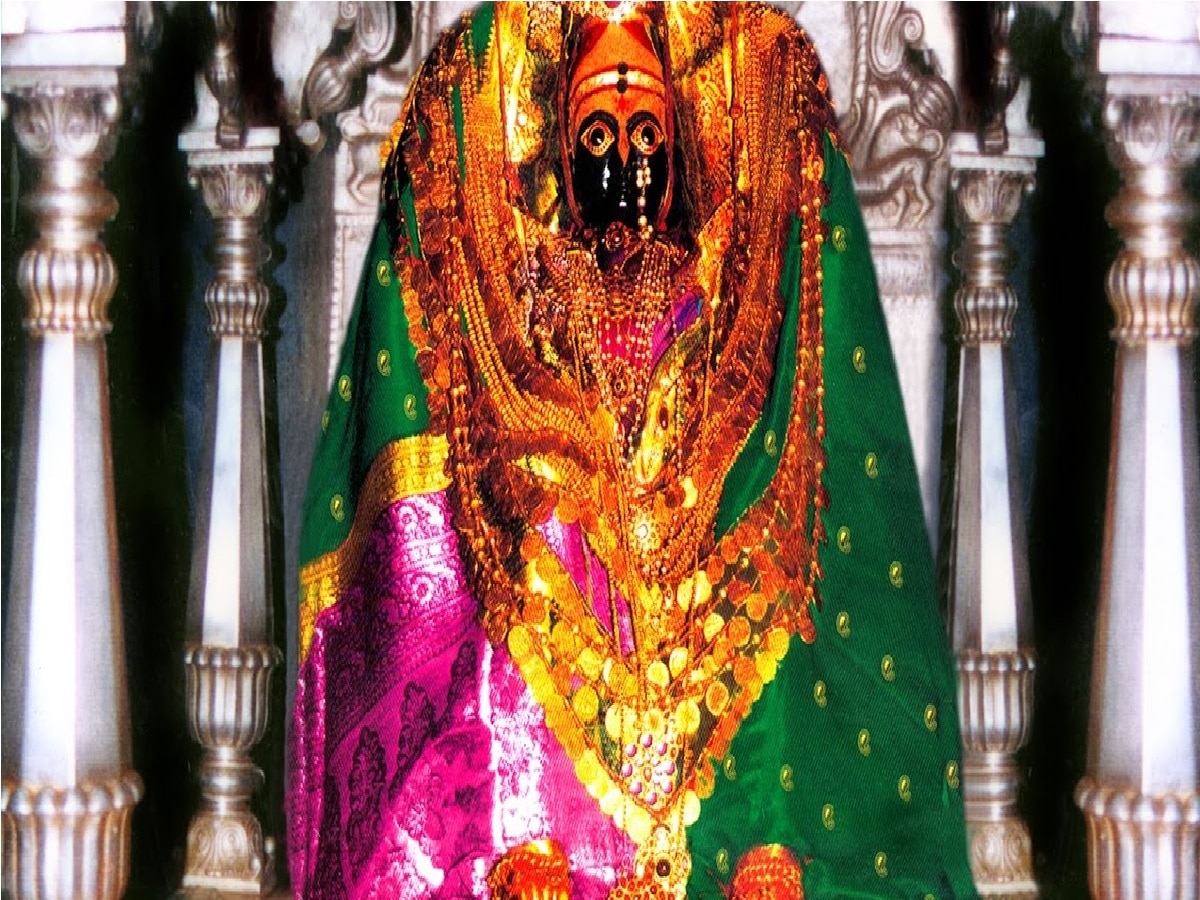
तुळजाभवानीचे मौल्यवान, शिवकालीन दागिने गायब; मोजणीत धक्कादायक बाब उघड

तुळजाभवानीचे मौल्यवान, शिवकालीन दागिने गायब; मोजणीत धक्कादायक बाब उघड


Tuljabhavani Temple Jewelry Missing : तुळजाभवानी मातेचे मौल्यवान आणि शिवकालीन दागिने गायब झाले आहेत. दागिन्यांच्या मोजणीत ही धक्कादायक बाब उघडकीस आली  आहे. देवीच्या खडावा, माणिक, मोती, पाचूचे 8 ते 10 मौल्यवान अलंकार गायब झाले आहेत. भाविकांनी तुळजाभवानीला वाहिलेल्या सोन्या चांदीच्या वस्तूंची मोजणी पूर्ण झाली. त्या दागिने मोजणीचा अहवाल जिल्हाधिका-यांना सादर झाला. त्यात ही धक्कादायक बाब समोर आली आहे. 
देवीच्या दागिन्यांच्या दुस-या क्रमांकाच्या डब्यात हे दागिने होते. ते नेमके कधी गायब झाले, याचा अंदाज बांधता येत नाही, असं पंच समितीनं आपल्या अहवालात म्हटलंय. हा अहवाल अद्याप जिल्ह्याधिका-यांनी स्वीकारलेला नाही. पुन्हा पडताळणी करून अहवाल सादर करण्याच्या सुचना करण्यात आल्याचं समजते आहे.

तुळजाभवानी मातेचे मौल्यवान अलंकार तसेच भाविकांनी वाहिलेल्या सोन्या-चांदीच्या वस्तूंची मोजणी पूर्ण होऊन तीन आठवडे लोटले. ही मोजणी पुर्ण झाल्यानंतर अत्यंत धक्कादायक बाब समोर आली असून दररोज वापरात असलेल्या 1 ते 7 क्रमाकांच्या डब्यापैकी क्रमांक 6 डब्यातले 8 ते 10 अलंकार गायब असल्याचे उघड झाले आहे. तर काही ठिकाणी नवीन अलंकार ठेवण्यात आले आहेत. यात देवीच्या खडावा, माणिक, मोती, पाचू आहेत. हे अलंकार पुरातन असल्याने या दागिन्यांचे मुल्यांकन करता येणार नाही. हे अलंकार कधी गायब झाले याचा आज अंदाज बांधताही येत नसून . शिवकालीन अलंकाराच्या मोजणीचा अहवाल सादर करण्याची 12 जुलै डेडलाइन होती. पंचकमीटीने अहवाल 18 जुलै रोजी सादर केला असून या अहवालात अनेक गंभीरबाबी समोर आल्या आहेत.

तुळजाभवानी मातेला दान केलेल्या सर्व दागिन्यांची जून महिन्यात मोजणी करण्यात आली. यावेळी तुळजाभवानी मातेच्या प्राचीन मौल्यवान अलंकारासह मातेला भाविकांनी वाहिलेल्या सोन्या-चांदीच्या वस्तूंची मोजदाद केली. मोजणीची संपूर्ण प्रक्रिया समिती सदस्यांच्या उपस्थितीत इन कॅमेरा पूर्ण केली.सर्व मौल्यवान अलंकारांची 1999 ची यादी, 1963 ची यादी तसेच 2010 च्या रजिस्टरप्रमाणे नोंदी घेण्यात आल्या. मोजणी पूर्ण झाल्यावर 1963 साली नोंदवलेल्या कांही शिवकालीन अलंकाराच्या नोंदी आढळून आलेल्या नाहीत. कांही पुरातन अलंकार काढून त्या ठिकाणी नवे कमी वजनाचे अलंकार ठेवले गेल्याचा पंच कमिटीला संशय आहे.

तुळजाभवानी मातेच्या ऐवजाची मोजणी प्रक्रिया सात जून रोजी प्रारंभ होऊन 23 जून रोजी प्रक्रिया पूर्ण झाली. या दरम्यान 3 ते 4 दिवस मोजणी बंद होती. प्रत्यक्ष मोजणी 10 ते 12 दिवस चालली. मोजणीनंतर तीन आठवडे लोटल्यानंतर समिती सदस्यांनी अहवाल सादर केला आहे. हा अहवाल अद्याप जिल्ह्याधिकार्यांनी स्विकारलेल्या नाही. पुन्हा पडताळणी करून अहवाल सादर करण्याच्या सुचना केल्या होत्या . मंदिर संस्थांच्या पंचांनी ही सगळी मोजणी ऑन कॅमेरा केली असून आता याचा अहवाल जिल्हाधिकारी डॉक्टर सचिन ओंबासे यांच्याकडे सुपूर्दकरण्यात आला आहे आता याच्यावर गायब असलेले दागिने व नव्याने जमा करण्यात आलेले दागिने याबाबत जिल्हाधिकारी काय कार्यवाही करतात हे पाहणं गरजेचे आहे.

तुळजाभवानी मंदिरातून 71 ऐतिहासिक नाणी आणि काही दागिने गायब 

महाराष्ट्राचं आराध्य दैवत असलेल्या तुळजाभवानी मंदिरातून ऐतिहासिक वस्तू गायब होत असल्याची तक्रार याआधी देखील नोंदवण्यात आली होती. अतिप्राचीन दागिन्यांचा गैरव्यवहार केल्याचा आरोप करण्यात आला होता. मंदिरातून 71 ऐतिहासिक नाणी आणि काही दागिने गायब झाल्याचा आरोप करण्यात आला होता. यास अधिकारी जबाबदार असल्याची तक्रार जिल्हाधिकाऱ्यांकडे करण्यात आली होती. 

मुंबईत संकटमोचन हनुमान मंदिरात चोरी

मुंबईत्या घाटकोपर पोलीस ठाणे हद्दीत असल्फा येथील संकटमोचन हनुमान मंदिरातून सोनं-चांदीचे दागिने चोरणाऱ्याला 4 महिन्यांच्या तपासानंतर अखेर अटक झाली. मंदिराचे महंत रामदासजी महाराज कुंभमेळ्यासाठी गेले होते. त्यावेळी विकास तिवारी याला काही दिवसांसाठी पुरारी नेमण्यात आलं होतं. मात्र तो दागिने चोरून फरार झाला होता. महंतांना आरोपीच्या नातलगांकडून धमकीही दिली जात होती. अखेर पोलिसांनी आरोपीला उत्तर प्रदेशातून ताब्यात घेतलं. 

सांगलीच्या गणपती मंदिरात चोरी

सांगलीच्या हरिपूर इथल्या बागेत असणा-या गणपती मंदिरात चोरी झाली. रात्री दोन वाजता हा प्रकार घडला. गाभा-यातील लोखंडी कपाट तोडून गणपतीचे एक लाख रुपये किंमतीचे दागिने चोरट्यांनी लंपास केलेत. घटनेनंतर सांगली ग्रामीण पोलीस घटनास्थळी दाखल झालेत. तसंच ठसे तज्ज्ञ, श्वान पथकही घटनास्थळी पोहचलेत. 


Source link

Chandrayaan-3 mission will carry hopes and dreams of our nation: PM Modi

Chandrayaan-3 mission will carry hopes and dreams of our nation: PM Modi


The Chandrayaan-3 mission will carry the hopes and dreams of our nation, Prime Minister Narendra Modi said on Friday, lauding Indian scientists hours before the launch of India’s third lunar mission.

Till Chandrayaan-1, the moon was believed to be a bone-dry, geologically inactive, and uninhabitable celestial body while it is now seen as a dynamic and geologically active body with the presence of water and sub-surface ice, he said on Twitter.

Maybe in the future, it can be potentially inhabited, the Prime Minister added.

Modi tweeted, “14th July 2023 will always be etched in golden letters as far as India’s space sector is concerned. Chandrayaan-3, our third lunar mission, will embark on its journey.” He noted that Chandrayaan-3 will be inserted into the lunar transfer trajectory after the orbit raising manoeuvres.   

Covering over 3,00,000 km, it will reach the moon in the coming weeks. Scientific instruments onboard will study the moon’s surface and enhance our knowledge, he said.

“Thanks to our scientists, India has a very rich history in the space sector. Chandrayaan-1 is considered to be a path breaker among global lunar missions as it confirmed the presence of water molecules on the moon. It featured in over 200 scientific publications around the world,” Modi said.

Giving details of the history of India’s moon mission, the Prime Minister said Chandrayaan-2 was equally pathbreaking because data from the Orbiter associated with it detected the presence of chromium, manganese, and sodium for the first time through remote sensing.

“This will also provide more insights into the moon’s magmatic evolution. The key scientific outcomes from Chandrayaan 2 include the first-ever global map for lunar sodium, enhancing knowledge on crater size distribution, unambiguous detection of lunar surface water ice with IIRS instrument, and more. This Mission has featured in almost 50 publications,” he said.

 Modi urged people to know more about this mission and the strides India has made in space, science, and innovation. “It will make you all very proud,” he added.


Source link

IISc develops super flexible composite semiconductor for next-gen tech

IISc develops super flexible composite semiconductor for next-gen tech


The Indian Institute of Science (IISc)‘s Department of Materials Engineering has created a highly flexible composite semiconductor material that holds potential for various applications in next-generation technologies such as flexible or curved displays, foldable phones, and wearable electronics.

Traditional semiconductor devices, such as transistors, are either made of amorphous silicon or amorphous oxides, both of which are inflexible and not strain tolerant at all. Adding polymers to the oxide semiconductors may increase their flexibility, but there is a limit to how much can be added without compromising the semiconductor’s performance, said the researchers.

The current study, published in Advanced Materials Technologies, found a way to fabricate a composite containing a significant amount of polymer — up to 40 per cent of the material weight — using a solution-process technique, specifically inkjet printing.

In contrast, previous studies have reported only up to 1-2 per cent polymer addition. Additionally, the approach enabled the semiconducting properties of the oxide semiconductor to remain unaltered with the polymer addition. The large quantity of polymer also made the composite semiconductor highly flexible and foldable without deteriorating its performance.

Composition of composite semiconductor

The composite semiconductor is made up of two materials: a water-insoluble polymer such as ethyl cellulose that provides flexibility, and indium oxide, a semiconductor that brings electronic transport properties.

According to the study, the key to forming these connected pathways is the choice of the right kind of water-insoluble polymer that does not mix with the oxide lattice when the oxide semiconductor is being fabricated. “This ‘phase separation’ and the formation of polymer-rich islands help in crack arrest, making it super flexible,” said Subho Dasgupta, Associate Professor in the Department of Materials Engineering, and corresponding author of the study.

Semiconductor materials are usually fabricated using deposition techniques such as sputtering. Instead, the team used inkjet printing to deposit their material onto various flexible substrates ranging from plastics to paper.

“Sometimes it is very difficult to get a continuous and homogeneous film. Therefore, we had to optimise certain protocols, for example, preheating the printed semiconductor layer on the Kapton substrate prior to high-temperature annealing,” explains first author Mitta Divya, former PhD student at the Department of Materials Engineering and currently a postdoc at King Abdullah University of Science and Technology (KAUST), Saudi Arabia.

Similarly, ensuring the right environmental conditions under which the ink can be printed is another challenge. “If the humidity is too low, you can’t print, because the ink dries up within the nozzle,” says Subho Dasgupta.

Going forward, such printed semiconductors can be used to fabricate fully printed and flexible television screens, wearables, and large electronic billboards alongside printed organic light emitting diode (OLED) display front-ends.

Moreover, these printed semiconductors will be low-cost and easy to manufacture, which could potentially revolutionise the display industry. The team of researchers has obtained a patent for their material and plans to test its shelf-life and quality control from device to device before it can be scaled up for mass production. They also plan to look for other polymers that can help design such flexible semiconductors.


Source link

An eco-friendly answer to diesel engine roars to life

An eco-friendly answer to diesel engine roars to life


India’s first 100 per cent dimethyl ether (DME) fuelled vehicle for on- and off-road applications has been developed, initiating a new chapter in the quest for a sustainable alternative-fuel transport system.

DME is renewable, can be produced indigenously, and several countries like Japan, the US, China, Sweden, Denmark, and Korea are already using it to power their vehicles. However, the use of DME in internal combustion (IC) engines remains uncharted territory in the Indian subcontinent.

Businessline had on March 18, 2020, reported on a collaborative research between IIT-Kanpur and Chennai-based tractor manufacturer TAFE to develop a tractor that can run on DME. The research had received a grant of ₹1.6 crore from the government’s Imprint-2 programme.

The research has come to fruition now. Dr Avinash Kumar Aggarwal and Prof Tarun Gupta of IIT-Kanpur have developed a 100 per cent DME-fuelled engine with a mechanical fuel injection system. “It exhibited higher thermal efficiency and lower emissions than the baseline diesel engine,” says a press release.

DME has properties similar to liquefied petroleum gas (LPG), and its usage can simultaneously reduce particulate matter and nitrogen oxide emissions. It is produced either by dehydration of methanol or from syn gas (a mixture of carbon monoxide and hydrogen). However, DME cannot be used in an unmodified diesel engine in higher proportions.

The newly innovated DME tractor is said to be a cost-effective and eco-friendly solution for agricultural applications. In addition, the simplified engine technology, which does not require expensive and hard-to-maintain emission control devices, is user-friendly, and compliant with stringent emission legislations. The exhaust from the DME-powered tractor is smokeless, thereby preserving ambient air quality.

DME-friendly design

The DME-fuelled engine emitted extremely low particulate and soot emissions and almost no smoke, even without expensive after-treatment devices, making it a viable alternative fuel and engine technology adaptable to the conventional diesel engines used in agricultural and transport sectors.

India’s oil import bill and greenhouse gas (GHG) emissions can be reduced by converting vast domestic coal reserves, low-value agricultural biomass waste, and municipal solid waste into methanol and DME for a variety of applications, including powering tractors and other vehicles.

It was found that certain additives enhanced DME’s lubricity. DME-compatible materials were used in the fuel injection equipment (FIE) — fuel supply and return lines — developed by the IIT-Kanpur researchers. Customised DME tanks were developed. The researchers used 3D computational modelling to determine the optimum FIE system design for DME induction. They then studied DME’s macroscopic and microscopic spray characteristics using high-speed imaging and phase Doppler interferometry (PDI). Based on these results, a dedicated FIE was developed for the DME-fuelled engine prototype. The DME engine was tested under full throttle performance (FTP) and part-throttle and part-load (PTPL) test conditions.

The DME-fuelled engine exhibited higher brake thermal efficiency. It produced negligible soot while significantly reducing hydrocarbon, carbon monoxide and carbon dioxide emissions. The results have been published in journals such as Energy Conversion and Management and Fuel. The engine prototype was installed in a tractor and successfully operated by the industrial partner, TAFE TMTL, Alwar, the release says.

DME vs DEE

Even as the DME technology is coming within reach, scientists are suggesting its sister — diethyl ether (DEE) — as a better alternative as it more resembles mineral diesel and can be more easily blended with diesel. This, in turn, would necessitate less tweaking of the existing engine. Dr Aggarwal has produced a scientific paper on DEE (published in Fuel magazine), too, which says that DEE requires merely recalibrating the fuel injection system.

DEE is an isomer (or another form) of butanol. With four carbon atoms and one oxygen atom, it belongs to the category of ‘oxygenated fuels’, which reduces carbon monoxide and soot emissions due to its shorter carbon chain and better ignition properties.

“Compared with mineral diesel, DEE’s most remarkable properties include a higher cetane number (>125), lower auto-ignition temperature, acceptable energy density, and wider flammability range,” says Dr Aggarwal in his paper. DEE has long been used as a cold-start performance improver for diesel engines. It is commonly used as an ignition improver for diesel engines since it thoroughly mixes with diesel.

More importantly, DEE is a renewable fuel if it is synthesised from ethanol, and is produced from low-value biomass feedstock through dehydration.

Dr Aggarwal also points to a flipside of DEE — its higher volatility increases the chances of ‘vapour lock’ in the fuel injection system. However, it is a promising green fuel.

In sum, both DME and DEE are vastly superior to mineral diesel.


Source link

YouTube
Instagram
WhatsApp