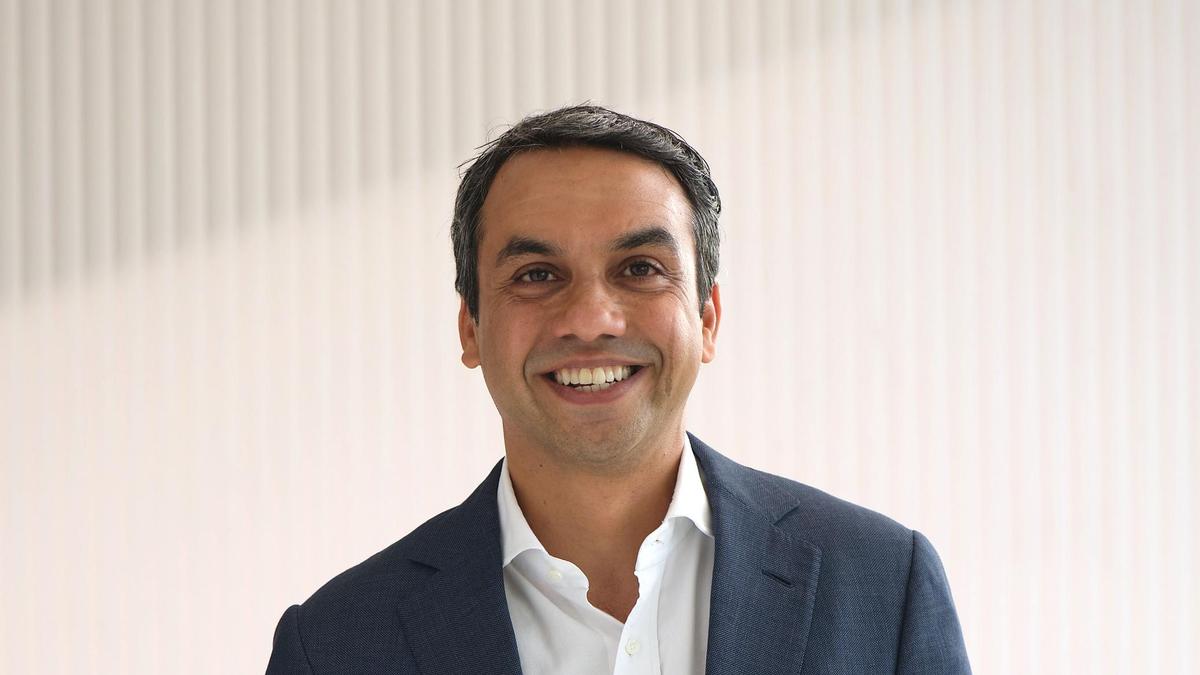
LEGACY-PLUS PUSH. Pirojsha Godrej, chairman-designate, Godrej Industries group
| Photo Credit:
SUPPLIED PIC
“The first person who should be fired if my performance is poor is me,” declares Pirojsha Godrej, the incoming chairman of the Godrej Industries group. Asked who in the company would dare to fire its top leader, Pirojsha points to the management and governance structure he reports to, underlining how the 129-year-old group is attempting to combine legacy values with sharper accountability, faster execution and disciplined scale-up.
That structure spans both family leadership and professional management. Pirojsha will oversee the broader Godrej group while continuing to chair Godrej Properties, Godrej Capital and Godrej Ventures. Burjis Godrej will chair Godrej Agrovet, while executives such as Sudhir Sitapati at Godrej Consumer Products and Sunil Kataria at Godrej Agrovet are being given larger operating mandates.
As the Godrej group prepares for a generational transition later this year, it is quietly reshaping how it operates, giving businesses greater independence, institutionalising board-led oversight and pushing each vertical to meet stricter return and execution thresholds. Internally, businesses are expected to deliver 18–20 per cent returns or demonstrate a credible path to leadership and scale. If they don’t then restructuring or even exits are on the table, irrespective of who is in charge.
Focus on the future
For decades, the Godrej group represented stability and stewardship-led growth.
“The key, as we see it, is combining the best of our past, the incredible set of values built consistently over generations, while avoiding the risk of looking backwards too much and keeping focus firmly on the opportunity ahead,” Pirojsha says
Portfolio discipline has been building for years under the next generation’s leadership. Businesses considered peripheral to the group’s long-term priorities were either exited, de-prioritised or realigned. For instance, Godrej sold premium grocery chain Nature’s Basket to the RP-Sanjiv Goenka group in 2019, while the 2024 family settlement formally separated capital-intensive businesses such as appliances, aerospace and heavy engineering into the Jamshyd Godrej-led Godrej Enterprises group.
At the same time, the group sharpened its focus on consumer products, real estate and financial services while increasingly shifting operating control toward professional executives rather than family-led management.
Capital first
Unlike conglomerates rushing into semiconductors, infrastructure and data centres, Godrej is avoiding sectors where capital intensity and execution complexity outweigh strategic advantage.
The group evaluated data centres but stayed away, citing technology risk and management bandwidth constraints, while newer bets such as Taj The Trees, a mixed-use community project in Vikhroli, Mumbai, aligns more closely with its strengths in urban real estate and premium consumption.
Fiscal discipline is most visible in Godrej Properties, which scaled up nationally through joint development agreements rather than warehousing large land banks. The company closed FY26 with ₹34,171 crore in booking value, making it India’s largest listed residential developer by sales value for the third consecutive year.
There’s a similar approach at Godrej Consumer Products, as managing director Sitapati initiated a “2040 backcast” strategy to identify categories that were likely to grow as India becomes wealthier and build portfolios around them.
That thinking drove bets in liquid detergents, fragrances and digital-first grooming categories, and acquisitions such as Raymond Consumer Care and men’s grooming brand Muuchstac. “Capital and management bandwidth are not infinite,” Pirojsha says, adding that the “99 per cent rule” will apply to all situations.
The ‘99% rule’
“Ninety-nine per cent of what the businesses do should not rely on each other,” elaborates Pirojsha. This highlights how the Godrej Industries group differs from other newer integrated conglomerate models.
So, while the businesses operate independently, the group centre focuses on talent, culture, sustainability and strategic alignment. The family name may be on the door, but the operating mandate is increasingly not a family matter.
Ironically, the biggest challenge identified by Pirojsha is not macroeconomic volatility but culture. Godrej Capital, which did not exist five years ago, now has around ₹25,000 crore worth assets under management. “We are a fast-growing organisation with a lot of new people coming in,” he says. “What we deliver is very important, but so is the ‘how’.”
That also explains why the Godrej group is relaunching its identity around the tag “Crafting Tomorrow Since 1897” — an attempt to balance continuity with reinvention. The transition is, ultimately, less about succession and more about redesigning how a legacy conglomerate functions in an India increasingly defined by scale, speed and execution.
The group has thrived for 129 years by being careful, deliberate and slow to overextend itself. What Pirojsha is attempting now is something more difficult: preserving the institutional trust while pushing the group to be faster, sharper and more performance-driven.
The redesign
When Nadir Godrej steps down in August to become chairman emeritus, the formal succession process will conclude. Operationally, however, the redesign is already underway. The 2024 split of the broader Godrej empire into the Godrej Industries group and Godrej Enterprises group removed ownership ambiguity and forced each side to define a clearer strategic identity.
“Values without performance is a bit empty, because our reputation and relevance ultimately depend on our ongoing results, not just what someone did in a previous generation,” Pirojsha sums up, on the need for a clear plan ahead.
More Like This
Published on May 11, 2026







