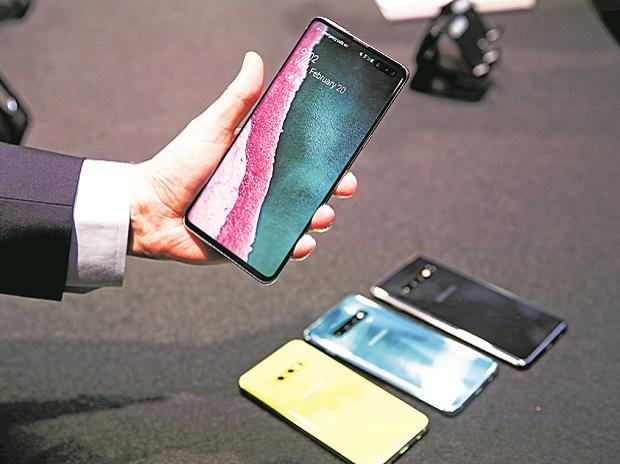
‘Make in India’ smartphones share reach 16% in Q1 with 44 mn units: Report

‘Make in India’ smartphones share reach 16% in Q1 with 44 mn units: Report


In order to meet the criteria for performance-linked incentive (PLI) scheme, ‘Make in India’ smartphone shipments grew 16 per cent year-on-year to reach 44 million units in the first quarter of this financial year, according to a new report.


The Indian government’s push with multiple PLI schemes has been showing a positive impact and “we saw increased local manufacturing share in product segments like smartwatch, TWS, neckband and tablet”, said Counterpoint Research.


led the ‘Make in India’ smartphone shipments with a 24 per cent share, followed by and .


Lava led the feature phone shipments with 21 per cent share.


recently announced the Vihaan initiative under which it plans to invest $60 million in the next five years to empower the local supply chain. also increased its manufacturing with the premium segment smartphones, especially the Galaxy S series,” said senior research analyst Prachir Singh.


In the smartphone segment, in-house manufacturing contributed to almost 66 per cent of the total ‘Make in India’ shipments in the June quarter, while the rest of the 34 per cent shipments came from third-party EMS (electronics manufacturing services) players.


Among the third-party EMS players, Bharat FIH, Dixon and DBG were the leading players during the quarter.


Padget Electronics (396 per cent YoY), Wistron (137 per cent YoY) and Lava (110 per cent YoY) were the fastest growing smartphone manufacturers during the quarter in terms of shipments.


“Also, we may see disbursement of PLI incentives during Q3 2022, which will further boost the local manufacturing sentiments,” said the report.


Optiemus leads the Made in India shipments for smartwatches with more than 75 per cent share.


In the wearable segment, TWS led in terms of domestic manufacturing with a 16 per cent contribution, followed by neckbands and smartwatches.


In TWS, Optiemus, Bharat FIH and Padget are the top three manufacturers.


In the neckband category, VVDN and Mivi have a 90 per cent share in the ‘Make in India’ shipments.


In the tablet category, Wingtech, and Dixon are the top players while in the TV category, Dixon, Radiant, Samsung and LG have a 50 per cent share.


“The government aims to make India an electronics manufacturing hub in the next four to five years. To help drive more initiatives under the themes of ‘Make in India’ and ‘Digital India’, the government, in its last budget, pushed the total allocation to $936.2 million,” said research analyst Priya Joseph.


–IANS


na/ksk/

(Only the headline and picture of this report may have been reworked by the Business Standard staff; the rest of the content is auto-generated from a syndicated feed.)

Dear Reader,

Business Standard has always strived hard to provide up-to-date information and commentary on developments that are of interest to you and have wider political and economic implications for the country and the world. Your encouragement and constant feedback on how to improve our offering have only made our resolve and commitment to these ideals stronger. Even during these difficult times arising out of Covid-19, we continue to remain committed to keeping you informed and updated with credible news, authoritative views and incisive commentary on topical issues of relevance.

We, however, have a request.

As we battle the economic impact of the pandemic, we need your support even more, so that we can continue to offer you more quality content. Our subscription model has seen an encouraging response from many of you, who have subscribed to our online content. More subscription to our online content can only help us achieve the goals of offering you even better and more relevant content. We believe in free, fair and credible journalism. Your support through more subscriptions can help us practise the journalism to which we are committed.

Support quality journalism and subscribe to Business Standard.

Digital Editor


Source link

Intel retires iconic Pentium and Celeron chips in PCs and laptops

Intel retires iconic Pentium and Celeron chips in PCs and laptops


Chip-maker has bid goodbye to Pentium and Celeron processors and has introduced a new chip for upcoming essential segment or budget computers.


The company has introduced ‘ Processor’ that will replace Pentium and Celeron branding in the 2023 notebook product stack.


“The new Processor branding will simplify our offerings so users can focus on choosing the right processor for their needs,” said Josh Newman, Intel vice president and interim GM of Mobile Client Platforms.


Intel said that with this new brand architecture, it will continue to sharpen its focus on its flagship brands: Intel Core, Intel Evo and Intel vPro.


In addition, this update streamlines brand offerings across PC segments to enable and enhance Intel customer communication on each product’s value proposition, while simplifying the purchasing experience for customers, the company said in a statement late on Friday.


Introduced in 1993, Pentium chips were first introduced in high-end desktop machines, and later to laptops.


Intel introduced Celeron for low-cost PCs in 1998. The first Celeron chip was based on a Pentium II processor.


The company said that the new ‘Intel Processor’ will serve as the brand name for multiple processor families, helping to simplify the product purchase experience for consumers.


“Intel will continue to deliver the same products and benefits within segments. The brand leaves unchanged Intel’s current product offerings and Intel’s product roadmap,” it added.


The rebranding came as the company is geared up to launch its flagship 13th Gen desktop processors.


“Intel is committed to driving innovation to benefit users, and our entry-level processor families have been crucial for raising the PC standard across all price points,a said Newman.


–IANS


na/svn/

(Only the headline and picture of this report may have been reworked by the Business Standard staff; the rest of the content is auto-generated from a syndicated feed.)

Dear Reader,

Business Standard has always strived hard to provide up-to-date information and commentary on developments that are of interest to you and have wider political and economic implications for the country and the world. Your encouragement and constant feedback on how to improve our offering have only made our resolve and commitment to these ideals stronger. Even during these difficult times arising out of Covid-19, we continue to remain committed to keeping you informed and updated with credible news, authoritative views and incisive commentary on topical issues of relevance.

We, however, have a request.

As we battle the economic impact of the pandemic, we need your support even more, so that we can continue to offer you more quality content. Our subscription model has seen an encouraging response from many of you, who have subscribed to our online content. More subscription to our online content can only help us achieve the goals of offering you even better and more relevant content. We believe in free, fair and credible journalism. Your support through more subscriptions can help us practise the journalism to which we are committed.

Support quality journalism and subscribe to Business Standard.

Digital Editor


Source link

Social media influencers eye long run gains of Centre’s dos and don’ts list

Social media influencers eye long run gains of Centre’s dos and don’ts list


As the Centre readies a list of dos and don’ts for influencers, the thriving community of individuals and companies is contemplating the challenges of a more regulated’ future — and it’s not all bad.


So whether it is podcast host Vedant Kaushik or marketing agency Pulp Strategy — the two ends of the influencer spectrum working towards pushing trends with their endorsement of products ranging from makeup to movies — both welcome the move to streamline the sector.


The Advertising Standards Council of India (ASCI) pegs the influencer industry at USD 150 million (approx Rs 1,200 crore).


The proposed guidelines will eradicate in one go the vagueness on whether a piece of content is sponsored or not… We have laws and standards for TV, films, radio, etc. why not for the modern medium of social media, Kaushik, who has nearly 60,000 followers on Instagram, told PTI.


A certain adjustment time may see some chaos. In the long run, this will lead to more responsible behaviour in the digital marketing ecosystem, added Ambika Sharma, Pulp Strategy’s founder and managing editor.


The Department of Consumer Affairs is expected to come out with guidelines for the community in the next few days, sources said. Influencers with large followers on platforms such as Instagram are endorsing products after taking payments from brands, they explained.


Soon, however, they will be required to put a disclaimer in their posts when they endorse a brand or are paid by a brand for promotion, the sources said. Violation of these guidelines might attract hefty penalties.


An influencer can be any person with a significant following on a social media platform. A product or brand endorsed, used or reviewed by the individual who holds considerable sway or influence’ over his followers, is what constitutes influencer marketing. Influencer marketing agencies such as Pulp Strategy connect influencers to companies and create strategies for them.


The penalties are reportedly in the range of Rs 10 lakh-50 lakh, said influencer-turned-entrepreneur Gaurav Jain.


“I think creators will be fined in accordance with their audience size and the kind of brand they’ve worked with. But I still feel mostly bigger celebrities and macro creators will fall under their radar in case of non-compliance,” Jain explained.


According to influencers and marketing agencies, the fear of heavy fines and possible litigation may pose some challenges, especially to smaller creators, initially. However, in the longer run, the guidelines will help formalise the industry and make brands and creators more responsible towards consumers.


Karan Pherwani of influencer marketing agency Chtrbox said the guidelines will cultivate long-term trust between the brand, influencer and their followers.


There’s no reason why audiences should not know when digital celebrities endorse a brand. In both cases, advertising when done well is just as impactful for the brand. Selecting the right celebrity and influencer, and having a strong brand alignment is key. Brand endorsement disclosures only further convey that the creator appreciates the brand enough to partner with it, Pherwani, director, creator solutions, Chtrbox, said.


Pulp Strategy’s Sharma agreed.


The guidelines may scare smaller influencers to begin with will benefit in the long term.


In her view, the rules are neither difficult to follow nor unreasonable.


The growing influencer marketing segment can cater to a wide gamut of industries, including fashion, food, cosmetics, design, technology and entertainment.


An influencer can earn from as small as a few thousands to lakhs of rupees, based on the brand, the creator’s reach and the quality of content, Jain explained.


Fitness coach and influencer Meenal Bhardwaj Pathak, who has more than one lakh followers on Instagram, said guidelines and penalties will instil a sense of moral and social responsibility in creators.


I think this is the right way of pushing these changes. When you know a product is being endorsed by a creator, you use your own discretion before buying it. And the provision of a fine will only teach creators to be more responsible towards their followers, Pathak said.


It is actually a great way in my opinion for building more trust between creators and audiences. The influencer marketing space has been growing, and exponentially. While it’s a great thing, it also leaves a lot of scope and potential for misinformation and exploitation of the unaware audience that spend a lot of time watching online content, Kaushik said.


Last year, the ASCI released the Guidelines For Influencer Advertising In Digital Media’ that mandated influencers on social media who advertise brands from their accounts to disclose paid partnerships.


The ASCI guidelines were a good starting point for the discussion to begin, Kaushik said.


Though there is general optimism that the proposed guidelines from the government will streamline the industry, some fear their influence’ will weaken.


Jain, who now runs an influencer marketing agency Creators Gram, said the fear of losing followers often makes creators hide their paid association with a brand in a post.


At times the audience feel kind of cheated, misled after realising they were watching an advertisement and not regular content. But if it is clearly mentioned that it is a paid promotion, then it is the viewer’s decision if they really want to see that content. They will have more choices, Jain said.


Influencers and marketing agencies alike are of the view that the penalty amount being speculated on right now seems unreasonable and on the higher side for the offence committed.


Fashion influencer Isha Borah, who has more than 10 lakh followers on Instagram, said penalties should be based on a creator’s earning and not a predefined amount.


I think it may be a bit too much for nano and micro-influencers who may not be making a lot of money through brand promotions. I think it should be based on their total earnings through paid collaborations rather than a flat sum, Borah said.

(Only the headline and picture of this report may have been reworked by the Business Standard staff; the rest of the content is auto-generated from a syndicated feed.)


Source link

Apple relying on upscale shoppers to turn latest iPhone into a hit

Apple relying on upscale shoppers to turn latest iPhone into a hit


The latest iPhone hits stores Friday, and . is counting on well-heeled shoppers to make the device a hit during a year of roaring inflation and shaky spending.


The iPhone 14 lineup reserves the best features for the high-end Pro models costing at least $1,000. And based on preorder data, the strategy is already working with consumers, who have turned the most expensive new iPhone into the most popular version.


Though overall spending on mobile devices and computers is slowing this year, there’s still an appetite for top-tier smartphones — Apple’s strength. That’s allowed the company to hold production steady at a time when much of the industry is scaling back plans.


Also Read | iPhone 14 series Launch: All model details, specifications and price


“The data continues to point to robust demand for the iPhone 14 Pro and Pro Max, which could have a materially positive impact for both mix and margins,” Amit Daryanani, an analyst at Evercore ISI, said in a report this week.


The iPhone 14 line was unveiled earlier this month alongside new Apple Watches and AirPods. The company didn’t raise prices, a surprise to analysts who thought inflationary pressure would force the move. But Apple is still attempting to upsell consumers more than ever before.


The standard iPhone, which starts at $799, doesn’t even run Apple’s latest processor, the A16. Instead, it uses the same A15 chip as last year, with the A16 going into the Pro models. The Pro phones also get significant camera improvements and a new interface called the Dynamic Island.


That’s left users with less reason to upgrade to a basic iPhone 14, but plenty of incentive to pay a little more for the Pro. A flurry of carrier promotions and trade-in offers also may coax consumers into buying a glitzier model.


Apple reshuffled its display configurations this year as well. Gone is the mini version of the iPhone. Instead, the company is betting that consumers want more screen real estate. The non-Pro iPhone 14 will come in a 6.1-inch model and a 6.7-inch Plus version that won’t be available until Oct. 7.


chart


The preorder data suggests the iPhone 14 Pro Max is more in demand than the same model was last year, part of the shift upscale, according to a report by KGI Securities.


The question now is whether that momentum is strong enough for Apple to overcome a broader slump. Worldwide the smartphone market is expected to decline 3.5% to 1.31 billion units this year, according to market research firm IDC.


In China, both a manufacturing hub for Apple and a key market, smartphone sales have tumbled this year. But Apple shipments are up 5% compared with an overall decline of 23%, according to Evercore ISI’s Daryanani.


“Apple continues to gain significant share in China and we expect the share gains to continue,” he said.


A successful iPhone 14 launch could help ease investor jitters after a roller coaster of a month. The stock has whipsawed between gains and losses in recent trading sessions, with the shares suffering their worst single-day rout since 2020 on Tuesday. A higher-than-expected inflation report and concerns about interest rate hikes have hit tech stocks especially hard.


Apple shares are down 14% for the year, though that’s a bit better than the S&P 500, which has fallen 18%. The tech-heavy Nasdaq Composite Index has tumbled 26%.


Analysts expect Apple sales to tick up 6% this quarter, a deceleration from the 29% gain it saw a year earlier — when pandemic-bound consumers were still snapping up . The iPhone 14 is coming out a couple weeks earlier in the year than usual, which should help shore up Apple’s revenue in the September quarter. The company’s biggest sales period of the year is usually the December quarter, lifted by holiday spending. Sales in that period are expected to gain 3%, according to analysts’ estimates.


The iPhone is unrivaled among Apple’s products in its importance. It provides about half of the company’s total revenue and helps spur sales of other devices, including the Apple Watch and AirPods. Both of those categories got makeovers during the recent launch, further spotlighting the company’s high-end focus.


The company unveiled a update of the AirPods Pro and a first-ever Apple Watch Ultra model, which — like the Pro — is designed to be both bigger and better. And, of course, it will cost a bit more.


–With assistance from Mark Gurman, Ryan Vlastelica and Debby Wu.


Source link

YouTube
Instagram
WhatsApp




