Big Blow For BJP In Nitin Gadkari, Devendra Fadnavis’s Home Turf

Big Blow For BJP In Nitin Gadkari, Devendra Fadnavis’s Home Turf


MVA’s Sudhakar Adbale won the Nagpur seat.

Mumbai:

In a major electoral setback for the BJP in one of its most significant bastions, the candidate for the opposition Maha Vikas Aghadi (MVA) coalition on Thursday defeated the party’s contender in polls to a Maharashtra Legislative Council seat in Nagpur.

What makes the results a huge blow for the BJP is that the constituency houses the headquarters of its ideological parent Rashtriya Swayamsevak Sangh (RSS) and is the home turf of prominent leaders like Union Minister Nitin Gadkari and Deputy Chief Minister Devendra Fadnavis.

A key contest in the state after Shiv Sena dissident Eknath Shinde displaced Chief Minister Uddhav Thackeray, siding with the BJP in June, the election saw the MVA’s Sudhakar Adbale win the Nagpur teachers’ seat, defeating the BJP-backed Nago Ganar, officials said.

The biennial elections to the upper house of the state legislature were mainly between the ruling tie-up between the BJP and Mr Shinde’s Shiv Sena faction and candidates backed by the MVA comprising Mr Thackeray’s Shiv Sena camp, the Congress and the Nationalist Congress Party (NCP).

The 6-year term of five council members – three from teachers and two from graduates constituencies – is expiring on February 7 and polling was held on Monday to fill up the upcoming vacancies.

Teachers and graduates fulfilling certain criteria and enrolled as voters were eligible to exercise their franchise in these elections.

The Konkan teachers’ constituency recorded the highest voter turnout at 91.02 per cent, while the Nashik division graduates seat logged the lowest polling at 49.28 per cent.

The teachers’ constituencies of Aurangabad, Nagpur and Konkan divisions recorded 86 per cent, 86.23 per cent and 91.02 per cent voting, respectively.

Besides Nagpur, another closely watched fight was in the Nashik division graduates seat, where the Congress saw a rebellion in its ranks in the run-up to the polls.

Three-time council member Sudhir Tambe was the official Congress candidate for the seat, but he did not file his nomination papers.

As he opted out of the contest, his son Satyajeet Tambe decided to fight as an independent. The Congress later suspended both. Satyajeet Tambde is currently leading in the polls, officials said.

Featured Video Of The Day

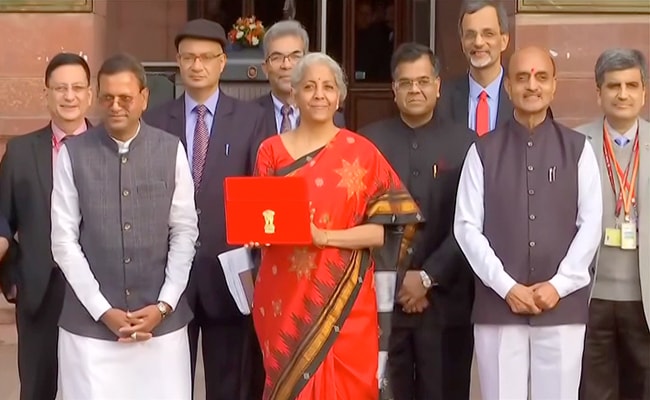
“Replacing Old Political Vehicles…”: N Sitharaman’s Slip Of Tongue, And A Smile


Source link

Union Budget 2023: New vs Old Tax Regime – See What Has Changed

Union Budget 2023: New vs Old Tax Regime – See What Has Changed


Budget 2023: New income tax slabs have been announced

New Delhi:

Finance Minister Nirmala Sitharaman has increased the rebate limit for individual taxpayers from Rs 5 lakh to Rs 7 lakh a year.

“..Currently, those with income up to Rs 5 lakh do not pay any income tax in both old and new tax regimes. I propose to increase the rebate limit to Rs 7 lakh in the new tax regime. Thus, persons in the new tax regime, with income up to Rs 7 lakh will not have to pay any tax,” Ms Sitharaman said while presenting Budget 2023 in parliament today.

She also announced new tax slabs and scrapped the old twin-structure system that was unboxed in 2020, which taxed citizens under 25 per cent without exemptions and 30 per cent with exemptions allowed.

The new slabs are:

Rs 0-3 lakh – no tax

Rs 3-6 lakh – taxed at 5 per cent

Rs 6-9 lakh – taxed at 10 per cent

Rs 9-12 lakh – taxed at 15 per cent

Rs 12-15 lakh- taxed at 20 per cent

Above Rs 15 lakh – taxed at 30 per cent

Difference between old and new tax regime

“I had introduced, in the year 2020, the new personal income tax regime with six income slabs starting from Rs 2.5 lakh. I propose to change the tax structure in this regime by reducing the number of slabs to five and increasing the tax exemption limit to Rs 3 lakh,” Ms Sitharaman said.

In Budget 2020, the Finance Minister had given an option to individual taxpayers to either continue in the old rate, under which they could still claim tax exemption, or opt for the reduced new rate but with no scope for claiming exemptions.

The old tax regime had 30 per cent tax rate for those whose income was Rs 15 lakh a year, but they could claim exemptions.

Those who opted for the new regime first announced in 2020 and whose income was over Rs 15 lakh were taxed at 25 per cent, but they could not claim exemptions.

Below is an example of how the new tax regime leads to more savings:

If your salary is Rs 7 lakh a year, then you don’t have to pay any tax. Earlier, the rebate was Rs 5 lakh.

Now, let’s say your salary is Rs 9 lakh a year. It will be taxed by compartmenting the amount into slabs. Accordingly:

A. 0-Rs 3 lakh: no tax (earlier, it was 0-Rs 2.5 lakh)

Balance: Rs 6 lakh to be taxed under two slabs i.e. Rs 3-6 lakh portion at 5 per cent and Rs 6-9 lakh portion at 10 per cent

B. Rs 3 lakh taxed at 5 per cent: Rs 15,000

Balance: Rs 3 lakh to be taxed under one slab i.e. Rs 6-9 lakh portion at 10 per cent

C. Rs 3 lakh taxed at 10 per cent: Rs 30,000

Total tax on Rs 9 lakh (sum of A, B and C): Rs 45,000

However, if tax on this Rs 9 lakh was calculated using the old slabs (0-Rs 2.5 lakh exempted and Rs 5 lakh rebate), you’d need to pay at least Rs 60,000, which means the new slabs lead to savings of some 25 per cent.


Source link

Budget: Eye On Growth, Big Announcements Before 2024 Polls

Budget: Eye On Growth, Big Announcements Before 2024 Polls

Budget 2023: Nirmala Sitharaman will present the Union Budget today

New Delhi:
The Union Budget for fiscal 2024, to be presented by Finance Minister Nirmala Sitharaman, will set the foundation for taking India’s economic growth to the forecast rate of 6.8 per cent. This is Ms Sitharaman’s fifth Budget presentation since 2019.

Here’s your 10-point cheatsheet to this big story:

  1. Predictably, India’s middle class is looking for some form of income-tax relief. Though the tax slab wasn’t changed and no new deduction was announced last year, inflation has eaten into people’s earnings. They haven’t seen a change in tax rate since 2017-18 and in tax slab since July 2014.

  2. Ms Sitharaman may be able to afford a balanced, not a populist, Budget since the general election is still a year and one more Union Budget away. Still, with Prime Minister Narendra Modi’s BJP hoping to win a third consecutive term, massive welfare programmes for farmers and the rural population can’t be ruled out.

  3. The Finance Ministry had been considering increasing the limit under 80C, which includes investment in life insurance, fixed deposit, bonds, housing and public provident fund. If this happens, it will encourage savings and help raise rainy day funds of people whose savings were eroded at the height of the COVID-19 pandemic.

  4. The markets in India – Asia’s third-biggest economy – will be closely watched when Ms Sitharaman begins her Budget speech at 11 am. Adani group companies led most of the fluctuations last week, but on Tuesday its Rs 20,000 crore follow-on share sale sailed through, bringing relief to the group that’s facing allegations of fraud made by US-based short-seller Hindenburg.

  5. The Modi government may strengthen its “Make In India” and “Atmanirbhar Bharat” policies by giving financial benefits to manufacturers and suppliers who want to set up shop in the country. India has been advertising itself as an alternative to China in the global supply chain.

  6. The real estate sector, which nosedived during the pandemic, expects the centre to announce favourable schemes and tax breaks to improve its luck after a slow but surefooted revival last year. In 2019, the goods and services tax, or GST, council cut the tax rate on affordable houses from 8 per cent to 1 per cent. The sector expects similar announcements in this Budget too.

  7. Over half of India’s population is under 30. For them, the focus would be on job security and reduced tax on products that they prefer to buy, such as electronic goods. Better terms for education loans and other forms of financial help for school and higher education will be keenly watched.

  8. The farm sector went through difficult times in 2022 due to global supply problems, unseasonal rains and floods, effects of climate change and the war in Ukraine. Ms Sitharaman would likely have something to cushion them from all these shocks. After all, farmers make for a large and influential voter base.

  9. Ms Sitharaman may pick up from where she left on “digital rupee”, which was first announced in last year’s Budget as a possible alternative to cryptocurrencies. Crypto trades have in recent times become wildly popular across the globe, albeit risky since there exists a grey area of regulation. The Finance Minister may give a status update on “digital rupee”.

  10. A Bloomberg brief of what to expect includes extension of long-term capital gains tax to immovable property and unlisted shares, compensation to oil retailers for selling fuel below market prices, cut in import taxes on gold to 10 per cent to rein in illegal shipments and increase in defence budget amid border tensions with China. 


Source link

Asaram Gets Life Sentence For Raping Former Woman Disciple

Asaram Gets Life Sentence For Raping Former Woman Disciple

Asaram is already serving a life sentence in another rape case. (File)

Ahmedabad:

A court in Gandhinagar on Tuesday sentenced self-styled godman Asaram Bapu, convicted in a rape case filed by a former woman disciple in 2013, to life imprisonment.

The 81-year-old is currently lodged in a Jodhpur jail, where he is serving life sentence in another case of raping a minor girl at his ashram in Rajasthan in 2013.

Sessions court judge D K Soni pronounced the ruling after hearing the arguments on the quantum of sentence.

The court on Monday convicted Asaram in a case registered in 2013 for raping a woman disciple, who hailed from Surat, on several occasions from 2001 to 2006 when she was living at his ashram at Motera near Ahmedabad.

The court convicted Asaram under Indian Penal Code Sections 376 2 (C) (rape), 377 (unnatural offences), 342 (wrongful detention), 354 (assault or criminal force to woman with intent to outrage her modesty), 357 (assault) and 506 (criminal intimidation), in the case lodged by his former woman disciple in 2013.

The court had acquitted six other accused, including Asaram’s wife Laxmiben, their daughter, and four disciples who were accused of aiding and abetting the crime, for want of evidence, the prosecution said.

(This story has not been edited by NDTV staff and is auto-generated from a syndicated feed.)


Source link

YouTube
Instagram
WhatsApp